
 Worksheets
7th Grade Topic Review
Total questions: 72
Worksheet time: 57mins

What form of heat transfer circulates the warm and cool air in a house?
Conduction
Radiation
Convection

The type of heat transfer that creates currents in water is called ________.
conduction
convection
radiation
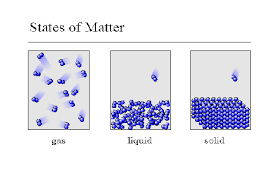
At higher temperatures
particles in an object have less kinetic energy
particles in an object move faster
a gas contracts

A group of friends gather around a fire to stay warm. This is an example of ________.
conduction
convection
radiation
Thermal Equilibrium is
Energy moving from cooler to warmer until both reach the same temperature
Energy moving from left to right until both reach the same temperature
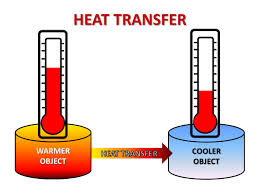
Energy moving from warmer to cooler until both reach the same temperature
If two objects have different temperatures, heat will flow from the warmer object to the cooler one until..
They both have an equal temperature
One temperature is higher than the other
They both have different temperatures

Alfred Wegener named his single supercontinent ____________, which means "all Earth" in ancient Greek.
Pandora
Gandowandaland
Pangea
Percia

Most geologists think that the movement of Earth's tectonic plates is caused by
the rotation of the Earth.
the Earth's magnetic field.
subduction.
convection currents.

When plates collide we get ________.
crumbles
volcanos
trenches
mountain ranges


Which layer of Earth flows slowly and causes the crust to move?
Crust
Mantle
Inner Core
Outer core

Sea-floor spreading explains how.....
new crust is created at a divergent boundary
volcanoes are formed on continents
deep sea trenches are formed
the idea that continents move around on Earth's surface.
A long chain of undersea mountains
mid ocean ridge
sea floor spreading
oceanic plates
answer the 4 questions down below
tectonic plates that make up the continents
the process of one tectonic plate sliding beneath another
oceanic plates
tectonic plates that make up the ocean floor
transform boundaries
boundaries where tectonic plates slide past each other horizontally
convergent boundaries
boundaries where tectonic plates collide or come together

The diagram represents two solids and the temperature of each. What occurs when the two solids are placed in contact with each other?
Heat energy flows from solid A to solid B. Solid A decreases in temperature
Heat energy flows from solid A to solid B. Solid A increases in temperature
Heat energy flows from solid B to solid A. Solid B decreases in temperature.
Heat energy flows from solid B to solid A. Solid B increases in temperature.


___________ is the process by which
new oceanic lithosphere (sea floor) forms as magma rises to Earth’s surface and solidifies at a mid-ocean ridge.
Continental drift
Sea-floor spreading
Plate tectonics
Mid-ocean range
___________ is the hypothesis that states that the continents once formed a single landmass, broke up, and drifted to their present locations.
Continental drift
Sea-floor spreading
Plate tectonics
Mid-ocean range
Continental drift was not widely accepted by scientists because it did not explain how the continents moved. Which theory later explains this?
The big bang theory
The theory of evolution
The theory of plate tectonics
The steady-state theory
Why do Earth's plates move?
because of tornadoes and hurricanes
because of Earth spinning on its axis
because of molten rock heating and cooling within the mantle
because of Earth orbiting the sun
Who came up with the idea that all the continents were once joined together?
Albert Einstein
Alfred Wegener
Charles Darwin
Werner Heisenberg
What evidence supports the idea that all the continents were once joined together?
Similar rocks found on different continents.
Mountains created by colliding continents.
Evidence of glaciers in unexpected places.
All of the above

Lystrosaurus was a slow-moving, plant-eating reptile that lived over 250 million years ago. Fossils of Lystrosaurus have been found in the brown areas shown below (The brown areas are on Africa, Antarctica, and India). How is this explained by the existence of Pangaea?
Lystrosaurus swam across the oceans from one continent to another.
Lystrosaurus drifted on rafts of vegetation from one continent to another.
Bridges once crossed oceans to connect Africa, Antarctica, and India.
Africa, Antarctica, and India used to be joined together into a single landmass.
Which of the following is the a picture of a ocean to ocean convergent boundary?


None of those show a ocean to ocean convergent
Process by which new ocean crust forms.
Seafloor spreading
Continental drift
Mid-ocean ridge
Rift
Place the labels onto the image
convection currents that move plates
crust is created
crust is destroyed
Match the following
divergent
new crust is created (at ridge or rift)
convergent continental-continental
makes folded mountains
transform
has earthquakes along fault line
convergent oceanic-continental
crust is destroyed, near volcanoes
convergent oceanic-oceanic
crust is destroyed, near volcanic island
How can human activities such as agriculture affect groundwater quality in a watershed?
They have no effect on groundwater quality.
They can introduce pollutants like pesticides and fertilizers into the groundwater.
They improve groundwater quality by adding nutrients.
They only affect surface water, not groundwater.

Coral Reefs provide what to marine life? (a)
Humans depend on the ocean for: (a)

Solid
Liquid
Gass

Which image shows particles in a solid?


Which image shows particles in a liquid?
Which image shows particles in a gas?
Where is the watertable located?
Between the saturated and unsaturated zone
Outside the aquifer
Above the saturated zone
Below the unsaturated zone
What is the saturated zone?
Where the ground is filled with water
The top layer of soil
Where there is less amounts of water in the ground
The area above the water table.
The reasons for water to get depleted
Increasing population
increasing trees
agricultural activities
decreasing water

All bodies of fresh water, salt water, ice, and snow that are found above ground
Groundwater
Surface water
Runoff
Swimming pool


Pick all the choices that will help minimize human impact on water.
properly dispose of harmful chemicals
recycle
use less water
volunteer to help clean up litter
use less plastic
A negative effect of building a dam is that it can _________________.
be used for drinking water
control water flow and flooding
be used for recreation
cause rivers to dry out before reaching the ocean

Which of the following is the greatest residential use of water?
shower
leaks
toilet
washing machine

During a prolonged period of _____, people may run out of water.
drought
rainfall
well drilling
dam building

_____ is any method of bringing water to plants. It allows people to grow crops in areas that are otherwise dry and would not be able to support agriculture.
water treatment
plumping
evaporation
irrigation
A hot spot is located at the boundary of a plate
true
false
What geologic feature will occur at a hot spot ?
volcano
folded mountain
deep sea trench
crevasse
A prime example of an area over a hot spot is :
Japan
the Andes Mountains
the East African Rift
the Hawaiian Islands
What plate is the hot spot under the Hawaiian Islands located ?
Atlantic
Pacific
African
South American
As one moves away from a hot spot, the crust will get :
younger
older
the will be no change in age
What area of the continental United States is over a hot spot ?
the Florida Everglades
the Grand Canyon
Yellowstone National Park
New York City
James and Abigail observe thermal energy transfer until both substances reach the same temperature. This is called (a) .
thermal equilibrium
kinetic energy
thermal energy
conductors
insulators
Where are most volcanoes and earthquakes located?
In the middle of the continents
Along the edges of tectonic plates
Along the equator
Near the North and south poles
The theory that continents move over the Earth's surface is the theory of:
The big bang
Continental drift
relativity
evolution
The matching coastlines of Africa and South America help support which theory?
The theory of evolution
The theory of gravity
The theory of superposition
The theory of continental drift
Continental drift was not widely accepted by scientists because it did not explain how the continents moved. Which theory later explains this?
The big bang theory
The theory of evolution
The theory of plate tectonics
The steady-state theory
The high level of volcanic activity and earthquakes surrounding the Pacific ocean is known as the:
The volcanic vortex
Earthquake alley
The ring of fire
San Andreas Fault zone
The youngest rocks on the ocean floor are located ____.
Near continents
At mid-ocean ridges
Near Indiana
Far from mid-ocean ridges
Process by which new ocean crust forms.
Seafloor spreading
Rift
Continental drift
Deep ocean ridge
True or False : Sea-floor Spreading adds new material to the ocean floor?
True
False

