
 Worksheets
Intro to Experimental Design
Total questions: 70
Worksheet time: 2hrs 2mins
The type of variable that responds to the experiment and is what you measure to determine if your hypothesis is true.
Independent
Dependent
Control
Constant
If I water the plant more often, then it will grow taller. Which of these is not a constant?
The amount of soil.
The pot size.
The type of plant.
The amount of water.

Maya designed an experiment to answer the following question: How does the amount of water given to a lima
bean seed affect how tall it grows?
In this experiment, what variable should Maya CHANGE?
the amount of water
the kind of plant
the type of soil
the amount of sunlight it gets

Maya designed an experiment to answer the following question: How does the amount of water given to a lima
bean seed affect how tall it grows?
Multiple answer!!!! Which things does Maya need to keep the same in her experiment?
the amount of water each plant gets
the amount of soil
the type of plant
the amount of sunlight each plant gets

Anthony designed an experiment to answer the following question: How does the temperature of water affect the time it takes for a sugar cube to dissolve?
What tool should Anthony use to measure how much time it takes for the sugar to dissolve?
ruler
stopwatch
triple beam balance
thermometer

Anthony designed an experiment to answer the following question: How does the temperature of water affect the time it takes for a sugar cube to dissolve?
Which factor should Anthony CHANGE in his experiment with the sugar cubes?
the amount of water he uses
the size of the sugar cubes
the temperature of the water

Anthony designed an experiment to answer the following question: How does the temperature of water affect the time it takes for a sugar cube to dissolve?
Multiple answers!!! Which things should Anthony keep the same in his experiment?
the amount of water
the size of the sugar cubes
the temperature of the water
Melika made a model to help understand why craters on the moon are different sizes. She represented the moon’s surface with a pan of flour. Melika represented objects that hit the moon with marbles. She thinks that dropping marbles from a greater height will make the crater’s diameter larger.
What should she change in her experiment to test her hypothesis?
the weight of the marbles
the kind of flour in the pan
the height she drops the marbles from
the size of the marbles
Results
Which step will you first complete?
Make a prediction.
Communicate findings.
Identify the question.
Science plays a significant role in daily life by:
Helping us understand the world around us
Limiting our creativity
Discouraging curiosity
Making life more complicated
Which of the following best describes how to formulate a scientific question and hypothesis based on an observation you have made?
By making an observation, asking a specific question about it, and proposing a possible explanation (hypothesis).
By guessing the answer without any observation.
By copying someone else's hypothesis without making an observation.
By ignoring the observation and making a random statement.
What is science? Science is the study of structure and behavior of the _______ and _______ world.
physical, natural
chemical, artificial
digital, virtual
mythical, imaginary
Which of the following is a characteristic of science?
Fiction
Evidence
Guesswork
Magic
Which of the following is a characteristic of science?
Testable
Unpredictable
Imaginary
Random
Which of the following is a characteristic of science?
Measurability
Invisibility
Luck
Instinct
The scientific method is best described as:
A systematic process for investigating phenomena and acquiring new knowledge.
A set of random guesses to solve problems.
A way to memorize scientific facts without experimentation.
A method for expressing personal opinions in science.
Which of the following is an example of a Simple Hypothesis?
If you consume fewer calories, you'll lose weight.
The number of calories consumed has no effect on weight.
There is a relationship between calories consumed and weight.

Students used various temperatures of water to see which one dissolved candy faster.
What was the independent variable?

A scientific question was asked: What is the affect of salt water on the the height of blades of grass?
What is the independent variable is being tested?
salt water
height
average
affect

If plants receive more water, the number of leaves will increase.
This is an example of a(n)...


Jeff is 7 feet 2 inches tall. What type of observation is this?
The cake has a sweet smell. What type of observation is this?

Which of these is a quantitative observation?
He is tall
Ha jumps high
He wears 23
He is 6 feet 8 inches tall

Which is a qualitative observation?
He is 6 feet 8 inches tall.
He weighs 265 lbs.
He is strong.
He wears a size 13 shoe.

Randall wants to know if the amount of salt in the water has an effect on his goldfish. What is the independent variable?
amount of water
number of goldfish
amount of salt
health of the goldfish

Jose wants to know if the diet of a rat affects the body weight of the rat.
What is the dependent variable?
diet of a rat
body weight
weight of food
number of rats
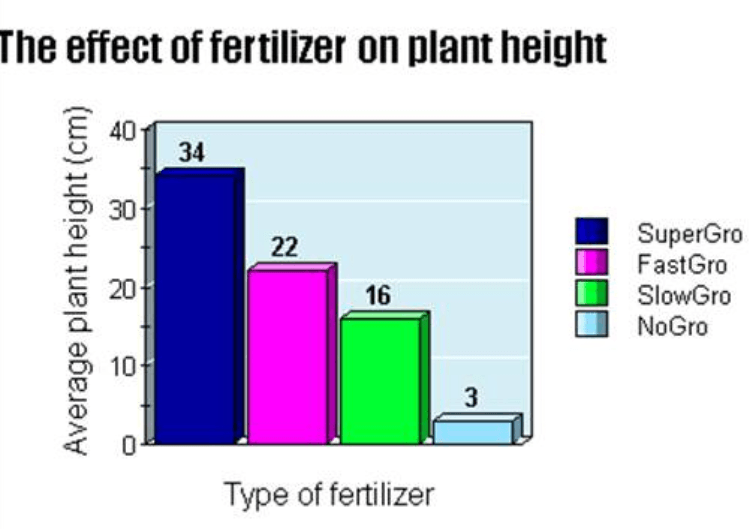
What is the dependent variable?
Type of fertilizer
Average plant height
The effect of fertilizer on plant height
The effect of plant height on fertilizer

Suri wants to know if the temperature of a nest will impact the number of lizards born male vs. female. What is the dependent variable?
nest temperature
number of eggs
number of male vs. female lizards born
number of lizards
-Amount of water
-Height of Ice cube
-Temperature the ice cube was at its highest height
-Temperature of the water
-Size of the ice cube
-3mm holes
-Distant water traveled out of carton
-Different heights of the holes in the container
-Ice water from Iceland
If the amount of nitrogen marsh grass receives is increased, then the height of the grass will increase, because nitrogen is an essential nutrient needed for marsh grass to grow.
What is the independent variable of the statement above?

What was controlled?
m = the amount of money Sarah will raise
d = the distance Sarah walks
Which of the variables is dependent?

Which culture of bacteria had the highest frequency of growth? (growing the fastest)
Culture 1
Culture 2
Culture 3
None of the cultures had a frequency of growth

In the Histogram above, rank the frequency of salaries from greatest to least.
32,500, 30,000, 37,500, 35,000
40,000, 37,500, 30,000, 32,500
25,000, 37,500, 30,000, 32,500
40,000, 37,500, 32,500, 30,000


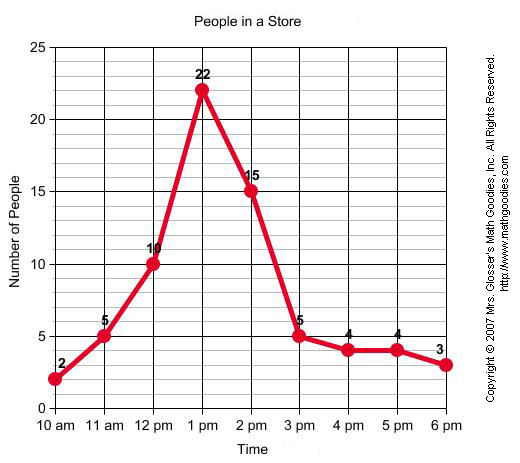
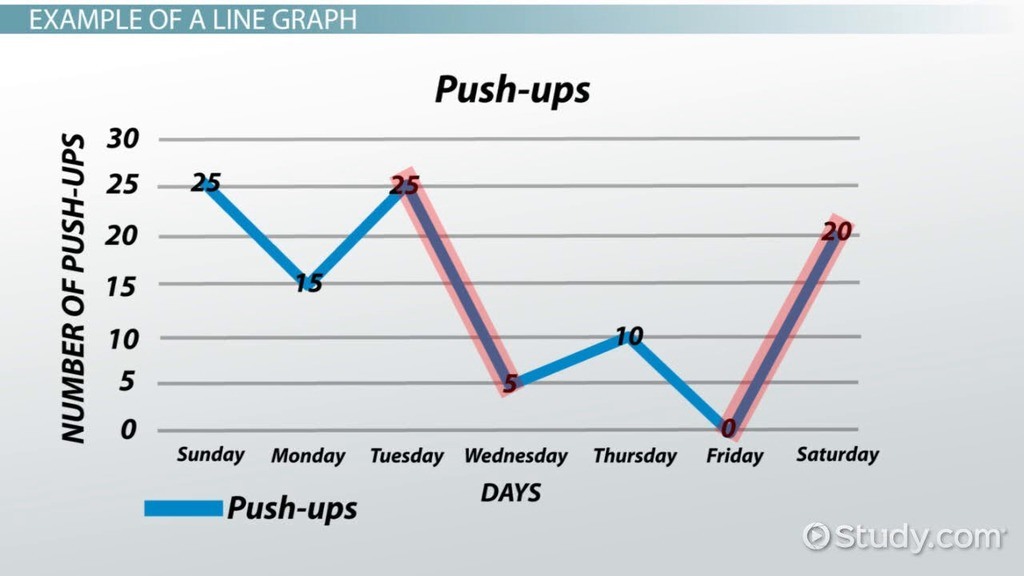
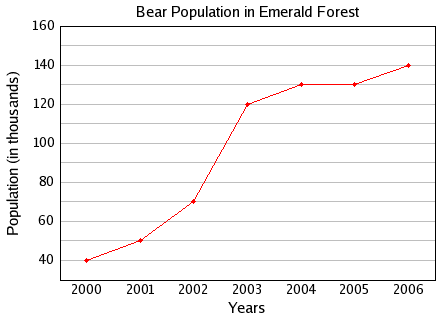
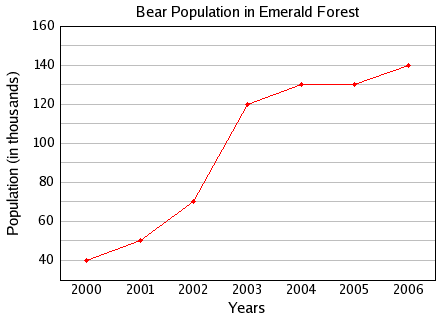
Between which two years did the bear population remain constant or the same?
2004 and 2005
2001 and 2002
2005 and 2006
2000 and 2001
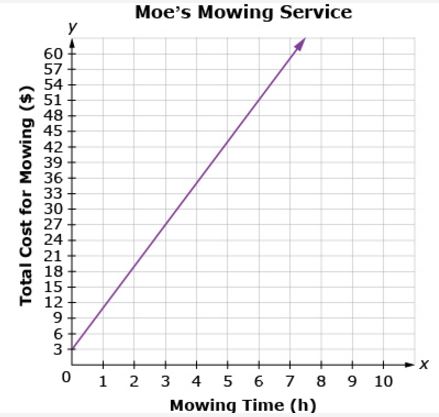
Which axis runs vertically (up and down)?
x− axis
y− axis
Which axis runs horizontally (left and right)?
x− axis
y− axis

Examine the population curves for wolves and moose in the graph below.
Which statement correctly describes the population relationship between the wolves and moose from 1968 to 1973?
As the moose population increased the wolf population increased.
As the moose population increased the wolf population decreased.
As the wolf population decreased the moose population decreased
As the wolf population increased, the moose population decreased.

What is the independent variable?
atomic number
electron volts
first ionization energy
Jim Askew's Graph

