
 Worksheets
Science GAPS
Total questions: 163
Worksheet time: 2hrs 21mins
Atoms form ions because they want to have a (a) outer shell.
Ionic bonds are formed between...
Non - metals
A metal and a non-metal
Metals
How is an ionic bond formed?
Sharing of electrons
Delocalised electrons
Transfer of electrons
Select all of the statements below that are correct to describe the structure and properties of ionic compounds...
They have high melting and boiling points
They have a lattice structure
The ions are held together by intermolecular forces
They can conduct electricity when molten
They can conduct electricity when solid
Which of the below is an ionic compounds?
Ni
MgCl2
H2O
CH4
An example of an ionic compound is Sodium Chloride, which is made from Na+ and Cl- ions. Why do these ions form an ionic bond?
They have like charges
They are from the same group
They are from the same period
They have opposite charges
Lithium is in group 1 of the periodic table, which ion would it form?
Li-
Li2-
Li+
Li2+
Oxygen is in group 6 of the periodic table, which ion would it form?
O-
O+
O2-
O2+
Lead Chloride is an ionic compound, made up from Pb2+ ions and Cl- ions. Which is the correct formula for this compound?
PbCl3
PbCl
PbCl4
PbCl2
Magnesium Hydroxide is an ionic compound made up from Mg2+ and OH- ions. Which is its correct formula?
MgOH
MgOH2
Mg(OH)2
MgO
polyatomic ions
an element from Group 7
Calcium Oxide, CaO
Covalent Bond
Ionic Bond
Calcium Chloride, CaCl2
Covalent Bond
Ionic Bond
Why do ionic bonds form?
so the number of protons equals the number of electrons
to fill the outermost energy level to make the atom stable
so an atom can become unstable
If an aluminum atom has 13 protons (+) and 10 electrons (-), what is it's charge?
Al+3
Al+13
Al+10
Al-10
if NONMETALS are more likely to GAIN electrons, they will form ...
anions
neutral atoms
cations
In the chemical formula for an ionic compound, which item is written first?
positive ion (cation)
negative ion (anion)
subscript
it's alphabetical

The transfer of Valence electrons from a metal to a non metal is known as
Covalent Bonding
Metallic bonding
Molecular bonding
Ionic Bonding
A(n) _________ is an ion with a positive (+) charge.
anion
cation
ion
solute
Covalent bonds are formed between...
two or more metal atoms
two or more non-metal atoms
a metal and a non-metal atom
Covalent bonds are formed when electrons are transferred between atoms.
True
False
Atoms can only share electrons in the (a) shell.
Fluorine is a diatomic molecule. Fluorine is in Group 7. How many electrons are shared in this covalent bond?
(a)
Oxygen is a diatomic molecule. Oxygen is in Group 6. How many electrons are shared in this covalent bond?
(a)

The structure of ammonia is shown in the diagram. What is the formula for ammonia?
NH3
HN3
N3H
HN3
What are the disadvantages of using displayed formulae, like the one shown?
The 3D structure of the molecule is not shown.
They can show how atoms are bonded in large molecules.
They do not show which atom each electron comes from.
They can be used to find the structural formula of the molecule.
Select the properties of simple covalent substances.
Low melting and boiling points.
High melting and boiling points.
Do not conduct electricity.
Good conductors of electricity.
Why do simple covalent substances not conduct electricity?
They have low melting points.
They have low boiling points.
There are no delocalised electrons or free ions to carry the charge.
The molecules are too large.
Covalent structures have low melting and boiling points because it does not take much energy to break the _____ intermolecular forces.
weak
strong
In a transverse wave, the vibrations are (a) to the direction of the wave.
Waves can transfer...
energy
matter
information
The vibrations in a longitudinal wave are (a) to the direction of energy transfer.
Select the transverse waves.
water waves
light
ultrasound
radio waves
P waves
Sound waves are (a) waves.
Seismic waves can be...
longitudinal
transverse
Sound waves can travel through a vacuum because they don't require particles.
True
False
Compare and contrast transverse and longitudinal waves, giving examples of each.
Which pathogen is non-living?
Virus
Bacteria
Fungi
Parasite/Protist
They are all alive
Which type of pathogen is responsible for causing the flu, chicken pox, and yellow fever?
viruses
parasites
fungi
bacteria
Which pathogen is treated with antibiotics?
virus
bacteria
parasite
fungi
Athlete's Foot is caused by:
fungus
bacteria
parasite
virus
A microbe that can cause harm is known as a
Pathogen
Pathogon
Virus
Bacteria
Mosquitoes and houseflies are examples of organisms that can spread disease. These types of organisms are refereed to as?
Vectors
Fungi
Pathogens
What are two viral diseases that do have a vaccine?
Measles and typhoid
Measles and malaria
Measles and chicken pox
This is the transmission of infectious disease through air.
Airborne transmission
Droplet spread
Contaminated Objects
Insect bites
The carrier of malaria causing protozoan is:
Female anopheles mosquito
cockroach
housefly
female Aedes mosquito
Which of the following is not caused by bacteria.
Cholera
Typhoid
Tuberculosis
Malaria
Which of the following is not a communicable disease
Cholera
cancer
Chicken pox
malaria
What is the pressure equation?
Pressure = Force x Area
Pressure = Force ÷ Area
Pressure = Area ÷ Force
Pressure = Area2 ÷ Force
Which property do gasses have that liquid do not?
Gasses can be compressed
Gasses can flow
Gasses can gain energy
Gasses can change shape
If a piston has a face of 2cm2 and a force of 5N is applied what is the total pressure?
2.5N/cm2
0.4N/cm2
10N/cm2
10N/m2
If a pressure of 100N/m2 is applied to a piston with an area of 1.5m2 what is the total force?
150N
75m2
0.015N
50N
What happens to the pressure as you go deeper underwater?
It increases
It descreases
It stays the same

In the image which hole will allow the water to travel furthest?
A
B
C
When going higher in the atmosphere the pressure will
Increase
Decrease
Stay the Same

Why is it dangerous to hold your breathe when SCUBA diving?
Air in your lungs can expand as you descend, damaging them
Air in your lungs can expand as you ascend, damaging them
Water pressure can force water into your lungs
Your lungs stretch as you go deeper due to increasing pressure
Why does tea taste bad on Mt. Everest
Water boils at a lower temperature
Atmospheric pressure breaks the tea bag
Water cannot boil on Everest
It's not bad but its a lot of effort and you always forget to bring milk
Why do hydraulic mechanisms work with liquids?
Liquids apply pressure in all directions equally
Liquids can be compressed
Liquids increase pressure with depth
Liquids have a fixed shape
Which of the following would increase the pressure on a system?
Increase the Temperature
Pump in more gas
Decrease the volume of the container
All of these
Newtons are the correct unit for which of the following?
Force
Work
Power
Acceleration
Which is the correct unit for work?
Joules
Newton
meter
Watts

It took 500 Newtons of force to push a car four meters. How much work was done?
2000 J
125 J
0.008 J
500 J
units for work are
newtons
joules
meters
seconds
The two main causes of variation within a species are:
Genetics
Diet
Environment
Personality
Some characteristics are caused by both genetics and environmental influences, select all those that only genetic.
Weight
Scar
Sporting ability
Eye colour
Blood group
Which type of graph would be used to show continuous data?
Bar Chart
Pie Chart
Histogram
Line Graph
Name the main 2 scientists who discovered the structure of DNA
Watson and Crick
Franklin and Crick
Watson and Mendel
Creese and Bareham
Select all the statements about the structure of DNA that are TRUE.
The structure is described as a double helix
A pairs with C
C pairs with G
The bases are held together with hydrogen bonds
The bases are: Argon, Thymine, Cyan, Ghana
Based on the complementary base pairing rules what would be the correct base pairing of the following strand: AGC TGA
TGT ACA
AAT CGT
TCG ACT
ACT CAT
Where is DNA found?
Nucleus
Cell Wall
Cell Membrane
Anywhere in the cell.
How many chromosomes are in a diploid cell?
50
46
20
16
(a) is a short length of DNA found on a chromosome that codes for a particular characteristic.
An alternative form of a gene is called an (a) .
The genetic make up of an organism is known as their (a)
The physical characteristics of an organism are known as their (a)
Which of these would be correct for an organism that was described as being homozygous recessive.
bb
BB
Bb
Bbb
If brown eyes are dominant (E) and green eyes recessive (e), what colour eyes would a cat have if they had the genotype, Ee?
Brown
Green
Blue
What process takes place to ensure only half the number of chromosomes (23) are found in gametes?
Mitosis
Meiosis
Fertilisation
Phagocytosis
True or False: Males are XY
True
False
Cells (Eg: gametes) with only half the number of chromosomes are known as (a)
The reason Meiosis takes place is to.......
Maintain the chromosome number within cells.
Make the maths easier for those people studying DNA
Allow males and females to reproduce
For fun!


The genotype for a yellow plant is...
Traits that help an organism survive in a specific environment.
Variation
Adaptation
Behavior
Environment
What is the advantage of having different shaped beaks?
To be cool and look different from other species.
To be able to eat the specific
food that is available in the environment.
To protect itself against predators.
To protect itself against prey.
A theory that explains how life has changed over time.
natural selection
evolution
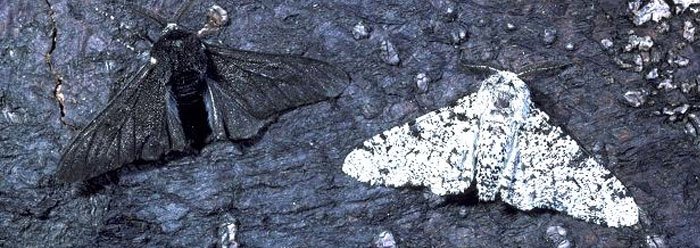
The trees these moths used to live on were white, but have been covered in soot(pollution) from coal factories. Which moth will be more successful in this environment?
Dark moth
Light moth
Both will be equally successful
Neither will be successful
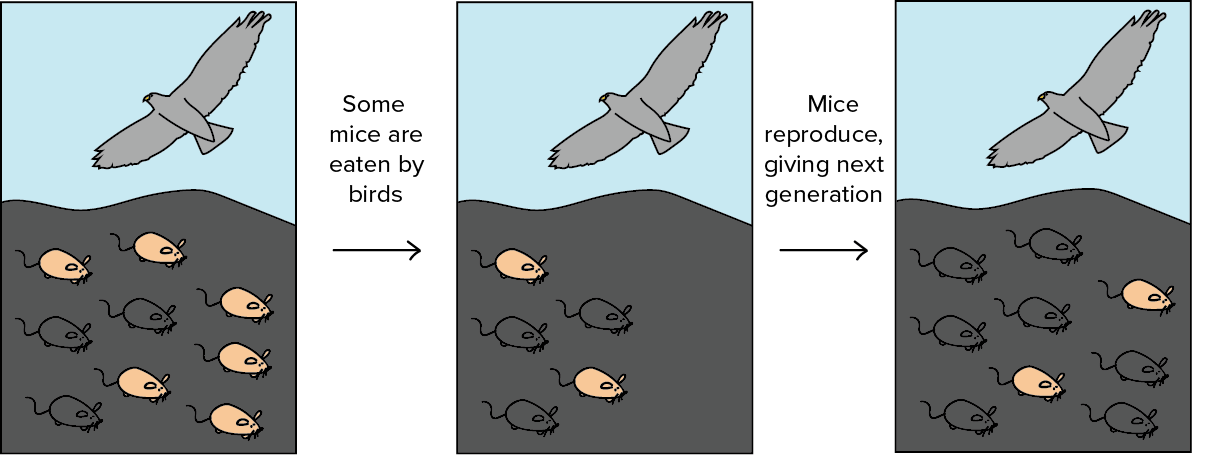
Why is the mouse population changing over time?
The light mice can reproduce more successfully than the dark mice
The hawks eat more dark mice than light mice because the dark mice taste better
The hawks eat more light mice than dark mice because they can see the light mice more easily
The hawks eat more dark mice than light mice because they can see the dark mice more easily


Scientist have created larger and sweeter strawberries for humans to consume (eat). What process was used?
Natural Selection
Artificial Selection

Artificial Selection = Man made

These magnets will...
Attract
Repel
Do nothing

These magnets will...
Attract
Repel
Do nothing

These magnets will...
Attract
Repel
Do nothing

These magnets will...
Attract
Repel
Do nothing
Which of these materials is magnetic?
Iron
Cobalt
Brass
Steel
Nickel
Which will turn a piece of steel into a permanent magnet?
Line it up with the Earth's magnetic field and tape along its length with a hammer
Stroke it with a magnet , same pole and same direction each time
Put it inside a magnetic field
Wash it
Heat it
Which of these will demagnetise a permanent magnet
Hit it
Heat it
Use it too much
Stroke it randomly with another magnet in different directions with different poles
Wash it

Here are the domains in a bar of steel. Which is true?
The steel is magnetic
The steel is a magnet

Here are the domains in a bar of steel. Which is true?
The steel is magnetic
The steel is a magnet
In magnetically hard materials...
Aligned domains stay aligned
Domains can be aligned, but become misaligned when the material is outside a magnetic field
In magnetically soft materials...
Aligned domains stay aligned
Domains can be aligned, but become misaligned when the material is outside a magnetic field
Which material is magnetically hard?
Iron
Steel
Brass
Copper
Which material is magnetically soft?
Iron
Steel
Brass
Copper

These two magnets are under a sheet of paper in a tray of iron filings. The magnets are...
Attracting
Repelling

These two magnets are under a sheet of paper in a tray of iron filings. The magnets are...
Attracting
Repelling

Which is true?
A is a north pole, B is south pole
B is a north pole, A is a south pole
Both A & B are north poles
Both A & B are south poles
If the magnet is removed, which way will the compasses point (if they are spread out)
North
East
South
West
Could be any direction
What type of bond is formed when electrons are shared between atoms?
Metallic Bond
Hydrogen Bond
Covalent Bond
Ionic Bond
Which of the following is a property of ionic compounds?
They are soluble in non-polar solvents.
They have high melting and boiling points.
They conduct electricity in solid state.
They are malleable and ductile.
Which element is most likely to form a cation?
Oxygen
Fluorine
Sodium
Chlorine

