wayground logo

Free Printable Worksheets

Font size

S
M
L
XL
Worksheets

Earth's Atmosphere Review

Total questions: 100

Worksheet time: 1hrs 24mins

Name
Class
Date
1.
Temperature in the stratosphere warms as altitude increases.
a)
True
b)
False
2.
Temperature decreases as altitude increases in the Thermosphere.
a)
True
b)
False
3.
In which layer of the atmosphere does weather occur?
a)
Mesosphere
b)
Thermosphere
c)
Stratosphere
d)
Troposphere
4.
What causes the temperature to increase in the stratosphere?
a)
Nitrogen
b)
Ozone
c)
Water Vapor
d)
carbon dioxide
5.
What is the lowest main layer of Earth's atmosphere?
a)
Thermosphere
b)
Troposphere
c)
Stratosphere
d)
Mesosphere
6.
What is the outer most main layer of Earth's atmosphere?
a)
Thermosphere
b)
Troposphere
c)
Stratosphere
d)
Mesosphere
7.
What is the second lowest main layer of Earth's atmosphere?
a)
Thermosphere
b)
Troposphere
c)
Stratosphere
d)
Mesosphere
8.
The layers of the atmosphere are classified according to changes in _________.
a)
altitude
b)
density
c)
composition
d)
temperature
9.
What are the 2 most abundant gases in Earth's atmosphere?
a)
carbon dioxide and oxygen
b)
carbon dioxide and nitrogen
c)
nitrogen and oxygen
d)
nitrogen and hydrogen 
10.
Which of the following is the correct order of the atmosphere layers from Earth to space?
a)
troposphere, stratosphere, mesosphere, thermosphere, exosphere
b)
troposphere, mesosphere, thermosphere, exosphere, stratosphere
c)
thermosphere, stratosphere, mesosphere, troposphere, exosphere
d)
troposphere, stratosphere, mesosphere, exosphere, thermosphere
11.
Where you will find the ozone layer.
a)
stratosphere
b)
thermosphere
c)
exosphere
d)
mesosphere
12.
As you go higher in the troposphere, the temperature _______________.
a)
decreases
b)
increases
c)
stays the same
d)
gets very hot
13.
Which layer of the atmosphere do most satellites orbit the Earth?
a)
Stratosphere
b)
Mesosphere
c)
Exosphere
d)
Ionosphere
14.
Which gas in our atmosphere is most abundant?
a)
Argon
b)
Oxygen
c)
Nitrogen
d)
Carbon Dioxide
15.
What is the percentage of oxygen in Earth's atmosphere?
a)
1%
b)
21%
c)
78%
d)
90%
16.
What are the 2 most abundant gases in Earth's atmosphere?
a)
carbon dioxide and oxygen
b)
carbon dioxide and nitrogen
c)
nitrogen and oxygen
d)
nitrogen and hydrogen 
17.
What absorbs ultraviolet rays in the atmosphere?
a)
troposphere
b)
stratosphere
c)
ozone layer
d)
greenhouse gases
18.
Without the Greenhouse Effect the Earth would be
a)
warm 
b)
cold
c)
dead
19.
What is the hottest layer in the atmosphere?
a)
Ionosphere
b)
Stratosphere
c)
Thermosphere
d)
Mesosphere
20.
The coldest layer.
a)
troposphere
b)
thermosphere
c)
exosphere
d)
mesosphere
21.
What happens to the air pressure the higher up in space you go?
a)
the air pressure increases
b)
the air pressure decreases
c)
the air pressure stays the same
d)
there is no air pressure
22.
Which layer has the highest pressure?
a)
thermosphere
b)
stratosphere
c)
troposphere
d)
ionosphere
23.
As you climb up a mountain what happens to the air pressure?
a)
decreases
b)
increases
c)
stays the same
24.
Which layer of the atmosphere contains most of Earth's weather?
a)
Troposphere
b)
Stratosphere
c)
Mesosphere
d)
Thermosphere
25.

Some jet airplanes fly in a layer of the atmosphere where temperature generally (mostly) increases with altitude. What is this layer of the atmosphere?

a)

mesosphere

b)

stratosphere

c)

thermosphere

d)

troposphere

26.

Which graph BEST illustrates (shows) the relationship of altitude and temperature in the lowest layer of the atmosphere of Earth?

a)
b)
c)
d)
27.
Which layer is the farthest from Earth?
a)
Mesosphere
b)
Stratosphere
c)
Thermosphere
d)
Exosphere
28.

What gas makes up 21% of Earth's Atmosphere?

a)

Nitrogen

b)

Oxygen

c)

Ozone

d)

None of the Above

29.

The most abundant gas in Earth's atmosphere is what?

a)

Oxygen

b)

Nitrogen

c)

Troposphere

d)

Helium

30.

What was the main ingredients that caused heat energy to be trapped, creating a greenhouse effect, in the ealry atmosphere?

a)

water and carbon dioxide

b)

oxygen

c)

carbon dioxide and oxygen

d)

nitrogen and carbon dioxide

31.

Which layer of the atmosphere aborbs UV light?

a)

troposphere

b)

stratospere

c)

thermosphere

d)

mesosphere

32.
This layer of atmosphere uses a type of oxygen (O3) to protect us from ultraviolet light.
a)
Mesosphere
b)
Ozonosphere or ozone layer
c)
Thermosphere
d)
Troposphere
33.

Which process is believed to start the increase in oxygen in our atmosphere?

a)

condensation

b)

outgassing

c)

photosynthesis

d)

barometric pressure

34.
The layer of the atmosphere containing the ionosphere and auroras is _?_.
a)
troposphere
b)
mesosphere
c)
stratosphere
d)
thermosphere
35.
The layers of the atmosphere that get hotter with increased altitude are the _?_.
a)
thermosphere and mesosphere
b)
troposphere and mesosphere
c)
thermosphere and stratosphere
d)
stratosphere and mesosphere
36.
The layer of gases that surrounds the Earth is known as its _?_.
a)
lithosphere
b)
hydrosphere
c)
atmosphere
d)
biosphere
37.
The layers of the atmosphere in order from bottom to top are _?_.
a)
troposphere, stratosphere, mesosphere, thermosphere, exosphere
b)
troposphere, mesosphere, atmosphere, thermosphere
c)
mesosphere, thermosphere, troposphere, stratosphere, exosphere
d)
thermosphere, stratosphere, mesosphere, troposphere, exosphere
38.
Why is atmospheric pressure greatest in the troposphere?
a)
gravity compresses the atmosphere as it pushes the gases down
b)
thermal and kinetic energy are the highest near the surface
c)
the coldest temperatures in the atmosphere are at Earth's surface
d)
the matter in the troposphere is the least dense
39.
Which layer of the atmosphere has the highest density of gas molecules and highest atmospheric pressure?
a)
troposphere
b)
mesosphere
c)
stratosphere
d)
thermosphere
40.
Directly above the troposphere is the _________.
a)
stratosphere
b)
mesosphere
c)
exosphere
d)
thermosphere
41.
Directly above the stratosphere is the _________.
a)
mesosphere
b)
troposphere
c)
thermosphere
d)
exosphere
42.

The air we breathe is made mostly of:

a)

argon

b)

carbon dioxide

c)

nitrogen

d)

oxygen

43.

The source of energy that drives air movement in the atmosphere is the:

a)

Sun

b)

Oceans

c)

Moon

d)

Ionosphere

44.

Jet planes fly in this layer to avoid the weather.

a)

troposphere

b)

thermosphere

c)

stratosphere

d)

mesosphere

45.

What is the molecular formula for ozone?

a)

O

b)

O2

c)

O3

d)

Oz

46.

Which layer of the atmosphere is home to artificial satellites?

a)

ionosphere

b)

mesosphere

c)

exosphere

d)

troposphere

47.
Why is Earth's atmosphere important?
a)
It is beautiful.
b)
It prevents pollution from happening.
c)
Life on Mars could not exist without it.
d)
Life on Earth could not exist without it.
48.

The Northen Lights that we see come from which layer?

a)

Troposphere

b)

Exosphere

c)

Thermosphere

d)

Mesosphere

49.

The diagram provided shows the layers of the atmosphere and some of the things found in each.

In what layer of the atmosphere does the water cycle occur?

a)

Troposphere

b)

Thermosphere

c)

Mesosphere

d)

Stratosphere

50.

The diagram provided shows temperature variations in the atmosphere.

Which of the following is true about the Thermosphere?

a)

Most solar radiation is blocked there.

b)

Ozone layer warming happens there.

c)

Temperatures are coldest there.

d)

The entire water cycle occurs there.

51.

Study the graphic about the Sun's electromagnetic waves in the atmosphere.

Which of the following statements is supported by the information in the graphic?

a)

X-ray energy from the Sun is blocked by the Stratosphere.

b)

The Mesosphere blocks UV (ultraviolet) light from the Stratosphere.

c)

All frequencies of energy reach the Troposphere and surface.

d)

Visible light is not passable through the Thermosphere.

52.

Use the data to answer the question.

The thinnest layer of the atmosphere is...

a)

Stratosphere

b)

Thermosphere

c)

Mesosphere

d)

Troposphere

53.

The diagram provided shows temperature variations in the atmosphere.

In which layer of the atmosphere does the temperature increase the most?

a)

Troposphere

b)

Thermosphere

c)

Mesosphere

d)

Stratosphere

54.

Why do we have different seasons?

a)

Because of the Earth's rotation around the sun

b)

Due to the tilt of Earth's axis

c)

Because the Earth's orbit changes shape

d)

Due to the distance between the Earth and the sun changing

55.

Which hemisphere experiences summer when it is tilted towards the sun?

a)

The Northern Hemisphere

b)

The Southern Hemisphere

c)

Both A and B

d)

Neither A nor B

56.

convection

a)

thermal energy transfer between TOUCHING objects

b)

can cause temperature inversions

c)

thermal energy transfer by matter in motion

d)

causes stormy weather

57.

conduction

a)

thermal energy transfer between TOUCHING objects

b)

can cause temperature inversions

c)

thermal energy transfer by matter in motion

d)

causes stormy weather

58.

a visible mass of condensed water vapor floating in the atmosphere

a)

rain

b)

clouds

c)

sleet

59.

low level clouds, usually flat, producing a gray layer of cloud cover

a)

stratus

b)

cirrus

c)

cumulus

60.

stratus layer that comes close to earth

a)

stratus

b)

fog

c)

cumulus

61.

fair weather clouds, puffy white clouds that look like a pile of cotton

a)

cirrus

b)

cumulus

c)

nimbus

62.

thin, wispy streaks across the sky, highest clouds

a)

nimbus

b)

cumulus

c)

cirrus

63.

solid or liquid water that falls to the earth's surface

a)

rain

b)

snow

c)

precipitation

64.

a large gray rain cloud

a)

cirrus

b)

stratus

c)

nimbus

65.

rain that passes through frozen air causing a rain/ice mix

a)

hail

b)

sleet

c)

snow

66.

ice crystals that form directly from water vapor

a)

snow

b)

sleet

c)

rain

67.

clouds are formed from

a)

rain

b)

evaporated water/water vapor

c)

heat

68.

there are ____ levels of clouds

a)

3

b)

6

c)

8

69.

Heat transfer between two substances that are in contact is called __?__.

a)

conduction

b)

convection

c)

radiation

70.

Heat from the Sun reaches Earth by __?__.

a)

conduction

b)

convection

c)

radiation

71.

When you touch a hot spoon, heat is transferred by __?__ from the spoon to your hand.

a)

convection

b)

conduction

c)

radiation

72.

How do clouds form?

a)

Water evaporates and condenses on condensation nuclei to form clouds

b)

Water from condensation nuclei evaporates to the sky to form clouds

c)

Water condenses onto other clouds when clouds run into one another

73.

Which of the following is NOT a type of condensation nuclei?

a)

dust

b)

ice

c)

sunlight

d)

smoke

74.

If a cloud has "nimbo-" or "-nimbus" in its name, it means:

a)

layered; spread out; sheet-like

b)

rain or precipitation

c)

heaped; puffy; instability

75.

If a cloud has "strato-" or "-stratus" in its name, it means:

a)

layered; spread out; sheet-like

b)

rain or precipitation

c)

heaped; puffy; instability

76.

If a cloud has "cumulo-" or "-cumulus" in its name, it means:

a)

layered; spread out; sheet-like

b)

rain or precipitation

c)

heaped; puffy; instability

77.

If a cloud has "cirro-" or "-cirrus" in its name, it means:

a)

curl of hair; wispy; high-altitude; icy

b)

mid-altitude

c)

heaped; puffy; instability

78.

If a cloud has "alto-" in its name, it means:

a)

curl of hair; wispy; high-altitude; icy

b)

mid-altitude

c)

heaped; puffy; instability

79.

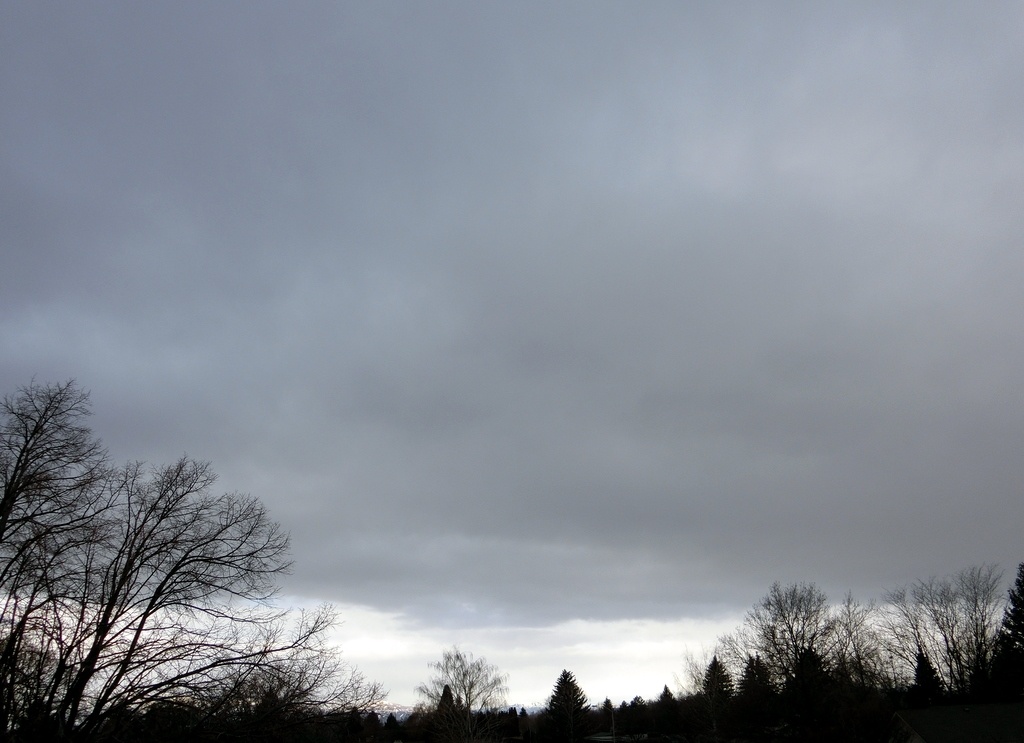
What type of cloud is in the picture?

a)

Cirrus

b)

Cumulus

c)

Stratus

d)

Cumulonimbus

80.

What type of cloud is in the picture?

a)

Cirrus

b)

Cumulus

c)

Stratus

d)

Cumulonimbus

81.

What type of cloud is in the picture?

a)

Cirrus

b)

Cumulus

c)

Stratus

d)

Cumulonimbus

82.

What type of cloud is in the picture?

a)

Cirrus

b)

Cumulus

c)

Stratus

d)

Cumulonimbus

83.

This is a special type of cloud that is found on Earth's surface.

a)

Fog

b)

Stratus

c)

Cumulonimbus

d)

Cirrus

84.
The temperature at which water vapor condenses is the 
a)
relative humidity
b)
humidity
c)
freezing point
d)
dew point
85.
This type of cloud is flat layers and the edges are not clearly defined
a)
cirrus cloud
b)
cumulus cloud
c)
stratus cloud
d)
cumulonimbus cloud
86.
Nimbostratus and cumulonimbus clouds can signal what type of upcoming weather?
a)
fair skies
b)
hot, sunny weather
c)
windy weather
d)
rainy weather
87.
Which of the following is an example of a cloud of vertical development?
a)
nimbostratus cloud
b)
cumulonimbus cloud
c)
cirrus cloud
d)
stratus cloud
88.
what type of cloud is shown?
a)
cumulus
b)
cirrus
c)
stratus
89.
what type of cloud is shown?
a)
cumulus
b)
cirrus
c)
stratus
90.
They are highest clouds in the sky. They look curly, white and feathery. Usually mean good weather.
a)
Cumulus
b)
Cumulonimbus
c)
Cirrus
d)
Stratus
91.
True or False: Cirrus clouds often produce rain or drizzle.
a)
True
b)
False
92.
What type of cloud is fog an example of?
a)
Nimbus
b)
Stratus
c)
Cirrus
d)
Cumulus
93.
What type of cloud is this?
a)
Cumulonimbus
b)
Cirrus
c)
Nimbus
d)
Stratus
94.

The amount of water vapor in the air compared to how much it can hold at that temperature is called the...

a)

Relative Humidity

b)

Absolute Humidity

c)

Heat Index

d)

Dew Point

95.

The temperature air needs to cool down to for the air to be 100% saturated is called the...

a)

Relative Humidity

b)

Absolute Humidity

c)

Heat Index

d)

Dew Point

96.

True or false: warm air can hold more water than cold air

a)

True

b)

False

97.


If the air outside is WARM but the relative humidity is LOW, which of the following is true?

a)

The heat index is high

b)

It will feel warmer than it actually is outside

c)

It will feel cooler than it actually is outside

d)

It will feel the exact same temperature as the thermometer says

98.

 What are condensation nuclei?

a)

The inside part of an atom

b)

Particles in the air that water vapor can condense onto

c)

Particles that cause it to start raining

d)

A special kind of condensation that occurs in the winter

99.

The amount of water vapor in the air is known as ___.

a)

dew point

b)

humidty

c)

relative humidity

d)

rain

100.

Which will hold more water, warm air or cold air?

a)

Warm Air

b)

Cold AIr