wayground logo

Free Printable Worksheets

Font size

S
M
L
XL
Worksheets

UNIT 8-9 QUIZIZZ

Total questions: 106

Worksheet time: 3hrs 40mins

Name
Class
Date
1.

How are the convection currents in the lava lamp different than convection currents in the atmosphere?

a)

warm air in the atmosphere sinks instead of rises

b)

The earth gets its heat from the sun and the lava lamp gets its heat from the light bulb below.

c)

Convection cells in the atmosphere flow in the same direction instead of opposite

d)

Cold air is less dense instead of being more dense.

2.

The number one thing hurricanes need is...

a)

warm water

b)

cold air from cold fronts

c)

cold water

d)

strong warm front

3.

What causes global convection currents

a)

Forests

b)

greenhouse gases

c)

more land forms

d)

uneven heating of the Earth's surface

4.

Where do warm ocean currents come from

a)

the poles

b)

near the land

c)

the equator

d)

middle of the oceans

5.

How to oceans form hurricanes?

a)

warm air over the equator rises and faster than cold air from the poles

b)

warm waters provide the energy for hurricanes

c)

cold water provides the energy for hurricanes

d)

cold air at the poles is more dense and falls faster than warm air from the equator

6.

How to warm waters contribute to hurricane development

a)

evaporating water adds heat to the atmosphere

b)

rising tides cause the ocean level to rise

c)

waves cause the hurricane to develope

d)

currents carry the warm water to the hurricane

7.

What city will experience decreasing temperatures in the next day?

a)

Denver

b)

El Paso

c)

Memphis

d)

Los Angeles

8.

What city is most likely going to see temperatures rise?

a)

San Jose

b)

El Paso

c)

Jacksonville

d)

Chicago

9.

Where do the most violent storms form

a)

The poles

b)

Tropic of Cancer

c)

The Equator

d)

Tropic of capricorn

10.

Where do warm ocean currents come from?

a)

warm ocean currents come from the southern hemisphere

b)

warm ocean currents come from the equator

c)

Warm ocean currents come from the poles

d)

Warm ocean currents come from the beach

11.

Where do cold ocean currents come from?

a)

cold ocean currents come from the southern hemisphere

b)

cold ocean currents come from the equator

c)

cold ocean currents come from the poles

d)

cold ocean currents come from the beach

12.

What does this symbol represent?

a)

Cold Front

b)

Warm Front

c)

Stationary Front

d)

Occluded Front

13.

What does this symbol represent?

a)

Cold Front

b)

Warm Front

c)

Stationary Front

d)

Occluded Front

14.

What does this symbol represent?

a)

Cold Front

b)

Warm Front

c)

Stationary Front

d)

Occluded Front

15.

What does this symbol represent?

a)

Cold Front

b)

Warm Front

c)

Stationary Front

d)

Occluded Front

16.

hurricanes are

a)

extreme low pressures

b)

extreme high pressures

c)

small rain storms

d)

formed over land

17.

Low Pressures are associated with what type of weather

a)

fair weather

b)

cold weather

c)

warm weather

d)

rainy weather

18.

high Pressures are associated with what type of weather

a)

fair weather

b)

cold weather

c)

warm weather

d)

rainy weather

19.

Warm Fronts bring

a)

rain followed by cool dry air

b)

hurricanes

c)

rain followed by hot humid air

d)

fair weather

20.

cold Fronts bring

a)

rain followed by cool dry air

b)

hurricanes

c)

rain followed by hot humid air

d)

fair weather

21.
Hot air rises because...
a)
it is less dense
b)
it is heavier
c)
it is more dense
d)
it contains Helium
22.
The process the causes plate tectonics, wind, and ocean currents is known as...
a)
Radiation
b)
Conduction
c)
Nuclear Energy
d)
Convection
23.
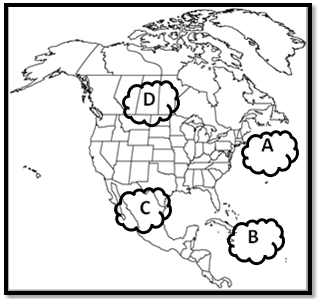
According to the map, which city is likely experiencing warmer weather?
a)
Seattle
b)
Chicago
c)
Boston
d)
San Diego
24.
Which type of weather is Dallas, Texas, likely experiencing?
a)
Thunderstorms
b)
Clear skies
c)
Cold temperatures
d)
Gentle precipitation for days
25.
Which of the following is most likely a cause of hurricanes?
a)
Cooler ocean temperatures
b)
Warmer ocean temperatures
c)
Large ocean waves
d)
Strong ocean currents
26.
A hurricane forms over the Atlantic Ocean. When it hits land and comes ashore, its wind speed decrease significantly.  This happens because the hurricane:
a)
gains more water from the flooded land than the ocean
b)
meets a land breeze
c)
meets a stronger hurricane moving from land
d)
no longer gains energy from warm ocean water
27.
What type of weather usually goes with this symbol?
a)
Clear, sunny skies
b)
Cloudy skies
c)
Hot temperature
d)
Thunderstorms
28.
What type of weather will occur with this symbol?
a)
Thunderstorms, cooler temperatures
b)
Gentle precipitation, warmer temperatures
c)
Sunny skies, warmer weather
d)
Cloudy skies, cooler weather
29.
____________ air sinks/falls because it is ____________dense.
a)
Cold, More
b)
Warm, Less
c)
Cold, Less
d)
Warm, More
30.
____________ air rises because it is ____________dense.
a)
Cool, Less
b)
Warm, Less
c)
Cold, More
d)
Warm, More
31.

A(n) _____ is a large body of air that has properties similar to the part of Earth's surface over which it depends.

a)

tornado

b)

pressure system

c)

front

d)

air mass

32.
Which type of front is near Seattle?
a)
cold front
b)
warm front
c)
occluded front
d)
stationary front
33.
Which type of air would you find at air mass A?
a)
cold, dry
b)
warm, humid
c)
warm, dry
d)
cold, humid
34.
This is the symbol for a... 
a)
Occluded Front
b)
Stationary Front
c)
Warm Front
d)
Cold Front 
35.
This is the symbol for a... 
a)
Stationary Front
b)
Occluded Front
c)
Cold Front
d)
Warm Front
36.
This is the symbol for a... 
a)
Stationary Front
b)
Occluded Front
c)
Cold Front
d)
Warm Front 
37.
This is the symbol for a... 
a)
Cold Front
b)
Warm Front
c)
Stationary Front
d)
Occluded Front 
38.
Which of the following will heat the fastest? 
a)
water
b)
land
c)
both heat at equal rates
39.
The conditions of the atmosphere at a certain time and place. 
a)
weather
b)
climate
c)
precipitation
d)
atmosphere
40.
Air travels
a)
from high pressure to low pressure
b)
from low pressure to high pressue
41.
What type of winds blow constantly, predictably, and over long distances?
a)
land breezes
b)
mountain breezes
c)
global winds
d)
land breezes
42.

Which statement correctly defines wind?

a)

The movement of air from areas of low pressure to areas of high pressure

b)

The movement of air to a colder area in the atmosphere.

c)

The movement of air from areas of high pressure to areas of low pressure.

d)

The movement of air pushed around and bouncing off Earth's surface.

43.
Where does the initial source of energy come from that creates winds?
a)
the moon
b)
the sun
c)
the Earth's surface
d)
the rotation of the Earth
44.

What is the initial source for global winds and convection in the atmosphere?

a)

heat from the Earth's core

b)

the rotation of the Earth

c)

Moon's gravity

d)

unequal heating of the Earth by the sun

45.

The Coriolis effect causes ___________.

a)

the Earth to rotate on its axis

b)

earthquakes

c)

global winds to move in a curved path instead of a straight line

d)

the Earth to revolve around the sun
46.
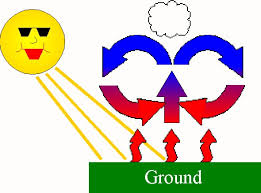
Which diagram shows the formation of a land breeze?
a)
diagram Y
b)
diagram X
c)
neither 
d)
both
47.
Which diagram shows the formation of a sea breeze?
a)
diagram Y
b)
diagram X
c)
neither
d)
both
48.
How do differences in air pressure affect the movement of air?
a)
Air always moves from areas of high pressure to areas of low pressure.
b)
Air always moves from areas of low altitudes to high altitudes.
c)
Air always moves from areas of low pressure to areas of high pressure.
d)
Air always moves from east to west.
49.
Which statement correctly describes the properties of cold air?
a)
less dense and less pressure than warm air
b)
more dense and more pressure than warm air
c)
more dense and less pressure than warm air
d)
less dense and more pressure than warm air
50.
Near the top of the troposphere is a narrow band of high speed winds called the______.
a)
westerlies
b)
jet stream
c)
trade winds
d)
local winds
51.
What kind of breeze is this and when would it form?
a)
Land breeze - daytime
b)
Land breeze - nighttime
c)
Sea breeze - daytime
d)
Sea breeze - nighttime
52.
In which direction do prevailing westerlies flow?
a)
from east to west
b)
from west to east
c)
from north to south
d)
from south to north
53.
Which global winds are found at the poles? 
a)
Polar Westerlies
b)
Prevailing Easterlies
c)
Polar Easterlies
d)
Trade Winds
54.
Which global winds directly effect weather in the U.S.?
a)
Trade Winds
b)
Prevailing Westerlies
c)
Polar Easterlies
d)
Doldrums
55.
The tropical winds running from 0 to 30 degrees latitude are called:
a)
subtropical westerlies
b)
polar westerlies
c)
trade winds
d)
polar winds
56.
Warm, rising air at the Equator forms a calm, weak wind called the:
a)
Doldrums
b)
Trade Winds
c)
Polar Easterlies
d)
Westerlies
57.
Cool, sinking air at 30 degrees North create a pressure belt known as the:
a)
Trade Winds
b)
Doldrums
c)
Horse Latitudes
d)
Westerlies
58.
What kind of heat transfer happens when the sun is heating your body?
a)
Conduction
b)
Radiation
c)
Convection
d)
Density
59.
What heat transfer happens when you burn your hand by touching a fire?
a)
Radiation
b)
Conduction
c)
Convection
d)
I don't know!!!!!!!!!!!
60.
Warm air rises and the cool air sinks demonstrates this type of heat transfer. 
a)
conduction
b)
convection
c)
radiation
d)
Insolation 
61.
Ironing a shirt is an example of...
a)
condensation
b)
conduction
c)
convection
d)
radiation
62.
The man goes to take the hot pot off the stove with his bare hands.
a)
conduction
b)
convection
c)
radiation
63.
Johnny accidentally grabbed the handle of the hot pot.
a)
conduction
b)
convection
c)
radiation
64.
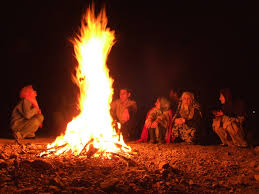
A group of friends gather around a fire to stay warm.
a)
conduction
b)
convection
c)
radiation
65.
Transfer of thermal energy through "space"
a)
conduction
b)
convection
c)
radiation
66.
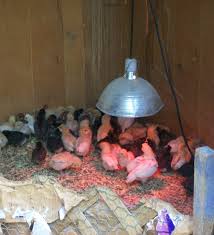
The baby chickens are kept warm from the heat lamps demonstrates this type of heat transfer. 
a)
conduction
b)
convection
c)
radiation
67.
Near the ceiling of a room the air is warmer; the warm air rises because of
a)
conduction
b)
convection
c)
radiation
68.
A house burns down. The vinyl siding of the house next door warps due to
a)
conduction
b)
convection
c)
radiation
69.
In what way does the Sun warm Earth? 
a)
radiation
b)
convection
c)
conduction
d)
condensation
70.
You are stirring a bowl of hot soup with a metal spoon. The spoon starts to feel warmer because of _?_.
a)
conduction
b)
convection
c)
radiation
71.
You buy a lava lamp from the store. As the lamp heats up, blobs of liquid rise to the top then sink back down to the bottom. This process continues because of _?_.
a)
conduction
b)
convection
c)
radiation
72.
You are doing your homework at a desk that is underneath a lamp. You start to feel hotter because of _?_ from the lamp.
a)
conduction
b)
convection
c)
radiation
73.
objects that prevent heat transfer
a)
insulator
b)
conductor
c)
kinetic energy
d)
potential energy
74.
energy in motion
a)
kinetic energy
b)
potential energy
c)
heat
d)
transfer
75.
A ______________ is a material that transfers thermal energy well.
a)
insulator
b)
protector
c)
conductor
d)
reflector
76.
Wood, straw, and wool are materials that are good __________________.
a)
insulators
b)
conductors
c)
reflectors
d)
generators
77.
Silver, stainless steel, and copper are materials that are good _________________.
a)
insulators
b)
radiators
c)
currents
d)
conductors
78.

Earth's Surface is divided into three temperate zones based on ____________.

a)

latitude

b)

longitude

c)

the Earth's axis

d)

ocean currents

79.
What is weather over a long period of time?
a)
A tropical vacation
b)
Weather
c)
Climate
d)
Science
80.
The sun’s rays are least direct __________.
a)
near the poles.      
b)
in July.
c)
near the equator.
d)
far from the ocean.
81.
Large bodies of water affect climate of the land next to them because
a)
water heats up and cools more slowly than land
b)
water heats up and cools faster than land
c)
water and land cool at the same time
d)
water and land heat at the same rate
82.
Ocean currents circulate the sun's heat.
a)
True 
b)
False
83.
The _______ of  a mountain range is the side that receives a lot of precipitation.
a)
dry side
b)
leeward/dry side
c)
windward/wet side
d)
cloudy side
84.
What makes global winds curve rather than move in straight lines?
a)
the spinning of Earth
b)
changes in air pressure
c)
changes in temperature
d)
differences in latitudes
85.

Identify the factors that influence an areas temperature

a)

Mountain Ranges

b)

Latitude

c)

Altitude

d)

Distance from Large Bodies of Water

e)

Prevailing Winds

86.

Why do states that are located in the center of the US receive less rain than Florida?

a)

They are surrounded by mountains

b)

They are farther from the ocean

c)

They have a lot of clouds

d)

They are further from the equator

87.

areas of low rainfall on a downward, or leeward side of the mountain

a)

Rain shadows

b)

Altitude

c)

Distance from oceans and lakes

d)

Presence of mountains

88.

Cold air is ____________ than warm air and ___________.

a)

more dense; sinks

b)

less dense; rises

c)

more dense; rises

d)

less dense; sinks

89.

Warm air is ____________ than cold air and ___________.

a)

more dense; sinks

b)

less dense; rises

c)

more dense; rises

d)

less dense; sinks

90.

When cool air sinks, it creates areas of __________ pressure.

a)

high

b)

low

91.

When warm air rises, it creates areas of __________ pressure.

a)

high

b)

low

92.

The horizontal (side to side) movement of air along Earth's surface is called ____________.

a)

Air currents

b)

Wind

c)

Air Pressure

d)

Atmosphere

93.

Air moves from areas of _____________ pressure, to areas of ______________ pressure.

a)

high; low

b)

low; high

94.

What type of breeze is this?

a)

Land Breeze

b)

Sea Breeze

c)

Mountain Breeze

d)

Valley Breeze

95.

What type of breeze is this?

a)

Land Breeze

b)

Sea Breeze

c)

Mountain Breeze

d)

Valley Breeze

96.
Which one heats and cools fastest?
a)
land
b)
sea
c)
both are the same rate
d)
air
97.
In convection, COOL air
a)
Rises
b)
Sinks
98.
In convection, WARM air
a)
Rises
b)
Sinks
99.
Warm air is __________ dense than cold air and rises creating convection currents.
a)
more
b)
less
100.

Cool/cold air that sinks towards the Earth's surface creates a ______________ area?

a)

high pressure

b)

low pressure

c)

no pressure

d)

pressure free

101.

How does air pressure flow?

a)

High to low

b)

Low to high

c)

Left to right

d)

Right to left

102.
Why do land breezes occur at night?
a)
Land cools off slower than water, so the air above water is cooler.
b)
Water cools off faster than land, so the air above land is warmer.
c)
Land heats up slower than water, so the air stays cooler during the day.
d)
Water cools off slower than land, so the air above water is warmer.
103.
Energy for convection on the Earth comes from...
a)
The sun
b)
The moon
c)
Solar winds
d)
The ocean
104.
The curving path of a moving object from an otherwise straight path due to Earth's rotation is called what?
a)
Sublimation
b)
Continental Deflection
c)
Transpiration
d)
Coriolis Effect
105.

The curving of the winds' paths is called the

a)

El Nino

b)

Coriolis effect

c)

La Nina

106.

Warm air over land and cool air over the sea causes

a)

land breeze

b)

sea breeze