wayground logo

Free Printable Worksheets

Font size

S
M
L
XL
Worksheets

PS U1 b The Atom and The Periodic Table

Total questions: 101

Worksheet time: 4hrs 19mins

Name
Class
Date
1.
What charge does a proton have?
a)
negative
b)
positive
c)
neutral
d)
no charge
2.
What charge does a neutron have?
a)
negative
b)
positive
c)
neutral
d)
no charge
3.
An atom with atomic number 6 would have how many protons?
a)
6
b)
12
c)
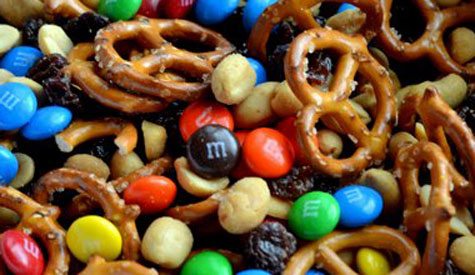
3
d)
cannot be determined 
4.
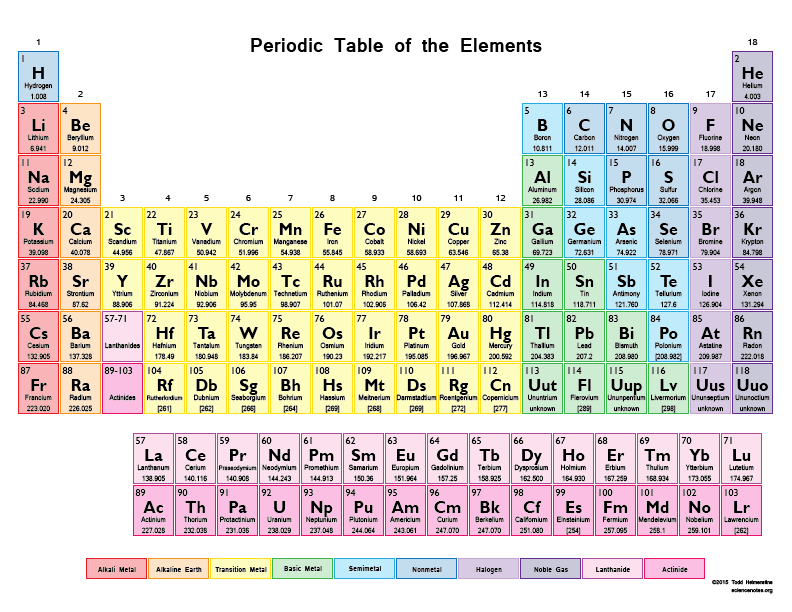
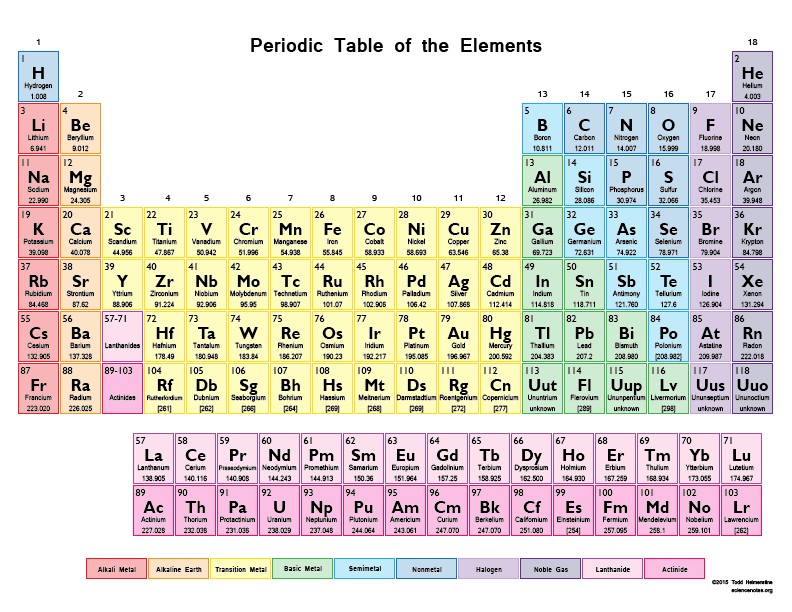
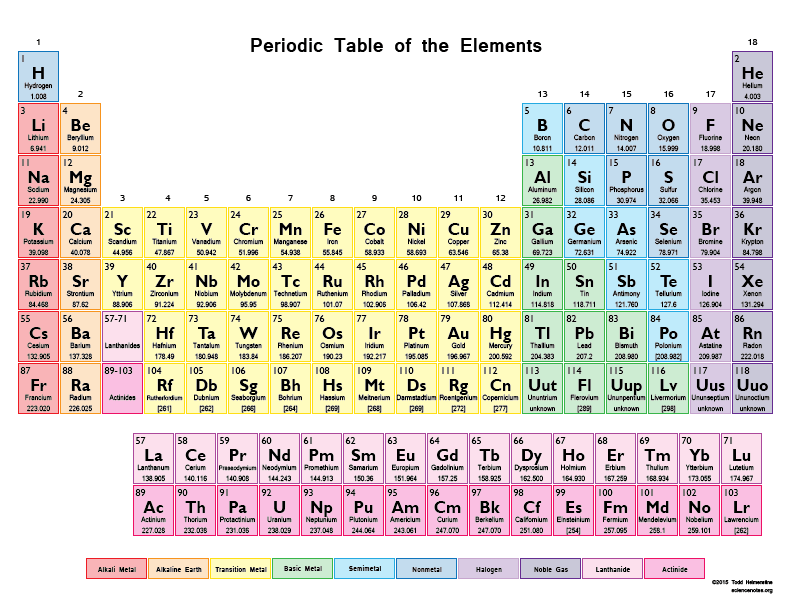
A particle that moves around the nucleus is a(n)...
a)
Proton
b)
Neutron
c)
Electron
d)
Quark
5.
In the modern periodic table elements are arranged by:
a)
atomic mass
b)
atomic number
c)
valence electrons
d)
number of isotopes
6.
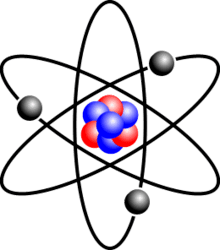
The middle of the atom, which contains protons and neutrons, is called _____.
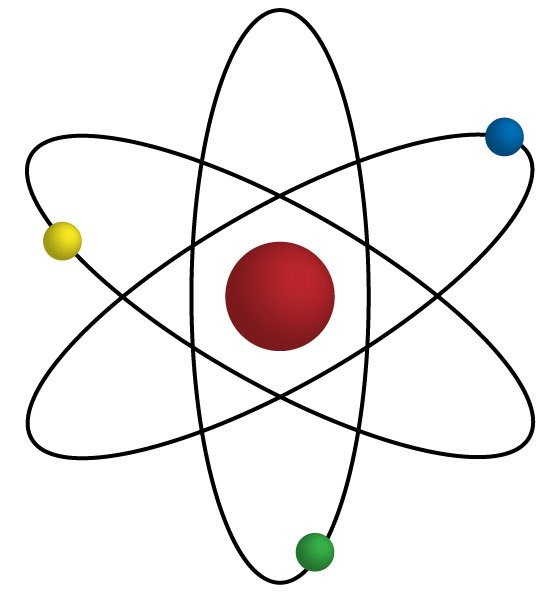
a)
the shell
b)
the nucleus
c)
the cell
d)
the control center
7.
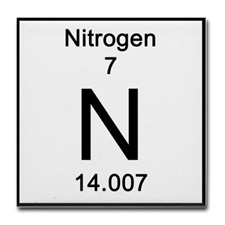
What is the number of protons that the element in this image contain?
a)
14
b)
7
c)
15
d)
18
8.
All matter is made of what?
a)
energy 
b)
atoms 
c)
electrons 
d)
compounds 
9.
What are the 3 particles that make-up the atom?
a)
protons, neutrons, and isotopes
b)
neutrons, isotopes, and electrons
c)
positives, negatives, and electrons
d)
protons, neutrons, and electrons
10.
Compounds are pure substances made from two or more elements chemically combined. What is the name of the illustration that shows all the known elements?
a)
element table
b)
periodic table
c)
star chart
d)
solar system model
11.
A magnet was placed near a pile that contained both iron and sulfur. The magnet was moved gradually closer to the pile. As it neared the pile, the magnet started attracting small pieces of iron from the pile. 
Which of these statements best describes the contents of the pile?
a)
It is a heterogeneous mixture of iron and sulfur that can be separated by magnetism.
b)
It is a solution of iron and sulfur that can be separated by magnetism.
c)
 It is a compound of iron and sulfur that can be separated by magnetism.
d)
It is a suspension of sulfur in iron that can be separated by magnetism.
12.
Of these mixtures, which one is a solution?
a)
A
b)
B
c)
C
d)
D
13.
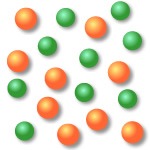
In this picture, which represents atoms?
a)
A
b)
B
c)
C
14.
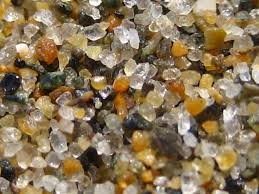
Of these mixtures, which one is a suspension?
a)
A
b)
B
c)
C
15.
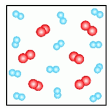
In this picture, which represents an element?
a)
A
b)
B
c)
C
16.
Which of these common substances is a homogeneous mixture? 
a)
table salt
b)
whole milk
c)
pure water
d)
maple syrup
17.
What type of substance is always made up of a single type of atom?
a)
compound
b)
mixture
c)
molecule
d)
element
18.
Muddy water is an example of what type of mixture?
a)
colloid
b)
solution
c)
suspension
d)
homogeneous
19.
Which of these substances is an example of a solution? 
a)
milk
b)
brass
c)
mercury
d)
concrete
20.
Which is the best set of tools to use for separating a mixture of water, sugar, and pebbles?
a)
a filter and a magnet
b)
a filter and a hot plate
c)
a magnet and a hot plate
d)
a settling tank and a filter
21.
What is a homogeneous mixture?
a)
a mixture that is the same throughout.
b)
a mixture that is made up of one type of atom.
c)
a mixture that is made up of one type of compound
d)
a mixture that cannot be separated through physical changes
22.
You are eating a pizza. What type of mixture are you consuming?
a)
homogeneous
b)
heterogeneous
c)
pure substance
d)
The Periodic Table
23.
Formed when atoms are joined together by a chemical bond.
a)
mixture
b)
molecules
c)
electron cloud
24.
A combination of particles of one or more substance that are distributed uniformly throughout another substance is a/an
a)
mixture 
b)
pure substance
c)
solution
d)
elements
25.
Chocolate chip cookie
a)
Pure Substance & Element
b)
Pure Substance & Compound
c)
Mixture & Homogenous
d)
Mixture & Heterogenous
26.
This is a heterogeneous mixture in which particles settle out unless it is constantly stirred.
a)
colloid
b)
suspension
c)
solution
d)
alloy
27.
This is a type of heterogeneous mixture in which the particles are dispersed and do not settle out.
a)
alloy
b)
solution
c)
suspension
d)
colloid
28.
What is an example of a mixture?
a)
iron
b)
ice
c)
soil
d)
gold
29.
Salt and pepper are a(n)
a)
element
b)
compound
c)
mixture
30.
This contains a variety elements and compounds that ARE NOT chemically combined.
a)
Water
b)
Mixture
c)
Elements
d)
Compounds
31.
Can a mixture be separated? 
a)
No
b)
Yes
c)
Only sometimes
32.
Pepsi is a . . .
a)
Heterogeneous mixture
b)
homogeneous mixture
c)
Element
d)
Compound
33.
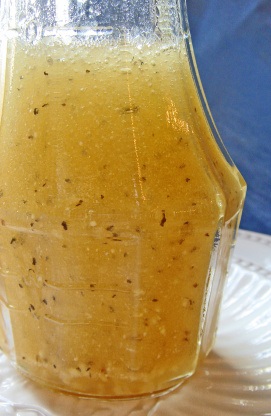
Italian Salad Dressing is a . . .
a)
heterogeneous mixture
b)
homogeneous mixture
c)
Pure Substance
d)
Compound
34.
Which of the following is a mixture?
a)
Sugar
b)
Salt Water
c)
Water
d)
Oxygen
35.
Which of the following is an element?
a)
Sugar
b)
Salt
c)
Water
d)
Oxygen
36.
This is made up of one or more of the SAME kind of atom
a)
Element
b)
Mixture
c)
Compound
d)
Matter
37.
Liquids that are combined together and maintain their physical properties are labeled as a 
a)
solute
b)
mixture
c)
solvent
d)
compound
38.
This picture represents which of the following?
a)
element
b)
compound
c)
mixture
39.
This diagram represents a _____.
a)
pure substance that is a compound
b)
mixture of elements
c)
pure substance that is an element
d)
mixture of compounds
40.
This diagram represents a _____.
a)
pure substance that is a compound
b)
mixture of elements
c)
pure substance that is an element
d)
mixture of compounds
41.
The picture shown here is what type of mixture?
a)
homogeneous
b)
hetergeneous
c)
pure substance
d)
element
42.
What does this picture represent?
a)
element
b)
compound
c)
mixture
43.
What is the atomic number?
a)
the number of protons
b)
the number of protons and neutrons
c)
the number of neutrons
d)
the number of protons and electrons
44.
What is the atomic number of this atom?
a)
1
b)
3
c)
4
d)
7
45.

What is the atomic number of Barium, Ba? (enlarge the periodic table)

a)

20

b)

38

c)

56

d)

88

46.

How many protons are in a sodium atom, Na? (tap to enlarge the periodic table)

a)

Sodium has 1 proton.

b)

Sodium has 3 protons.

c)

Sodium has 11 protons

47.

Atoms of the same element which have a different number of neutrons are called _________________.

a)

ions

b)

isotopes

c)

quarks

d)

molecules

48.

Which subatomic particle has a negative charge in the atom?

a)

proton

b)

neutron

c)

electron

d)

quark

49.

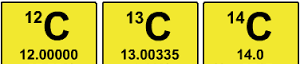
How many neutrons does C-14 contain? (tap to enlarge the image)

a)

6

b)

7

c)

14

d)

8

50.

How many neutrons does C-14 contain? (tap to enlarge the image)

a)

6

b)

7

c)

14

d)

8

51.

How many electrons are in an atom with an atomic number of 50?

a)

5

b)

8

c)

50

d)

2

52.

ALL atoms of the same element have:

a)

same number of proton

b)

same number of nucleon

c)

different number of neutron

d)

different number of electron

53.
What do these isotopes of carbon all have in common?
a)
neutrons & mass number
b)
atomic number and neutrons
c)
atomic number and electrons
d)
protons, atomic number, and mass number
54.
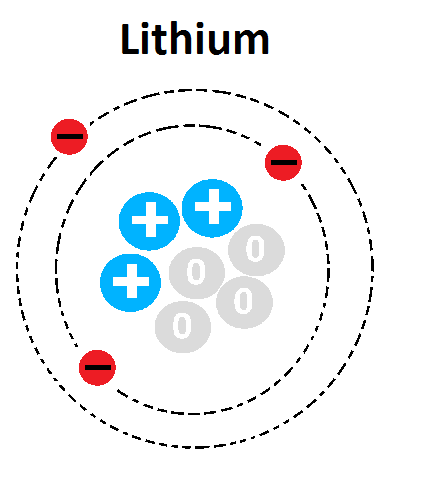
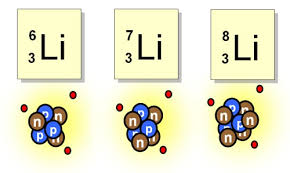
which atom has  4 neutrons?
a)
Li-6
b)
Li-7
c)
Li-8
d)
they have the same # of neutrons
55.

The innermost energy level has a maximum of how many electrons?

a)

1

b)

2

c)

6

d)

8

56.

The atomic number is the same as the:

a)

electrons

b)

neutrons

c)

protons

d)

atomic mass

57.

Look at the image. How many protons does carbon have?

a)

12.011

b)

6

c)

4

d)

5

58.

The atomic number and protons for carbon is 6. Is this true or false?

a)

true

b)

false

59.

Look at the image. What is the atomic number for oxygen?

a)

15.999

b)

16

c)

8

d)

9

60.

Look at the image. What how many protons are in oxygen?

a)

16

b)

7

c)

8

d)

9

61.

True or false. The proton and atomic number for oxygen is 8?

a)

true

b)

false

62.

True or false. The valence electrons is the same as the group number for elements.

a)

false

b)

true

63.

What is the valence electron number for all elements in group 1?

a)

4

b)

3

c)

2

d)

1

64.

Which best explains why the alkali metals are the most reactive group in the periodic table?

a)

They are radioactive.

b)

They have complete outer energy levels.

c)

They have the highest atomic masses of any elements.

d)

They have only one electron in their outer energy level.

65.

Which group have 7 valence electrons?

a)

Halogens

b)

Alkali metals

c)

Noble gases

66.
What is the atomic number of this nucleus?
a)
1
b)
3
c)
4
d)
7
67.
What is the atomic number of this atom?
a)
2
b)
4
c)
6
d)
none of the above
68.
What is the atomic number of this atom?
a)
1
b)
2
c)
3
d)
4
69.
What is the atomic number of this atom?
a)
7
b)
14
c)
21
d)
none of the above
70.
This particle determines what element you have - the elements identity.
a)
electron
b)
proton
c)
neutron
d)
valence shell
71.
Which particle has a positive charge?
a)
electron
b)
orbital
c)
proton
d)
neutron
72.
The atomic number of Hydrogen is
a)
1
b)
2
c)
3
d)
4
73.

An atomic number of 8 means the atom has ___________

a)

8 neutrons

b)

8 protons

c)

16 electrons

d)

88 protons and electrons

74.

An element has an atomic number of 35. How many protons do the atoms contain?

a)

3

b)

35

c)

70

d)

150

75.

Which set of information completes the 2nd row of the chart?

a)

Sulfur; 17; 32

b)

Sodium; 11; 28

c)

Sulfur; 16; 32

d)

Sulfur; 16; 33

76.

Which set of information completes the 3rd row of the chart?

a)

Barium; Ba; 138

b)

Lead; Pb; 82

c)

Barium; Br; 136

d)

Barium; Ba; 56

77.
What is the atomic number of Nickel? (enlarge the periodic table)
a)
110
b)
28
c)
46
d)
78
78.
How many protons are in a sodium atom? (tap to enlarge the periodic table)
a)
Sodium has 1 proton.
b)
Sodium has 3 protons.
c)
Sodium has 11 protons
79.
An element has the mass number 12 and atomic number  6. The number of neutrons in it is:
a)
6
b)
10
c)
4
d)
8
80.
If an atom has 10 electrons, how many protons does it have?
a)
0
b)
1
c)
10
d)
5
81.
How many electrons are in an atom with an atomic number of 50?
a)
5
b)
8
c)
50
d)
2
82.
What subatomic particles would you find in the nucleus of an atom?
a)
Protons only
b)
Protons and Neutrons
c)
Neutrons and Electrons
d)
Protons and Electrons 
83.
Which subatomic particles contribute the most to the mass of an atom?
a)
Protons, Neutrons, Electrons
b)
Protons only
c)
Protons and Electrons
d)
Protons and Neutrons
84.
What is the mass number of this atom?
a)
9
b)
10
c)
19
d)
27
85.
An element with a mass number of 11 and an atomic number of 5 has how many neutrons?
a)
11
b)
5
c)
6
d)
16
86.
Most of the mass of an atom is contained here.
a)
electron orbitals 
b)
nucleus
c)
shells
d)
atomic #
87.
A phosphorus atom has 15 protons and 16 neutrons. What is the mass number?
a)
15
b)
16
c)
31
d)
1
88.
What element has 20 protons? (Use your periodic table.)
a)
Potassium (K)
b)
Calcium (Ca)
c)
Nitrogen (N)
d)
Neon (Ne)
89.
What element has 16 protons? (Use your periodic table.)
a)
Oxygen (O)
b)
Sulfur (S)
c)
Phosphorus (P)
d)
Boron (B)
90.
How many electrons does a neutral atom of Neon have?
a)
10
b)
18
c)
20
d)
30
91.
Which particles are NOT included in the mass number?
a)
Protons
b)
Protons and Neutrons
c)
Electrons
d)
Neutrons
92.
What is true about a neutral atom?
a)
The number of protons equal the number of neutrons
b)
The number of protons equal the number of electrons
c)
The number of neutrons equal the number of electrons
d)
The number of protons, neutrons, and electrons are all different
93.
The nucleus is ____________ charged whereas the electron cloud is ____________ charged. 
a)
negatively, positively
b)
negatively, negatively
c)
positively, positively
d)
positively, negatively
94.
The  mass of an atom is located  in the ___________ and the volume of an atom is made of the ____________
a)
electron cloud, nucleus
b)
electron cloud, energy levels
c)
nucleus, electron cloud
d)
nucleus, neutrons
95.
What is the number of protons that the element in this image contain?
a)
14
b)
7
c)
15
d)
18
96.
How many protons are in this element?
a)
79
b)
196
c)
117
d)
Cannot be determined
97.
What does the 1.00794 stand for?
a)
Hydrogen
b)
atomic number
c)
atomic mass
d)
atomic explosion
98.

How many neutrons does Chlorine have?

a)

18

b)

17

c)

35

d)

52

99.
What number indicates the nucleus?
a)
1
b)
2
c)
3
d)
4
100.
What number indicates an electron?
a)
1
b)
2
c)
3
d)
4
101.
The nucleus of an atom is made of
a)
electrons and protons
b)
electrons and neutrons
c)
protons and neutrons
d)
empty space