
 Worksheets
Chemistry February Review
Total questions: 103
Worksheet time: 5hrs 7mins
In an atom, an orbital represents
the most probably location of a proton
the most probable location of an electron
the least probably location of a neutron
photons emitted as electrons move to lower energy levels
In an atom, an orbital represents
the most probably location of a proton
the most probable location of an electron
the least probably location of a neutron
photons emitted as electrons move to lower energy levels
Which particle has a mass so small, it is considered to be 0 amu?
proton
hydrogen nucleus
neutron
electron

During a flame test, sodium chloride produces an intense yellow flame. This yellow color is produced when electrons in excited atoms
are gained by the atoms
are lost by the atoms
move to higher energy states within the atoms
move to lower energy states within the atoms
What quantity is the same among atoms of the same element?
mass number
atomic number
number of neutrons
number of nucleons
An atom that has 8 protons and 10 neutrons is an isotope of the element
nitrogen
oxygen
fluorine
neon
Which electron configuration represents the atoms of a bromine atom in the excited state?
2-8-18-7
2-8-18-8
2-8-17-8
2-8-18-7-1
Under which conditions does a gas behave least like an ideal gas?
high temperature and low pressure
high temperature and high pressure
low temperature and low pressure
low temperature and high pressure
In an atom, an orbital represents
the most probably location of a proton
the most probable location of an electron
the least probably location of a neutron
photons emitted as electrons move to lower energy levels
During a flame test, sodium chloride produces an intense yellow flame. This yellow color is produced when electrons in excited atoms
are gained by the atoms
are lost by the atoms
move to higher energy states within the atoms
move to lower energy states within the atoms
An atom that has 8 protons and 10 neutrons and 6 electrons is an ion of the what element?
nitrogen
oxygen
fluorine
neon
What part of the atom determines the identity of an atom?
Electrons
Neutrons
Protons
Nucleus
Which scientist discovered the electrons?
Dalton
Thomson
Atristotle
Bohr
Rutherford and his students did experiments that showed
quark
nucleus
proton
electron
Bohr discovered that electrons are located in
the nucleus
inside protons
electron cloud
circular orbits around the nucleus
What is the charge of a neutron?
+1
-1
0
+2
Which scientist is known for the discovery of the nucleus?
Bohr
Rutherford
Thomson
Dalton
An atom that has 7 protons, 7 neutrons and 10 electrons is an ion of what element?
Nitrogen
Oxygen
Fluorine
Neon
The elements on the Periodic Table are arranged in
order of increasing
atomic mass
atomic number
molar mass
oxidation number
Which term represents the strength of the attraction an
atom has for the electrons in a chemical bond?
electrical conductivity
electronegativity
first ionization energy
specific heat capacity
Which term represents the amount of energy required
to remove the most loosely bound electron from an
atom in the gaseous state?
atomic radius
electronegativity
First ionization energy
electrical conductivity
As the elements in Period 2 of the Periodic Table are
considered in order from left to right, which property
generally decreases?
atomic radius
electronegativity
ionization energy
nuclear charge
Which sequence correctly places the elements in order
of increasing ionization energy?
H -> Li -> Na -> K
I -> Br -> Cl -> F
O -> S -> Se -> Te
H -> Be -> Al -> Ga
In a given period of the Periodic Table, the element
with the lowest first ionization energy is always in
Group 1
Group 2
Group 17
Group 18
Which of these elements has physical and chemical
properties most similar to silicon (Si)?
germanium (Ge)
lead (Pb)
phosphorus (P)
chlorine (Cl)
As the atomic number of elements within Group 2
increases, the metallic character of each successive
element
decreases
increases
remains the same
How much energy is required to remove the most
loosely bound electron from a neutral atom of neon
in the gaseous phase?
363 kJ
441 kJ
1086 kJ
2081 kJ
Which atom has the greatest attraction for the
electrons in a chemical bond?
hydrogen
oxygen
silicon
sulfur
Which element is a noble gas?
Argon
chlorine
hydrogen
magnesium
The element helium is classified as a
metal
metalloid
noble gas
An atom of which element has the largest atomic
radius?
Fe
Mg
Si
Zn


What is the atomic number?
the number of protons in the nucleus
the number of protons and neutrons in the nucleus
the number of neutrons in the nucleus
the number of protons in the energy levels
What is the mass number?
the number of protons in the nucleus
the number of protons and neutrons in the nucleus
the number of neutrons in the nucleus
the number of protons and electrons in the atom
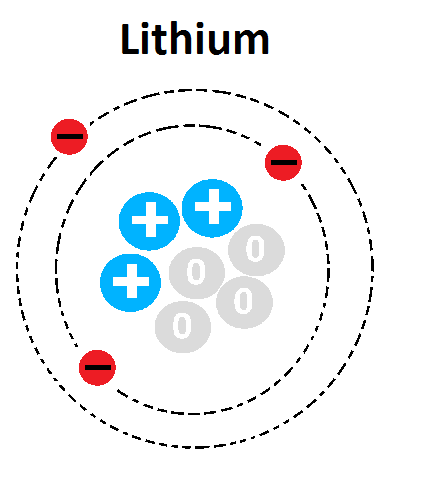
What is the atomic number of this atom?
1
3
4
7
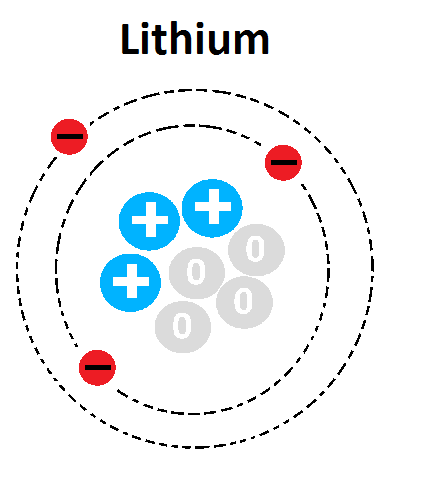
What is the mass number of this atom?
1
3
4
7
Who discovered that the atom had an small, dense, positively charged center?
Ernest Rutherford
J.J Thomson
Robert Millikan
John Dalton
Place the following atomic models in order, from earliest to latest:
A) Rutherford B) Thomson C) Dalton
B, C, A
C, A, B
A, C, B
C, B, A
The bonds in BaO are best described as
covalent, because valence electrons are shared
covalent, because electrons are transferred
ionic, because valence electrons are shared
ionic because electrons are transferred
Which property best accounts for the conductivity of metals?
the relatively high first ionization energy
the malleability of most metals
the free electrons in the valence energy levels
the filled inner electron energy levels

The results of these tests suggest that
both solids contain only ionic bonds
both solids contain only covalent bonds
Solid A contains only covalent bonds and solid B contains only ionic bonds
Solid A contains only ionic bonds and solid B contains only covalent bonds
The bond between which two atoms is most polar?
H-O
F-F
C-O
N-H
Which phrase describes the distribution of charge and the polarity of a CH4 molecule?
symmetrical and polar
symmetrical and nonpolar
asymmetrical and polar
asymmetrical and nonpolar
Based on bond type, which compound has the highest melting point?
CH3OH
C6H14
CaCl2
CCl4
Which element consists of positive ions immersed in a "sea" of mobile electrons?
Sulfur
Nitrogen
Calcium
Chlorine
Which substance contains bonds that involved the transfer of electrons from one atom to another?
KBr
CO2
Cl2
NH3
Which statement best describes the substance that results when electrons are transferred rom a metal to a nonmetal?
It contains covalent bonds and has a high melting point
It contains covalent bonds and has a low melting point
It contains ionic bonds and has a low melting point
It contains ionic bonds and has a high melting point
A substance that does not conduct electricity as a solid but does conduct electricity when melted is most likely classified as
an ionic compound
a nonmetal
a metal
a molecular compound
Which substance is an electrolyte?
C6H12O6
KOH
H2O
CH3OH
A covalent bond forms when atoms
share neutrons
transfer electrons
share electrons
transfer neutrons
How many valence electrons does nitrogen have?
2
3
4
5

Look at the electron dot diagram in the picture. The electron in the bond between hydrogen and fluorine are more strongly attracted to the atom of
hydrogen, which has the higher electronegativity
hydrogen, which has the lower electronegativity
fluorine, which has the higher electronegativity
fluorine, which has the lower electronegativity
The bond between a diatomic nitrogen molecule (N2) is best described as
polar with a triple bond
polar with a double bond
nonpolar with a triple bond
non polar with a double bond
H2 + Cl2 ➔ 2HCl
As energy is released during the formation of a
bond, the stability of the chemical system generally
will
decrease
increase
stay the same
Which particles may be gained, lost, or shared
by an atom when it forms a chemical bond?
protons
nucleons
electrons
neutrons
When a sodium atom reacts with a chlorine
atom to form a compound, the electron
configurations of the ions forming the compound
are the same as those in which noble gas atoms?
krypton and neon
krypton and argon
neon and argon
neon and helium
Which is the correct electron-dot formula for
a molecule of chlorine?


Determine whether Al(OH)3 is soluble using Table F
Soluble
Insoluble
A mixture with more solute dissolved in the solvent than is usually soluble is called:
concentrated
supersaturated
saturated
unsaturated
When you have added as much solute as can dissolve in the solvent, the solution is called:
concentrated
supersaturated
saturated
unsaturated
Identify the solvent
Solubility refers to the ____ of solute that can dissolve in a certain volume or mass of solvent, at a certain temperature.
Mean
Range
Amount
Mode
What is the molarity of a 0.5L sample of a solution that contains 60.0 g of sodium hydroxide (NaOH)
0.8 M
1.5M
3.0M
6.0M
Which of the following is the correct formula for calculating molarity?
moles/liters of solution
moles/kg of solvent
# particles/Avogadro's #
theoretical yield/actual yield
A dilution is when
solute is added to the volume of solution
water is added to the volume of solution
solute is removed from the volume of solution
water is removed from the volume of solution
What volume, in milliliters, of 10.0 M NaOH is needed to prepare 300.0 mL of 2.00 M NaOH by dilution?
0.067 mL
60.0 mL
100 mL
125 mL
Based on Table S, an atom of which element has the strongest attraction for electrons in a chemical bond?
Aluminum
Chlorine
Magnesium
Sulfur
Which diatomic molecule is formed when two atoms share six electrons?
H2
O2
N2
F2
Which symbol represents an atom in the ground state with the most stable electron configuration?
B
O
Li
Ne
Which compound has the least ionic character?
KBr
HF
MgO
BrCl
The bonds in BaO are best described as
covalent, because valence electrons are shared
covalent, because electrons are transferred
ionic, because valence electrons are shared
ionic because electrons are transferred
Which property best accounts for the conductivity of metals?
the relatively high first ionization energy
the malleability of most metals
the free electrons in the valence energy levels
the filled inner electron energy levels
The results of these tests suggest that
both solids contain only ionic bonds
both solids contain only covalent bonds
Solid A contains only covalent bonds and solid B contains only ionic bonds
Solid A contains only ionic bonds and solid B contains only covalent bonds
The bond between which two atoms is most polar?
H-O
F-F
C-O
N-H
Which phrase describes the distribution of charge and the polarity of a CH4 molecule?
symmetrical and polar
symmetrical and nonpolar
asymmetrical and polar
asymmetrical and nonpolar
Based on bond type, which compound has the highest melting point?
CH3OH
C6H14
CaCl2
CCl4
The liquids hexane and water are placed in a test tube. The test tube is stoppered, shaken, and placed in a test tube rack. The liquids separate into two distinct layers because hexane and water have different
formula masses
molecular polarities
pH values
specific heats
What is the chemical formula for ammonium sulfide?
(NH4)2S
(NH4)2SO3
(NH4)2SO4
(NH4)2S2O3
What is the name of PbO2
Lead Oxide
Lead (II) Oxide
Lead (IV) Oxide
Lead Hydroxide
Which element consists of positive ions immersed in a "sea" of mobile electrons?
Sulfur
Nitrogen
Calcium
Chlorine
Which formula represents a tetrahedral molecule?
CH4
CaCl2
HBr
Br2

