
Font size
 Worksheets
S3 Revision (PTAA, Rates, Formula & Acids)
Total questions: 87
Worksheet time: 4hrs 21mins
What elements are represented in this chemical formula? Fe2O3
Iron, oxygen
Ferrium, oxygen
Francium, europium, oxygen
Beryilium, oxygen
Which of the following elements is least likely to form a compound?
Hydrogen
Argon
Sodium
Potassium
Which one is the odd one out?
sodium
carbon
glucose
gold
Is this an element or a compound? CaSO4
Element
Compound
What is the name of CuSO4 ?
Copper sulfide
Copper sulfate
Carbon sulfate
Copper nitrate
Aluminium oxide
Al2O
AlO2
Al2O3
Al3O2
Barium chloride
BaCl
Ba2Cl
BaCl2
Ba2Cl3
Iron (II) sulphide
FeS
Fe2S
FeS2
Fe2S3
Match the following terms to their definition
Made up of only one type of atom
Element
More than one type of atom sharing the same space but not joined together
Mixture
Two or more atoms chemically bonded together
Compound
Label where we find metals and non-metals on the periodic table
Metals
Non-metals
Where can the alkali metals be found?
Where can the halogens be found?
The elements are arranged in the periodic table depending on their chemical and physical properties. A column is called a (a) and is a family of elements with (b)
properties.
Which element has the atomic number 79?
What is the atomic number of Iodine?


The relative mass of a proton is...
Negligible
1
0
-1
The atomic number of an element is the number of (a) . The mass number of an element is the number of protons + the number of (b) . In an element the number of protons is equal to the number of (c) so the overall charge on the element is (d) .
Label the parts of nuclide notation
Number of electrons
Element symbol
Atomic number
Mass number
How many protons are in each of the following:

6
Aluminium
13

92
Barium
56
Isotopes are atoms of the same element with different ____________.
Number of Neutrons & Mass Number
Number of Protons & Atomic Number
Number of Protons, Neutrons, and Electrons
Number of Electrons & Mass Number

Carbon-14 has ____ protons, ____ electrons, and _____ neutrons.
6, 6, 8
6, 6, 6
6, 6, 14
6, 10, 14
An atom of phosphorus has an atomic number of 15 and a mass number of 31. How many neutrons does it contain?
15
16
31
46
What is the electron arrangement of calcium?
(a)
Sort the substances into the right headings
Lemon Juice
Vinegar
Water
Salt Solution
Oven Cleaner
Bleach
An acid has a pH of (a) 7
An alkali has a pH of (a)
7
Match the following gases with their test and result
Carbon Dioxide
Turns limewater cloudy
Hydrogen
Burns with a squeaky pop
Oxygen
Relights a glowing splint
Which of the following gases would dissolve to produce acid rain? There are 3 correct answers
Sulfur dioxide
Nitrogen dioxide
Carbon dioxide
Hydrogen dioxide
Helium dioxide
Which list of salts are all insoluble in water?
Lead sulfate, copper carbonate, silver chloride
Copper sulfate, sodium carbonate, potassium chloride
Sodium sulfate, ammonium carbonate, magnesium chloride
Potassium sulfate, potassium carbonate, copper chloride
What is the name of a chemical, that changes colour in different pH solutions?
Acid
Alkali
Water
Indicator
Which one of these is a salt?
Sulphuric acid
Water
Sodium Chloride
Sodium hydroxide
A carbonate reacts with an acid to form what gas?
(a)
When mixed with water, insoluble metal oxides e.g. CuO or ZnO make a (a) solution
Complete this equation:
sulfuric acid + potassium hydroxide -->
potassium oxide + hydrogen
potassium chloride + water
potassium sulfate + hydrogen
potassium sulfate + water
Sulphuric acid produces (a) salts
Chloride
Nitrate
Carbonate
Hydrochloric acid produces (a) salts
Nitrate
Sulphate
Carbonate
Nitric acid produces (a) salts
Chloride
Sulphate
Carbonate
Solutions that have more OH– ions than H+ ions are
acidic
alkaline
spectator ions
neutral
Solutions that have more H+ ions than OH- ions are
acidic
alkaline
spectator ions
neutral
When mixed with water, insoluble metal oxides e.g. CuO or ZnO make a (a)
solution
Acidic
Alkaline
When mixed with water, soluble metal oxides e.g. K2O , Na2O , Li2O make a (a)
solution
Acidic
Neutral
What happens to the pH of an acid during neutralisation?
It stays the same
It moves toward pH 1
It moves towards pH 7
It moves towards pH 14
An element was burned in air. The product was added to water, producing a solution with a pH less than 7. The element could be
Tin
Zinc
Sulfur
Sodium
Sodium sulfate solution reacts with barium chloride solution.
Na2SO4(aq) + BaCl2(aq)⟶ 2 NaCl (aq)+ BaSO4 (s)
The spectator ions present in this reaction are
Na+ and Cl−
Na+ and SO42−
Ba and Cl
Ba and SO4

A
B
C
D
Which of the following oxides, when shaken with water, would give an alkaline solution?
Calcium oxide
Nickel Oxide
Nitrogen dioxide
Sulfur dioxide
Ions that appear in the same state on both sides of the reaction equation that don't react are called
(a)
Complete the following word equation:
Metal carbonate + acid -->
Salt + Hydrogen
Salt + Water + Carbon Dioxide
Salt + Water
What does the word insoluble mean?
Does dissolve
Doesn't dissolve
Is part of a solid
Which salt would be formed by reacting cobalt carbonate and hydrochloric acid?
Cobalt sulfate
Cobalt chloride
Cobalt hydroxide
Cobalt sulfide
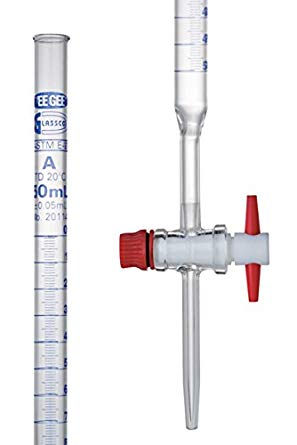
What is this piece of apparatus called
Pipette
Burette
Janette
Cuvette

What is this piece of apparatus called
Pipette
Burette
Janette
Cuvette
What is the name of CuSO4 ?
Copper sulfide
Copper sulfate
Carbon sulfate
Copper nitrate
What is the name of CuO?
Copper oxide
Copper oxygen
Copper oxate
Copper
What is the chemical formula for ammonium phosphate
What do Roman Numerals represent in the name of a compound?
The number of atoms
The oxidation number of the anion
The valency of the transition metal
The coefficient needed to balance the equation
Sort the following substances into the correct headings
Sodium chloride
Lithiun nitrate
Potassium sulfate
Sodium Hydroxide
Lithium carbonate
potassium oxide
Hydrochloric acid
nitric acid
sulfuric acid
Ethanoic acid
Label the pH scale to show each type of substance
Acid
Alkali
Neutral
What can be measured to follow the progress of chemical reactions?
Temperature
Mass
Volume
All of the above
Which factor can increase the rate of a chemical reaction?
Decreasing surface area
Decreasing concentration of a reactant
Increasing temperature
Using a catalyst
What are catalysts?
Substances that slow down chemical reactions
Substances that speed up chemical reactions
Substances that change chemically during a reaction
Substances that have no effect on chemical reactions
How can the average rate of a chemical reaction be calculated?
By measuring the quantity of product
By measuring the quantity of reactant used
By measuring the change in mass
All of the above
What happens to the rate of a reaction over time?
It remains constant
It increases
It decreases
It fluctuates
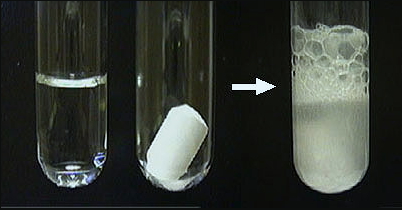
How could we make this reaction happen more quickly?
Decrease the concentration of the acid
crush the chalk to increase the surface area
Put the test tube in an ice bath
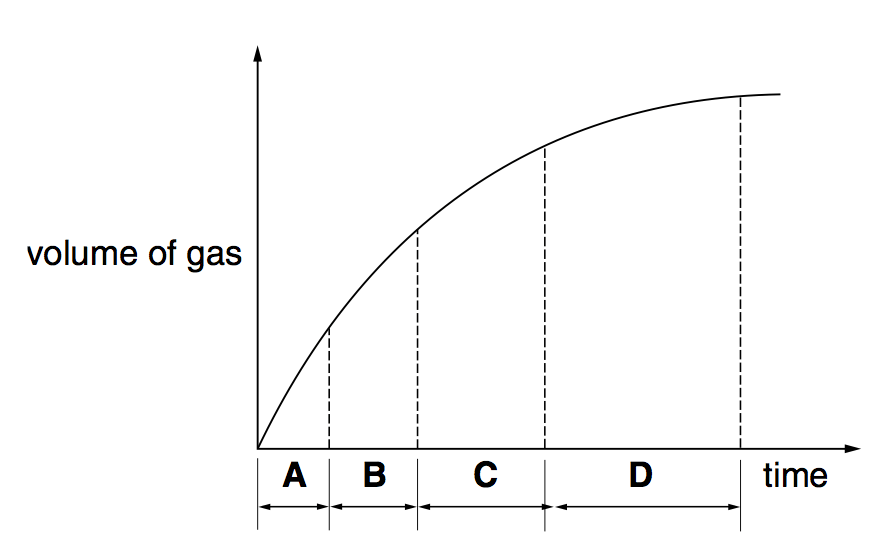

The mass of zinc used in Experiment 1 was 1.00 g. What mass the mass of zinc used in Experiment 3?
0.50 g
1.00 g
2.00 g
3.00 g

100
5
4
0.25
In an endothermic reaction, heat is_____
taken in
given out
In an exothermic reaction, heat is_____
taken in
given out
A temperature increase causes the particles to ______
slow down
move faster
collide less
collide slower
Grinding a tablet into powder increases the rate of reaction due to increased_____
concentration
surface area
temperature
catalyst
Select ALL factors that increase the rate of a reaction?
increasing temperature
increasing concentration
increasing surface area
increasing particle size
adding a catalyst


Charlotte, James, and Amelia are studying the average growth rate of a plant species over five days: 15mm, 18mm, 20mm, 22mm, and 25mm. What is the average growth rate?
20mm
21mm
22mm
23mm
A biologist recorded the time it took for a plant to complete four different growth stages. The first stage took 12 days, the second stage took 15 days, the third stage took 14 days, and the fourth stage took 13 days. What was the average time per growth stage?
13.5
13
14
14.5

