

wayground logo

Free Printable Worksheets

Font size

S
M
L
XL
Worksheets

Physical Science Midterm Review

Total questions: 151

Worksheet time: 3hrs 4mins

Name
Class
Date
1.
Atomic Radius is...
a)
the relative size of the atom's nucleus
b)
the relative size of the atom's electron cloud
c)
the energy required to shield the outer electrons from the nucleus
d)
a measure of the ability of an atom to attract electrons
2.
As you move down the periodic table atoms get bigger.  This is because ____________.
a)
The atoms have more mass.
b)
The atoms have more protons.
c)
The atoms have more energy levels
d)
The atoms have more nuetrons
3.
Which atom has the largest atomic radius?
a)
potassium
b)
rubidium 
c)
francium
d)
cesium
4.
The atom with the largest atomic radius in Group 18 is - 
a)
Ar
b)
He
c)
Kr
d)
Rn
5.
Ionization energy is...
a)
the energy required to add an electron to a specific atom
b)
how much energy it takes to remove an electron from an atom
c)
the energy required to shield the outer electrons from the nucleus
d)
a measure of the ability of an atom to attract electrons
6.
Which of the following will have a higher ionization energy than arsenic (As)?
a)
Gallium (Ga)
b)
Neon (Ne)
c)
Antimony (Sb)
d)
Germanium (Ge)
7.
What term is used to describe "The energy required to remove an electron from gaseous atoms"
a)
excitation energy
b)
ionization energy
c)
polarization energy
d)
electrolytic energy 
8.
What term is used to describe "A measure of the size of an atom"
a)
chemical reactivity
b)
atomic radius
c)
energy levels
d)
orbit
9.

What is water ( H2OH_2O  ) ?

a)

Element

b)

Compound

c)

Mixture

10.

What is water ( H2OH_2O  ) ?

a)

Element

b)

Compound

c)

Mixture

11.

What is table salt (NaCl)?

a)

Element

b)

Compound

c)

Mixture

12.

What is soda?

a)

Element

b)

Compound

c)

Mixture

13.

What is salt water?

a)

Element

b)

Compound

c)

Mixture

14.

What is salad dressing?

a)

Element

b)

Compound

c)

Mixture

15.

What is Carbon (C)?

a)

Element

b)

Compound

c)

Mixture

16.

What is sodium bicarbonate (NaHC O3O_3  )?

a)

Element

b)

Compound

c)

Mixture

17.

What is iron (Fe)?

a)

Element

b)

Compound

c)

Mixture

18.

What is air?

a)

Element

b)

Compound

c)

Mixture

19.

What is Copper (Cu)?

a)

Element

b)

Compound

c)

Mixture

20.

What are eggshells (CaC O3O_3  )?

a)

Element

b)

Compound

c)

Mixture

21.

What is a compound?

a)

A substance that is made up of one type of atom and cannot be reduced to a simpler substance

b)

A material that has two or more elements or compounds that are in close contact and are mixed in any proportion. They can be separated by physical means.

c)

A substance made of two ore more different atoms that are chemically bonded to one another. They can only be destroyed by chemical processes.

22.

What is an element?

a)

A substance that is made up of one type of atom and cannot be reduced to a simpler substance

b)

A material that has two or more elements or compounds that are in close contact and are mixed in any proportion. They can be separated by physical means.

c)

A substance made of two ore more different atoms that are chemically bonded to one another. They can only be destroyed by chemical processes.

23.

What is a mixture?

a)

A substance that is made up of one type of atom and cannot be reduced to a simpler substance

b)

A material that has two or more elements or compounds that are in close contact and are mixed in any proportion. They can be separated by physical means.

c)

A substance made of two ore more different atoms that are chemically bonded to one another. They can only be destroyed by chemical processes.

24.

What is Aluminum (Al)?

a)

Element

b)

Compound

c)

Mixture

25.
Is this equation balanced?
a)
yes
b)
no
c)
Not enough information
d)
Left side is balanced
26.
Fill in the blanks with coefficient:
PCl5+_ H2O→_ HCl+H3PO4
a)
4, 5
b)
1, 6
c)
3, 8
d)
2,2
27.
Balance this equation
_Zn+_HCl-->_ZnCl+_H2
a)
1,1,2,1
b)
1,1,1,2
c)
1,2,1,1
d)
2,1,1,1
28.
Balance this equation.
_Mg + _Cl--> _MgCl2
a)
1, 2,1
b)
already balanced
c)
2,1,1
d)
1,1,2
29.
Balance this equation
_N+ _H--> _NH3
a)
1,2,3
b)
1,3,2
c)
1,1,2
d)
2,1,1
30.
How many atoms of aluminum are on each side of the following equation: 4Al + 3O--> 2AlO3
a)
2
b)
6
c)
1
d)
4
31.
At the end of chemical reactions, what is the total mass of the reactants compared to the total mass of the products?
a)
the product is doubled
b)
the product is half the mass of the reactants
c)
the mass is the same
d)
the mass changes depending on the reaction
32.
N2 + H2 = NH4
a)
Balanced
b)
Unbalanced
33.
What does the Law of Conservation of Mass state?
a)
Matter cannot be gained or lost in a chemical reaction.
b)
Matter can only be lost in a chemical reaction.
c)
Matter can only be gained in a chemical reaction.
d)
Matter can be gained and lost in a chemical reaction. 
34.
Name the part in red:

H2 + O2 -> H2O
a)
Coefficient
b)
Product
c)
Yield
d)
Subscript
35.
Name the part in red:

_2_H+ _1_O2 -> _2_H2O
a)
Coefficient
b)
Product
c)
Yield
d)
Subscript
36.
Name the part in red:

H+ O2 -> H2O
a)
Coefficient
b)
Product
c)
Reactant
d)
Subscript
37.
Name the part in red:

H+ O-> H2O
a)
Coefficient
b)
Product
c)
Reactant
d)
Subscript
38.
Which number should go in the blank?
_ H2 + O2 -> 2 H2O
a)
1
b)
2
c)
3
d)
0
39.
Is this balanced?
Al + O2 → 2Al2O3
a)
Yes
b)
No
40.

What is the arrow in a chemical equation...

H2 + O2 --> H2O

a)

Reactants

b)

Products

c)

Yields

d)

Chemical Equation

41.
Which problem is balanced?
a)
PbO2 + 2H2
b)
SO2 + H20 --> H2SO4
c)
2Na + 2H2O --> 2NaOH + H2
42.
Balance this equation:
MgCl2 --> Mg4+ Cl2
a)
It's already balanced.
b)
4MgCl2 --> Mg4+ 4Cl2
c)
4MgCl2 --> Mg4+ 5Cl2
43.
Balance this equation:
FeS + 2HCl -->
FeCl2 + H2O
a)
FeS2 + 2HCl --> FeCl2 + H2O
b)
It's already balanced
c)
FeS2 + 2HCl --> FeCl2 + H4O
d)
None of these
44.
Balance this equation:
 2Li + Cl2 -> LiCl
a)
2Li + Cl2 -> 4LiCl2
b)
2Li + Cl2 -> LiCl2
c)
2Li + Cl2 -> 2LiCl
45.

Where are metals located on the periodic table?

a)

Blue

b)

Orange

c)

Yellow

d)

Red

46.

Ionic Bonds

a)

Non metal and non metal

b)

Metal and non metal

47.

Cl2

a)

Covalent Bond

b)

Ionic Bond

48.

The positive ions tend to _____________ electrons.

a)

Share

b)

Lose

c)

Gain

d)

Neutral

49.

Where are the metalloids located on the periodic table? 

a)

Blue

b)

Green

c)

Orange

d)

Red

50.

Ionic bonds form between two ions that have...

a)

Positive Chargers

b)

negative charges

c)

Same Charges

d)

Opposite Charges

51.

How does calcium become a calcium ion?

a)

Lose 2 electrons

b)

Gain 2 electrons

c)

Lose 1 electron

d)

Gain 1 electron

52.

How does oxygen become an oxide ion?

a)

Lose 2 electrons

b)

Gain 2 electrons

c)

Lose 1 electron

d)

Gain 1 electron

53.

An electron has what kind of charge?

a)

equal charge

b)

no charge

c)

negative charge

d)

positive charge

54.

What is the ionic compound that is formed when you combine Li+ and N-3 ions? LiN3

a)

LiN

b)

LiN3

c)

Li3N2

d)

Li3N

55.

Is hydrogen considered a metal or a non-metal or metalloid

a)

non-metal

b)

metal

c)

metalloid

56.

What does the 6 represent?

a)

Atomic mass

b)

Atomic number

c)

Isotope

d)

Atomic Symbol

57.

Electrons located on the outermost shell are called _________ electrons

a)

Hybrid

b)

Atomic

c)

Neutral

d)

Valence

58.

Atoms form bonds with other atoms in order to be ______

a)

Happy

b)

Stable

c)

Not Happy

d)

Friends

59.

The valence shell corresponds to this grouping on the periodic table?

a)

The Groups

b)

The Periods

c)

Ionic compounds

d)

Molecular compounds

60.
Name the following ionic compound: BeCl2
a)
beryllium chlorine
b)
beryllium II chloride
c)
beryllium chloride
d)
beryllium dichloride
61.
What is the correct formula for the compound, lithium oxide?
a)
LiO
b)
Li2O
c)
LiO2
d)
Li2O2
62.
What is the formula for manganese(III) oxide?
a)
MgO
b)
Mg2O3
c)
MnO
d)
Mn2O3
63.
The formula of calcium phosphate is 
a)
CaPO4
b)
Ca2(PO4)3
c)
Ca3PO4
d)
Ca3(PO4)2
64.
What is the name of Al(NO3)3?
a)
Aluminum trinitrate
b)
Monoaluminum nitrate
c)
Aluminum (III) nitrate
d)
Aluminum Nitrate
65.
Name the following ionic compound: Cr(NO2)3
a)
chromium nitrite
b)
chromium nitride
c)
chromium III nitride
d)
chromium III nitrite
66.
What is the name of N2O3
a)
Nitrogen trioxide
b)
Dinitrogen oxide
c)
Dinitrogen trioxide
d)
Nitrogen oxide
67.
What is the chemical formula for Tetrasulfur pentoxide?
a)
SO
b)
S4O
c)
S4O5
d)
S5O4
68.
What is the name of C3Cl?
a)
Carbon octachloride
b)
Tricarbon octachloride
c)
Carbon trichloride
d)
Octacarbon trichloride
69.

What is the name of Br6F10 ?

a)

Bromium fluoride

b)

Hexabromine fluoride

c)

Bromium decafluoride

d)

Hexabromine decafluoride

70.
What is the name of CO
a)
Carbon oxide
b)
Carbon dioxide
c)
Carbon monoxide
d)
Carbon II oxide
71.
What is the name of S2Br6?
a)
sulfur hexabromide
b)
disulfur hexabromine
c)
disuflur hexabromide
d)
disulfur pentabromide
72.
The correct name of Cu₃N₂ is
a)
copper (III) nitride
b)
copper (II) nitride
c)
copper nitride
d)
tricopper dinitride
73.
Roman numerals tell you the ____ of the metal cation(s) in an ionic compound.
a)
number
b)
mass
c)
type
d)
charge
74.
True or false: When naming ionic compounds, use prefixes to indicate subscripts
a)
True
b)
False
75.
Ionic compounds are written with
a)
cation (+ ion) first then anion (- ion)
b)
anion (- ion) first then cation (+ ion)
c)
either way is fine
d)
polyatomic ions first
76.

zinc (I) fluoride

a)
ZnF2
b)
ZnF
c)
Zn2F
d)
Zn2F4
77.
ammonium phosphate
a)
(NH4)3PO4
b)
NPO4
c)
NH4PO4
d)
NH4(PO4)3
78.
The formula for copper (II) hydroxide is
a)
Cu(II)OH
b)
Cu(OH)2
c)
Cu2OH
d)
CuOH2
79.
The chemical formula for tin (IV) oxide is written
a)
Sn2O4
b)
Ti2O4
c)
SnO2
d)
TiO2
80.

A substance that can be observed without changing the identity of the substance is called

a)

molecule

b)

chemical property

c)

physical property

81.

Freezing is what happens when

a)

a liquid changes to solid

b)

gas changes to liquid

c)

solid changes to liquid

82.

All matter is made up small particles called

a)
molecules
b)
cells
c)
atoms
83.

A chemical change happens when

a)
the physical state of a substance changes.
b)

elements or compounds combine to form a new substance.

c)
the color of a substance changes.
84.

A compound is formed by

a)

combining atoms from different elements

b)
two or more elements mix together
c)
two or more elements separate
85.

Melting happens when

a)

solids turn into liquids

b)

liquids turn into gas

c)
addition of water
86.

Condensation happens when

a)

gas changes to liquid.

b)

liquid changes to gas.

c)

water vapor changes to ice

87.

A change in matter that does not form a new substance is

a)

physical change

b)

chemical change

c)

physical property

88.

The process of a liquid changing to gas is called

a)
condensation
b)
melting
c)

vaporization

89.

Solubility is the ability to

a)
evaporate in a solvent
b)
react with a solvent
c)
dissolve in a solvent
90.

Match the following

a)

gas

1.

no definite shape or volume

b)

liquid

2.

no definite shape, definite volume

c)

solid

3.

definite shape and volume

91.

Match the following

a)

mass

1.

amount of material in a substance

b)

matter

2.

substance that has both mass and volume

c)

mixture

3.

2 substances physically combined

d)

volume

4.

amount of space an object takes up

92.

Match the following

a)

Graduated container

1.

Measures liquids

b)

Balance

2.

Measures mass

c)

Water displacement

3.

Can measure irregularly shaped objects

93.

Which is a Chemical change?

a)
Burning of wood
b)
Melting of ice
c)
Cutting a piece of paper
94.

Which is a physical change?

a)
Mixing salt and water
b)
Burning wood
c)

Cutting paper with scissors

95.

_____ can be a solid, liquid, or gas.

a)

Volume

b)

Mass

c)
Matter
96.

The definition of Weight is

a)
The measure of the force of gravity on an object.
b)
The amount of food consumed by an organism.
c)
The distance between two points.
97.

The definition of Mass is

a)

The temperature of an object.

b)

The force of gravity on an object.

c)

The amount of matter in an objects.

98.

Match the following

a)

Atom

1.

Smallest particle that makes up matter.

b)

Element

2.

Matter containing only one type of atom

c)

Molecules

3.

Atoms join together to form new particle

d)

Compounds

4.

Combined atoms from different elements

99.

Match the following

a)

Solute

1.

Substance dissolved in a solution

b)

Solvent

2.

Substance that dissolves the solute

c)

Solution

3.

Substances evenly spread in mixture

100.
Baking is pretty much just ___
a)
astronomy
b)
chemistry
c)
biology
d)
physics
101.
The science of different kinds of matter, and how that matter can change, is called ___
a)
physics
b)
baking
c)
chemistry
d)
biology
102.
Anything made by combining two or more different things is called ___
a)
a solvent
b)
a solution
c)
a chemical change
d)
a mixture
103.
Both baking and chemistry require careful ___
a)
tasting and measuring
b)
timing and heating
c)
tasting and heating
d)
timing and measuring
104.
In a chemical change,  particles that make up two or more substances are rearranged to ___
a)
form a mixture
b)
form a new substance
c)
mix into a solid
d)
mix into a solution
105.
Unlike the mixtures from our picnic, chemical changes usually ___
a)
can't be eaten
b)
can't be undone
c)
involve only two things
d)
can be seperated
106.
Which of these is NOT an indicator of a chemical change?
a)
a change in color
b)
giving off or taking in of heat
c)
the release of gases
d)
a change in shape
107.
Data that supports or disputes a scientific idea is called ___
a)
guesses
b)
evidence
c)
a theory
d)
a hypothesis
108.
All the little holes in the spongy-looking cake were caused by ___
a)
liquid oxygen
b)
oxygen gas
c)
carbon dioxide gas
d)
frozen carbon dioxide
109.
Change in color, release of smell or light, and giving off heat are indicators of ___
a)
a nuclear change
b)
a physical change
c)
a chemical change
d)
a state change
110.

Precipitate forms when a chemical reaction happens between two liquids

a)

True

b)

False

111.

What are some examples of physical properties of matter?​ ​ (a)   ​ (b)   ​ (c)   ​ (d)  

Choose from the below words
solubility
melting point
hardness
density
flammability
reacts with air
112.

What are some indicators that a chemical reaction has occured?

a)
Change in sound
b)
Formation of a solid
c)
Color change, formation of a precipitate, release of gas, change in temperature
d)
Increase in pressure
113.

What do you find the density of an object?

a)
By multiplying the mass of the object by its volume
b)
By adding the mass of the object and its volume
c)
By subtracting the mass of the object from its volume
d)
By dividing the mass of the object by its volume.
114.

What is the density of water?

a)
0.5 g/cm³
b)
100 g/cm³
c)
10 g/cm³
d)
1 g/cm³
115.

What does concentration of a solution mean?

a)
The color of the solution
b)
The temperature of the solution
c)
The viscosity of the solution
d)
Amount of solute present in a given quantity of solvent or solution
116.

What is a heterogeneous mixture?

a)
A mixture of two or more substances that are easily separated
b)
A combination of two or more substances that are not uniformly distributed
c)
A combination of two or more substances that are chemically combined
d)
A mixture of two or more substances that are uniformly distributed
117.

What is a compound?

a)
A type of plant
b)
A type of musical composition
c)
A type of clothing material
d)
A substance formed when two or more chemical elements are chemically bonded together
118.

What is a pure substance?

a)
A material that has a constant composition and cannot be separated into simpler substances by physical means.
b)
A material that cannot be classified as a solid, liquid, or gas
c)
A substance that is a mixture of different elements and compounds
d)
A material with variable composition that can be separated into simpler substances by physical means
119.

What's the definition of a solution?

a)
A type of problem
b)
Homogeneous mixture of two or more substances
c)
A solid substance
d)
A type of gas
120.

What makes an acid?

a)
Absorbs hydrogen ions
b)
Donates hydrogen ions or protons
c)
Releases oxygen ions
d)
Attracts hydrogen ions
121.

What's the pH value of acids?

a)
Less than 7
b)
Depends on the type of acid
c)
More than 7
d)
Equal to 7
122.

What is made when you combine an acid and a base?

a)
Salt and water
b)
Oil and water
c)
Sugar and water
d)
Vinegar and water
123.

What are elements?

a)
Types of weather patterns
b)
Famous landmarks around the world
c)
Different forms of energy
d)
Basic building blocks of all matter
124.

Where are the metal located on the periodic table?

a)
Bottom side
b)
Left side
c)
Top side
d)
Right side
125.

The Periodic Table is organized by the properties of the elements. Elements are in the same group or period because they have something in common with the elements to the bottom and top and to the left and right of them.

a)

True

b)

False

126.

More H+ ions make a solution more....

a)
basic
b)
acidic
c)
neutral
d)
salty
127.

What is a group on the periodic table?
a)
A row of elements with similar chemical properties
b)
A group of elements with different chemical properties
c)
A column of elements with similar chemical properties
d)
A single element on the periodic table
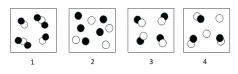
128.

Which image is a pure substance?

a)

1

b)

2

c)

3

d)

4

129.

The air we breathe is?

a)

An element

b)

Heterogenous mixture

c)

Homogenous Mixture

d)

Compound

130.

This is a correct dot diagram for neon (Ne)

a)

true

b)

false

131.

Which of these is incorrect?

a)
b)
132.

Which of these is correct?

a)
b)
c)
133.

This is a correct dot diagram for oxygen (O)?

a)

true

b)

false

134.

Which shows the right valence electrons?

a)

A

b)

B

c)

C

d)

D

135.

Which shows the right valence electrons?

a)

A

b)

B

c)

C

d)

D

136.

Which shows the right valence electrons?

a)

A

b)

B

c)

C

d)

D

137.

Which shows the right valence electrons?

a)

A

b)

B

c)

C

d)

D

138.

Which shows the right valence electrons?

a)

A

b)

B

c)

C

d)

D

139.

Which shows the right valence electrons?

a)

A

b)

B

c)

C

d)

D

140.

Which shows the right valence electrons?

a)

A

b)

B

c)

C

d)

D

141.

Which shows the right valence electrons?

a)

A

b)

B

c)

C

d)

D

142.

Which scientist edited the Periodic Table and arranged elements in increased atomic number?

a)

Rutherford

b)

Dalton

c)

Mendeleev

d)

Moseley

143.

Which scientist created the Periodic Table and arranged elements in increasing atomic mass?

a)

Rutherford

b)

Thomson

c)

Mendeleev

d)

Moseley

144.

Elements in the same group or family have _____________.

a)

the same number of valence electrons and different properties.

b)

the same number of valence electrons and similar properties

c)

different number of valence electrons and similar properties.

d)

different number of valence electrons and different properties.

145.

Which class of elements are malleable, ductile, shiny when clean and polished, good conductors of heat and electricity, and reacts with acids to form hydrogen gas?

a)

metals

b)

nonmetals

c)

metalloids

d)

ions

146.

What is the name of Group 1 elements?

a)

Alkali Metals

b)

Alkaline Earth Metals

c)

Transition Metals

d)

Halogens

147.

What is the name of the elements that are unreactive and have a full octet?

a)

Halogens

b)

Noble Gases

c)

Alkali Metals

d)

Transition Metals

148.

What is an atom or bonded group of atoms that has a positive or negative charge?

a)

ion

b)

atom

c)

metal

d)

nonmetal

149.

What is the term of an atom that will lose electron(s) and have a positive change?

a)

cation

b)

anion

c)

electronegativity

d)

ionic radius

150.

The Halogen group has an oxidation number of -1. Why?

a)

The Halogen group will gain one electron, therefore have an oxidation number of -1.

b)

The Halogen group will lose one electron, therefore have an oxidation number of -1.

c)

The Halogen group will lose seven electrons, therefore have an oxidation number of -1.

151.

Where are metalloids located on the Periodic Table?

a)

In the s block.

b)

In the f block.

c)

In the d block.

d)

The elements that touch the staircase except aluminum.
