
 Worksheets
Heat Transfer
Total questions: 22
Worksheet time: 1hrs 17mins


The earth receives heat energy from the sun by _______________, which is the transfer of energy as electromagnetic waves.


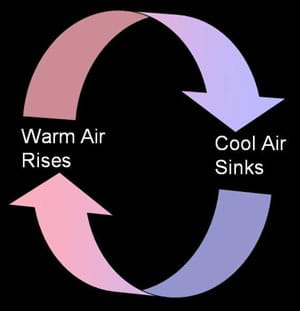
Near the ceiling of a room the air is warmer. The warm air rises because of
conduction
convection
radiation

In heat transfer, heat always flows from the _______________ substance to the _______________ substance.
Hotter to colder
Colder to hotter
Hotter to hotter
Colder to colder

When you use a microwave, what is the main way that heat is transferred?
Convection
Conduction
Radiation
insulation.

An iron is placed on your clothes to smooth out the wrinkles. The iron transfers heat to your clothes through
conduction
convection
radiation

You get sunburned due to __________ from the sun.
conduction
convection
radiation

Near the ceiling of a room the air is warmer. The warm air rises because of
conduction
convection
radiation

The heat from a lamp allows a lizard to remain warm. This is an example of which type of heat transfer?
radiation
conduction
convection
insulation

Energy transfer during which hot fluid rises and cold fluid sinks, creating a cycle, is called...
Heat
Convection
Radiation
Conduction

Which Earth's surface heats quicker, sand or water?
Water
Sand
N/A
N/A
16-25.
Answer the questions below after watching the video
What is the primary driving force behind heat transfer?
Material type
Velocity difference
Temperature difference
Pressure difference
Which material would likely increase the rate of heat transfer through a wall?
Copper
Insulation
Brick
Drywall
What does thermal resistance depend on?
Smoothness of the material
Weight of the material
Color of the material
Thickness of the material
What is the primary benefit of adding insulation layers to walls?
Enhances the aesthetic appeal
Increases the structural strength
Reduces heat transfer
Makes the walls thinner
Which type of convection involves external forces like fans or wind?
Natural convection
Forced convection
Active convection
Passive convection
What is the role of the boundary layer in convection?
Increases radiation
Has no effect on convection
Increases convection
Decreases convection
Why are double-paned windows effective in reducing heat transfer?
They decrease radiation
They increase conduction
They reflect sunlight
They limit air movement
How does radiation differ from conduction and convection in terms of heat transfer?
Requires direct contact
Is faster than both
Does not require a medium
Only occurs in solids
What can reduce the impact of radiation in building design?
Using thicker walls
Increasing wall height
Applying reflective coatings
Using darker colors
What is a key factor in choosing a location for building a house to minimize heat transfer?
Proximity to water bodies
Amount of direct sunlight
Height above sea level
Nearby vegetation
26-35.
Answer the questions below after watching the video
What is the main purpose of the experiment demonstrated in the video?
To compare the density of wood, metal, and plastic
To understand the boiling point of water
To learn how different materials conduct heat
To test the melting point of butter
What materials are used for the spoons in the experiment?
Copper, Aluminum, and Steel
Wood, Glass, and Metal
Wood, Metal, and Plastic
Plastic, Glass, and Copper
What is placed on top of each spoon in the experiment?
A small rock
A piece of ice
A pat of butter
A sugar cube
What was the purpose of using butter in the experiment?
To add flavor to the experiment
To make the spoons slippery
To prevent the spoons from rusting
As a marker to observe heat conduction
What is the significance of the experiment's setup?
To illustrate how heat conduction varies among materials
To compare the boiling points of different substances
To demonstrate the properties of water
To show the melting point of different materials
What is the final step before observing the results in the experiment?
Placing the setup under sunlight
Heating the spoons directly
Pouring hot boiling water into the bowl
Freezing the setup overnight
Why did the bead move down the spoon made of metal?
Due to the magnetic properties of metal
Because metal conducts heat better
Because metal has a higher density
Because of the gravitational pull
Why did the bead not move on the spoons made of wood and plastic?
Because they are waterproof
Due to their non-conductive nature
Because they are lighter than metal
Because they absorb heat
What does the experiment demonstrate about heat conduction?
Only metals can conduct heat
All materials conduct heat at the same rate
Heat conduction is not affected by material
Different materials conduct heat differently
How can viewers further explore the concept demonstrated in the video?
By conducting the experiment with different liquids
By visiting the cool science experiments headquarters website
By reading a physics textbook
By visiting a science museum
36-45.
Answer the questions below after watching the video
What is true about energy in our environment?
It can be created from nothing.
It is only visible under special conditions.
It can be transformed from one form to another.
It is not necessary for living organisms.
What happens when energy is transformed?
It can only be transformed into heat.
It increases in quantity.
It changes form but the total amount remains constant.
It disappears completely.
What type of energy transformation occurs in a strummed ukulele?
Chemical to sound
Potential to kinetic
Kinetic to sound
Electrical to kinetic
What energy transformation is seen when a light bulb is turned on?
Electrical to light and heat
Solar to electrical
Mechanical to electrical
Kinetic to potential
What happens when a match is struck?
Electrical energy changes to light
Sound energy transforms into heat
Kinetic and chemical energy transform into light and heat
Potential energy is converted to kinetic
What transformation occurs when a bow and arrow is released?
Kinetic to potential
Elastic potential to sound
Elastic potential to kinetic
Chemical to kinetic
How does an electric kettle transform energy when turned on?
Electrical to thermal
Chemical to electrical
Mechanical to thermal
Solar to thermal
What energy transformation is observed in a descending roller coaster?
Kinetic to potential
Electrical to mechanical
Gravitational potential to kinetic
Thermal to kinetic
What occurs when an electric doorbell is pressed?
Kinetic to electrical
Potential to kinetic
Electrical to kinetic and sound
Chemical to electrical
During the use of a drill to secure a screw into wood, what transformation takes place?
Chemical to mechanical
Potential to chemical
Electrical to kinetic
Kinetic to potential
46-55.
Answer the questions below after watching the video
What is the height of Mount Everest?
9,848 meters
8,848 meters
9,000 meters
8,500 meters
What is the average temperature near the summit of Mount Everest in May?
5 degrees Celsius
-5 degrees Celsius
0 degrees Celsius
-10 degrees Celsius
What is the core body temperature of a human in degrees Celsius?
37 degrees
30 degrees
35 degrees
40 degrees
What does thermal insulation prevent?
Production of thermal energy
Transfer of thermal energy between objects
Absorption of thermal energy by objects
Generation of heat in objects
What happens to thermal energy between objects with different temperatures?
It transfers from warmer to cooler objects
It increases in the warmer object
It disappears
It remains constant
Which material is NOT mentioned as a thermal insulating material?
Down feathers
Polyester
Wool
Cotton
What natural thermal insulator do marine mammals have?
Feathers
Scales
Blubber
Fur
What is the purpose of thermal insulation in a beach cooler?
To keep the contents cool
To make the cooler lighter
To heat the contents
To absorb moisture
Why do architects use thermal insulation in buildings?
To maintain the temperature inside
To increase the brightness inside
To make the buildings look bigger
To reduce the cost of construction
Which of the following is an example of thermal insulation in vehicles?
Under the vehicle tires
Inside the fuel tank
Between the engine compartment and the seats
On the vehicle's exterior paint
56-65.
Answer the questions below after watching the video
What materials are needed for the lab experiment?
Three glasses of water at different temperatures and food coloring
A thermometer and a heat source
A microscope and slides
A set of beakers and a Bunsen burner
What principle does the lab experiment aim to demonstrate?
Chemical reactions
Gravity
Magnetism
Energy transfer, heat, and convection
How can you determine the temperature of the water in each glass?
By the dispersion of food coloring
By the color of the water
By tasting the water
By measuring with a thermometer
What was the purpose of using different water temperatures?
To illustrate the freezing point of water
To compare the taste of water at different temperatures
To demonstrate the boiling point of water
To show the effect of temperature on food coloring
What does the speed of food coloring dispersion indicate?
The temperature of the water
The color of the food coloring
The size of the glass
The amount of food coloring used
Which glass had the fastest movement of water molecules?
The glass with room temperature water
The glass with cold water
The glass with hot water
All glasses had the same movement
How does the experiment illustrate the concept of molecule movement?
By heating the water to its boiling point
By freezing the water
Through the dispersion and mixing of food coloring
By changing the water color
What does the experiment teach about convection?
It cannot be demonstrated visually
It is a method of energy transfer significant in many natural processes
It only occurs in solid materials
It is irrelevant to our daily lives
What other methods of energy transfer were mentioned?
Filtration and sedimentation
Radiation and conduction
Evaporation and condensation
Osmosis and diffusion
Why is it important to understand energy transfer methods?
Only important for scientists
For better understanding of natural and technological processes
To perform better in sports
To improve cooking skills
66-75.
Answer the questions below after watching the video
What is another name for thermal energy?
Chemical energy
Mechanical energy
Heat energy
Electric energy
What causes thermal energy to be produced?
Particles staying still
Atoms and molecules moving faster and colliding
Decrease in temperature
Atoms moving slower
What happens to particles in a hot pot as it cools down?
They move faster
They begin to move slower
They vanish
They produce more energy
How is thermal energy transferred from the Sun to Earth?
Radiation
Convection
Conduction
Insulation
Why is thermal energy important for life on Earth?
It is not important for life
It cools the planet
It is transferred from the Sun to maintain life
It is used to cook food only
What is convection?
Roasting marshmallows over a fire
Rubbing hands together
Warming up water on the stove
Sun heating the Earth
What is conduction?
Roasting marshmallows over a fire
Sunlight warming the Earth
Rubbing hands together
Heating water on the stove
What is radiation in the context of thermal energy?
Heating water on the stove
Rubbing hands together
Roasting marshmallows over a fire
Sunlight warming the Earth
What happens to gas particles when heated?
They slow down
They turn into liquid
They come closer together
They spread out in all directions at great speeds
What should you remember about the states of matter and thermal energy?
Heating something on the stove creates a gas
Cooling something creates a gas
Thermal energy has no effect on states of matter
Heating something creates a solid
76-80.
Answer the questions below after watching the video
Why does sand heat up faster than water under the same sunlight?
Water is in constant motion, distributing the heat.
Sand is usually darker than water.
Water reflects all the sunlight.
Sand has a lower specific heat capacity than water.
If you heat equal masses of water and oil, which one will have a higher temperature after one minute?
Oil
Both will have the same temperature
It depends on the type of oil
Water
What is required to make water reach the same temperature as oil in the experiment?
A higher temperature setting
More time
Less heat
Twice the amount of heat
What does specific heat capacity measure?
The time it takes to heat a substance
The maximum temperature a substance can reach
The weight of a substance after heating
The amount of heat to raise the temperature of 1kg of a substance by 1°C
Which substance has a higher specific heat capacity?
Sand
Oil
Water
All have the same capacity

