wayground logo

Free Printable Worksheets

Font size

S
M
L
XL
Worksheets

Chemical Bonding and Compounds Review

Total questions: 216

Worksheet time: 9hrs 5mins

Name
Class
Date
1.

The formula for this binary ionic compounds

Aluminum oxide is

a)

Al2O3

b)

Al3O2

c)

Al O

2.
Beryllium will ____ valence electrons when forming an ionic bond.
a)
lose 4
b)
gain 4
c)
lose 2
d)
gain 2
3.
In the chemical formula for an ionic compound, which item is written first?
a)
positive ion
b)
negative ion
c)
subscript
d)
the female
4.
Magnesium bromide is an ionic compound with the chemical formula MgBr₂.  What does the "2" tell you?
a)
There are 2 bromide ions for every magnesium ion
b)
Bromide has a 2- charge
c)
Bromide has a 2+ charge
d)
There are 2 magnesium ions to every bromide ion
5.
Which is the correct name for CaBr2?
a)
Calcium Bromine
b)
Bromine Calcium
c)
Calcium Bromide
d)
Carbon and Bromine
6.

Which is the correct formula for aluminum sulfide?

a)

AlS

b)

Al3S2

c)

S3Al2

d)

Al2S3

7.

Which of the following is true for ionic bonding & ionic compounds?

a)

They must be made of ions with like charges.

b)

The negative ion must be written first.

c)

Compounds must have an overall charge of zero.

d)

They are made of metals and nonmetals.

e)

The positive ion must be written first.

8.

The formula for beryllium phosphide will contain (a)   phosphide ions.

9.

Oxygen has (a)   valence electrons.

10.
What is the formula for aluminum fluoride?
a)
AlF
b)
Al2F3
c)
AlF3
d)
Al3F2
11.
Metals tend to 
a)
gain electrons
b)
lose electrons
12.
What is the correct formula for the compound, lithium oxide?
a)
LiO
b)
Li2O
c)
LiO2
d)
Li2O2
13.

Which of the following pairs of elements will NOT form an ionic compound?

a)

sodium and fluorine

b)

phosphorous and aluminum

c)

potassium and magnesium

d)

strontium and oxygen

14.
A cation is a ____ ion.
a)
negative
b)
positive
c)
neutral
d)
ficticious
15.
Ionic bonds form between metals and ____.
a)
metalloids
b)
metals
c)
nonmetals
16.

Ionic bonds happen because of the ____ of valence electrons.

a)

sharing

b)

transfer

c)

keeping

d)

covering

17.

What is the correct formula for potassium oxide?

a)

KO2

b)

KO

c)

K2O

d)

OK2

18.

What is the correct name for SrF2?

a)

fluoride strontium

b)

strontium fluorine

c)

strontium diflluoride

d)

strontium fluoride

19.
Magnesium ion would take a charge of
a)
1+
b)
2+
c)
3+
d)
0
20.
Ionic compounds are bonds between
a)
Metals and Metals
b)
Metals and Nonmetals
c)
Nonmetals and Nonmetals
d)
None of the above
21.
 Li2O
a)
Dilithium oxideDilithium oxide
b)
Lithium oxide
c)
Lithium dioxide
22.
What is the formula for magnesium phosphide?
a)
Mg3P2
b)
Mg2P3
c)
Mg2PO3
d)
Mg3(PO3)2
23.
The chemical formula for an ionic compound of potassium and oxygen is
a)
KO.
b)
K2O.
c)
K2O2.
d)
KO2.
24.
Which is most likely to form a negative ion?
a)
an element from group 17
b)
a metal
c)
an element from group 1
d)
an element with atoms that have eight valence electrons
25.
Name this compound: 
KF
a)
Potassium fluoride
b)
Potassium fluorite
c)
Fluorine potasside 
d)
Potassium fluorate
26.
Which of these compounds is ionic? 
a)
Carbon dioxide
b)
Dinitrogen Trioxide
c)
Silicon tetrachloride
d)
Lithium bromide
27.

Why do all bonds form?

a)

so the number of protons equals the number of electrons

b)

so an atom can become unstable

c)

to fill the outermost energy level

28.

Which of the following apply to Group 18 on the Periodic Table?

a)

They are called "Noble Gases"

b)

They have 8 valence electrons

c)

They are stable and unlikely to react with other elements

d)

all of the above

29.

What is the oxidation number for Group 1 Alkali Metals?

a)

1-

b)

1+

c)

0

d)

2+

30.

What is the written name for the ionic compound?

(a)  

31.

What is the chemical formula for an ionic compound with the following elements?

(a)  

32.

Which of the following is an ionic compound:

a)

CH4

b)

I2

c)

LiBr2

d)

CO

33.
What two types of atoms make a covalent bond?
a)
2 Nonmetals
b)
1 Nonmetal and 1 Metal
c)
2 Metals
d)
2 Noble Gases
34.
How are covalent bonds explained?
a)
When one atom takes the other atom's electron
b)
When the atom shares an electron with an another atom
c)
When the two nucleus merge
d)
When the neutrons leave the nucleus
35.
Name the following compound: 
CO2
a)
monocarbon dioxide
b)
carbon oxide
c)
carbon dioxide
d)
oxygen carbonide
36.
phosphorus trichloride
a)
KCl3
b)
PCl3
c)
K3Cl
d)
P3Cl
37.

dinitrogen pentoxide

a)

N2O5

b)

NO5

c)

N5O2

d)

N2O6

38.

P₄S₁₀

a)

tetrapotassium decasulfide

b)

phosphorus decasulfide

c)

tetraphosphorus decasulfide

d)

phosphorus (X) sulfide

39.
Have a high m.p. (1000°C-3000°C)
a)
ionic compounds
b)
covalent compounds
40.
When dissolved in water, the solution is a good conductor of electricity.
a)
ionic compounds
b)
covalent compounds
41.
usually hard but brittle
a)
ionic compounds
b)
covalent compounds
42.
usually soft
a)
ionic compounds
b)
covalent compounds
43.

The following properties are all characteristics of ionic compounds EXCEPT

a)

high melting and boiling points

b)

soft

c)

crystal lattice structure

d)

conduct electricity when dissolved in water

44.
The melting point of sugar is__________________ the melting point of table salt.
a)
greater than
b)
less than
c)
equal to
45.

Many are gasses at room temperature.

a)
ionic compounds
b)
covalent compounds
46.

A material that has a low boiling point

a)

Ionic

b)

Covalent

c)

Both

47.

A single particle can be classified as a "molecule".

a)

Ionic

b)

Covalent

c)

Both

48.

Which of the following is true for BOTH ionic and covalent compounds?

a)

They bond to attain a noble gas configuration

b)

During bonding, atoms will increase in mass.

c)

They either transfer or share protons to get the atomic number of a noble gas.

d)

They always act like the noble gas that comes before them.

49.
Low melting point and low solubility in water are general properties of ______________________ compounds
a)
ionic
b)
covalent
c)
chemical
d)
glucose
50.

crystalline structure of alternating positive and negative charges

a)

ionic

b)

covalent

c)

metallic

51.
How many elements are in C6H12O6?
a)
1
b)
2
c)
3
d)
4
52.

How many atoms are there TOTAL in H2SO4 ?

a)

6

b)

5

c)

7

d)

3

53.

How many Oxygen atoms are in Al₂(SO₄)₃?

a)

4

b)

12

c)

7

d)

24

54.

A subscript is the small number below the element symbol that tells the number of _______ of that element.

a)

atoms

b)

valence electrons

c)

protons

d)

elements

55.
Number of H in 3(NH₄)₂CrO₄
a)
4
b)
2
c)
8
d)
24
56.
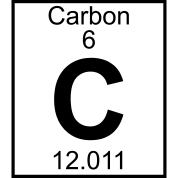
What does 12.011 represent?
a)
atomic mass
b)
atomic number
c)
element name
d)
chemical symbol 
57.

How do you calculate the number of neutrons? *

a)

Mass = Atomic number - Neutrons

b)

Mass - Atomic number = Neutrons

c)

Atomic number = Neutrons

58.

where are the metaloids found

a)

far left, vertical

b)

stair step/diagonal

c)

far right horizontal

d)

at the bottom

59.

Periodic law states that the elements are arranged according to their atomic ________ so that elements with similar chemical properties are in the same ________ and properties repeat periodically.

a)

numbers, rows

b)

masses, rows

c)

masses, column

d)

numbers, column

60.

A row on the Periodic Table of Elements

a)

family

b)

period

c)

row

d)

isotope

61.
___________ is the only metal that is a liquid at room temperature.
a)
Platinum
b)
Water
c)
Tin
d)
Mercury
62.
__________ would have some characteristics of metals and some characteristics of nonmetals.
a)
Gold
b)
Sodium
c)
Arsenic
d)
Bismuth
63.

Metals (select all that apply)

a)

are found on the right side of the periodic table.

b)

are found on the left side of the periodic table.

c)

are good conductors of heat and electricity.

d)

are brittle.

e)

are malleable and ductile.

64.

Nonmetals (select all that apply)

a)

are found on the right side of the periodic table.

b)

are found on the left side of the periodic table.

c)

are good conductors of heat and electricity.

d)

are brittle.

e)

can be solid, liquids, or gases at room temperature.

65.

Name for NaH

a)

sodium hydrogen

b)

potassium hydride

c)

sodium hydride

d)

potassium hydrogen

66.

Formula for barium sulfide

a)

B2S3

b)

BaS

c)

Ba2S

d)

BaS2

67.

Formula for lead (II) chloride

a)

PbCl2

b)

Pb2Cl

c)

Pb2Cl3

d)

Pb3Cl2

68.

Name for PBr2

a)

phosphorus bromide

b)

phosphorus dibromide

c)

phosphorus dibromine

d)

phosphorus bromine

69.

Formula for Disilicon Heptasulfide

a)

SiS6

b)

SiS7

c)

Si2S6

d)

Si2S7

70.

Name for LiOH

a)

lithium hydrogen oxide

b)

lithium hydroxide

c)

lithium (II) hydroxide

d)

lithium (I) hydroxide

71.

Name for SrBr2

a)

strontium bromine

b)

strontium bromide

c)

strontium dibromide

d)

strontium dibromine

72.

Formula for sulfur dioxide

a)

S2O

b)

SO2

c)

S2O2

d)

(SO)2

73.

Formula for Cobalt (II) bromide

a)

CoBr

b)

Co2Br2

c)

Co2Br

d)

CoBr2

74.

Formula for aluminum phosphate

a)

Al2P3

b)

Al3PO4

c)

AlP

d)

AlPO4

75.

Formula for Perchloric acid

a)

HCl2O4

b)

HCl4

c)

HClO

d)

HClO4

76.
What is the correct formula for the compound, lithium oxide?
a)
LiO
b)
Li2O
c)
LiO2
d)
Li2O2
77.
What is the name of Al(NO3)3?
a)
Aluminum trinitrate
b)
Monoaluminum nitrate
c)
Aluminum (III) nitrate
d)
Aluminum Nitrate
78.
What is the name of N2O3
a)
Nitrogen trioxide
b)
Dinitrogen oxide
c)
Dinitrogen trioxide
d)
Nitrogen oxide
79.
True or false: When naming ionic compounds, use prefixes to indicate subscripts
a)
True
b)
False
80.

How many Oxygen atoms are in H2O?

a)

1

b)

2

c)

0

d)

4

81.

What type of elements form covalent bonds?

a)

Metals

b)

Non Metals

c)

Metalloids

d)

Nobel Gas

82.

When a covalent bond forms _______________ are shared.

a)

protons

b)

nutrons

c)

valence electrons

d)

quarks

83.

Compounds have _________________ properties, compared to the elements that form them.

a)

similar

b)

different

84.

How many valence electrons does Oxygen (O) have?

a)

6

b)

8

c)

15

d)

16

85.

How many atoms of hydrogen are in a sugar molecule with the formula C6H12O6

a)

12

b)

6

c)

24

d)

18

86.

Atoms that are _____________ will form bonds.

a)

stable

b)

unstable

87.

An atom of nitrogen (N) has _______ open bonding sites.

a)

5

b)

4

c)

3

d)

8

88.

Which statement describes the model that shows a compound.

a)

Model X shows a compound because there are two different types of atoms

b)

Model X shows a compound because two different atoms are chemically bonded together.

c)

Model Y dhows a compound because there is more than one type of atom.

d)

Model Y shows a compound because each pair of matching atoms can form a chemical bond.

89.
What do we call a covalent bond where electrons are shared UNEVENLY or UNEQUALLY?
a)
Ionic
b)
Polar Covalent
c)
Nonpolar Covalent
d)
Van der Waals Force
90.

Why do all bonds form?

a)

so the number of protons equals the number of electrons

b)

so an atom can become unstable

c)

to fill the outermost energy level

91.
How many atoms are there all together in HCl?
a)
1
b)
2
c)
3
92.
What are the different elements in carbon dioxide?
a)
carbon
b)
cobalt and oxygen
c)
oxygen and carbon
d)
oxide and carbon
93.
How many atoms are there all together in Magnesium hydroxide? Mg(OH)2
a)
3
b)
5
c)
2
94.
DIFFERENT kinds of atoms chemically combined to form a substance are
a)
Mixture
b)
Element
c)
Compound
d)
Substance
95.
How many elements are represented in the compound?
Na2CO3
a)
1
b)
2
c)
3
d)
4
96.

Which choice would be a molecule?

a)

O

b)

H

c)

Au

d)

H2

97.
Which of the following is an ionic compound?
a)
Glucose
b)
Water
c)
Sodium Chloride
d)
Vegetable Oil
98.
_______________ compounds share electrons.
a)
ionic
b)
covalent
c)
metallic
d)
acidic
99.

What kind of compound is made from the attraction between oppositely charged ions?

a)

Covalent

b)

Metallic

c)

Ionic

d)

Chemical

100.

name this compound

a)

ammonium phosphate

b)

ammonium sulfate

c)

aluminium phosphate

d)

aluminium sulfate

101.

the charge of ions is ................... respectively:

a)

+3 / -2

b)

+2 / -3

c)

+3 / -3

d)

-2 / +3

102.

the phosphate ion has charge equals ......:

a)

+2

b)

+3

c)

-8

d)

-3

103.

the compound name is:

a)

lithium hydroxalate

b)

lithium oxide

c)

lithium bihydroxide

d)

lithium hydroxide

104.

sodium and Florine react and form an ionic compound

a)

true

b)

false

c)

no enough information

105.

when an atom lose two electrons from its outer energy level it transforms to :

a)

+1 ion

b)

+2 ion

c)

-1 ion

d)

-2 ion

106.
What is the correct term for "bond that forms when electrons are shared equally"?
a)
ionic bond
b)
metallic bond
c)
nonpolar covalent bond
d)
polar covalent bond
107.
What is the correct term for "bond that forms between a metal and a nonmetal"?
a)
ionic bond
b)
metallic bond
c)
nonpolar covalent bond
d)
polar covalent bond
108.
What is the correct term for "atom with more protons than electrons"?
a)
positive ion (cation)
b)
negative ion (anion)
c)
neutral atom
d)
stable atom
109.
What is the correct term for "atom with more electrons than protons"?
a)
positive ion (cation)
b)
negative ion (anion)
c)
neutral atom
d)
stable atom
110.
What is the correct term for "atom with a full valence shell"?
a)
positive ion (cation)
b)
negative ion (anion)
c)
neutral atom
d)
stable atom
111.
Carbon has four electrons in its valence shell. How many nore electrons does carbon need to have a full valence shell?
a)
2 more
b)
4 more
c)
8 more
d)
0 more, it is already full
112.
The correct formula for the diagram is _________.
a)
K2O
b)
2KO
c)
KOK2
d)
KO2
113.
Which of the following formulas represents the harmful gas, carbon monoxide?
a)
CO
b)
CO2
c)
NO
d)
SO2
114.
Which type of bond is formed by the attraction of charged particles?
a)
ionic
b)
polar covalent
c)
nonpolar covalent
d)
metallic
115.
Which compound contains covalent bonds?
a)
NaI
b)
K2O
c)
N2O3
d)
BeO
116.
Which two elements would form an ionic bond?
a)
carbon and hydrogen
b)
oxygen and silicon
c)
cesium and iodine
d)
potassium and calcium
117.
What is the total number of atoms in the chemical formula shown below?
Al2(SO4)3
a)
17
b)
15
c)
10
d)
5
118.
Which is not a property of ionic compounds?
a)
They are formed when nonmetals bond to nonmetals.
b)
They form crystals.
c)
They dissolve in water.
d)
They have high melting points.
119.
What is the formula for Hydrosulfuric Acid?
a)
H2(SO3)
b)
H2S
c)
H2(SO2)
d)
H2(SO4)
120.
Name HF
a)
hydrofluoric acid
b)
Hypofluoric acid
c)
hydrogen fluorine acid
d)
fluoric acid
121.
Name the acid: H3PO3
a)
hydrophosphoric acid
b)
phosphorous acid
c)
phosphoric acid
d)
phosphoric hydroxide
122.
What is the formula for hydrochloric acid?
a)
HCl
b)
HClO
c)
H3ClO3
d)
HClO3
123.
What is the formula for nitric acid?
a)
HNO2
b)
HNO3
c)
HNO4
d)
H2NO3
124.
What determines the number of hydrogens in your acid?
a)
there are always just one
b)
its the same as the charge of hydrogen
c)
its the same as the charge of the anion
d)
magic
125.
What is the formula for perchloric acid?
a)
H3ClO3
b)
H3ClO4
c)
HClO3
d)
HClO4
126.
HNO2
a)
hydronitrogen
b)
hydrogen nitrogen oxygen
c)
nitrous acid
d)
nitric acid
127.
Hydroiodic acid
a)
H2I2
b)
H1I1
c)
HI
128.
HBr
a)
hydrogen bromine acid
b)
hydrobromide acid
c)
hydrobromic acid
129.
carbonic acid
a)
H2CO3
b)
H2CrO4
c)
H2C2O4
d)
HCO3
130.
chlorous acid
a)
HClO3
b)
HClO2
c)
HClO
d)
HCl
131.

The correct name for this acid H2SO3 is

a)

Hydrosulfiric acid

b)

Sulfurous acid

c)

Sulfiric acid

d)

Sulfate acid

132.

Binary acids start with "____________"

a)

acid

b)

nitric

c)

hydraulic

d)

hydro

133.

Always add the word "________" to the end when naming acids

a)

base

b)

hydro

c)

acid

d)

Baumstark

134.

When naming oxyacids, change "-ite" to:

a)

-ate

b)

-ic

c)

-ous

d)

-ite

135.

When naming oxyacids, change "-ate" to:

a)

-ate

b)

-ic

c)

-ous

d)

-ite

136.
NaCl
a)
58.5
b)
23
c)
35.5
d)
67.6
137.
K2S
a)
110.3
b)
110
c)
78.2
d)
110.2
138.
Cs2SO4
a)
361.9
b)
361.8
c)
313.9
d)
180
139.
(NH4)2SO4
a)
132.1
b)
114.1
c)
132
d)
70.1
140.
Copper (II) sulfide
a)
95.7
b)
96
c)
159.3
d)
191.4
141.
magnesium fluoride
a)
62.3
b)
43.3
c)
73.9
d)
92.9
142.
iron (II) phosphate
a)
357.7
b)
358
c)
150.9
d)
206.8
143.
aluminum nitrate
a)
213
b)
89
c)
41
d)
150.9
144.

Calculate the relative formula mass of

aluminium oxide, Al2O3


[Relative atomic mass:

O = 16 ; Al = 27 ]

(a)  

145.

Calculate the relative formula mass of

copper (ii) sulphate, CuSO4.


[Relative atomic mass:

O = 16 ; Al = 27 ; S = 32 ; Cl = 35.5 ; Cu = 64 ]

(a)  

146.

Calculate the relative formula mass of

copper (i) sulphate, Cu2SO4.


[Relative atomic mass:

O = 16 ; Al = 27 ; S = 32 ; Cl = 35.5 ; Cu = 64 ]

(a)  

147.

What is the formula mass of the covalent compound silicon dioxide (SiO2)?

a)

7193.6 g/mol

b)

30.0 g/mol

c)

44.1 g/mol

d)

60.1 g/mol

148.
What is the percent by mass of oxygen in MgO?
a)
20%
b)
40%
c)
50%
d)
60%
149.
What is the percent by mass of magnesium in MgO?
a)
20%
b)
40%
c)
50%
d)
60%
150.
What is the percent by mass of fluorine in CaF2 (gram-formula mass = 78 g/mol)?
a)
24%
b)
49%
c)
51%
d)
65%
151.
What is the percent composition by mass of sulfur in the compound MgSO4 (gram formula mass = 120 g/mol)?
a)
20%
b)
27%
c)
46%
d)
53%
152.
What is the percent composition of Benzene, C6H6?
a)
C = 50%
H = 50%
b)
C = 85.7 %
H = 14.3%
c)
C = 92.2%
H = 7.8%
d)
C = 71.9%
H = 28.1%
153.
Find the percent composition of Cu2S?
a)
%Cu= 67.987 %S= 32.013
b)
%Cu= 79.854   %S= 20.145
c)
%Cu= 35.946   %S= 64.054
154.

Which element has an abundance of 39.03% in the compound sodium phosphate, Na3PO4

a)

Na

b)

P

c)

O

d)

None of the above

155.
Predict the bond that will form between Be and F.
a)
Ionic
b)
Covalent
156.
If an atom has 7 protons and 7 electrons what charge will it have?
a)
-2
b)
-1
c)
0
d)
+2
157.
Predict the bond that will form between Se and Cl.
a)
Ionic
b)
Covalent
158.
Predict the bond that will form between Sr and S.
a)
Ionic
b)
Covalent
159.
How many atoms of Oxygen are in this compound?
a)
4
b)
1
c)
12
d)
7
160.
Which has the greater EN: 
N or C?
a)
C
b)
N
161.

The difference in electronegativity affects the type of bond will be formed. What type of bond would be formed with a difference of 0.3?

a)

Covalent

b)

Polar Covalent

c)

Ionic

162.

The difference in electronegativity affects the type of bond will be formed. What type of bond would be formed with a difference of 2.0?

a)

Covalent

b)

Polar Covalent

c)

Ionic

163.

The difference in electronegativity affects the type of bond will be formed. What type of bond would be formed with a difference of 0.6?

a)

Covalent

b)

Polar Covalent

c)

Ionic

164.

What type of bond would be formed between O and H?

a)

Covalent

b)

Polar Covalent

c)

Ionic

165.

How many valence electrons does carbon have?

a)

4

b)

5

c)

6

d)

7

166.
Valence electrons are the...
a)
Innermost electrons
b)
Middle electrons
c)
Outermost electrons
d)
Any electrons
167.

USE THE PERIODIC TABLE

How many valence electrons does sodium have?

a)

1

b)

2

c)

3

d)

4

168.

USE THE PERIODIC TABLE

How many valence electrons does Phosphorus have?

a)

31

b)

5

c)

15

d)

4

169.
How many valence electrons are found in atoms of group 14?
a)
4
b)
3
c)
14
d)
16
170.

Why are halogens so reactive?

a)

They want to get rid of their only valance electron

b)

They only need one more electron

c)

They are non reactive, they have a full shell

171.
Which of the following statements describes group 2 of the periodic table?
a)
Stable non-metals with 1 valence electron
b)
Stable Metals with 2 valence electrons
c)
Highly reactive non-metals with 1 valence electron.
d)
Highly reactive metals with 2 valence electrons.
172.
Describe this element.
a)
Highly reactive metal
b)
Highly reactive nonmetal
c)
Stable
d)
Less stable non metal
173.
An atom that has gained or lost electrons is called ...
a)
a winner
b)
an isotope
c)
an ion
d)
a loser
174.

Atoms that gain electrons become...

a)

negatively charged

b)

positively charged

c)

remain neutrally charged

175.

Atoms that lose electrons become...

a)

negatively charged

b)

positively charged

c)

remain neutrally charged

176.
Polar molecules, like water, result when electrons are shared __________.  
a)
equally
b)
unequally
177.
Which is a property shared by most molecular compounds?
a)
high boiling point
b)
high melting point
c)
low melting point
d)
nonpolar bonds
178.
Magnesium bromide is an ionic compound with the chemical formula MgBr2. What does the “2” tell you?
a)
Bromide has a 2- charge
b)
There are two magnesium ions to every bromide ion
c)
There are two bromide ions for every magnesium ion
d)
Bromide has a 2+ charge
179.
In the chemical formula for an ionic compound, which item is written first?
a)
the name of the positive ion
b)
the name of the negative ion
c)
the subscripts
d)
the charges
180.
The chemical name for the compound with the formula Na2S is
a)
sodium fluride
b)
magnesium sulfide
c)
lithium oxide
d)
sodium sulfide
181.
A mixture made of two or more elements, at least one of which is a metal is called a(n)
a)
superconductor
b)
complex metal
c)
metallic bond
d)
alloy
182.
Which of the following groups contain the most reactive elements?
a)
the alkali metals
b)
the alkaline earth metals
c)
the carbon family
d)
the noble gases
183.
Which of the following groups contains the least reactive elements?
a)
the alkali metals
b)
the alkaline earth metals
c)
the carbon family
d)
the noble gases
184.
Orderly crystal shapes, high melting points, and electrical conductivity when dissolved in water are properties of ionic compounds
a)
True
b)
False
185.
When electrons are transferred between two atoms, a covalent bond is formed.
a)
True
b)
False
186.
Solid metals are good conductors of heat and ____________________.
a)
electricity
b)
electrons
c)
elections
d)
elements
187.

Which has the greater electronegativity:

N or C?

a)

C

b)

N

188.

Which has the greater electronegativity:

H or F?

a)

H

b)

F

189.
What is it called when atoms share two pairs of electrons?
a)
A double bond
b)
A single bond
c)
A triple bond
d)
A quadruple bond
190.
What is it called when atoms share three pairs of electrons?
a)
A single bond
b)
A double bond
c)
A triple bond
d)
a quadruple bond
191.
Which type of bond transfers electrons?
a)
Covalent bond
b)
Ionic bond
192.
What bond is formed between a nonmetal and a nonmetal?
a)
Covalent bond
b)
Ionic bond
193.
What bond is formed between a metal and a nonmetal?
a)
Covalent bond
b)
Ionic bond
194.

How many Hydrogen are in H2O?

a)

1

b)

2

c)

3

d)

Not enough information.

195.

Which of the following describes accurately the chemical formula between Mg 2+ and Cl -

a)

MgCl2

b)

Mg2Cl

c)

Cl2Mg2

d)

Mg2Cl2

196.

With the exception of Hydrogen and Helium, how many valence electrons do the remaining elements want to have through chemical bonds in order to have a complete number of outer electrons?

a)

6

b)

8

c)

2

d)

4

197.

Electrons in a polar covalent bond are shared _______.

a)

equally

b)

unequally

c)

the same.

d)

non-stop equally

198.

Electrons in a nonpolar covalent bond are shared _________.

a)

equally

b)

unequally

c)

differently

d)

oppositely

199.

In a metallic substance the sea of valence electrons produce __________ luster, which is how light reflects off the surface.

a)

earthy/dull

b)

pearly/glassy

c)

metallic/shiny

d)

dull/greasy

200.

When naming an Ionic Compound you must change the ending of the nonmetal to include the letters _______.

a)

ide

b)

tor

c)

ite

d)

ness

201.

A positively charged ion is

a)

a cation.

b)

an anion.

c)

in a good mood.

d)

is an optimist.

202.

A negatively charged ion is

a)

a cation.

b)

an anion.

c)

in a good mood.

d)

is an optimist.

203.
The elements on the left side of the periodic table are generally always ______ and the elements on the right side of the periodic table are generally always ______.
a)
cations; anions
b)
anions; cations
c)
reactive; non-reactive
d)
non-reactive; reactive
204.
An example of a polyatomic ion is:
a)
O2-
b)
Na+
c)
CO32-
d)
Ag+
205.

A chemical bond that involves the SHARING of electrons.

a)

ionic bond

b)

an Ion

c)

covalent bond

d)

a anion

206.

Ionic Bonds

a)

metal with nonmetal

b)

nonmetal with nonmetal

207.

Covalent Bonds

a)

metal with nonmetal

b)

nonmetal with nonmetal

208.

CaCl

a)

Ionic Bond

b)

Covalent Bond

209.

NaO

a)

Ionic Bond

b)

Covalent Bond

210.

Cl2

a)

Metal with Nonmetal

b)

Nonmetal with Nonmetal

211.

Zinc fluoride

a)

ZnF2

b)

Zn2F

c)

ZnF

d)

Zn2F4

212.

When naming ionic compounds, the metal is always named first and the nonmetal is always named second.

a)

True

b)

False

213.

Write the correct formula for Sodium Chloride.

a)

SC

b)

SCl

c)

NaCl

d)

NaCl2

214.

What is the correct formula for a compound formed from the ions K + and N-3

a)

KN

b)

KN3

c)

K3N3

d)

K3N

215.

What is the correct formula for a compound formed from Na + and S -2

a)

Na2S

b)

NaS2

c)

Na2S2

d)

NaS

216.
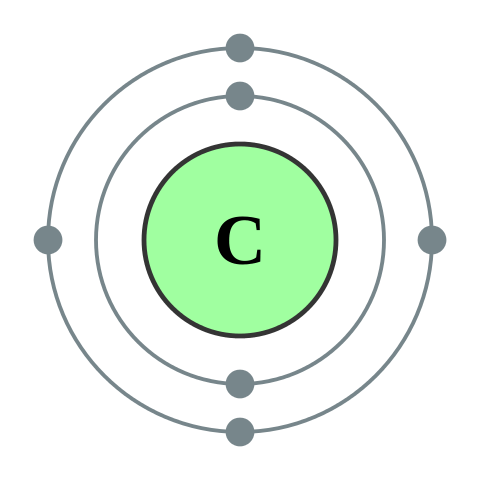
How many valence electrons in this structure?
a)
6
b)
5
c)
4
d)
7