
 Worksheets
Labs
Total questions: 49
Worksheet time: 25mins
(blank) means toward the front
Anterior
Superior
Superficial
Posterior
(blank) means further away from the point of attachment
Superior
Anterior
Proximal
Distal
(blank) Means toward the head or up
Superior
Anterior
Superficial
Medial
(blank) means closer to the body surface
Anterior
Superficial
Proximal
Inferior
(blank) means toward the midline
Medial
Posterior
Distal
Lateral
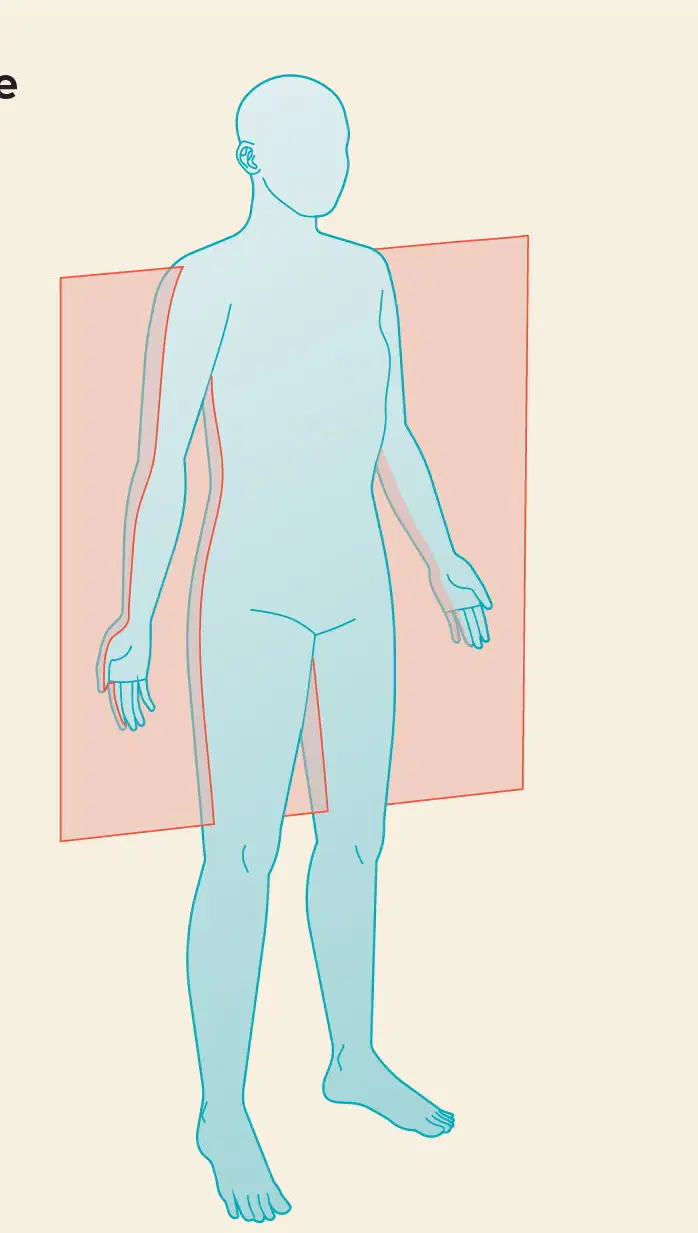
What plane of dissection is this?
Frontal (coronal)
Median (sagittal)
Transverse (cross)
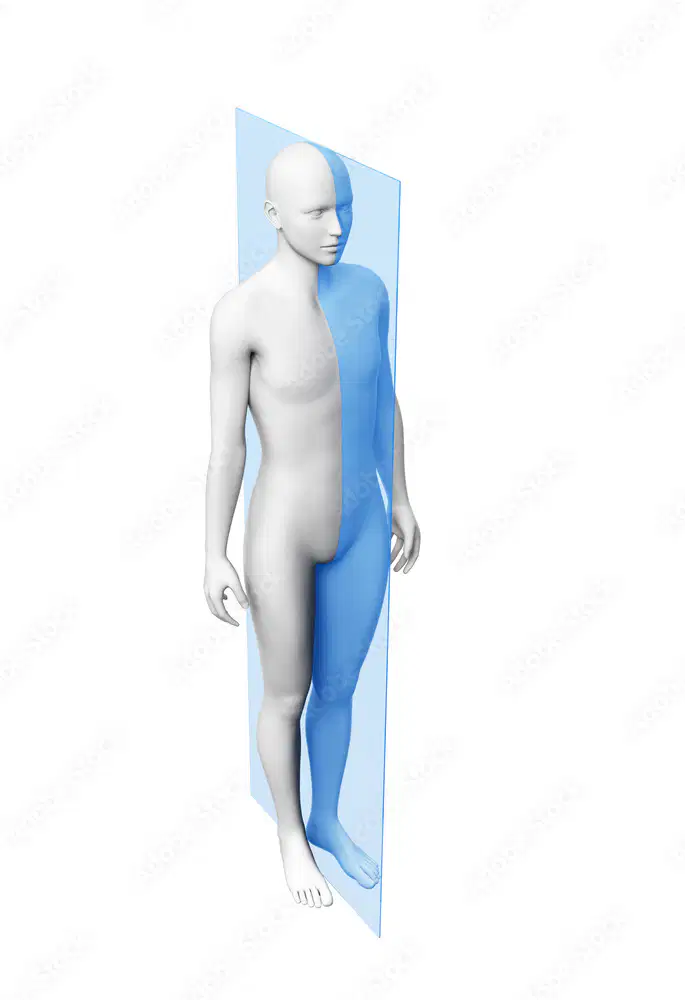
What plane of dissection is this?
Median (sagittal)
Frontal (coronal)
Transverse (cross)

What plane of dissection is this?
Frontal (coronal)
Median (sagittal)
Transverse (cross)

What is the cavity at #1 called?
Spinal Cavity
Cranial Cavity
Dorsal Cavity
Pelvic Cavity
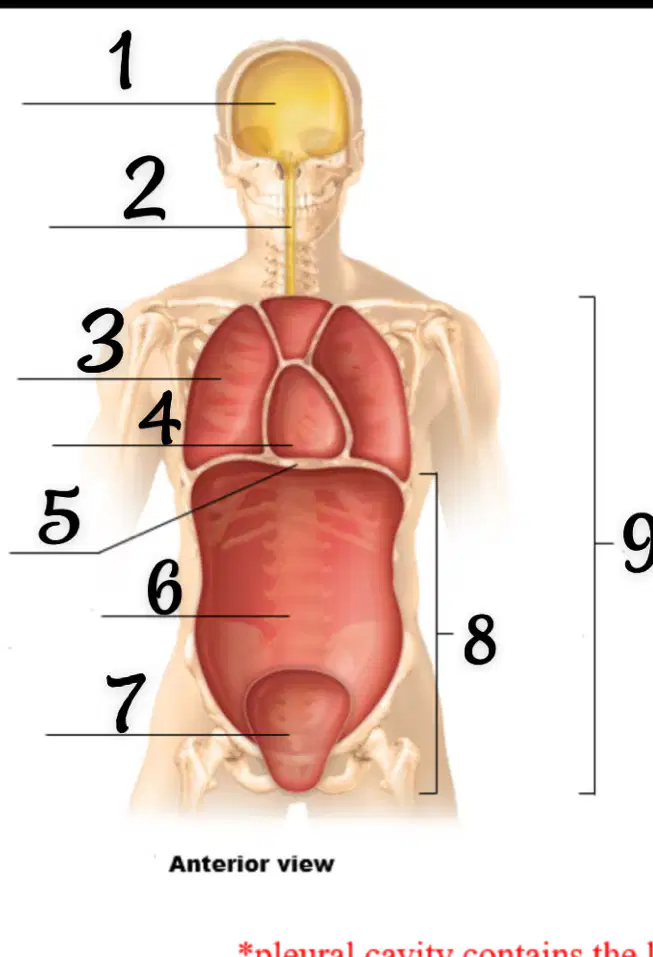
What is the cavity at #2 called?
Abdominal Cavity
Cranial Cavity
Vertebral Cavity
Pelvic Cavity
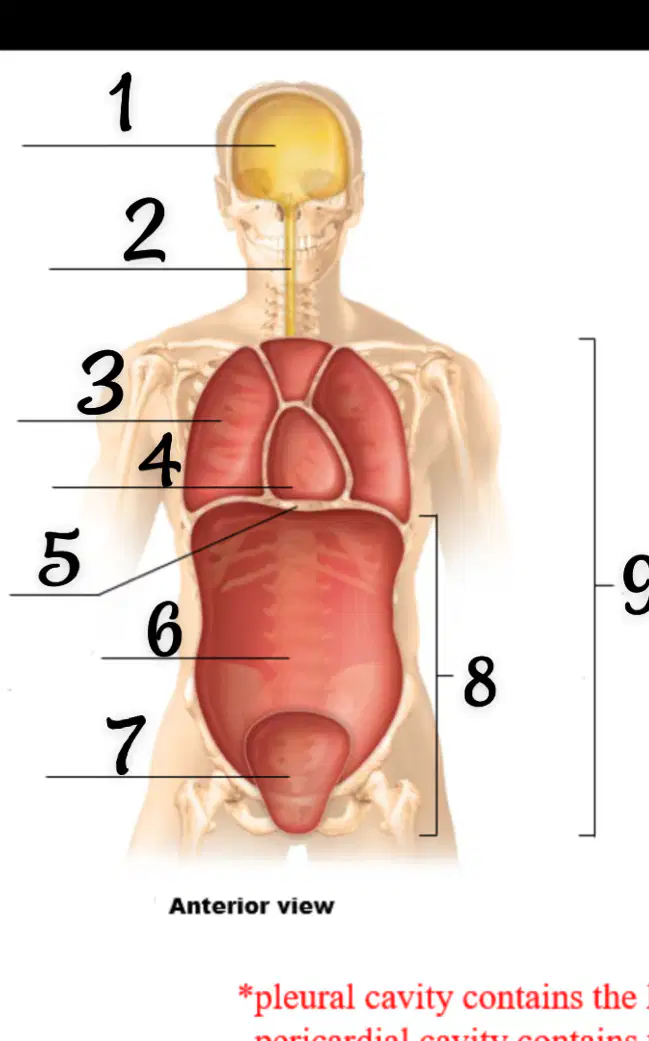
What is the cavity at #3 called?
Thoracic Cavity
Pleural Cavity
Ventral Cavity
Distal Cavity

What is the cavity at #4 called?
Abdominal
Spinal
Pericardial
Diaphragm

What is the cavity at #5 called?
Spinal
Diaphragm
Thoracic
Pelvic
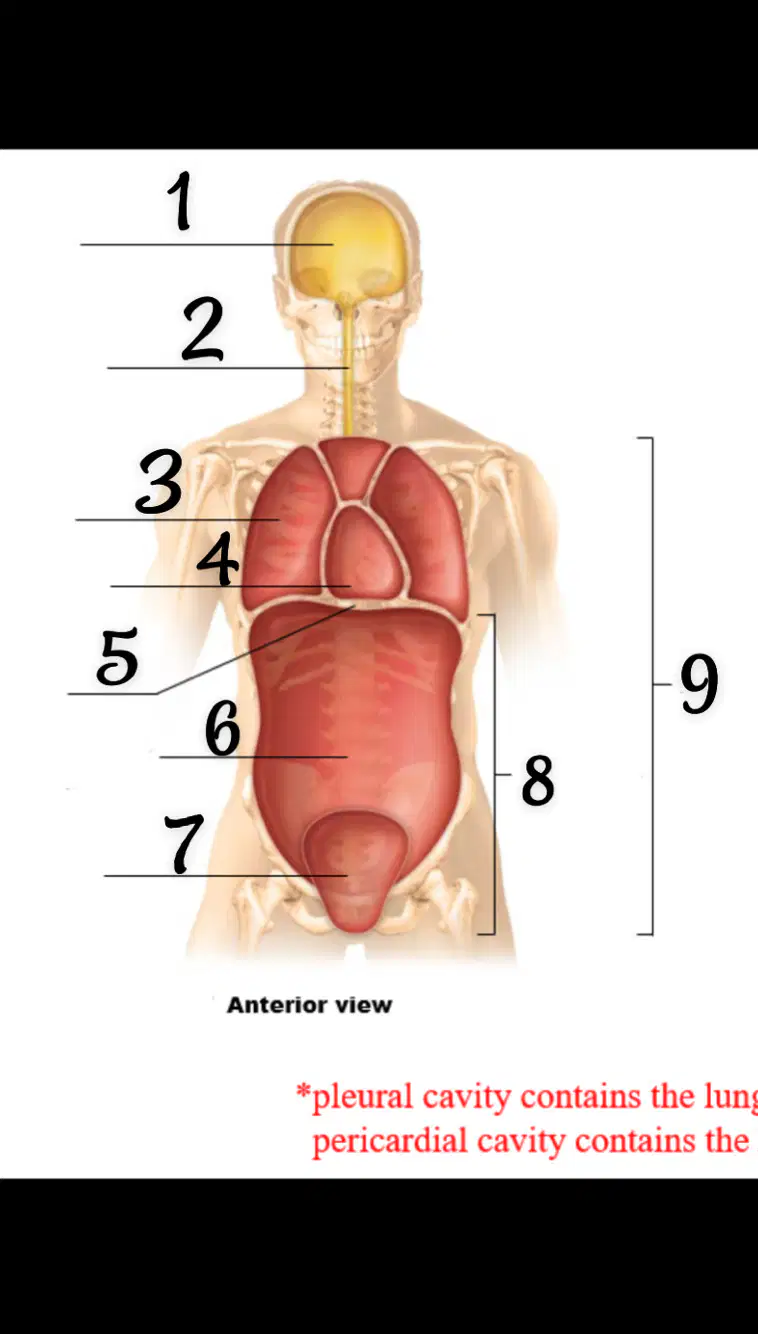
What is the cavity at #6 called?
Pelvic Cavity
Spinal Cavity
Cranial Cavity
Abdominal Cavity
What is the cavity at #7 called?
Abdominal Cavity
Diaphragm
Pelvic Cavity
Mediastinum

What is the cavity at #8 called?
Abdominopelvic Cavity
Vertebral Cavity
Dorsal Cavity
Cranial Cavity

What is the cavity at #9 called?
Dorsal Cavity
Ventral Body Cavity
Diaphragm
Cranial Cavity
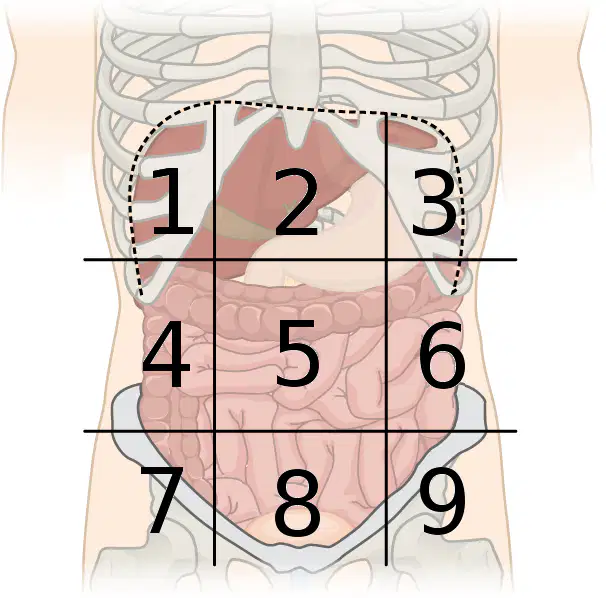
What is #1 called?
Epigastric Region
Left hypochondriac region
Right hypochondriac region
Left lumbar region
What is #2 called?
Epigastric Region
Umbilical Region
Right lumbar region
right inguinal region
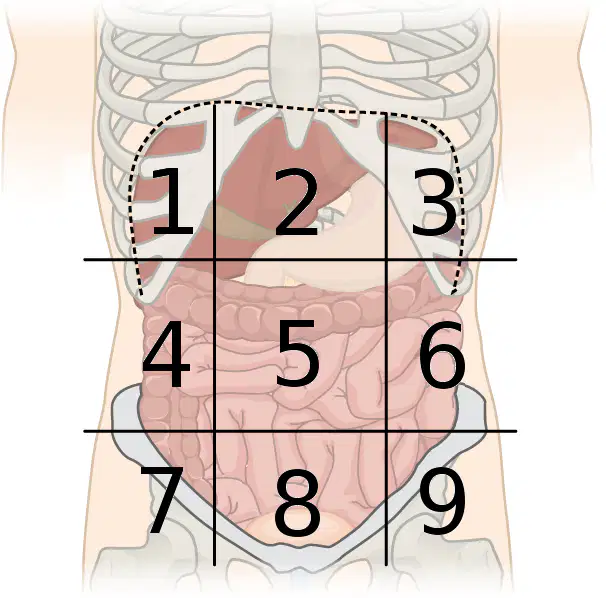
What is #3 called?
Right lumbar region
Left lumbar region
Right hypochondriac region
Left hypochondriac region
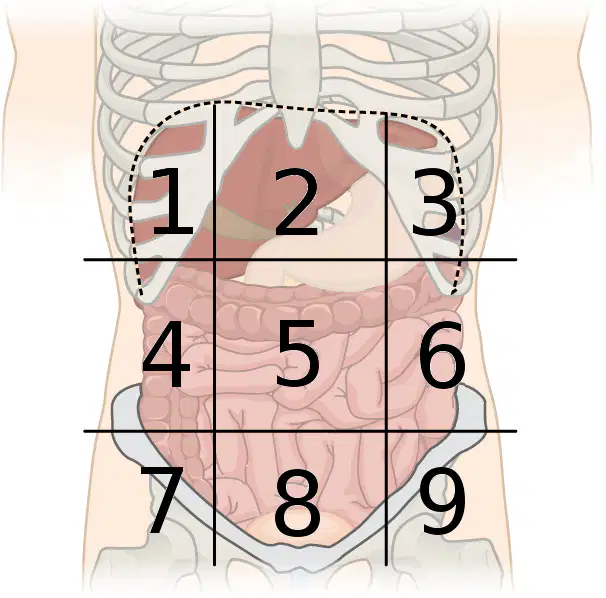
What is #4?
Left inguinal region
umbilical region
right lumbar region
epigastric region

What is #5 called?
Umbilical region
hypogastric region
epigastric region
left lumbar region
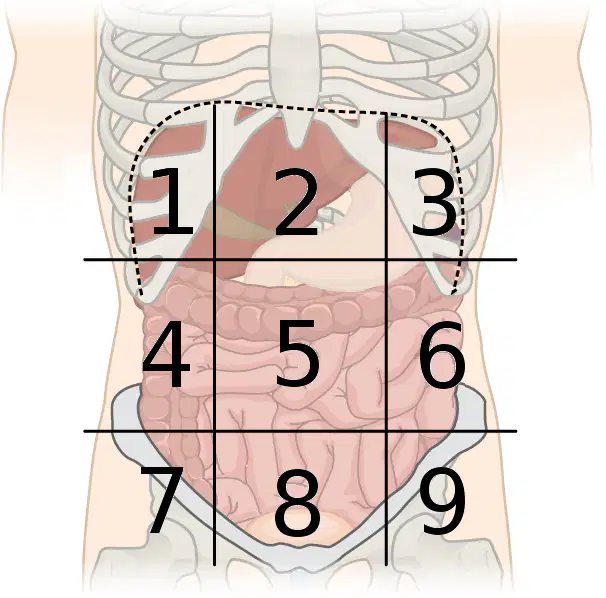
What is #6 called?
Right lumbar region
Left lumbar region
Left hypochondriac region
Right inguinal region

What is #7 called?
Right hypochondriac region
Epigastric region
Right inguinal region
Left lumbar region
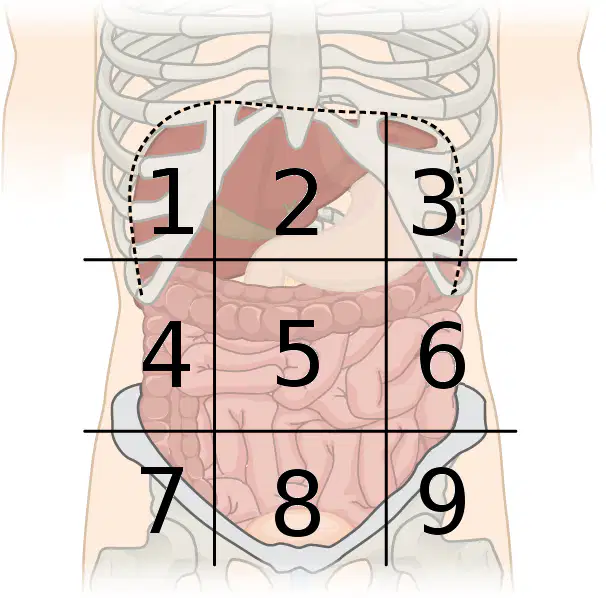
What is #8 called?
Left lumbar region
Hypogastric region
Epigastric Region
Umbilical Region
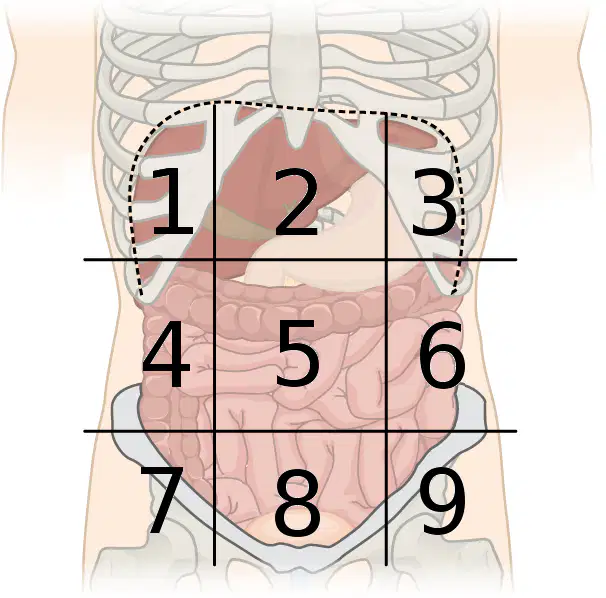
What is #9 called?
Left lumbar region
Left inguinal region
Right inguinal region
Epigastric Region
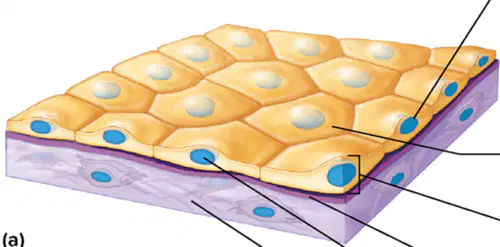
What epithelial tissue type is this?
Simple cuboidal
Simple Squamous
Simple columnar
Stratified squamous
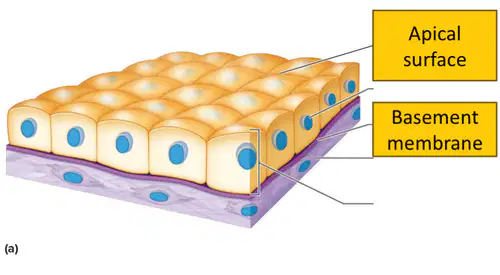
What epithelial tissue is this?
Simple columnar
Simple squamous
Simple cuboidal
Stratified columnar
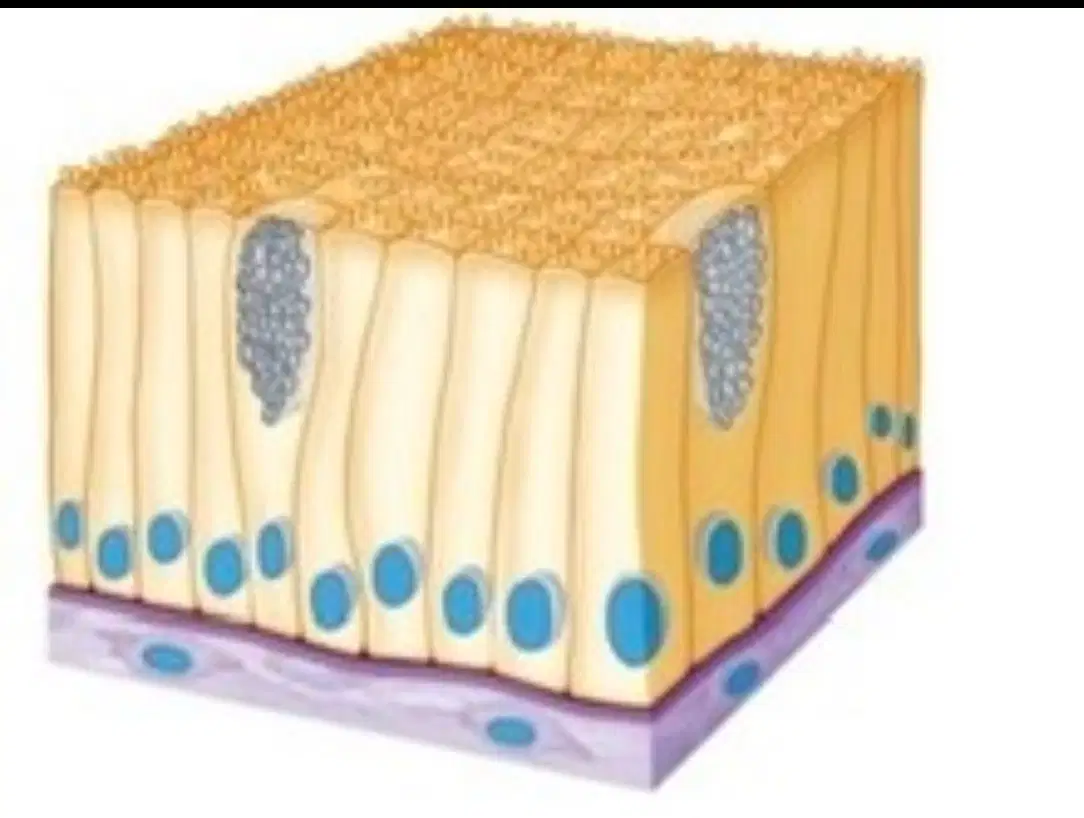
What epithelial tissue is this?
Simple columnar
Simple squamous
Stratified squamous
Simple cuboidal
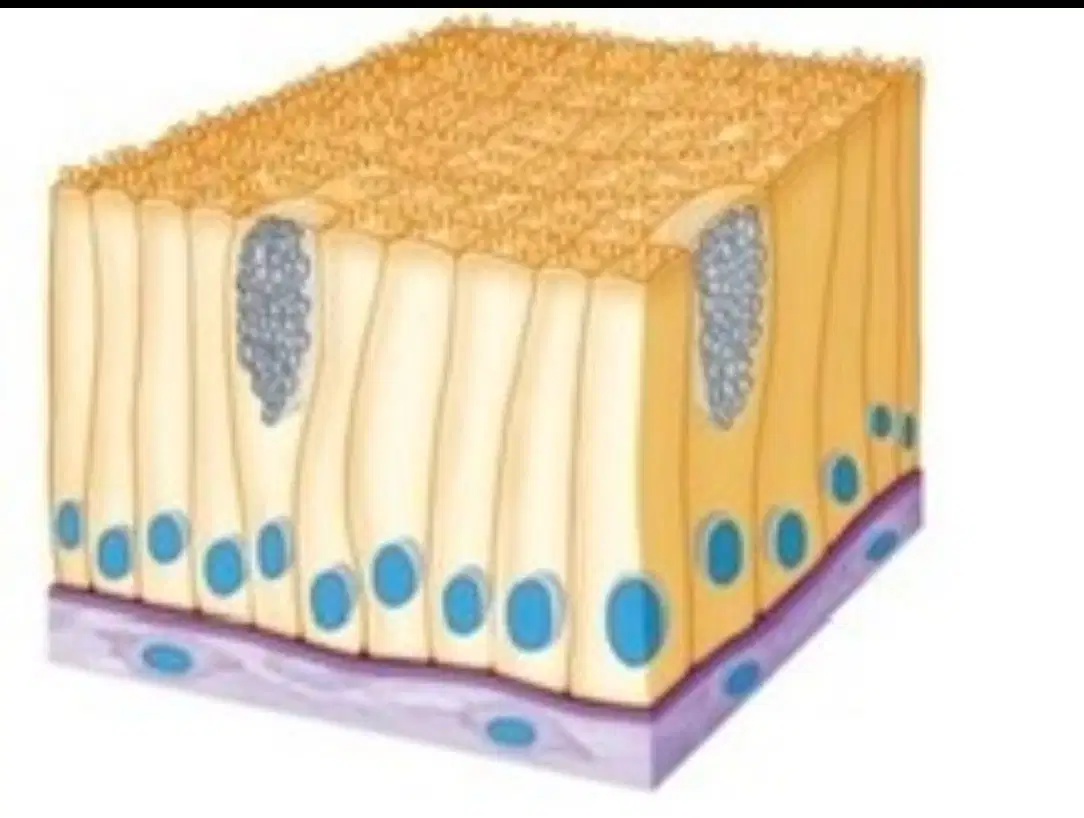
What epithelial tissue is this?
Simple squamous
Pseudostratified Columnar
Simple Columnar
Stratified cuboidal
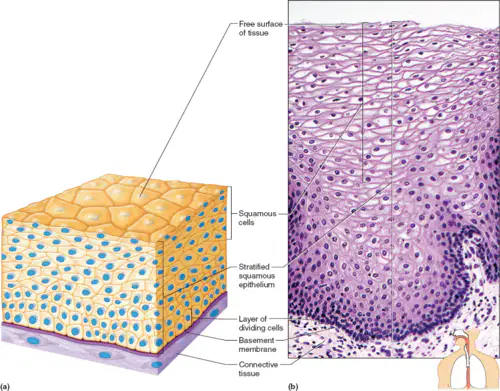
What epithelial tissue is this?
Stratified squamous
Simple squamous
Stratified cuboidal
Pseudostratified columnar

What epithelial tissue is this?
Simple cuboidal
Stratified cuboidal
Simple squamous
Simple columnar
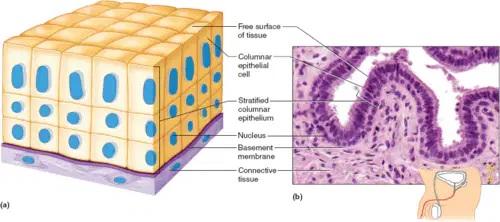
What epithelial tissue is this?
Simple squamous
Simple columnar
Stratified cuboidal
Stratified columnar

What is #1?
Diphysis
Proximal epiphysis
Metaphysis
Spongy bone

What is #2?
Metaphysis
Diphysis
Compact bone
red bone marrow

What is #3?
Metaphysis
Diphysis
Articular cartilage
long bone

what is #4?
Distal
Metaphysis
Endostenum
Compact bone

What is #5?
Distal epiphysis
Yellow bone marrow
Nutrient artery
Compact bone

what is #6?
Metaphysis
Articular cartilage
Compact bone
Periosteum

what is #7?
Spongy bone
Compact bone
long bone
short bone

what is #8?
Yellow bone marrow
Endosteum
Compact bone
Epiphyseal line

what is #9?
Yellow bone marrow
Red bone marrow
Metaphysis
Diphysis

what is #10?
Red bone marrow
Spongy bone
Endosteum
Metaphysis

what is #11?
Compact bone
Spongy bone
Metaphysis
Proximal

what is #12?
Red bone marrow
Medullary cavity
Yellow bone marrow
Spongy bone

what is #13?
Yellow bone marrow
Red bone marrow
Compact bone
Epiphyseal line

what is #14?
Yellow bone marrow
Periosteum
Metaphysis
Diphysis

what is #15?
Diphysis
Metaphysis
Nutrient artery
Spongy bone

what is #16?
Articular cartilage
Metaphysis
Proximal epiphysis
Compact bone

