
 Worksheets
103 unit
Total questions: 25
Worksheet time: 15mins
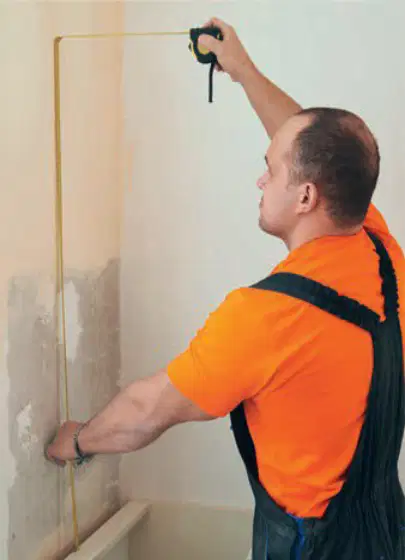
What are the traditional skills required for construction and building services tradespeople?
Carpentry, plumbing, and electrical work
Cooking and baking
Painting and sculpting
Gardening and landscaping

What is the acceptable range for a door frame that is required to be 900mm wide with a tolerance of +/- 2mm?
What is the imperial unit equivalent of kilogramme (kg)?
inch (in)
foot (ft)
pint (pt)
pound (lb)
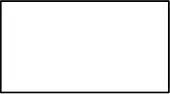
What is the formula for the area of a rectangle?
length × width
length + width
2 × (length + width)
length × length
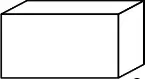
What is the formula for the volume of a brick?
length × width × height
length + width + height
2 × (length + width + height)
length × width

What is the formula for the area of a triangle?
1/2 * base * height
base * height
1/2 * base * base
base + height
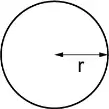
What is the formula for the area of a circle?
πr²
2πr
πd
r²
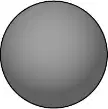
What is the formula for the volume of a sphere?
(4/3)πr³
πr²h
2πr
(1/3)πr²h

What is the formula for the volume of a cylinder?
The formula for the volume of a cylinder is V = πr²h, where V is the volume, r is the radius of the base, and h is the height of the cylinder.
The formula for the volume of a cylinder is V = 2πrh, where V is the volume, r is the radius of the base, and h is the height of the cylinder.
The formula for the volume of a cylinder is V = πr², where V is the volume, r is the radius of the base, and h is the height of the cylinder.
The formula for the volume of a cylinder is V = πr²h/3, where V is the volume, r is the radius of the base, and h is the height of the cylinder.
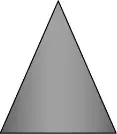
What is the formula for the volume of a cone?
V=31πr2h
V=πr2h
V=21πr2h
V=32πr2h
Linear metres are a measure of what?
Length
Weight
Volume
Temperature
Which of the following items can be calculated in linear measurements?
Skirting board
Lengths of timber
DPC
All of the above
Fill in the blank: 4 pieces @ 3.3m = _____.
13.2m
10.2m
12.0m
15.0m
To find the area of a surface, you need to multiply its length by its width (L × W). What is the area of a surface with a length of 3.3m and a width of 3.3m?
10.89 m²
9.9 m²
11 m²
10 m²
Calculate the volume of an object with dimensions 3.3m × 3.3m × 3.3m. Use the formula: volume = length × width × height.
35.937 m³
30.000 m³
40.000 m³
50.000 m³

Which of the following is a permanent reference point on a building site?
Temporary benchmark
Ordnance benchmark
Datum line
Set mark

What is the traditional skill in bricklaying that involves measuring and setting out?
Masonry
Carpentry
Surveying
Plastering
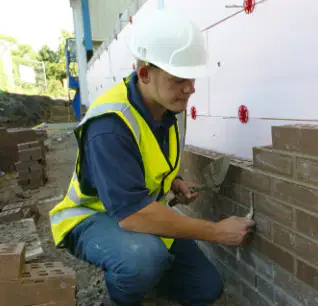
The traditional skill in bricklaying that involves finishing, jointing, and pointing is called:
Masonry
Carpentry
Plastering
Tiling
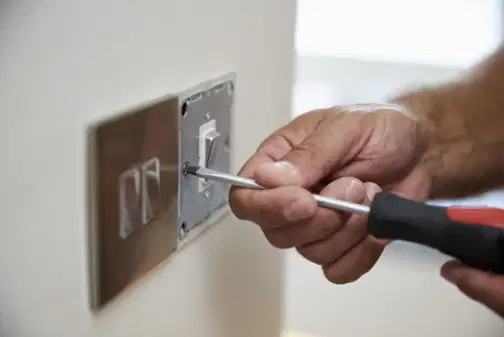
Name a traditional skill used in BSE trades related to electrical work.
Wiring
Plumbing
Carpentry
Masonry

The process of 'Cutting' in carpentry and joinery involves:
measuring and marking the material before cutting
assembling the cut pieces together
applying a finish to the wood
sanding the wood surface
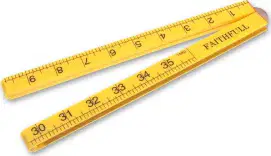
Fill in the blank: A _______ is a type of measuring tool that can be folded for convenience.
Folding rule.
Tape measure
Caliper
Protractor

What does the term 'marking tools' refer to?
Tools used for cutting materials
Tools used to mark the required measurements
Tools used for painting surfaces
Tools used for drilling holes
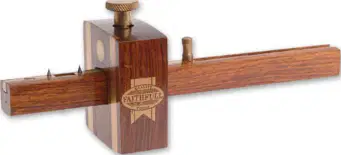
Gauges can be used for ______ and marking out components.
measuring
cutting
drilling
sanding
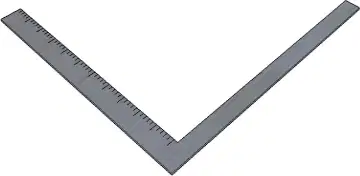
Squares are used for marking out and checking ______ and corners.
angles
lines
circles
edges

Why is it important to use the right tools for the job?
To ensure safety and accuracy
To save time
To reduce costs
To increase complexity

