
 Worksheets
REVIEW FOR NSCAS
Total questions: 65
Worksheet time: 51mins
What is a fossil?
The preserved remains of an organism or evidence of its activity.
Living animals that can reproduce.
Animals that can only be seen in a particular place.

Which organism is most like the tortoise?


According to this image, which TWO organisms are most closely related?
bat
bird
butterfly

apoptosis
tumor
embryo
Which of the following is a key piece of evidence for the theory of evolution?
Astronomical observations
Weather patterns
Fossil records
Geological formations
What is the significance of studying embryology in understanding evolution?
It helps identify the diet of ancient species.
It provides evidence of common ancestry among species.
It explains the migration patterns of species.
It shows the lifespan of different species.
Structures that have similar functions but different origins
analogous structures
homologous structures
vestigial structures
An example of this is: Wings of a moth and wings of a bird are both for flying but they are entirely different structures
analogous structures
homologous structures
vestigial structures

analogous structures
homologous structures
vestigial structures

analogous structures
homologous structures
vestigial structures

The picture shows what kind of evidence?
Fossil evidence
Anatomical Evidence
Molecular (DNA) evidence
Embryology

The picture shows what kind of evidence?
Fossil evidence
Anatomical Evidence
Molecular (DNA) evidence
Embryology

The illustration above shows the structures of two unrelated species. Each have a similar function but are different in structure. This is an example of-
Vestigial structures
Cyclic structures
Analogous structures
Homologous structures

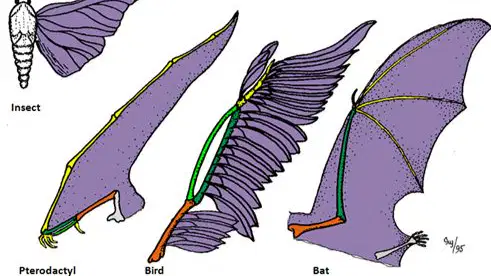
Similar functions that evolved independently in different organisms due to serving similar purposes
Homologous structure

The same kinds of functions that grow in structurally different patterns in different organisms (penguin and fish fins) are termed as ___.
endosymbiosis
natural selection
analogous structures
vestigial organs
The theory that all life shares a common ancestor.
Evolution
Life
After life
Kingdom
Preserved remains of plant and animals from the past are called _________.
fossils
rocks
wood
water
The first living organisms were...
Single celled
Multi Celled
Dinosaurs
Humans
According to the fossils record, at one time, all living organisms on Earth in the past were living UNDER WATER.
True
False
The end of life for a group of organisms, usually a species, is called a(n) ___________.
wipeout
extinction
meteorite
dying off
Which of the following is the brain of the cell?
Nucleus
Ribosomes
Cell Membrane
Cytoplasm
The basic unit and structure of life
Cells
DNA
Genes
Chromosomes
Human has _______ number of chromosomes
22
26
46
64
Most mutations are said to be___________
Random
easily treated
can be detected

The brain of the cell.
Lysosomes
Nucleus
ribosomes
Mitochondria

How many PAIRS of chromosomes do humans typically have?
23
46
12
92


The picture shows _____________
Cells
Chromosomes
Organ
Genes
The changes or alteration in the DNA structure is called
Mutation
Disease
Abnormalities
Essential for the body to build muscles.
Proteins
Chromosomes
DNA
Is it possible to pass down mutation to the offspring?
Yes
No
May be

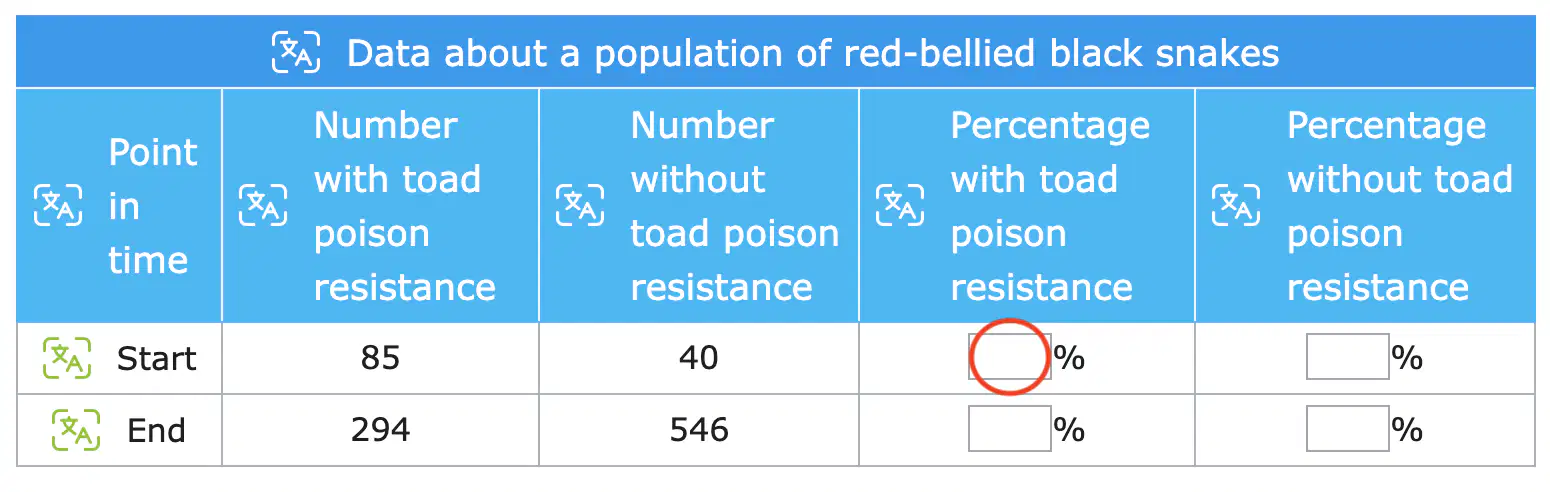
What is percentage of the encircled box?
68%
32%
86%
24%
What is something that might naturally orbit a planet?
a star
a comet
a moon
a solar system
The Sun is at the center of
the universe
the galaxy
the solar system
the world
The sun, comets, asteroids, planets, and natural satellites make up the
solar system
universe
galaxy
everything
The sun, comets, asteroids, planets, and natural satellites make up the
solar system
universe
galaxy
everything
Which is not a Gas Giant?
Mars
Jupiter
Saturn
Neptune
Earth's period of revolution is
59 days
1.88 years
244 days
365 days

Which is true about Mercury, Venus, Earth, and Mars
they all have an atmosphere
they all have many moons
they all have rings made of rocks and ice
they all have a rocky surface
If two magnets are close together, the magnetic force will be ________.
smelly
weak
strong
positive

Which of the following objects will a magnet attract?
A rubber band
A paper clip
A piece of paper
A wooden stick

Imprints or remains of once living organisms, found in sediment, are called ....
Evolution
Vestigial Structures
Homologous Structures
Fossils
change in the DNA sequence
protein
error
mutation
mutagen
one nucleotide is preplacced with a different nucleotide
addition
substitution(point)
deletion
inversion
when one or more nucleotides are deleted
substitution
addition
remake
deletion
when one or more nucleotides are inserted
addition
deletion
insertion
remake
Genetic mutations can be...
beneficial, harmful, or neutral
beneficial only
harmful only
neutral only
1. The process of choosing parent organisms for desired characteristics is called
natural selection
Artificial selection
random selection
genetic manipulation
What is an example of artificial selection?
Letting dogs choose their own mate
Letting plants pollinate on their own
Crossing a labrador and a poodle to create a labradoodle
Artificial selection is also known as
natural selection
selective hearing
genetic manipulation
selective breeding
When humans select desirable traits to be passed down to offspring
natural selection
artificial selection
The change that occurs over long periods of time in the characteristics and diversity of organisms
natural selection
artificial selection
evolution
acquired characteristics
What is a good argument for genetically modifying animals?
Produce more meat
Figure out how to make Spiderman
Modifying your kids to make them more awesome
New genes are needed to create new species

