
 Worksheets
8th Grade Science STAAR Review (24-25)
Total questions: 78
Worksheet time: 1hrs 5mins
Felix examined several photos of stars. To compare their temperatures, he looked at the colors of the stars. He organized the photos in order from coolest to hottest. Which of these answers shows the correct order?
red, yellow, white, blue
white, blue, yellow, red
yellow, white, blue, red
blue, yellow, white, red

What is the Hertzsprung-Russel Diagram?
A map which tells the approximate location of stars in the Milky Way galaxy and their distance from Earth.
A table that alphabetically lists stars by name and includes dates of when the star was first charted.
A chart which organizes stars into categories based on the amount of Hydrogen they burn.
A graph used to classify stars according to their luminosity, color, temperature, and stage.

Knowing the color of a star also tells us its __________
age
location
temperature
name

Which star is considered a main sequence star?
Vega
Betelgeuse
Pollux
Van Maanan's Star


A[n] ______________ tide occurs when the sun is at right angles to the line between Earth and the moon.
high
neap
low
spring
A[n] ___________ tide occurs when the sun, Earth, and the moon are in a straight line.
spring
high
low
neap

Which body has the greater effect on Earth's tides?
Sun
Saturn
Moon
Venus

What type of tides would this arrangement of earth-moon-sun create?
neap tide
spring tide
new moon tide
full moon tide


What type of front is shown?
Warm Front
Cold Front

How does the air in this type of front move?
Warm air slowly moves over cold air
Warm air slowly moves under cold air.
Cold air moves over warm air.
Warm air meets cold air and cannot move
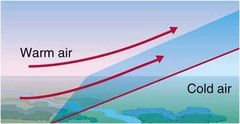
Which type of front is displayed?
Cold
Warm

A front is
where warm air is cooling at earth's surface
a boundary where hot and cold air are separating
a boundary where two different air masses meet
where cold air is rising and forming rain clouds

What type of front is the starred city experiencing?
cold front
warm front

Which organism DOES NOT pass energy directly to the eagle?
rat
thrush
frog
dragonfly

How many producers are on this food web? Primary consumers (herbivores)?
2, 3
4, 3
3, 3
4, 2

Look at the picture of the forest.
What prevents the small trees in the forest from growing larger?
Less rain reaches the smaller trees.
Less sunlight reaches the smaller trees.
Less soil reaches the smaller trees.
Less rain, sunlight and soil reaches the smaller trees.

Look at the desert food web.
What organism will possibly die out if the feather grass were removed from the desert?
Jackrabbit
Grasshopper
Desert tortoise
Desert fox
A producer
Eats grass
Makes its own food
Does not need food(energy)
Is a primary consumer
A primary consumer
makes its own food
eats other animals
is a carnivore
consumes the producer
A food chain shows ___ feeding relationship(s)
2
multiple
1
all
How many calories will be passed on from 250 to the next trophic level?
2,500
25
2.5
10%
What's an example of a producer?
(a)

___% of energy is passed from one organism to another.
1
10
100
1000
A behavioral trait is
a distinct feature or body part of an organism
an individual way in which an organism gathers food
a unique instinct that alerts organisms of nearby danger
a way in which an organism interacts with is environment

An opossum playing dead to confuse its predators is an example of
a behavioral trait
a physical trait

Birds migrating in the winter to get food for the year is an example of
a physical trait
a behavioral trait
(a) traits are the structural features that animals have that help them survive in their environment.
(a) traits are the things that organisms do to survive in their environment.

Toads hide during the day and come out at night to feed when it is much cooler, this is an example of
a behavioral trait
a physical trait
Primary succession begins where there was no ecosystem and no soil such as
a severe storm
a volcanic eruption
an old farm is abandoned
a forest fire
Secondary succession (thnk soil) forms after a catastrophic event like a forest fire and has a ___________ growth rate than primary succession because soil already exists.
extremely slower
slower
faster
What is a pioneer species?
Pioneer means first- so it must be the first thing to grow where nothing has grown before.
Pioneer means last -it's the last thing in an ecosystem
Pioneer has to do with covered wagons and traveling west during the 1800s.


Which type of succession is being shown here?
Why do grasses appear before shrubs in ecological succession?
loosen the dirt for new trees to take roots?
provide food for animals returning to the area
require plenty of sunlight to make their own food
can grow even in areas with shallow soil
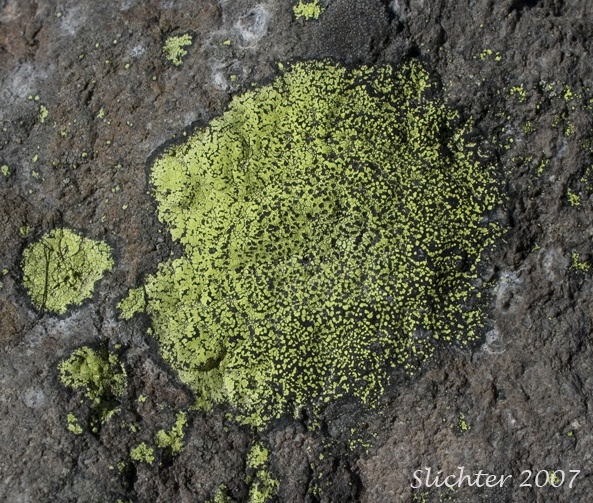
The control center of the cell; contains DNA
mitochondria
nucleus
ribosomes
ER
Golgi Bodies
Where cellular respiration takes place to make energy for the cell
nucleus
mitochondria
Golgi Bodies
ER
lysosomes
Controls what enters and exits the cell like a door
cell membrane
nuclear membrane
ER
Cell wall
vacuole
The filling in the cell that takes up space between organelles
nucleus
cytoskeleton
gelatin
cytoplasm
cytochondria
Produces proteins for the cell
ribosomes
lysosomes
vacuoles
mitochondria
chloroplasts
Gives shape and support to a plant cell
cell wall
cell membrane
vacuole
chloroplasts
Cell skeleton

Which organelle is this?
mitochondria
ER
Golgi bodies
nucleus
cytoplasm

What type of cell is this? (check all that apply)
plant
animal
prokaryote
eukaryote
bacteria

What is #4 pointing to?
cell membrane
cell wall
cytoskeleton
nucleus
nuclear membrane
Which BEST describes the function of the skeletal system?
A. It transports oxygen to cells and tissues.
B. It gives shape and support to the human body.
C. It takes in and breaks down all necessary nutrients for the body.
Which system of the human body provides protection to most of the major organs?
A. skeletal system
B. circulatory system
C. respiratory system
D. muscular system
In which system of the human body does the heart belong?
A. skeletal system
B. respiratory system
C. circulatory system
D. Nervous System
Which body system’s main purpose is to help the body move?
A. digestive system
B. muscular system
C. respiratory system
Which body system sends messages to the brain?
A. nervous
B. muscular
C. circulatory
Which two body systems work together to support the body and allow the body to move?
circulatory and respiratory
digestive and nervous
skeletal and muscular
circulatory and digestive

What is the Net Force and the direction of the object's movement as a result of the net force?
5N, Right
5N, Left
9N, Right
9N, Left

What is the Net Force and the direction of the object's movement as a result of the net force?
1N, Right
1N, Left
9N, Left
9N, Right
Action: Gravitational attraction pulls a book down
Reaction: A surface or the ground pushes the book up
Reaction: The book pulls back on the Earth
Reaction: The book falls to the ground
Reaction: The book pushes against a surface or the ground.
Action: A swimmer pushes the water backwards
Reaction: The swimmer moves forward
Reaction: The water pushes the swimmer forward
Reaction: The swimmer is tired
Reaction: The water moves backward
Action: A baseball player throws a ball.
Reaction: The ball flies through the air.
Reaction: The ball pushes back on the player's hand.
Reaction: The ball falls to the ground.
Reaction: The ball pushes on the air.
A net force F acts on a mass m and produces an acceleration a. What acceleration results if a net force 2F acts on mass 4m?
a/2
8a
4a
2a
An electric model train is acceleration at a rate of 8 m/s2 by a 12 N force? What is the mass of the train?
1.5 kg
3 kg
4.5 kg
9 kg
Biodiversity, aka biological diversity, usually refers to
the number of people on Earth
the variety of species on Earth
the number of animal species in a specific area
the number of plant species in a specific area
Why is biodiversity important to ecosystems?
It helps populations adapt to ecological changes.
It increases at each level of the food chain.
Mg + __HCl ---> MgCl2 + H2

