
Font size
 Worksheets
Space Test
Total questions: 146
Worksheet time: 2hrs 16mins
A light year is a unit appropriate for measuring which of the following characteristics of celestial bodies?
Size of galaxies
Mass of stars
Time of planetary orbits
Temperature of nebula
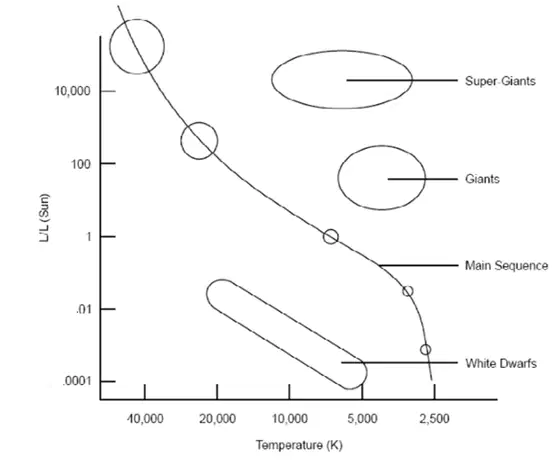
Looking at the diagram shown, when white dwarf stars are compared to giant stars, white dwarfs have ___.
1. Higher luminosity/brightness
2. Lower luminosity/brightness
3. Cooler temperatures
4. Higher temperatures
1 & 3 only
1 & 4 only
2 & 3 only
2 & 4 only
All observable objects outside our galaxy, when viewed from Earth, have their spectra shifted to slightly longer wavelengths. This is sometimes called red-shift. Astronomers have concluded that this is evidence that all objects in the universe are –
Hotter than the sun.
Moving away from each other.
Older than our solar system.
Absorbing radiation from the stars.
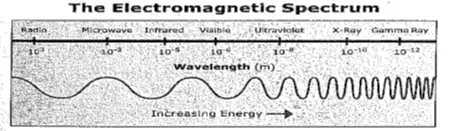
Which statement correctly identifies the relationship between wavelength and energy?
X-rays have smaller wavelengths and lower energy than ultraviolet waves.
Visible light has longer wavelengths and higher energy than infrared waves.
Radio waves have longer wavelengths and higher energy than gamma rays.
Visible light has shorter wavelengths and higher energy than radio waves.
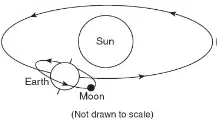
What force is responsible for these orbiting motions?
A. Electricity
B. Friction
C. Gravity
D. Magnetism
The most common element in a star, such as the Sun, is
A. Oxygen
B. Carbon
C. Hydrogen
D. Helium
Proxima Centauri is a star that is 4.2 light years from Earth. Based solely on this information, which of the following conclusions can be drawn?
The diameter of this star is more than four times larger than the Sun.
Light we see from the star took more than four years to reach Earth.
This star takes a little more than four years to make one rotation.
The gravity of this star would make an object weigh four times more than on Earth.
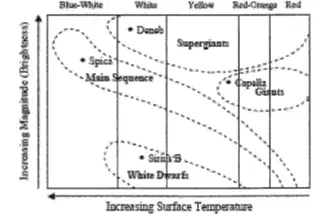
Which of these sequences the stars from least to greatest in absolute magnitude or luminosity?
A. Sirius B, Spica, Capella, Deneb
B. Capella, Deneb, Sirius B, Spica
C. Capella, Sirius B, Deneb, Spica
D. Sirius B, Capella, Spica, Deneb
A celestial body moving in an elliptical orbit around a star is called a what?
Alien
Moon
Star
Planet
The Earth revolves around its _____ once very 24 hours.
Tilt
Axis
Side
Revolution
The curved path of a celestial object or spacecraft around a star, planet, or moon, especially a periodic elliptical revolution.
Orbit
Circle
Rotation
Revolution
A celestial body that makes an orbit around a planet, including the eight major planets, dwarf planets, and minor planets
Sun
Star
Planet
Moon
A system of millions or billions of stars, together with gas and dust, held together by gravitational attraction.
Solar System
Universe
Galaxy
Planet
The object's orbital motion around another object.
Rotation
Orbit
Axis
Revolution
All existing matter and space considered as a whole; the cosmos. The universe is believed to be at least 10 billion light years in diameter and contains a vast number of galaxies; it has been expanding since its creation in the Big Bang about 13 billion years ago.
Galaxy
Planet
Solar System
Universe
A fixed luminous point in the night sky which is a large, remote incandescent body like the sun.
Planet
Comet
Star
Moon
The collection of eight planets and their moons in orbit around the sun, together with smaller bodies in the form of asteroids, meteoroids, and comets.
Planet
Solar System
Galaxy
Universe

What force holds the planets in motion around the sun?
Magnetic
Electrical
Gravitational
Air Resistance

Asteroids are composed mostly of _________.
ice
dirt
rock
gas
Who came up with the "Universal Law of Gravitation"?
Albert Einstein
Thomas Edison
Edwin Hubble
Sir Isaac Newton
Which statement is true?
Objects with more mass have less gravity.
Objects with more mass have more gravity.
Objects are only attracted to each other if they have high masses.
Distance is the most important factor in gravity.
This type of galaxy has arms that come out from the center.
Elliptical
Spiral
Irregular
This type of galaxy is made of mostly old stars.
Elliptical
Spiral
Irregular
This type of galaxy is made of mostly young stars.
Elliptical
Spiral
Irregular
Which of the following is smaller than the Sun?
blue supergiant
red supergiant
white dwarf
yellow giant
Which of the following would be the hottest temperature?
red supergiant
yellow giant
blue supergiant
orange giant
Which stage is NOT part of a lower-mass star's life cycle?
main sequence
giant star
supernova
white dwarf
How long does it take the Earth to rotate once on the axis?
48 hours
24 hours
36 hours
12 hours
Name the 4 outer planets
Jupiter, Saturn, Uranus, Neptune
Earth, Mars, Venus, Mercury
Pluto, Eris, Haumea, Makemake
Sun, Moon, Earth, Mars
A person who studies the universe and everything in it
astronomer
geologist
biologist
meteorologist
What is the term that describes a star and everything that orbits that star
galaxy
planetary system
universe
solar system
Name three types of galaxies
Spiral, Elliptical, Irregular
Cylindrical, Pyramidal, Pyramidal
What is it called when an extremely massive star explodes
Quasar
Nova
Supernova
Black Hole
what is a light year
A light year is a measure of time used in physics.
A light year is a type of star found in the galaxy.
A light year is the speed at which light travels.
A light year is a unit of distance used in astronomy to measure how far light travels in one year.
Millions or billions of stars held up together by gravity is called
nebula
star cluster
constellation
galaxy
Name the star that is the center of our solar system
Moon
Earth
Sun
Mars
What is the name of the chart that graphs a star's brightness and temperature
Kepler diagram
Galactic map
Stellar classification chart
Hertzsprung-Russell diagram
Name the four inner planets
Mercury, Venus, Earth, Jupiter
Pluto, Eris, Haumea, Makemake
Jupiter, Saturn, Uranus, Neptune
Mercury, Venus, Earth, Mars
What galaxy do we live in?
Milky Way
Andromeda
Bay Harbor
Triangulum
The spinning motion of a planet on its axis
Revolution
Orbit
Translation
Rotation
the action of one object completely moving around another object in an orbital path
Revolving
Circling
Orbiting
Spinning
What is the term that represents a huge sphere of gas held together by gravity
comet
star
planet
moon
What tool do astronomers use to study distant objects in space
Spectrometers
Microscopes
Telescopes
Binoculars
The imaginary line that runs through both poles of a planet
Tropic of Cancer
Prime Meridian
Axis
Equator
About how long does it to Earth to revolve once around the Sun?
360 days
366 days
365 days
What term describes an area in space with gravity so strong that nothing can escape its pull
neutron star
red giant
white dwarf
black hole
What characteristic do astronomers use to classify galaxies
Color and brightness
Distance from Earth
Shape
Temperature and age
What key term describes all of space and everything in it
galaxy
planet
solar system
universe
Spectral class
Spectral class refers color of the stars determined by their wavelengths invisible light
Spectral class is a measure of a star's brightness.
Spectral class categorizes planets based on their size.
Spectral class is used to determine the age of a star.
Most stars are in what part of the HR-diagram?
Supernova remnants
White dwarfs
Main sequence
Red giants
What part of the HR-Diagram are the brightest and hottest stars?
Luminosity
The surface temperature of a star is measured in
Celsius (C)
Kelvin (K)
Luminosity is measured in
Solar units
What is spectral class
In which direction do planets orbit the Sun?
Which Planet is the hottest?
Which planet is the largest?
Which planet is the closest to the Sun?
What does Earth have that our Moon doesn't
What causes planets and moons to shine?
What planet takes the longest to orbit the sun?
What orbits Earth the same way Earth orbits the Sun?
What would change if Mars' surface had less iron?
Mars would appear less reddish
What can be found in the Kuiper belt?
What is a characteristic of a terrestrial planet
Where are terrestrial planets located in our solar system
What type of planets are located in the outer solar system.
Is the Sun a star?
The distance from the Sun to where 92 million miles is
Venus
The Moon
Jupiter
Earth
Which is large a light year or 1 AU
Why do are light years used instead of miles?
Light years are used because space is so big
What is an asteroid
What is a dwarf planet
What is a comet
What is a meteor
What are galaxy clusters?
Why is Pluto no longer considered a planet?
Pluto is no longer considered a planet because it isnt large enough
What are the Voyager and Pioneer Probes?
What is accuracy?
Accuracy is getting as close as possible to the correct answer
When repeated measurements are very close to each other
Who was Copernicus
Copernicus was a Renaissance astronomer known for developing the theory that the Sun was the Center of the Universe
In a GEOCENTRIC model the Sun resolves around
According to Copernicus the rising and setting of the Sun is due to
What are Epicycles?
Geo is a prefix for
Helio is a prefix for
Stars are made up of mostly two types of gases
Do all stars shine equally?
The measure of how much energy or light a star shines from its surface is called
Bigger stars glow brighter than smaller stars
When astronomers measure how bright a star is from a distance is called
All stars glow because of
Why does the Hubble Space Telescope images show what objects looked like a long time ago?
The gyroscopes on the Hubble Space Telescope are use to
maintain orientation and stabilize position. To steer it
How do scientist know that the Sun is a middle aged star?
How bright it is
By how fats it spins
How big it is
By the wrinkles on its surface
Why are you seeing the past when you look at the stars in the sky?
Optical telescopes detect what type of light
What is visible light
What is the term for the path that a celestial body follows as it moves around another body in space?
Trajectory
Orbit
Course
Route
Which planet is known as the 'Red Planet' due to its reddish appearance?
Saturn
Mars
Jupiter
Venus
What is the name of the phenomenon when the moon passes directly between the Earth and the Sun, blocking the Sun's light?
Full Moon
Solar Eclipse
Lunar Eclipse
New Moon
nuclear fusion occurs when
What are sun spots

What causes day and night?
The sun's ROTATION
The tilt of the earth on its axis
The earth's ROTATION on its axis every 24 hours
What is a REVOLUTION?
When one object orbits around another object
When one object rotates in place on an axis
When two objects spin around each other
What is a ROTATION?
When one object orbits around another object.
When one object spins around on its axis
When two objects move around each other
How long does it take Earth to make one REVOLUTION AROUND the Sun?
24 hours (one day)
365 days (one year)
11 days
What is the Sun?
An aestroid
A star
A planet
Which is the third planet from the sun?
Mercury
Venus
Earth
The sun is a planet.. True or False?
True
False


How many planets are there in the Solar System?
Nine
Fifteen
Eight
Eleven
What is the shape of the planets?
A square
Triangular
Spherical
A circle
One full orbit is called a...
Axis
Rotation
Inertia
Revolution

Based on the data in the table, which conclusions can you draw?
Uranus is the coldest of all the planets
The farther a planet is from the Sun, the longer it takes to orbit it.
A day on Earth is longer than a day on Saturn.
The farther a planet is from the Sun, the shorter its day.
All the planets in the solar system orbit the sun. What is the main difference between the orbits of the inner and outer planets?
The outer planets take longer to orbit the sun than the inner planets do.
The outer planets rotate as they orbit the sun, and the inner planets do not.
The inner planets travel a greater distance than the outer planets do.
The inner planets and outer planets orbit in different directions.
Which is the following is arranged from biggest to smallest?
Universe, constellation, galaxy, solar system
Galaxy, constellation, universe, solar system
Universe, galaxy, constellation, solar system
Galaxy, universe, constellation, solar system
List the 8 planets in order
Mercury, Earth, Mars, Jupiter, Saturn, Uranus, Venus, Neptune
Mercury, Venus, Earth, Mars, Jupiter, Saturn, Uranus, Neptune
Mercury, Venus, Earth, Mars, Saturn, Jupiter, Uranus, Neptune
Mars, Venus, Earth, Mercury, Saturn, Jupiter, Uranus, Neptune

What type of galaxy is this?
Spiral
Elliptical
Irregular

What type of galaxy is this?
Spiral
Elliptical
Irregular
What is the name of the force that keeps planets in orbit around the sun?
Gravitational force
Magnetic force
Electromagnetic force
Nuclear force
Which planet is known as the 'Red Planet'?
Mars
Venus
Jupiter
Saturn
What is the term for a small body of matter from outer space that enters the earth's atmosphere?
Comet
Satellite
Meteor
Asteroid

