wayground logo

Free Printable Worksheets

Font size

S
M
L
XL
Worksheets

Computer Memory Terms & More Study Guide

Total questions: 106

Worksheet time: 1hrs 20mins

Name
Class
Date
1.
Access
a)
It stores the exact same data with greater protection than previous levels.
b)
It refers to the delay that occurs when requesting a specific response. Less latency is better.
c)
The action of accessing a storage location and obtaining the stored data.
d)
The action of obtaining data from or writing data into a data storage device.
e)
An abbreviation for binary digit. It can only contain the value 1 or 0. It is the basic data unit for digital computers.
2.
Bit
a)
Redundant Array of Independent/Inexpensive Disks is a method of using multiple hard drives together for data storage with multiple hard drives appearing as a single drive.
b)
A set amount of data storage that is formatted by a file system and typically has a drive letter assigned to it (such as C:, D:, E:, etc.).
c)
Like the buffer, it is DRAM (dynamic random access memory) on the hard drive used to store temporary data that has recently or is frequently being accessed.
d)
An abbreviation for binary digit. It can only contain the value 1 or 0. It is the basic data unit for digital computers.
e)
It consists of eight bits.
3.
Buffer
a)
The storage area is used to temporarily store data so that a difference in data transfer rates and/or data processing rates between sender and receiver can be compensated.
b)
A set amount of data storage that is formatted by a file system and typically has a drive letter assigned to it (such as C:, D:, E:, etc.).
c)
The action of accessing a storage location and obtaining the stored data.
d)
The action of obtaining data from or writing data into a data storage device.
e)
It consists of eight bits.
4.
Byte
a)
A common measurement used to benchmark a storage device. It determines the maximum number of read and write operations for a storage device.
b)
Known as striping, where data is striped across multiple hard drives but offers no protection.
c)
It consists of eight bits.
d)
The action of obtaining data from or writing data into a data storage device.
e)
The amount of data that can be stored in a given storage device, usually expressed in bytes.
5.
Cache
a)
Like the buffer, it is DRAM (dynamic random access memory) on the hard drive used to store temporary data that has recently or is frequently being accessed.
b)
It refers to the delay that occurs when requesting a specific response. Less latency is better.
c)
Known as striping, where data is striped across multiple hard drives but offers no protection.
d)
Known as mirroring, which stores the exact same data within at least two hard
e)
The action of accessing a storage location and obtaining the stored data.
6.
Capacity
a)
The amount of data that can be stored in a given storage device, usually expressed in bytes.
b)
Data storage that happens online using services, such as Google Drive, Microsoft OneDrive, Apple iCloud, and more.
c)
It refers to the delay that occurs when requesting a specific response. Less latency is better.
d)
It combines a traditional HDD with a small SSD in one storage device.
e)
A process that is designed to extend the life of solid-state storage devices by ensuring all memory blocks experience a similar number of write/erase cycles.
7.
Channel
a)
The action of obtaining data from or writing data into a data storage device.
b)
A set amount of data storage that is formatted by a file system and typically has a drive letter assigned to it (such as C:, D:, E:, etc.).
c)
Is a collection of electronic circuits used for data writing and reading processes to and from magnetic media.
d)
Redundant Array of Independent/Inexpensive Disks is a method of using multiple hard drives together for data storage with multiple hard drives appearing as a single drive.
e)
A process that is designed to extend the life of solid-state storage devices by ensuring all memory blocks experience a similar number of write/erase cycles.
8.
Data
a)
The storage area is used to temporarily store data so that a difference in data transfer rates and/or data processing rates between sender and receiver can be compensated.
b)
It stores the exact same data with greater protection than previous levels.
c)
It is an ordered collection of information.
d)
It consists of eight bits.
e)
Redundant Array of Independent/Inexpensive Disks is a method of using multiple hard drives together for data storage with multiple hard drives appearing as a single drive.
9.
Jumper
a)
Used to set a hard drive's attributes, such as Master/Slave.
b)
It combines a traditional HDD with a small SSD in one storage device.
c)
Is a collection of electronic circuits used for data writing and reading processes to and from magnetic media.
d)
An abbreviation for binary digit. It can only contain the value 1 or 0. It is the basic data unit for digital computers.
e)
Like the buffer, it is DRAM (dynamic random access memory) on the hard drive used to store temporary data that has recently or is frequently being accessed.
10.
Latency
a)
The action of recording data on a storage device.
b)
It reads and writes data using flash memory with no moving parts.
c)
It refers to the delay that occurs when requesting a specific response. Less latency is better.
d)
A hard drive can be removed from a supported device without having to turn it off.
e)
It stores the exact same data with greater protection than previous levels.
11.
Cloud
a)
It refers to the delay that occurs when requesting a specific response. Less latency is better.
b)
It combines a traditional HDD with a small SSD in one storage device.
c)
It consists of eight bits.
d)
Data storage that happens online using services, such as Google Drive, Microsoft OneDrive, Apple iCloud, and more.
e)
The action of accessing a storage location and obtaining the stored data.
12.
RAID
a)
It is an ordered collection of information.
b)
The storage area is used to temporarily store data so that a difference in data transfer rates and/or data processing rates between sender and receiver can be compensated.
c)
Redundant Array of Independent/Inexpensive Disks is a method of using multiple hard drives together for data storage with multiple hard drives appearing as a single drive.
d)
Is a collection of electronic circuits used for data writing and reading processes to and from magnetic media.
e)
Known as mirroring, which stores the exact same data within at least two hard
13.
RAID level 0
a)
It combines a traditional HDD with a small SSD in one storage device.
b)
Redundant Array of Independent/Inexpensive Disks is a method of using multiple hard drives together for data storage with multiple hard drives appearing as a single drive.
c)
Known as striping, where data is striped across multiple hard drives but offers no protection.
d)
A set amount of data storage that is formatted by a file system and typically has a drive letter assigned to it (such as C:, D:, E:, etc.).
e)
Known as mirroring, which stores the exact same data within at least two hard
14.
RAID level 1
a)
Known as mirroring, which stores the exact same data within at least two hard
b)
Is the preferred faster access and transfer protocol for SSDs on the PCIe interface.
c)
Redundant Array of Independent/Inexpensive Disks is a method of using multiple hard drives together for data storage with multiple hard drives appearing as a single drive.
d)
The storage area is used to temporarily store data so that a difference in data transfer rates and/or data processing rates between sender and receiver can be compensated.
e)
A set amount of data storage that is formatted by a file system and typically has a drive letter assigned to it (such as C:, D:, E:, etc.).
15.
RAID level 5+
a)
It refers to the delay that occurs when requesting a specific response. Less latency is better.
b)
A process that is designed to extend the life of solid-state storage devices by ensuring all memory blocks experience a similar number of write/erase cycles.
c)
It stores the exact same data with greater protection than previous levels.
d)
The action of recording data on a storage device.
e)
A hard drive can be removed from a supported device without having to turn it off.
16.
Read
a)
It stores the exact same data with greater protection than previous levels.
b)
A hard drive can be removed from a supported device without having to turn it off.
c)
Known as striping, where data is striped across multiple hard drives but offers no protection.
d)
It is an ordered collection of information.
e)
The action of accessing a storage location and obtaining the stored data.
17.
Write
a)
Data storage that happens online using services, such as Google Drive, Microsoft OneDrive, Apple iCloud, and more.
b)
It refers to the delay that occurs when requesting a specific response. Less latency is better.
c)
It reads and writes data using flash memory with no moving parts.
d)
The action of recording data on a storage device.
e)
The action of obtaining data from or writing data into a data storage device.
18.
Volume (V)
a)
The action of obtaining data from or writing data into a data storage device.
b)
Is the preferred faster access and transfer protocol for SSDs on the PCIe interface.
c)
A set amount of data storage that is formatted by a file system and typically has a drive letter assigned to it (such as C:, D:, E:, etc.).
d)
It stores the exact same data with greater protection than previous levels.
e)
A process that is designed to extend the life of solid-state storage devices by ensuring all memory blocks experience a similar number of write/erase cycles.
19.
Solid-State Drive (SSD)
a)
A set amount of data storage that is formatted by a file system and typically has a drive letter assigned to it (such as C:, D:, E:, etc.).
b)
Redundant Array of Independent/Inexpensive Disks is a method of using multiple hard drives together for data storage with multiple hard drives appearing as a single drive.
c)
Is a collection of electronic circuits used for data writing and reading processes to and from magnetic media.
d)
Known as mirroring, which stores the exact same data within at least two hard
e)
It reads and writes data using flash memory with no moving parts.
20.
Solid-State Hybrid Drive (SSHD)
a)
Is a collection of electronic circuits used for data writing and reading processes to and from magnetic media.
b)
Data storage that happens online using services, such as Google Drive, Microsoft OneDrive, Apple iCloud, and more.
c)
It combines a traditional HDD with a small SSD in one storage device.
d)
A set amount of data storage that is formatted by a file system and typically has a drive letter assigned to it (such as C:, D:, E:, etc.).
e)
A common measurement used to benchmark a storage device. It determines the maximum number of read and write operations for a storage device.
21.
Hard Disk Drive (HDD)
a)
Is a collection of electronic circuits used for data writing and reading processes to and from magnetic media.
b)
A set amount of data storage that is formatted by a file system and typically has a drive letter assigned to it (such as C:, D:, E:, etc.).
c)
They read and write data to spinning disks, or platters, which is measured in revolutions per minute (RPM).
d)
The storage area is used to temporarily store data so that a difference in data transfer rates and/or data processing rates between sender and receiver can be compensated.
e)
A hard drive can be removed from a supported device without having to turn it off.
22.
Hot-Swappable (HS)
a)
It refers to the delay that occurs when requesting a specific response. Less latency is better.
b)
Known as striping, where data is striped across multiple hard drives but offers no protection.
c)
A hard drive can be removed from a supported device without having to turn it off.
d)
Used to set a hard drive's attributes, such as Master/Slave.
e)
It combines a traditional HDD with a small SSD in one storage device.
23.
Non-Volatile Memory Express (NVMe)
a)
Used to set a hard drive's attributes, such as Master/Slave.
b)
Is the preferred faster access and transfer protocol for SSDs on the PCIe interface.
c)
It stores the exact same data with greater protection than previous levels.
d)
They read and write data to spinning disks, or platters, which is measured in revolutions per minute (RPM).
e)
It is an ordered collection of information.
24.
Wear Leveling
a)
It consists of eight bits.
b)
A hard drive can be removed from a supported device without having to turn it off.
c)
Known as mirroring, which stores the exact same data within at least two hard
d)
It reads and writes data using flash memory with no moving parts.
e)
A process that is designed to extend the life of solid-state storage devices by ensuring all memory blocks experience a similar number of write/erase cycles.
25.
Input/Output Operations Per Second (IOPS)
a)
It is an ordered collection of information.
b)
Known as striping, where data is striped across multiple hard drives but offers no protection.
c)
It combines a traditional HDD with a small SSD in one storage device.
d)
A common measurement used to benchmark a storage device. It determines the maximum number of read and write operations for a storage device.
e)
The action of recording data on a storage device.
26.
What is this a microscopic picture of?
a)
Memory Stick 
b)
CD
c)
Magnetic Tape
d)
SD Card 
27.
What is the most durable?
a)
Magnetic Tape
b)
Solid State Drive
c)
Hard Drive
d)
CD
28.

Why do computers use binary to read data from memory?

a)
It's all they understand 
b)
It's quicker 
c)
Computers are made up of electronic switches 
d)

Computers only read 1's and 0's because they are a computer favorite numbers

29.
What type of memory is accessed the quickest?
a)
Solid State Memory
b)
Magnetic Storage
c)
Blu-Ray
d)
CD/DVD
30.
What type of memory is inside an iPhone?
a)
Magnetic Tape
b)
Solid State
c)
Optical
31.

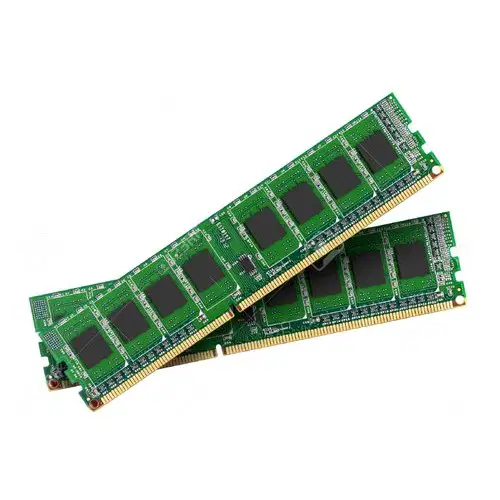
Which of these is RAM?

a)
b)
c)
d)
32.

Which of these is a Hard Disk Drive (HDD)?

a)
b)
c)
d)
33.

Put these measurements in sort from smallest to largest:

a)

Kilobyte

b)

Megabyte

c)

Gigabyte

d)

Terabyte

e)

Petabyte

1)
2)
3)
4)
5)
34.

Redundant Array of Independent Disks (RAID) are commonly used on _______.

a)

PCs

b)

Tablets

c)

Smartphones

d)

Servers

35.

A CD ROM is an example of a ____________

a)

Storage device

b)

Input device

c)

Output media

d)

Storage media

36.
Mass storage device that uses chips to store information
a)
External HD
b)
SSD
c)
USB 
d)
DVD
37.

Which type of memory is volatile and loses its data when the power is turned off?

a)

Hard Disk Drive (HDD)

b)

Random Access Memory (RAM)

c)

Read-Only Memory (ROM)

d)

Solid-State Drive (SSD)

38.
a)

Input device

b)

Output device

c)

Storage device

d)

CPU

39.

What does the acronym RAM mean?

a)

Reduced Access Memory

b)

Redundant Access Module

c)

Random Access Memory

d)

Random Access Module

e)

Really Awesome Memory

40.

What do solid state drives generate less of?

a)

Block cache

b)

Errors

c)

Heat

d)

Memory

e)

World hunger

41.

What is another name for a CPU?

a)

Miniprocessor

b)

Megaprocessor

c)

Centralized processor

d)

Microprocessor

e)

C3P0

42.

What is the purpose of an operating system?

a)

To manage computer hardware and software resources and provide common services for computer programs.

b)

To provide entertainment for the user

c)

To make the computer run faster

d)

To control the temperature of the computer

43.

What systems use a Central Processing Unit (CPU) and memory?

a)

Desktops only

b)

Servers only

c)

All types of computers

d)

Laptops only

44.

Name this device.

a)

CD

b)

DVD

c)

Hard Disk

d)

Blu-ray

45.

Convert the binary number 110010 to decimal.

a)

50

b)

25

c)

38

d)

19

46.

Arrange the following numbers from biggest to smallest!

8-6-7-4-5

a)

8-7-6-5-4

b)

4-5-6-7-8

c)

8-7-6-4-5

47.
Putting sauce on a pizza
a)
Area
b)
Circumference
48.
The rubber on a tire
a)
Area
b)
Circumference
49.
Sand covering a circular playground
a)
Area
b)
Circumference
50.

Choose numbers larger than 30

a)

40

b)

29

c)

10

d)

25

51.

Choose numbers smaller than 49

a)

70

b)

50

c)

38

d)

94

52.

Find the median of the data set

31, 43, 12, 25, 54, 18

a)

21

b)

28

c)

24

d)

22

53.
Find the median of these numbers:
99, 32, 61, 82, 58, 41, 73, 24, 18
a)
58
b)
41
c)
32
d)
73
54.

Binary langauge consists of __________ and __________.

a)

Ones and Twos

b)

Zeros and Twos

c)

Ones and Tens

d)

Zeros and Ones

55.

__________ bits makes a byte.

a)

2

b)

2

c)

6

d)

8

56.

________ is a temporary primary memory.

a)

RAM

b)

SD card

c)

Pen drive

d)

CD

57.

RAM is lost when the computer is switched off

a)

TRUE

b)

FALSE

58.

How many Kilobytes are ther in a Megabyte?

a)

1024

b)

10 000

c)

10

d)

24

59.

Half a byte is called a

a)

sandwich

b)

nibble

c)

cookie

d)

bit

60.

Which of these is the largest

a)

Terabyte

b)

Petabyte

c)

Gigabyte

d)

Megabyte

61.

Select the Storage Devices

a)

b)

c)

d)

62.

Convert the binary number 11001 to decimal.

a)

50

b)

25

c)

38

d)

19

63.
Convert 00010001 to decimal
a)
17
b)
27
c)
37
d)
47
64.
Convert 00100100 to decimal
a)
26
b)
36
c)
46
d)
56
65.
Convert 65 to binary
a)
01100001
b)
00100001
c)
01000001
d)
00100101
66.
Which of these is the correct sequence for the place values for binary numbers?
a)
1, 2, 4, 8, 16, 32, 64, 128
b)
1, 2, 4, 6, 8, 10, 12, 14, 16
c)
1, 2, 3, 4, 5, 6, 7, 8
d)
0, 1
67.

Convert this Binary number into a Decimal number: 0010 1000

(a)  

68.

Convert this Binary number into a Decimal number: 0001 0001

(a)  

69.

Convert this Binary number into a Decimal number: 1101 1110

(a)  

70.

Convert this Binary number into a Decimal number: 1111 1111

(a)  

71.
How would you write the number 4 in binary code?
a)
0100
b)
0000
c)
0001
d)
0010
72.

Which number represents that the circuit is "off" or closed?

a)

zero

b)

two

c)

ten

d)

one

73.

Which number represents that the circuit is "on" or open?

a)

zero

b)

two

c)

ten

d)

one

74.

6

a)

100

b)

101

c)

110

d)

111

75.

101

a)

2

b)

3

c)

4

d)

5

76.

Convert the following binary number into hex: 1010

(a)  

77.

1111 to decimal

a)

15

b)

11

c)

12

d)

13

78.

Match the following terms.

a)

Octal (Base-8)

1.

Used in early computer systems

b)

Hexadecimal

2.

Uses 16 symbols to represent numbers

c)

Binary (Base-2)

3.

Fundamental in digital electronics

d)

Decimal (Base-10)

4.

The number system humans use

79.

Calculate the binary addition:

01100000

01101001

Use binary addition rules

a)

11001001

b)

11101001

c)

11001011

d)

1010101111

80.
What is the word (command) used to display numbers and text on the screen?
a)
print
b)
input
c)
output
d)
command
81.
What is a variable?
a)
A box(memory location) where you store values
b)
a type of graphics
c)
Data type
d)
a type of memory
82.

List items have an index number. In the following list, which item has the index number of 3?

["John", "Harry", "Jesse", "John", "Harry", "Harry"]

a)

"John"

b)

"Harry"

c)

"Jesse"

83.
What is the position of the name 'Paula' in the following list:
names = ["Paul","Phillip","Paula","Phillipa"]
a)
0
b)
1
c)
2
d)
3
84.

To make the turtle move forward, which command is used?

a)

turtle.penup()

b)

turtle.forward()

c)

turtle.left()

d)

turtle.backward()

85.

In order to move the turtle 120 forward without drawing on the screen, which order is correct?

a)

turtle.forward(120)

turtle.penup()

turtle.pendown()

b)

turtle.pendown()

turtle.forward(120)

turtle.penup()

c)

turtle.penup()

turtle.forward(120)

turtle.pendown()

86.
To repeat until a particular condition is true use
a)
while loop
b)
for loop
c)
if loop
d)
indentation
87.

Fill in the blank

s t _ _

a)

ew

b)

ue

c)

ui

d)

ain

88.

Sort the numbers from least to greatest.

a)

23

b)

77

c)

84

d)

91

e)

92

1)
2)
3)
4)
5)
89.

Sort the numbers from least to greatest.

a)

001

b)

010

c)

100

d)

101

e)

110

1)
2)
3)
4)
5)
90.

Sort the numbers from least to greatest.

a)

001

b)

010

c)

100

d)

101

e)

110

1)
2)
3)
4)
5)
91.

Sort the numbers from least to greatest.

a)

00010

b)

00110

c)

00111

d)

01100

e)

10001

1)
2)
3)
4)
5)
92.

Sort the numbers from least to greatest.

a)

13/5

b)

12.38

c)

18 3/4

d)

20.27

e)

2209/100

1)
2)
3)
4)
5)
93.

Sort the numbers from least to greatest.

a)

1.94

b)

2.67

c)

18/5

d)

4.07

e)

4 11/50

1)
2)
3)
4)
5)
94.

Sort the numbers from least to greatest.

a)

32/25

b)

1 8/25

c)

211/100

d)

2 19/50

e)

19/5

1)
2)
3)
4)
5)
95.

What advantage does fiber optic cabling have over traditional copper cabling?

a)

Lower data transmission speeds

b)

Higher susceptibility to electromagnetic interference

c)

Shorter lifespan

d)

Higher data transmission speeds

96.

Where do children keep their collection of story books?

a)

On the floor

b)

In the refrigerator

c)

In their shoes

d)

In bookshelf

97.

ROM stands for ​ (a)   only memory. This is a type of computer storage is ​ (b)   data that normally can only be read, not written to. RAM stands for ​ (c)   access memory. It refers to a type of computer memory that allows for ​ (d)   access to data while the computer is running.

Choose from the below words
Read
Random
Permanent
Temporary
Quick
Slow
98.

The following file types are all images:

a)

MOV

b)

GIF

c)

JPG

d)

RTF

e)

PNG

99.

PDF stands for

a)

Portable Double Format

b)

Professional Document Format

c)

Portable Document Format

d)

Professional Double Format

100.

What is the purpose of file compression?

a)

To reduce the quality of a file

b)

To increase the size of a file

c)

To decrease the size of a file

d)

To change the file format

101.
.crx
a)
chromium extension
b)
video transport stream file
c)
3gpp multimedia file
d)
compressed android package
e)
uuencoded file
102.


(a)  

103.

Solve:

(a)  

104.

Solve for x 

(a)  

105.

Solve the Proportion

(a)  

106.

What is 50% of 150?

(a)