Worksheets
Earth/Space - Concept 1
Total questions: 81
Worksheet time: 41mins
Wind speeds increase as you move upward from Earth's surface due to less friction from Earth's surface.
Increases because the air meets with less friction from Earth's surface.
Decreases due to cooling temperatures.
Remains constant in the thin atmosphere.
Fluctuates unpredictably with altitude.
Where do meridians all converge?
At mid-latitudes
At the equator
At the poles (North & South Pole)
Nowhere
What happens to the density of air as you move further into the atmosphere?
It increases
It decreases
It remains constant
It fluctuates
What happens to the density of air as you move further into the atmosphere?
The temperature at which air becomes saturated.
The temperature to which air must be cooled at a constant pressure to reach saturation.
The temperature at which water vapor condenses to form dew.
The measure of humidity in the air.
How do cumulonimbus clouds develop the atmosphere?
They develop vertically in the atmosphere.
They are flat and remain at the same altitude.
They form in layers horizontally.
They are only present at high altitudes.
Which describes the evaporation process?
The process of water converting into ice.
The process of water changing from a gas to a liquid.
The process of water changing from a liquid to a gas.
The process of water undergoing condensation.
What is the primary cause of wind?
Humidity decrease
Temperature differences
Coriolis force
Pressure imbalances
The difference in elevation between two side-by-side contour lines on a topographic map is called a(n) ______________ _________.
gradient measure
elevation difference
altitude separation
contour interval
What is Ozone?
A pollutant produced by industrial activities.
An extremely important molecule in the Earth's atmosphere that absorbs harmful radiation.
A heavy gas that traps heat.
A compound that accelerates climate change.
What is any region where the same standard time is kept? How many are there on earth?
Time-zones, 12
Time-zones, 24
Time-zones, 18
Time-zones, 20
What process takes up latent heat?
Melting
Condensation
Sublimation
Evaporation of water
What type of technology would you use to find your location in a wooded area?
GPS
Sonar
OSTM/Jason-2 Satellite
What type of technology would you use to study sea levels?
GPS
Sonar
OSTM/Jason-2 Satellite
What type of technology would you use while fishing for a really big fish?
GPS
Sonar
OSTM/Jason-2 Satellite
Which describes humidity?
The clarity of the sky.
The amount of oxygen present in the air.
The measure of temperature variations in the atmosphere.
The amount of water vapor that is present in the air.
What provides the energy that drives the water cycle?
The sun
The moon
The earth
The water
Describe adiabatic cooling.
It is a process where a fluid cools as it expands without exchanging heat with its surroundings.
It is a process where a fluid heats up due to compression.
It is a process of cooling by evaporation.
It is a process of cooling through heat conduction.
Which description matches the atmospheric layer: exosphere?
Where most weather occurs
Atoms are moving fast enough that they are able to escape into outer space
Extremely low air density
Where meteors tend to burn up
Contains the concentrated zone
Which description matches the atmospheric layer: mesosphere?
Where most weather occurs
Atoms are moving fast enough that they are able to escape into outer space
Extremely low air density
Where meteors tend to burn up
Contains the concentrated zone
Which description matches the atmospheric layer: thermosphere?
Where most weather occurs
Atoms are moving fast enough that they are able to escape into outer space
Extremely low air density
Where meteors tend to burn up
Contains the concentrated zone
Which description matches the atmospheric layer: stratosphere?
Where most weather occurs
Atoms are moving fast enough that they are able to escape into outer space
Extremely low air density
Where meteors tend to burn up
Contains the concentrated zone
Which description matches the atmospheric layer: troposphere?
Where most weather occurs
Atoms are moving fast enough that they are able to escape into outer space
Extremely low air density
Where meteors tend to burn up
Contains the concentrated zone
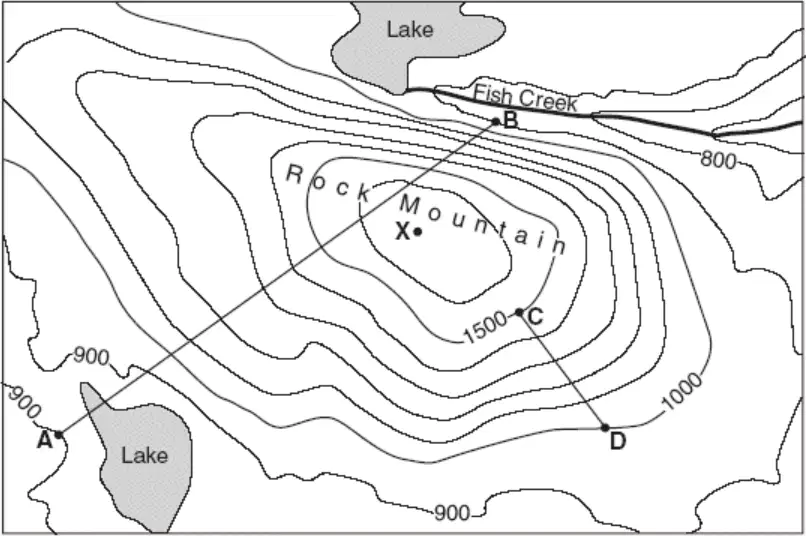
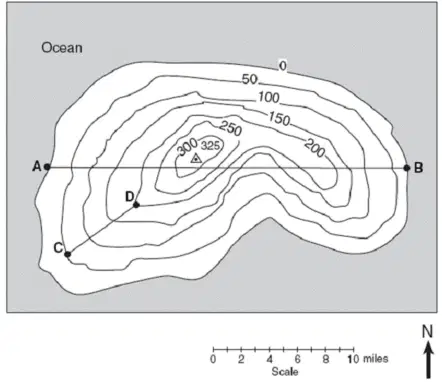
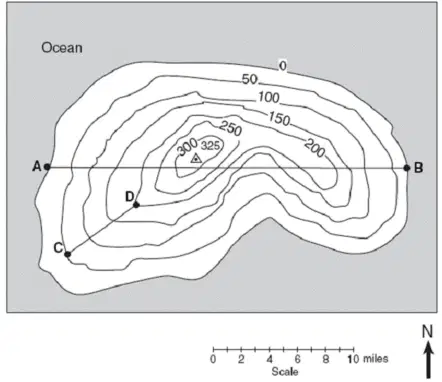
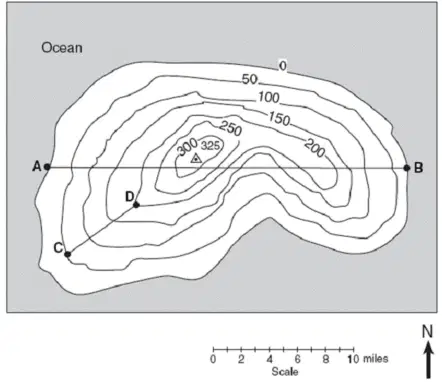
What is the contour interval of the map above?
100ft
50ft
200ft
300ft
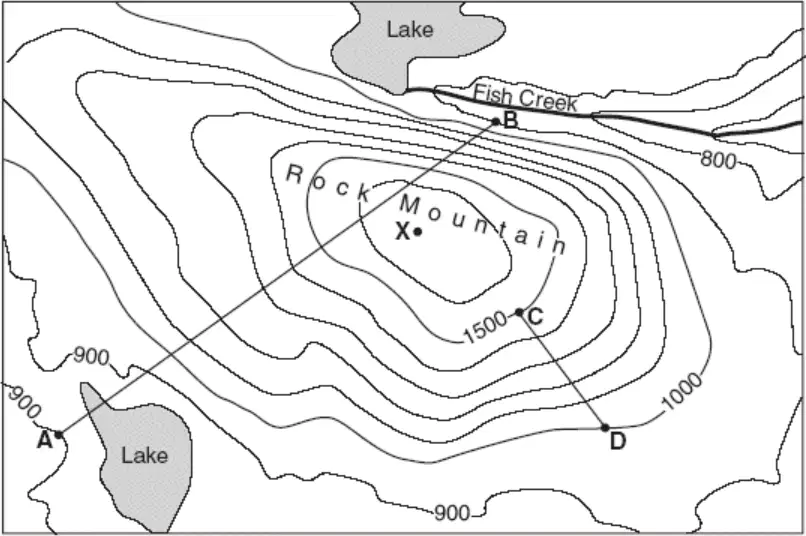
What is the elevation at point B?
900ft
850ft
950ft
1000ft
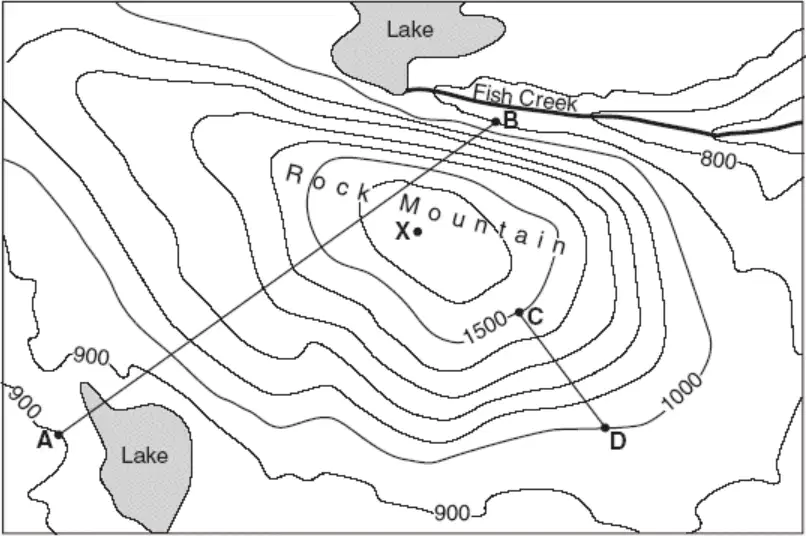
Which point(s) have the lowest elevation on this map?
A & B
A
B
C
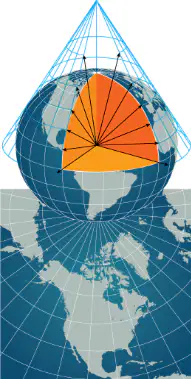
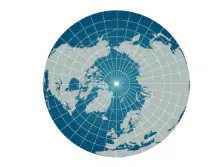
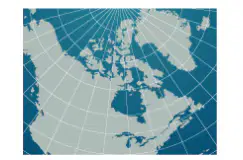
Identify the map projection shown in the image.
A) Mercator
B) Conic
Gnomic
Match the scientist to their field of study: meteorologist
Forces and processes that cause weather
Materials that make up the Earth
The universe
Patterns of weather over a long period of time
Earth’s oceans
Match the scientist to their field of study: oceanographer
Forces and processes that cause weather
Materials that make up the Earth
The universe
Patterns of weather over a long period of time
Earth’s oceans
Match the scientist to their field of study: astronomer
Forces and processes that cause weather
Materials that make up the Earth
The universe
Patterns of weather over a long period of time
Earth’s oceans
Match the scientist to their field of study: geologist
Forces and processes that cause weather
Materials that make up the Earth
The universe
Patterns of weather over a long period of time
Earth’s oceans
Match the scientist to their field of study: climatologist
Forces and processes that cause weather
Materials that make up the Earth
The universe
Patterns of weather over a long period of time
Earth’s oceans
24. Close contour lines of a map indicate..
A rapid increase in elevation
A gradual rise in elevation
Flat terrain
A steady decline in elevation
Match the Earth system, Hydrosphere, with the description.
Blanket of gases around Earth
All organisms and their environments
From surface of Earth down to its center
Water
Match the Earth system, Atmosphere, with the description.
Blanket of gases around Earth
All organisms and their environments
From surface of Earth down to its center
Water
Match the Earth system, Biosphere, with the description.
Blanket of gases around Earth
All organisms and their environments
From surface of Earth down to its center
Water
Contour lines on a map connect what?
Points with equal elevation
Points with equal slope
Points with equal precipitation
Points with equal vegetation
Where does the equator sit?
0; latitude
45; latitude
90; longitude
0; longitude
Latitude lines run _____________
east-west
north-south
Longitude lines run _____________
east-west
north-south
29. Longitude lines are also called ____________________.
Meridians
Parallels
Equators
Time Zones