
 Worksheets
IGCSE. Chemistry. Principles of Chemistry
Total questions: 48
Worksheet time: 24mins
Name
Class
Date
1.
Q1. What type of bond involves the swapping of electrons?
a)
Ionic
b)
Covalent
c)
Metallic
d)
Don't Know
2.
Q2. What type of bond involves the sharing of electrons?
a)
Ionic
b)
Covalent
c)
Metallic
d)
Don't Know
3.

Q3. What type of bond is represented by the diagram, below?
a)
Ionic
b)
Covalent
c)
Metallic
d)
Don't Know
4.

Q4. What is the formula for the molecule shown in the diagram, below?
a)
H₂O
b)
2HO
c)
(OH)₂
d)
Don't Know
5.

Q5. Use the diagram to deduce how many electrons an oxygen atom has in its outer shell. (Write your answer as a digit e.g. 2)
(a)
6.
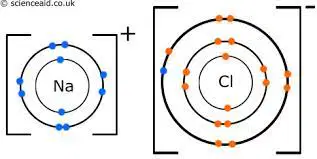
Q6. What kind of bond is represented by the diagram, below?
a)
Ionic
b)
Covalent
c)
Metallic
d)
Don't Know
7.
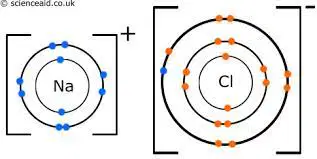
Q7. Does a sodium atom gain or lose an electron when forming a bond with chlorine?
a)
Gain
b)
Lose
c)
Don't Know
8.
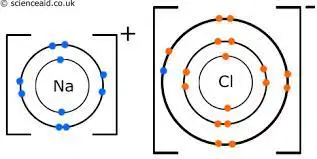
Q8. Does a chlorine atom gain or lose an electron when forming a bond with sodium?
a)
Gain
b)
Lose
c)
Don't Know
9.
Q9. What is the name given to an atom that gains or loses an electron(s)?
(a)
10.
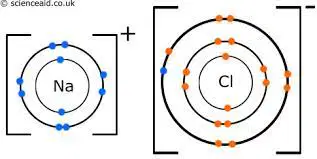
Q10. What is the name of the special force that forms the ionic bond between these two ions?
a)
Gravitational
b)
Electrostatic
c)
Electrochemical
d)
Electromagnetic
e)
Don't Know
11.
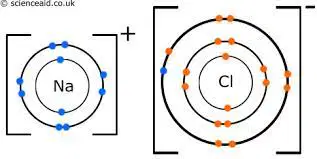
Q11. Use the diagram to deduce how many electron shells a sodium atom would have.
a)
1
b)
2
c)
3
d)
Don't Know
12.
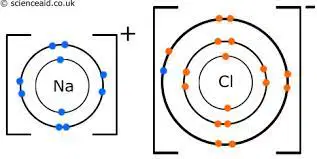
Q12. Use the diagram to deduce how many protons a chlorine atom would have. (Write you answer in digits e.g. 10)
(a)
13.
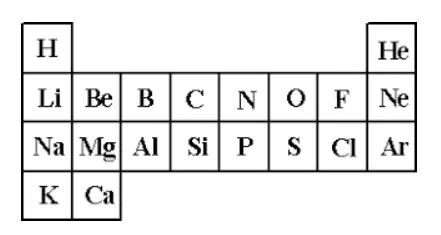
Q16. Give the symbol of an element that cannot gain or lose electrons
(a)
14.
Q18. What types of bonds form between two non-metal atoms?
a)
Ionic
b)
Covalent
c)
Metallic
d)
Don't Know
15.
Q19. What types of bonds form between a metal atom and a non-metal atom?
a)
Ionic
b)
Covalent
c)
Metallic
d)
Don't Know
16.
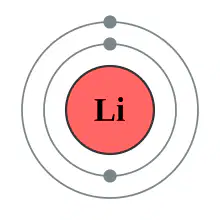
Q21. What group number does this atom pertain to in the periodic table of elements?
a)
3, because it has three protons
b)
3, because it has three electrons
c)
1, because it has one electron
d)
1, because it has one electron in the outer shell
e)
Don't Know
17.
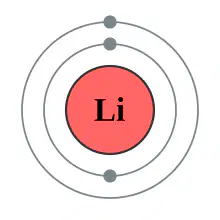
Q22. What period does this atom pertain to in the periodic table of elements?
a)
3, because it has three protons
b)
3, because it has three electrons altogether
c)
2, because it has two electron shells
d)
1, because it has one electron in the outer shell
e)
Don't Know
18.
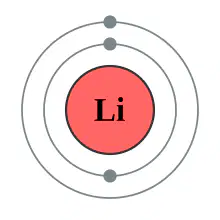
Q23. How many protons does this atom have?
a)
1
b)
2
c)
3
d)
Don't Know
19.
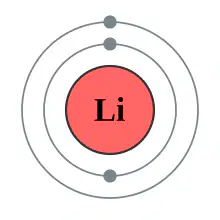
Q24. How many electrons does this atom have?
a)
1
b)
2
c)
3
d)
Don't Know
20.

Q25. How many electrons would an ion of lithium have?
a)
1
b)
2
c)
3
d)
Don't Know
21.
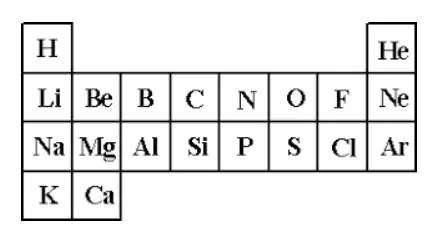
Q27. What is the symbol of the atom shown as an electron configuration diagram in Q26, above?
(a)
22.
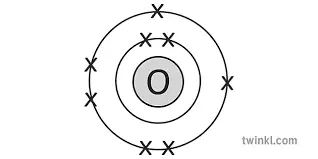
Q28. What is the maximum number of electrons that can be found in the first shell (innermost shell) of any atom?
a)
1
b)
2
c)
6
d)
8
e)
Don't Know
23.
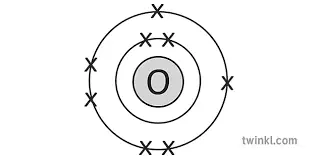
Q29. What is the maximum number of electrons that can be found in the second shell (outermost shell) of any atom?
a)
1
b)
2
c)
6
d)
8
e)
Don't Know
24.
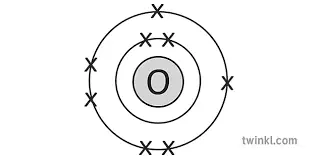
Q30. When this atom forms an ion, will it gain or lose electrons?
a)
Gain
b)
Lose
c)
Don't Know
25.
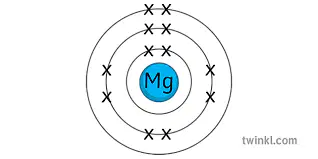
Q31. When this atom forms an ion, will it gain or lose electrons?
a)
Gain
b)
Lose
c)
Don't Know
26.
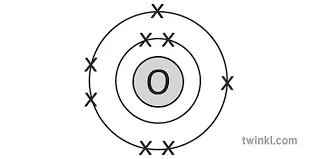
Q32. When this atom forms an ion, what will its charge be?
a)
+1
b)
+2
c)
-1
d)
-2
e)
Don't Know
27.
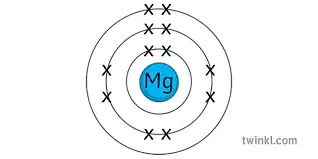
Q33. When this atom forms an ion, what will its charge be?
a)
+1
b)
+2
c)
-1
d)
-2
e)
Don't Know
28.
Q34. What is the formula of Magnesium Oxide?
a)
MgO because there will be one atom of each type
b)
Mg₂O₂ because one will lose two electrons and one will gain two electrons
c)
2MgO because there are two atoms of each type
d)
Don't Know
29.
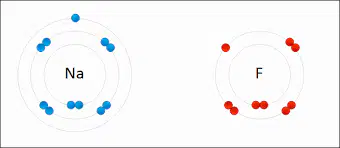
Q35. These electron configuration diagrams show that...
a)
Sodium is in group 1 and fluorine is in period 3
b)
Sodium is in period 3 and fluorine is in group 1
c)
Sodium is in group 1 and fluorine is in period 2
d)
Don't Know
30.
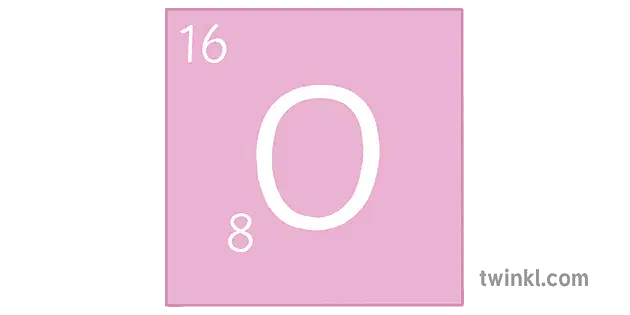
Q38. How many protons does an atom of oxygen have?
a)
16
b)
8
c)
24
d)
Don't Know
31.

Q39. How many neutrons does an atom of oxygen have?
a)
16
b)
8
c)
24
d)
Don't Know
32.
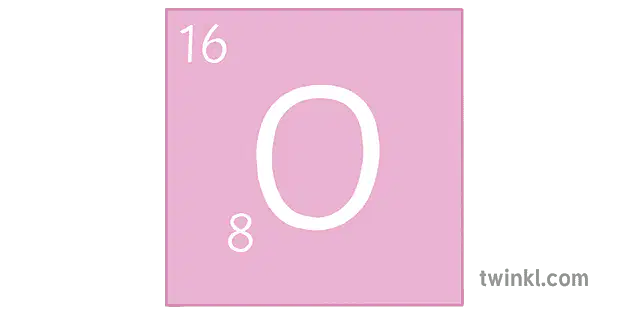
Q40. What is the mass number of this atom?
a)
16
b)
8
c)
24
d)
Don't Know
33.
Q41. What makes these two atoms different? X₂ and X₉
a)
Different mass number
b)
Different proton number
c)
They are allotropes
d)
Don't Know
34.
Q42. An atoms 'relative atomic mass' compares its mass to an atom of...
a)
Hydrogen
b)
Oxygen
c)
Carbon
d)
Don't Know
35.
Q43. Ionic bonds form between...
a)
Two metal atoms
b)
Two non-metal atoms
c)
A metal and a non-metal atom
d)
Don't Know
36.
Q44. The first name in an ionic compound comes from the...
a)
Metal
b)
Non-metal
c)
Don't Know
37.
Q45. The second part of the name of an ionic compound comes from the non-metal.
a)
True
b)
False
c)
Don't Know
38.
Q46. The ending of the compound ends in 'ate' if the compound contains oxygen (except OH)
a)
True
b)
False
c)
Don't Know
39.
Q49. Write the formula of the compound formed between lead (Pb) and Sulfur
(a)
40.
Q50. Write the formula of the compound formed between lead (Pb) and sulphate.
a)
PbSO₄
b)
4PbSO
c)
Pb(SO)₄
d)
Don't Know
41.
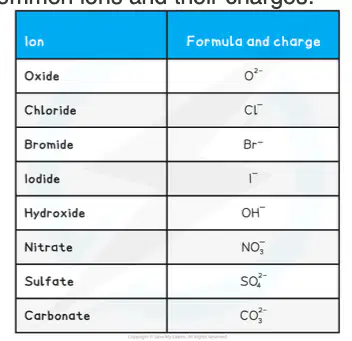
Q51. How many electrons will an ion of oxygen gain?
a)
1
b)
2
c)
3
d)
4
e)
Don't Know
42.
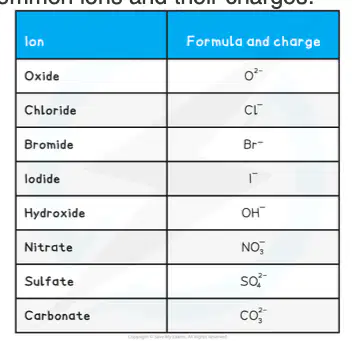
Q52. How many electrons will an ion of nitrate gain?
a)
1
b)
2
c)
3
d)
4
e)
Don't Know
43.
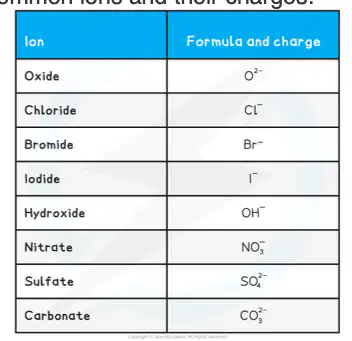
Q53. How many electrons will an ion of iodine gain?
a)
1
b)
2
c)
3
d)
4
e)
Don't Know
44.
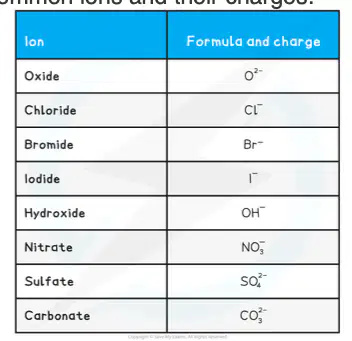
Q54. How many electrons will an ion of carbonate gain?
a)
1
b)
2
c)
3
d)
4
e)
Don't Know
45.
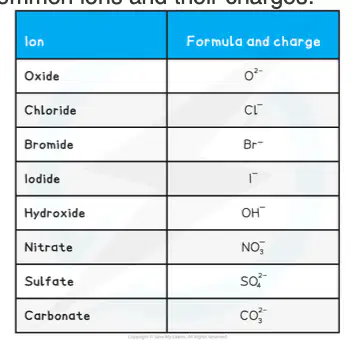
Q55. What will be the formula and name of the compound made when sodium is added to chlorine?
a)
SCl, sodium chlorine
b)
NaCl, sodium chlorate
c)
NaCl, sodium chlorine
d)
NaCl, sodium chloride
e)
Don't Know
46.
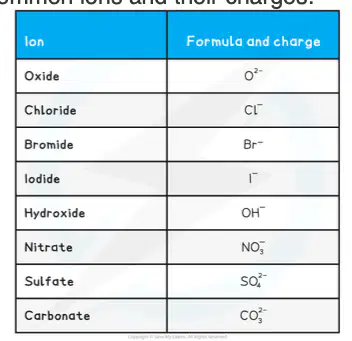
Q56. What will be the formula and name of the compound made when sodium is added to oxide?
a)
SO, sodium oxide
b)
NaO, sodium oxide
c)
Na₂O, sodium oxide
d)
NaO₂, sodium oxide
e)
Don't Know
47.
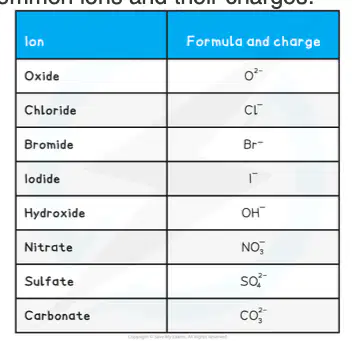
Q57. What will be the formula made when Al-³ is added to carbonate?
a)
AlCO₃
b)
Al³CO₃
c)
Al₂CO₃
d)
Al₂(CO₃)₃
e)
Don't Know
48.
Q58. Can you explain why the formula for aluminium sulfate is written as Al₂(SO₄)₃. If you don't know, write "I don't know."
4 lines
100 %

