
 Worksheets
Solar System Review 1
Total questions: 68
Worksheet time: 1hrs 8mins
The center of our solar system is the....
Earth
Sun
Moon
Asteroid belt
There are _________ planets in our solar system.
6
7
8
9
Jupiter, Saturn, Uranus, and Neptune are know as ________ planets.
rocky
gaseous
The gaseous planets are much larger than the rocky planets.
True
False
___________ are similar to planets but are not large enough to have cleared their orbital region of other objects.
dwarf planets
comets
asteroid belt
Kuiper Belt
Oort cloud

These planets are the?
Inner(Rocky) planets
Outer(Gas Giants) planets

What planets are these?
Inner(Rocky) Planets
Outer(Gas Giants) Planets
Which answer only applies to Earth?
Has an atmosphere
Has Rings
water in all 3 states
Is made of rocky surfaces

Which planet has the hottest temperature?
Mars
Venus
Mercury
Earth
Gravity of this object keeps planets in their orbits
moon
sun
Jupiter
The ______ states that the universe began expanding out of an enormous Explosion between 15 and 20 billion years ago.
H-R Diagram
binary star theory
Big Bang theory
"big crunch" theory
A________is a huge collection of stars.
universe
galaxy
solar system
super nova
Our solar system is located __________ of the Milky Way.
in the center
on the edge
outside
1 million miles out
There are _________ of galaxies in our universe.
hundreds
thousands
millions
billions
Holds galaxies together
Star Dust
Gravity
Moon Rocks
RED light
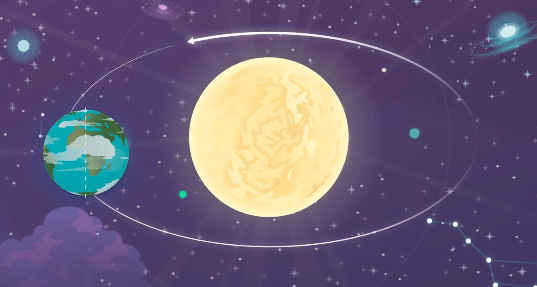
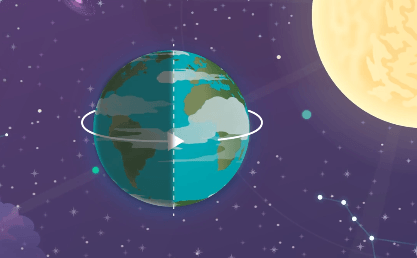

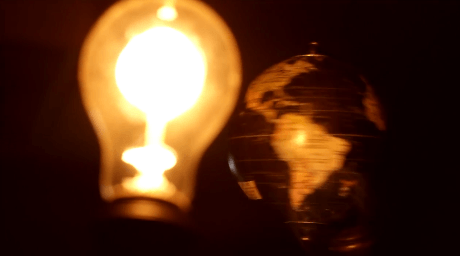
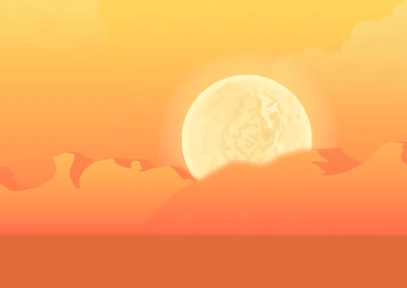
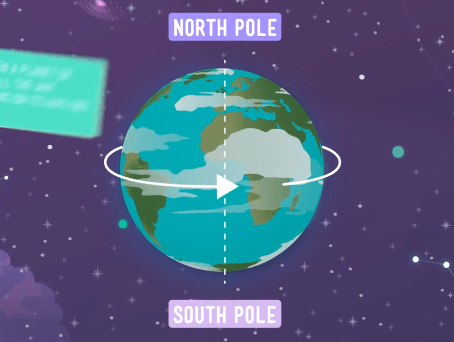
What looks like the motion of the Sun in the sky...
is really caused by the motion of _____.
the Earth
the stars
the planets
the Earth's axis
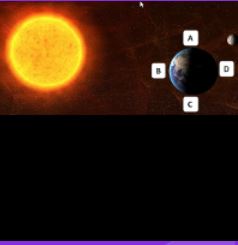
Which part of Earth is experiencing night?
A
B
C
D
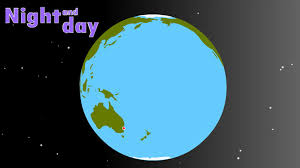

Which location is experiencing day time?
Location A because it is facing away from the sun
Location B because it is facing the sun
Location A because it is facing the sun
Location B because it is facing away from the sun

How long do you think it would take for location A to get to where location B is?
24 hours
a year
12 hours
a summer

The Moon is a planet.
True
False
The Earth, Sun, and Moon have gravity.
True
False
Out of the Earth, Sun, and Moon, the Earth has the most gravity of the three.
True
False
Out of the Earth, Sun, and Moon, the Sun has the most gravity of the three.
True
False
The Earth and Moon are both made of rock.
True
False
The Sun is made of gas.
True
False
The Sun and Moon are not planets.
True
False
The Moon is a natural satellite of the Earth.
True
False
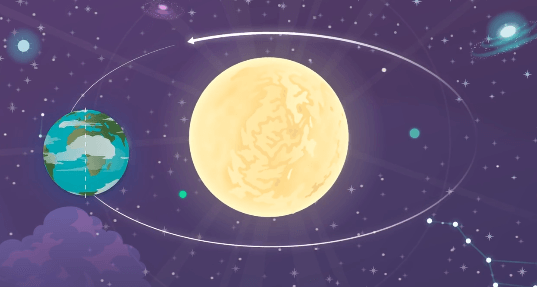
The Earth orbits the Sun.
True
False
The Sun is a star.
True
False
The Moon revolves around the Earth.
True
False
Match the following

I am made of gases

I reflect sunlight at night.

Most of my surface is covered in water.

Match the following

I am 93 million miles away.

I have some landforms and a lot of craters.

It takes me 24 hrs ( 1 day ) to rotate.

Match the following

My atmosphere is very hot.

I am a celestial body that orbits a planet.

I have landforms and few craters.

Match the following

I rotate 1 time every 25 days at the equator and 35 days at poles.

I rotate 1 time every 27 days.

I rotate 1 time every 24 hours.


What is a constellation?
A planet orbiting the sun.
A group of stars forming a pattern in the sky.
A single bright star.
A comet moving through space.
Why do different constellations appear in the sky at different times of the year?
The stars move around Earth.
The sun's light makes some stars disappear.
Earth's rotation changes the stars we see.
Earth's orbit around the sun changes our view of the night sky.
What is a circumpolar constellation?
A constellation only visible in summer.
A constellation that can be seen year-round in a certain hemisphere.
A group of stars that form a temporary pattern.
A constellation that appears only near the equator.
Which star is known as the North Star?
Betelgeuse
Sirius
Polaris
Vega
Why does Polaris appear to stay in the same place in the sky?
It is the brightest star.
Is is located almost directly above the Earth's North Pole.
It moves slower than other stars.
It is closer to Earth than other stars.
How did ancient explorers use constellations?
To predict the weather.
To measure the distance between planets.
To navigate and determine direction.
To communicate messages.
What does the word "circumpolar" mean?
Around a pole.
Brightest star.
Changing shape.
Found near the equator.
What is the name of the constellation that contains the star Sirius?
Orion
Ursa Major
Canis Major
Cassiopeia
Why do constellations look different from different locations on Earth?
The atmosphere bends the light from star.
The Earth is round, so people see different parts of the sky.
Some places have fewer stars in the sky.
Some stars only shine in certain places.
What is stage 1 of a star's life cycle?
Star nebula.
Red giant.
Planetary nebula.
White dwarf.

