
Қаріп өлшемі
 Жұмыс парақтары
Unit 3 Structure and Matter Review
Total сұрақ: 54
Worksheet time: 27mins
What is an atom?
A basic building block of matter; made of subatomic particles
A basic substance that cannot be simplified
Two or more atoms chemically joined together
Two or more different atoms chemically joined together
What is an element?
A basic building block of matter; made of subatomic particles
A basic substance that cannot be simplified
Two or more atoms chemically joined together
Two or more different atoms chemically joined together
What is a molecule?
A basic building block of matter; made of subatomic particles
A basic substance that cannot be simplified
Two or more atoms chemically joined together
Two or more different atoms chemically joined together
What is a compound?
A basic building block of matter; made of subatomic particles
A basic substance that cannot be simplified
Two or more atoms chemically joined together
Two or more different atoms chemically joined together
What is a subatomic particle with a positive charge found in the nucleus?
Electron
Neutron
Proton
Matter
Which subatomic particle has a negative charge and is found in energy levels outside the nucleus?
Proton
Neutron
Electron
Matter
What is a subatomic particle with no charge found in the nucleus?
Electron
Neutron
Proton
Matter
What is anything that has mass and takes up space?
Proton
Neutron
Electron
Matter
What is the center of the atom that contains the protons and neutrons?
Electron cloud
Nucleus
Valence shell
Ion
What do the rows on the periodic table represent?
Groups
Nucleus
Periods
Ions
What do the columns on the periodic table, also known as families, indicate?
Number of protons
Number of neutrons
Number of valence electrons
Number of energy levels
What is a charged particle that can be either positive or negative called?
Atom
Molecule
Ion
Electron
What is the maximum number of electrons the first shell can hold?
2
8
18
32
What is a pure substance versus a mixture?
A pure substance is made of one type of atom or molecule, while a mixture consists of two or more substances.
A pure substance is a combination of different elements, while a mixture is a single element.
A pure substance can be separated by physical means, while a mixture cannot.
A pure substance has no distinct properties, while a mixture has specific properties.
What is a characteristic of a homogenous mixture?
You can see all the parts.
It is called mechanical.
You can’t see all the parts but they’re still mixed together.
It is not mixed at all.
Which of the following is an example of a heterogeneous mixture?
Shampoo
Coffee with sugar
Trail mix
Cake
What is another name for a homogenous mixture?
Mechanical
Solution
Compound
Element
Which of the following is NOT a characteristic of a heterogeneous mixture?
You can see all the parts.
It is called mechanical.
It is a solution.
Examples include pizza and lucky charms.
What is the difference between a molecule and a compound?
A molecule is two or more different atoms chemically combined, whereas a compound is two or more atoms chemically combined.
A molecule is two or more atoms chemically combined, whereas a compound is two or more different atoms chemically combined.
A molecule is a single atom, whereas a compound is two or more atoms chemically combined.
A molecule is two or more atoms physically combined, whereas a compound is two or more atoms chemically combined.
Is a molecule always a compound? Why or why not?
Yes, because all molecules are made of atoms.
No, because a compound must have different atoms combined.
Yes, because molecules and compounds are the same.
No, because compounds are only made of one type of atom.
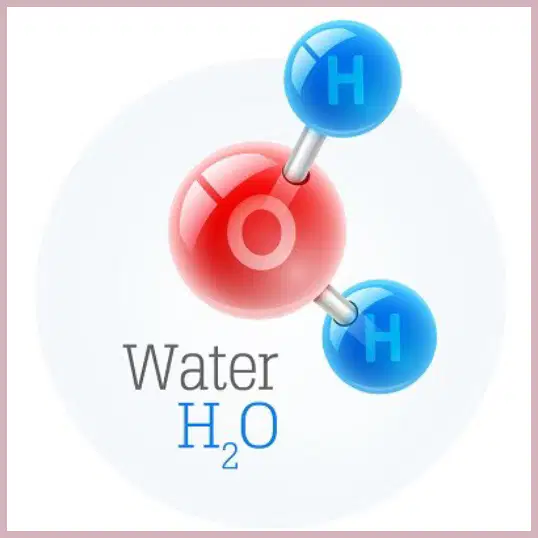
Is water a molecule, a compound, or both?
Molecule
Compound
Both
Neither
In a chemical formula, such as 4 H₂O, what does the "4" in front of H₂O mean? What WORD does the 4 represent?
Subscript
Coefficient
Molecule
Element
In a chemical formula, such as 4 H₂O, what does the "2" after the H mean? What WORD does the 2 represent?
Atoms
Molecules
Coefficient
Elements
Why are all atoms neutral?
Because they have more protons than electrons
Because they have an equal amount of protons and electrons
Because they have more electrons than protons
Because they have no protons or electrons
What is an atom called when it is no longer neutral?
Molecule
Neutron
Ion
Proton
What is the main difference between an ionic bond and a covalent bond in terms of electrons?
Ionic bonds involve the sharing of electrons between nonmetals.
Covalent bonds involve the transfer of electrons from a metal to a nonmetal.
Ionic bonds involve the transfer of electrons from a metal to a nonmetal.
Covalent bonds involve the transfer of electrons between metals.
What type of elements typically have a covalent bond?
Metals
Nonmetals
Metalloids
Noble gases
Which elements are typically involved in ionic bonds?
Nonmetals and metalloids
Metals and nonmetals
Metals and metalloids
Nonmetals only
What is the difference between a cation and an anion?
A cation has more electrons than protons, making it negatively charged.
A cation has more protons than electrons, making it positively charged.
An anion has more protons than electrons, making it positively charged.
An anion has more protons than electrons, making it negatively charged.
What happens when a nonmetal takes an electron from a metal?
It forms a cation, which is positively charged.
It forms an anion, which is negatively charged.
It forms a cation, which is negatively charged.
It forms an anion, which is positively charged.
What elements form a cation and an anion?
Two metals exchanging electrons.
A metal and a non-metal exchanging electrons.
Two non-metals exchanging electrons.
A metal and a metalloid exchanging electrons.
What is a greenhouse gas?
A gas that cools the Earth's atmosphere
A gas that traps heat from the Sun in Earth's atmosphere
A gas that is only found in greenhouses
A gas that is used in refrigeration
Which of the following is a greenhouse gas?
Oxygen (O₂)
Nitrous oxide (N₂O)
Helium (He)
Argon (Ar)
Which of the following is NOT a greenhouse gas?
Methane (CH₄)
Carbon dioxide (CO₂)
Water vapor (H₂O)
Neon (Ne)
Which greenhouse gas is represented by the chemical formula CH₄?
Ozone
Nitrous oxide
Methane
Carbon dioxide
What are substances made from?
Different types of molecules
Different types of atoms
Different types of gases
Different types of liquids
How many atoms can form a molecule?
One to ten
Two to thousands
Hundreds only
Thousands only
How many greenhouse gases are there?
Three
Four
Five
Six
How many protons does Nickel have?
31
28
59
4
What is the atomic mass of Nickel?
28
31
59
4
How many neutrons are present in Nickel?
28
31
59
4
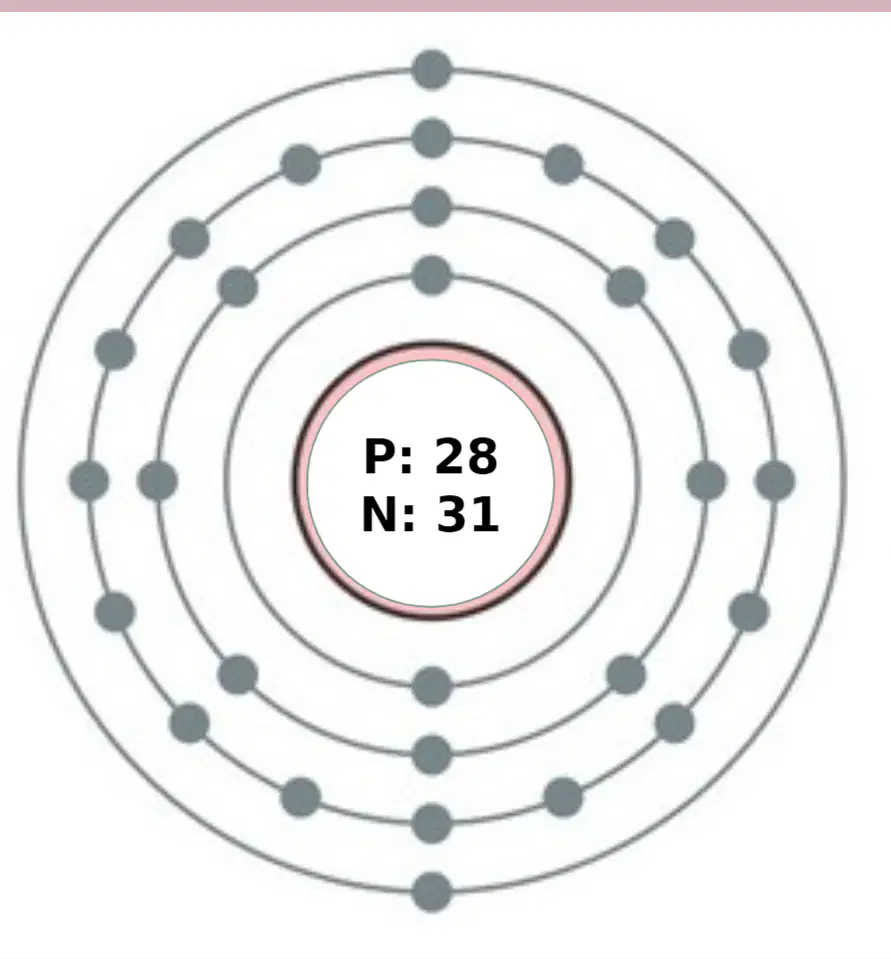
How many energy levels or shells does Nickel have?
2
3
4
5
What is the total count of atoms in the compound Mg(OH)₂?
3
4
5
6
How many hydrogen (H) atoms are present in the compound Mg(OH)₂?
1
2
3
4
Which of the following is the correct count of oxygen (O) atoms in Mg(OH)₂?
1
2
3
4
What is the symbol for magnesium in the compound Mg(OH)₂?
Mn
Mg
Mo
Mh
What is the total number of atoms in the compound FeS₂?
2
3
4
5
How many sulfur (S) atoms are present in the compound FeS₂?
1
2
3
4
How many iron (Fe) atoms are present in the compound FeS₂?
1
2
3
4
What is the total number of atoms in the compound Ca(H₂PO₄)₂?
10
12
15
18
How many hydrogen (H) atoms are present in the compound Ca(H₂PO₄)₂?
2
4
6
8
How many oxygen (O) atoms are present in the compound Ca(H₂PO₄)₂?
4
6
8
10
How many phosphorus (P) atoms are present in the compound Ca(H₂PO₄)₂?
1
2
3
4
__________ are the building blocks of life.
ions
molecules
atoms
none

