
Font size
 Worksheets
year 7 term 1 physics and chemistry revision
Total questions: 75
Worksheet time: 53mins
Definition of a solid:
definite shape and definite volume
indefinite shape and definite volume
indefinite shape and indefinite volume
definite shape and indefinite volume
Which of the following takes the shape of its container? Mark all that apply.
solid
liquid
gas
Solid to gas:
deposition
sublimation
condensation
evaporation
Gas to liquid:
evaporation
condensation
melting
freezing
Liquid to solid:
evaporation
melting
boiling
freezing
Matter is
Anything that has volume
Anything that has mass
Anything that has mass and volume

What state of matter does the picture below represent?
solid
liquid
gas
plasma
What is a Solid?
Matter that has a fixed shape and size.
Matter that has a fixed size and no fixed shape
Matter that has no fixed shape or size
Matter that has no fixed shape and size
The state of matter that keeps its shape and volume when it is placed in a different container is called ______.
gas
liquid
solid
The state of matter that expands to fill its container is called ______.
gas
liquid
solid
What is matter made up of?
particles that are too large to be seen
tiny butter particles
particles that are too small to be seen
tiny water particles
Which state of matter has its own shape
Gas
Solid
LIquid

The diagram shows arrangement of particles in a
Solid
Liquid
Gas
Define a liquid.
Matter that has fixed shape but no fixed volume
Matter that has fixed shape and fixed volume
Matter that has fixed volume, but no fixed shape
In which state of matter will there be the LARGEST space between molecules?
Solid
Liquid
Gas
What does the particle theory explain?
The process of photosynthesis
The history of chemical reactions
The properties of solids, liquids, and gases
The structure of DNA
What cannot be easily compressed?
Vacuum
Solids and liquids
Plasma
Gases
What has a fixed volume but no fixed shape?
Solids
Gases
Plasma
Liquids
What can be compressed because their particles are far apart?
Gases
Liquids
Solids
Both liquids and solids
What has no fixed shape or volume?
Ions
Solids
Gases
Liquids
What cannot flow because their particles cannot move from place to place?
Plasma
Gases
Liquids
Solids
Who investigated Brownian motion?
Robert Charles
Charles Darwin
Robert norman
Robert brown
Pollen grains suspended in water exhibit Brownian motion. How does a particle undergoing Brownian motion move?
In smooth curves
Randomly
Orderly with a pattern
In straight lines with no change of direction
Diffusion is...
It is the random movement of particles.
It is when particles move from a place of higher concentration to a place with lower concentration.
It is when particles move when being mixed together.
It is when the particles hit the sides of their container.
Diffusion is the natural movement of molecules from:
Areas of low concentration to areas of high concentration
Areas of high concentration to areas of low concentration
Cold to hot environments
Gaseous to liquid environments
What happens to the coffee particles when coffee is added to hot water?
They sink to the bottom of the cup
They spread out
They clump together
They freeze
Diffusion is the movement of particles from an area of _____ concentration to an area of ______ concentration
High, Low
Low, High
Low, Low
High, High
What is the definition of diffusion?
The movement of particles from an area of low concentration to an area of high concentration.
The movement of particles from an area of high concentration to an area of low concentration.
In which direction does diffusion occur, from high to low concentrations or from low to high concentrations?
from low to high concentrations
from high to low concentrations
in both directions simultaneously
it does not occur
What impact does temperature have on the rate of diffusion?
Temperature has no impact on the rate of diffusion.
Temperature decreases the rate of diffusion.
Temperature increases the rate of diffusion.
Diffusion is the movement of particles from an area of _____ concentration to an area of ______ concentration
High, Low
Low, High
Low, Low
High, High

What is Science?
A series of procedures to help you solve problems.
A way to find out what is wrong in this world.
An organized way of studying the natural world and finding solutions to common problems.
The way scientists make up general rules.
What do scientists do?
Observe the world around them
Ask questions about the world
Test different ideas to solve problems
All of the above
The three main branches of science are _________.
Chemistry, Geology, Genetics
Physical Science, Life Science, Earth and Space Science
Observing, Exploring, Experimenting
Thinking, Reading, Writing


How do we measure forces?
Newtons
metres
pounds
Celsius

What is true about this image?
It shows unbalance forces.
It shows balanced forces.
The people on the right are winning.
The people on the left are winning.

What is true about this picture?
the forces are balanced
the forces are unbalanced

A force can change an object's shape
true
false
A force can change an object's speed
true
false
Cycles put oil in the axles of their bicycle to reduce friction. This is called
Condesation
Friction
Oil formation
Lubrication
The force of Friction does this to objects
fast
slow
You can reduce friction by doing the following:
Fabrication
Lubrication
Select the correct definition of weight.
It is the force of gravity acting on the object.
It is the amount of matter in an object.
Select the correct definition of mass.
It is the amount of matter in an object.
It is the force of Earth's gravity on an object.
Weight is measured in.....
Kilogram
Newtons
Kilometer
Mass is measured in.....
Kilograms
Kilometers
Newtons
My weight would change on different planets.
True
False
My mass would change on different planets.
True
False

A force that resists motion between 2 surfaces that are pressed together.
Tension Force
Friction Force
Magnetic Force

The force that is transmitted through a string, rope, cable or wire when it is pulled tight by forces acting from opposite ends.
Buoyancy Force
Air Resistance
Tension Force

The force related to an object's or substance's ability to stretch or deform.
Elastic Force
Air Resistance
Spring Force

A type of fictional force that acts upon objects as they travel through the air.
Normal Force
Applied Force
Wind Resistance

An upward force exerted by a fluid that opposes the mass of an immersed object.
Tension Force
Buoyancy Force
Normal Force

A force exerted by a compressed or stretched spring upon any object that is attached to it.
Spring Force
Tension Force
Elastic Force

The force of attraction between two masses.
Gravity Force
Magnetic Force
Normal Force

An attractive or repulsive force caused by the interaction between electrically charged particles.
Friction Force
Electrical Force
Buoyancy Force

The repelling or attracting force between a magnet and a ferromagnetic material (like iron).
Magnetic Force
Electrical Force
Gravity
Friction is a...
Type of movement
Form of energy
Colour
Force
Friction changes an object's speed by...
Slowing it down
Maintaining its speed
Speeding it up
Which of these will reduce friction between two surfaces?
Roughen the surfaces
Polish the surfaces
Lubricate the surfaces
Dry the surfaces
The correct pressure equation is...
Pressure = Area/Force
Pressure = Area * Force
Pressure = Force * Area
Pressure = Force / Area

In liquids, pressure is greatest...
At the top
At the sides
In the middle
At the bottom
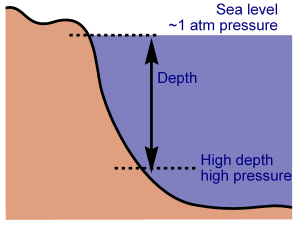
When you increase your depth under water, the water pressure on your body
increases
decreases
stays the same
What is pressure?
The amount of force exerted on a surface
The surface area of an object
The weight of an object
What is the unit of measurement for pressure?
Pascal
grams
Newton
meters

