
 Worksheets
Sound Review
Total questions: 78
Worksheet time: 4hrs 54mins
Sound is produced by -----
Heat energy
Low temperatures
Vibrations
Friction
True or False: Sound needs a medium.
True
False
True or False: Sound waves are faster than light.
False
True

Areas of increased pressure on a sound wave are known as a ----
Rarefaction
Compression
Frequency
Amplitude

The distance from the beginning of one compression to the beginning of the next compression is called a -----
Rarefaction
Frequency
Wavelength
Compression

Spread out areas or areas of decreased pressure on a sound wave are known as a ---
Rarefaction
Amplitude
Compression
Hertz
The number of wavelengths that pass a fixed point each second is known as ----
Hertz
Amplitude
Frequency
The unit for measuring frequency is the ---
Joule
Hertz
Gram
Newton

The measure of the amount of energy in a wave is ----
Wavelength
Hertz
Frequency
Amplitude
The speed of sound depends on these two things:
The type of medium and the temperature of the medium
Speed of the medium and temperature of the medium
Temperature of the medium and sound of the medium
None of the above
Sound waves travel the fastest through ---
Liquids
Gases
Solids
Sound waves that are beyond the range of human ear are known as ----
Infrasonic waves
Ultrasonic waves

Sonar and echolocation use ----- to detect objects under water.
Refraction
Reflection

Which wave carries more energy?
Wave A
Wave B
Waves that require a material to travel though are called
electromagnetic waves
mechanical waves
ocean waves
transverse waves
I do not know and do not wish to answer.

This picture is an example of a
longitudinal wave
transverse wave
i do not know and do not wish to answer.

This picture is an example of which type of wave?
transverse wave
longitudinal wave
ocean wave
I do not know and do not wish to answer.
A short wavelength is equal to
a low frequency
slow wave speed.
a high frequency
I do not know and do not wish to answer.

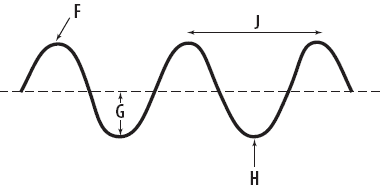
#1 refers to the
wavelength
amplitude
crest
trough
#2 refers to the
wavelength
amplitude
crest
trough
#3 refers to the
wavelength
amplitude
crest
trough
#4 refers to the
wavelength
amplitude
crest
trough

The waves are traveling at the same speed.
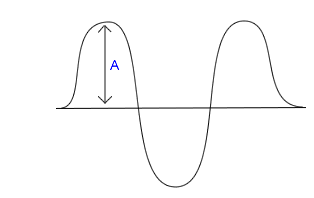
Which wave has the greater amplitude?
Wave on the Left
Wave on the Right
Both amplitudes are the same

The waves are traveling at the same speed.
Which wave has the greater frequency?
Graph on the Left
Graph on the Right
Both have the same frequency

Which graph shows the wave with the highest amplitude, greatest frequency and shortest wavelength?
Graph on the Left
Graph on the Right
Both waves have the same

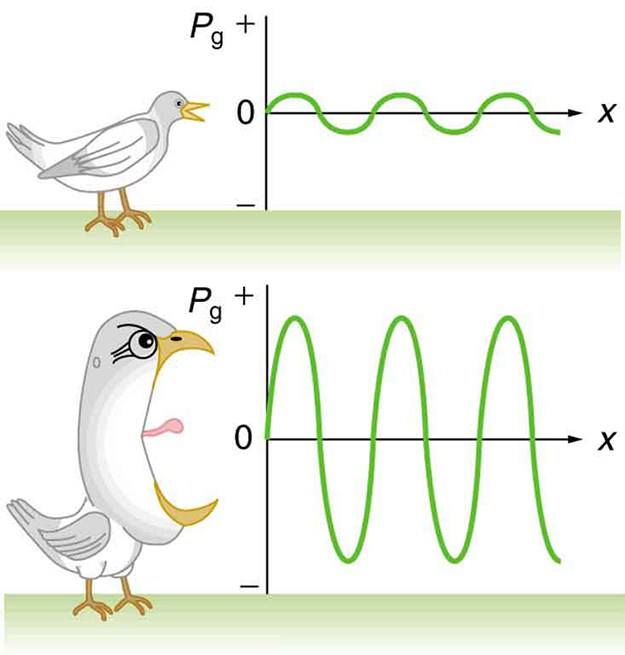
Which statement is true about the two waves?
Both waves have the same amplitude, but the bottom wave has greater energy because of a greater frequency.
The top waves has greater energy because it has greater amplitude.
Both waves have the same frequency, but the top wave has a greater amplitude.

Which graph shows shorter wavelengths?
Graph on the Left
Graph on the Right
Both have the same wavelengths

The waves are traveling at the same speed.
Which wave has the LEAST amount of energy?
Wave on the Left
Wave on the Right
Both have the same energy level

Both graphs show the number of waves that passed during a 5 second period. Which graph shows the faster waves?
Graph on the Left has faster waves
Graph on the right has faster waves
Both graphs have waves with the same speed.
A (a) is a wave that makes the particles in the material that carries the wave move back and forth.
What is a rapid back-and-forth motion that can occur in solids, liquids or gasses?
vibration
sound
light
rarefaction
The sounds you hear a produced by (a) .
Sound waves can travel through:
solids
liquids
gasses
all of these
Sound waves cannot travel through:
solids
liquids
gasses
empty space
Sound waves require a __________ to travel through.
medium
person
transverse
Slinky
You usually hear sound through the medium of:
air
water
fire
earth
Longitudinal waves are comprised of:
compressions and rarefactions
crests and troughs
honey and vinegar
waves and matter
Sound waves travel fastest in:
gasses
liquids
solids
empty space
Sound waves travel slowest in (a) .
A wave with a greater intensity will produce:
a louder sound
a softer sound
a lower pitch sound
a higher pitch sound
(a) is the maximum distance particles in a medium move from their rest position.
The perception of how low or high a sound seems is called (a) .
The pitch of a sound depends on its:
frequency
amplitude
intensity
loudness
The higher the frequency, the ____________ the wavelength.
longer
shorter
taller
bolder
The human ear can detect frequencies between:
20 and 20000 Hz
100 and 200 Hz
1 and 100 Hz
20 and 30 Hz
Frequency is measured in:
decibels
Hertz
meters
seconds
What is a rapid back-and-forth motion that can occur in solids, liquids or gasses?
vibration
sound
light
rarefaction
A wave with a greater intensity will produce:
a louder sound
a softer sound
a lower pitch sound
a higher pitch sound
The pitch of a sound depends on its:
frequency
amplitude
intensity
loudness


What is this?
peak
wavelength
valley
equilibrium

What is this?
peak
valley
wavelength
amplitude

What is this?
amplitude
equilibrium
wavelength
peak

What is this?
amplitude
peak
valley
starting position
Sound waves can travel through:
solids
liquids
gasses
all of these
Sound waves cannot travel through:
solids
liquids
gasses
empty space
A back-and-forth motion causing particles to move close together generates a ______________.
rarefaction
surface
transverse
compression
Which statement is true of amplitude?
the lower the amplitude the louder the sound
the lower the amplitude the quieter the sound
the lower the amplitude the lower pitch the sound
the lower the amplitude the higher pitch the sound

What does the area pointed by the arrow in the diagram represent?
compression
rarefaction
equilibrium
The distance from the beginning of one compression to the beginning of the next compression is called a -----
Rarefaction
Frequency
Wavelength
Compression
Hearing problems affect people of all ages.
true
false

Sounds enter to the ear as:
light
vibrations
flavors
feelings
The part of the ear is a thin muscle that vibrates is called the
ear drum
ear canal
hammer
Which part of the ear is a tube that looks like a snail and it changes sound into nerve impulses that are sent to the brain?
pinna
anvil
cochlea


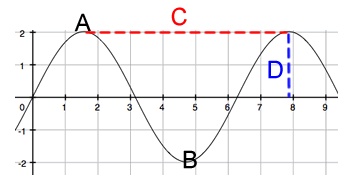

Between waves B and D, which is louder?
Wave B
Wave D

Between waves F and G, which is lower in pitch?
Wave F
Wave G

Between waves C and H, which is lower in volume?
Wave C
Wave H

