
Font size
 Worksheets
Arterial: Disease
Total questions: 79
Worksheet time: 48mins
What is the most common type of arterial disease?
Chronic Peripheral Arterial Disease
Coronary Artery Disease
Carotid Artery Disease
Aortic Aneurysm
What is claudication in the context of Chronic Peripheral Arterial Disease?
MODERATE disease. Pain and muscle fatigue with activity, relieved upon rest.
MILD disease. No symptoms during activity.
SEVERE disease. Constant pain even at rest.
ACUTE disease. Sudden onset of pain without activity.
Pseudo-claudication
Not vascular related. MSK or neurogenic. Patient
will have similar pain in extremity but without muscle fatigue or needing to stop.
MODERATE disease. Pain & muscle fatigue w/ activity.
Pt must stop to rest. Pain is relieved upon rest
Symptom location is constant & distal to level of disease
Example - Pop disease = calf _______
SEVERE disease. Pain in feet & heels at night in bed or when limb is same level as heart. Relieved upon dependency.
MOST SEVERE. Ulcers and gangrene in most distal part of limb like toes or bony regions like top of feet.
Rest pain
Not vascular related. MSK or neurogenic. Patient
will have similar pain in extremity but without muscle fatigue or needing to stop.
MODERATE disease. Pain & muscle fatigue w/ activity.
Pt must stop to rest. Pain is relieved upon rest
Symptom location is constant & distal to level of disease
Example - Pop disease = calf _______
SEVERE disease. Pain in feet & heels at night in bed or when limb is same level as heart. Relieved upon dependency.
MOST SEVERE. Ulcers and gangrene in most distal part of limb like toes or bony regions like top of feet.
Tissue loss/Necrosis
Not vascular related. MSK or neurogenic. Patient
will have similar pain in extremity but without muscle fatigue or needing to stop.
MODERATE disease. Pain & muscle fatigue w/ activity.
Pt must stop to rest. Pain is relieved upon rest
Symptom location is constant & distal to level of disease
Example - Pop disease = calf _______
SEVERE disease. Pain in feet & heels at night in bed or when limb is same level as heart. Relieved upon dependency.
MOST SEVERE. Ulcers and gangrene in most distal part of limb like toes or bony regions like top of feet.
Which vessels are most commonly affected in diabetics with arterial disease?
Tibial vessels
Coronary vessels
Carotid vessels
Renal vessels
Which of the following is a risk factor for arterial disease?
Diabetes
Hypertension
Hyperlipidemia
All of the above
What is the most contributing factor to arterial disease according to the image?
Smoking
High cholesterol
Lack of exercise
Poor diet
____ caused by embolism, usually big toe
blue toe syndrome
Which symptom is associated with moderate arterial disease?
Claudication
Rest pain
Tissue loss/Necrosis
What does 'acute' mean in the context of Acute Arterial Occlusion?
sudden onset
chronic condition
gradual improvement
mild symptoms
what are some physical signs of chronic peripheral arterial disease?
coldness in the lower leg or foot, weak pulses, skin color changes, and non-healing sores.
thick toenails
dry skin, loss of hair
Which of the following is a cause of thrombus in Acute Arterial Occlusion?
Infection
Trauma or dissection
Genetic disorder
Allergic reaction
What is the most common source of embolism in Acute Arterial Occlusion?
The heart
The lungs
The liver
The kidneys
The 6 P's associated with Acute Arterial Occlusion are:
Pain, Pallor, Pulselessness, Paresthesia, Paralysis, Polar
Pain, Pallor, Pulselessness, Paresthesia, Paralysis, Pyrexia
Pain, Pallor, Pulselessness, Paresthesia, Paralysis, Paraplegia
Pain, Pallor, Pulselessness, Paresthesia, Paralysis, Paresthesia
Cold Sensitivity/Raynauds phenomenon
Pt experiences symptoms of ischemia in hands or feet when exposed to cold.
Symptoms include: blue or white discoloration, pain, tingling, numbness
Young women w/ bilateral symptoms. Experience vasospasm when cold or
emotionally stressed. Functional disease
caused by something else (like side effect). Pt has existing fixed
arterial disease. May not have ischemia symptoms at rest. When cold,
vasoconstriction worsens ischemia. Most likely unilateral & pt fits chronic PAD
history.
Primary Raynauds:
Pt experiences symptoms of ischemia in hands or feet when exposed to cold.
Symptoms include: blue or white discoloration, pain, tingling, numbness
Young women w/ bilateral symptoms. Experience vasospasm when cold or
emotionally stressed. Functional disease
caused by something else (like side effect). Pt has existing fixed
arterial disease. May not have ischemia symptoms at rest. When cold,
vasoconstriction worsens ischemia. Most likely unilateral & pt fits chronic PAD
history.
Secondary Raynauds:
Pt experiences symptoms of ischemia in hands or feet when exposed to cold.
Symptoms include: blue or white discoloration, pain, tingling, numbness
Young women w/ bilateral symptoms. Experience vasospasm when cold or
emotionally stressed. Functional disease
caused by something else (like side effect). Pt has existing fixed
arterial disease. May not have ischemia symptoms at rest. When cold,
vasoconstriction worsens ischemia. Most likely unilateral and pt fits chronic PAD
history.
Which of the following are symptoms of Cold Sensitivity/Raynauds phenomenon aka ischemia or when feet/hands exposed to cold?
Numbness and tingling in fingers and toes
High fever and chills
Severe headache and dizziness
Persistent cough and sore throat
blue/white discoloration
What is the inflammation of the vessel wall called?
Arteritis
Phlebitis
Thrombosis
Aneurysm
Which disease is known as "Pulseless disease" and affects larger vessels such as the aorta?
hint : it affects young asian women
Takayasu
Kawasaki disease
Giant cell arteritis
Polyarteritis nodosa
Match the following aneursym descriptions
some of the symptoms for overall aneurysms are : shock, abdominal pain and bounding pulse
dilation of all 3 layers
true aneurysm
most common aneurysm location
infrarenal
most common cause of aneurysm
atherosclerosis
most common type of aneursym
fusiform
complications
rupture/peripheral embolization
Match the following aneursym descriptions
some of the symptoms for overall aneurysms are : shock, abdominal pain and bounding pulse
false aneurysm
not all 3 layers are dilated
intimal flap, hypertensive pt w/ severe back/check pain
dissecting aneurysm
pulsating hematoma, puncture of all 3 layers occurs post procedure such as catheterization/angio. communicating neck/channel.
pseudoaneurysm
Match the following
congenital narrowing of aortic arch, diminshed pulses & hypertensive young people
coarctation
compression of pop by gastro. muscle. in young athletic men experiencing intermittent claudication.
popliteal entrapment
compression of nerves or blood vessels by shoulder ribs and muscles
thoracic outlet syndrome
compression of artery by swelling trapped inside fascia most often anterior tibial region
compartment syndrome
Buerger’s disease, also known as thromboangiitis obliterans, most commonly affects which group of people?
Young men (<40yo) that are heavy smokers
Older women
Children
Non-smokers
What is the most common location for an aneurysm?
Infrarenal aorta
Thoracic aorta
Cerebral arteries
Femoral artery

What is the risk associated with a dissecting aneurysm?
High risk of rupture.
Low risk of rupture.
No risk of rupture.
Risk of infection.
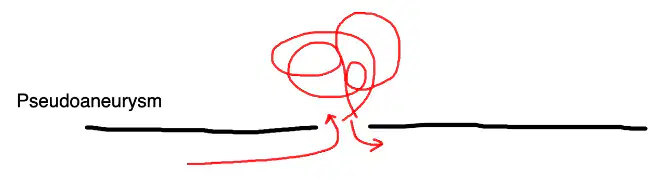
What is a pseudoaneurysm also known as?
Pulsating hematoma.
True aneurysm.
Arteriovenous fistula.
Vascular malformation.
Coarctation is the congenital narrowing of which part of the body?
Aortic arch.
Pulmonary artery.
Inferior vena cava.
Superior vena cava.
Which syndrome is caused by the compression of nerves or blood vessels by shoulder, ribs, and muscles?
Thoracic outlet syndrome.
Carpal tunnel syndrome.
Cubital tunnel syndrome.
Piriformis syndrome.
What is the most common location for compartment syndrome?
Anterior tibial region.
Posterior tibial region.
Medial femoral region.
Lateral femoral region.
__________ is hardening and narrowing of the arteries caused by buildup of cholesterol plaque on the interior walls of the arteries.
Arteries
Atherosclerosis
Plaque
Asystole
Secondary raynauds
Unilateral : Caused by something else, like side effect
Pt has existing arterial disease & fits CPAD Hx
When cold vasoconstriction worsens ischemia
No ischemia symptoms at rest
Ischemia at rest
Primary raynauds
Bilateral : young women
Vaso-spasms when cold or emotionally stressed
When cold Vasoconstriction worsens ischemia
Fixed arterial disease & pt fits CPAD HX

What is the most common aneurysm?
Fusiform
Pseudoaneursym
Dissecting
Saccular
bilateral buttock claudication occurs due to;
aortoiliac disease
iliofemoral disease
neurogenic
muscoskeletal
Unilateral buttock claudication occurs due to;
aortoiliac disease
iliofemoral disease
neurogenic
muscoskeletal
if you have symptoms of claudication where is the disease located at?
proximal to symptom
distal to symptom
at symptom location
throughout
if you have thigh claudication this should suggest what?
distal external iliac disease
common femoral disease
femoral popliteal disease
aortoiliac disease
if tez has claudication symptoms in his calf where is the issue located?
aortoiliac disease
femoral disease
popliteal disease
none of these
two-block claudication stands for _______.
specific leg pain after walking 2 block
specific leg pain bilaterally
specific pain after 2 minutes
all of these
seveve rest pain occurs in the ______
heel, toes, forefoot
thigh, knee,calf
calf,heel, toes
all of these
the 7th symptom of acute arterial occlusion is
purplish
rubish
cellulitis
necrosis
atherosclerosis is most common among _____
young age
diabetics
old age
children
diabetics have a higher chance of occlusive disease in the _____
distal popliteal
tibial vessels
femoral
greatersaphenous artery
T/F
poor sensation as a result of neuropathy leads to increase chances of trauma
true
false
systemic hypertension is associated to _____ atherosclerosis
coronary
cerebrovascular
peripheral
none of these
T/F
atherosclerosis is also called arteriosclerosis obliterans
true
false
atherosclerosis occurs most often in _____
carotid bifurcation
ICA
renal artery
ECA
atherosclerosis occurs most often in _____
carotid bifurcation
brachiocephalic vessels
origins of visceral vessels
infrarenal aortoiliac system, common femoral bifurcation
adductors canal, pop trifurcation
_____ caused by obstruction of terminal aorta.
Occurs in MALES
symptoms: fatigue in hips, thighs, calves on exercise. absence of pulsation in femoral arteries, impotence, coldness/palor of lower limbs.
leriche syndrome
may thurners
pagets syndrome
nut-cracker syndrome
obstruction of a blood vessel by a foreign substance or blood clot.
most frequently due to plaque or thrombus breaking loose & lodging in a small vessel usually in a distal artery, improves if there is collateral creation.( associated to blue toe)
leriche syndrome
may-turners
nut-cracker syndrome
pagets- syndrome
embolism
Match the following aneurysms
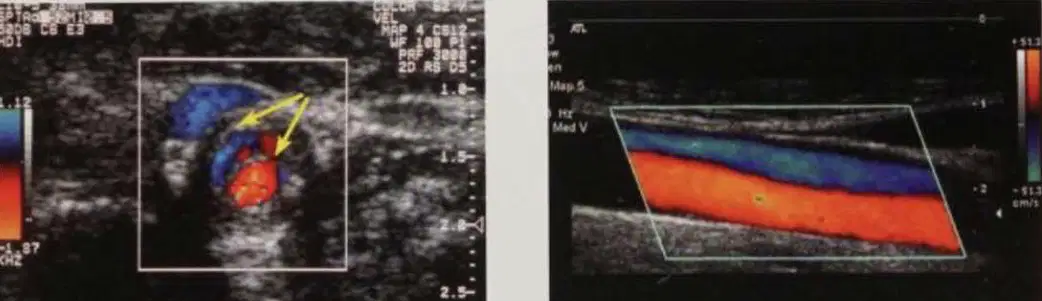
dissection aneurysm
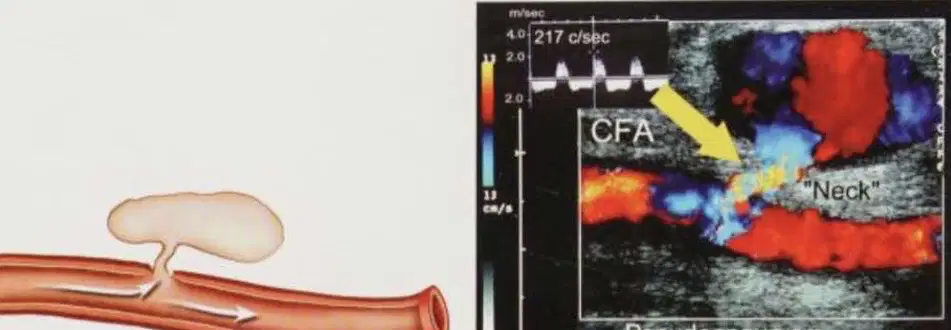
pseudoanuerysm
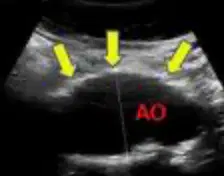
fussiform aneurysm
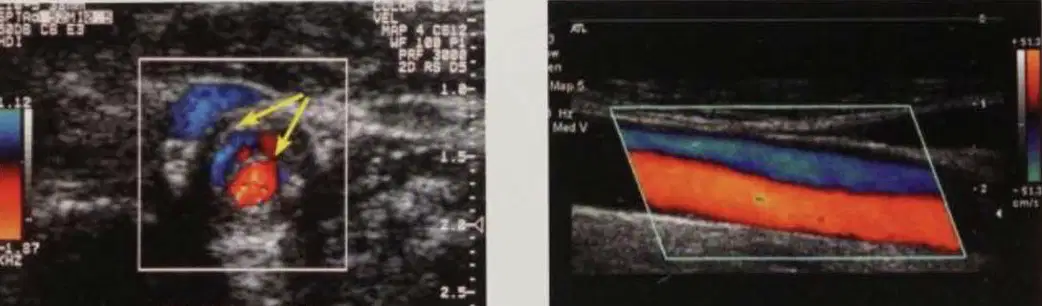
a dissecting aneurysm usually occurs due to weaking of the medial layer which causes an intimal tear. It usually occurs in the ____
thoracic aorta
infrarenal aorta
popliteal artery
aortic arch
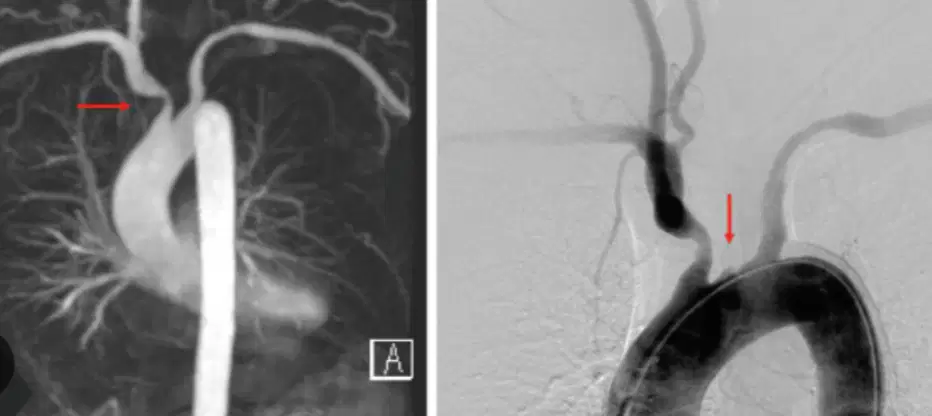
arteritis is cause by inflammation of the arterial wall which eventually results in thrombus.
there are 4 types: takayasu(pulseless) arteritis, temporal arteritis, polyarteritis and beurgers disease(thromboangitis obliterates)
which of these causes inflammation in larger blood vessels & is usually found in young Asian women
takayasu artertitis
temporal arteritis
polyarteritis
beurgers disease
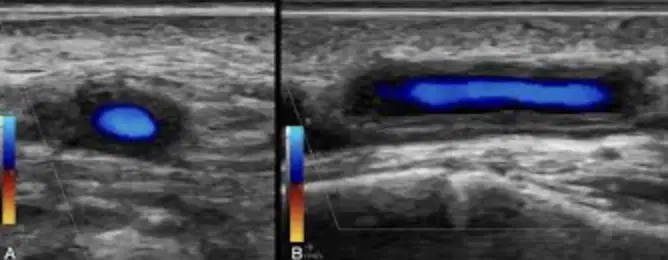
arteritis is cause by inflammation of the arterial wall which eventually results in thrombus.
there are 4 types: takayasu(pulseless) arteritis, temporal arteritis, polyarteritis and beurgers disease(thromboangitis obliterates)
which of these causes inflammation in temporal vessel and creates a halo sign
Takayasu(pulseless) arteritis
temporal arteritis
polyarteritis
beurgers disease(thromboangitis obliterates)
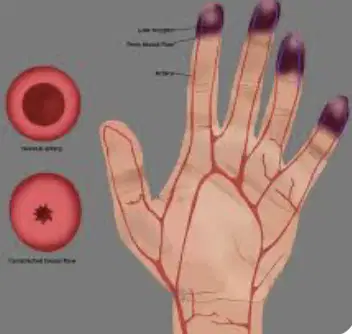
arteritis is cause by inflammation of the arterial wall which eventually results in thrombus.
there are 4 types: takayasu(pulseless) arteritis, temporal arteritis, polyarteritis and beurgers disease(thromboangitis obliterates)
which of these causes inflammation in the smaller digital vessels, usually in heavy smokers & males >40yo presents in distal arteries of fingers & toes.
takayasu(pulseless) arteritis
temporal arteritis
polyarteritis
beurgers disease(thromboangitis obliterates)
Arteritis is caused by inflammation of arterial wall which eventually results in thrombus.
there are 4 types: takayasu(pulseless) arteritis, temporal arteritis, polyarteritis & beurgers disease(thromboangitis obliterates)
which of these causes necrotizing inflammation in medium & small arteries & organs
takayasu(pulseless) arteritis
temporal arteritis,
polyarteritis
beurgers disease(thromboangitis obliterates)
____ occurs secondary to arteritis disease
superficial thrombophlebitis
coarctation
takayasu
temporal arteritis

congenital narrowing of the aorta
usually in the thoracic aorta, & abdominal aorta due to hypertension related to kidney perfusion or low extremity ischemia.
symptoms: decreased pulses & decreased segmental pressures
coarctation
dissection
pseudoanerusym
takayasu arteritis
T/F
ultrasound is thought to be very important in the diagnosis of dissection of the aorta
true
false
with elevation of the foot with impaired arterial supply you will experience
pallor
rubor
cyanosis
all of these
with dependency of the leg with arterial insufficiency
cyanosis
rubor
palor
none of these
T/F
if there is an aneurysm present it is usually palpable
true
false
palpable pulses usually indicate _______ , peroneals CANNOT be palpated
aorta
femoral
popliteal
dpa
posterior tibial arteries
palpable thrill or vibration over a pulse usually indicates
fistula
post stenotic turbulence
patent dialysis graft
patent peroneals
T/F
upon the physician taking his hand and palpating the dpa he feels a faint pulse.
the DPA is patent, just experiencing compartment syndrome
true
false
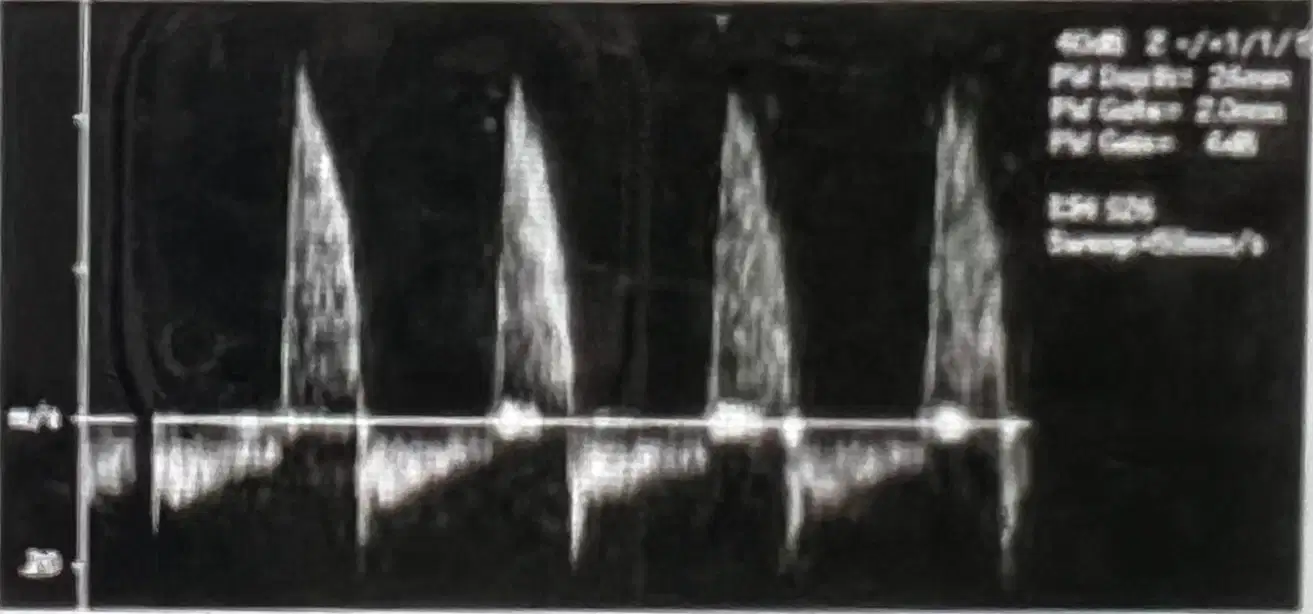
a bruit is associated to pandiastolic flow caused by severe arterial disease or stenosis
true
false
a ____ is a low frequency sound heard on auscultation caused by significant stenosis that is caused by a response distal to a stenosis
bruit
thrill
vibration
all of these
the absence of a bruit suggests normality but cannot rule out disease due to some cases of _____ the bruit disappears
ruptured aneuryms
embolism
>90% severe stenosis
dissection
an abnormal direct communication between an artery and a vein with a single connection
is considered a ____ AVF
traumatic AVF
congenital AVF
Neurogenic AVF
arterial AVF
an abnormal direct communication between an artery and a vein with numerous connections between arterial and venous systems
is considered a ____ AVF
traumatic AVF
congenital AVF
Neurogenic AVF
arterial AVF
AVF increase the chance of causing CHF, BUT AVF located peripherally increase the chance of _____
ischemia
occlusion
rest pain
raynauds
Match the following to the normal AVF characteristics

arterial flow prox: low resistant

at avf/graft: high psv/edv
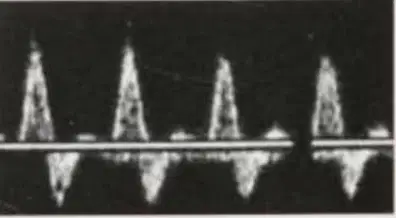
distal flow: pulsatile/triphasic, normal
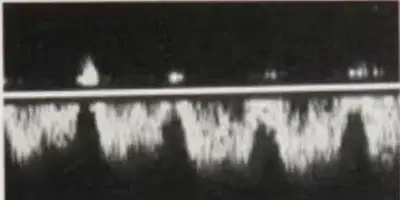
vein inflow: high veloc., phasic, pulsat
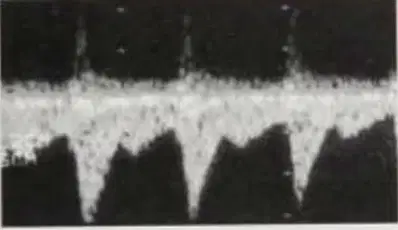
vein outflow: high pressure, high pulsat
patient comes in with clinical signs of paresthesia , muscle weakness and diminished pulses in the anterior tibial region in the leg post-surgical correction of a traumatic event. what could be the cause of this
traumatic AVF
compartment syndrome
popliteal entrapment
ischemia
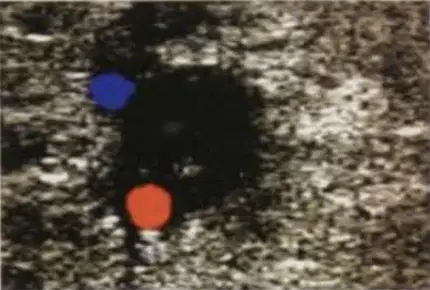
- most Commonly: popliteal artery region
- in 40-50yo men
- due to repetetive trauma to join regions
- symptoms: claudication , bruit , diminished pulses distally , occlusion/narrowing effect
- composed of mucin/cystic fluid near artery/vein
popliteal entrapment
CPAD
adventitial disease
compartment syndrome
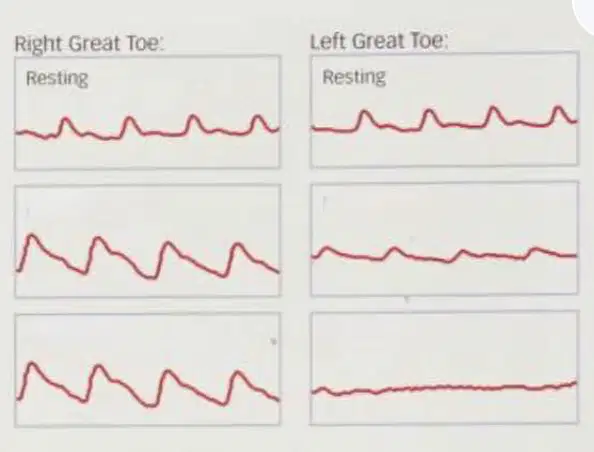
what motion may cause the waveform to diminish in a patient experiencing popliteal entrapement
resting
running
dorsiflexion
plantar flexion
exercise
which position would cause discomfort and enhance symptoms of a patient experiencing TOS?
upward arm movements
exercise
downward arm movements
making a fist
dorsiflexion
what position should be used when testing the patient for TOS?
arm at 180degree angle in same plane as torso
arm at 90degree angle in same plane as torso
adson maneuver left & right test
valsalva maneuver
supine adson maneuver

