
Font size
 Worksheets
Learning Outcomes
Total questions: 66
Worksheet time: 36mins
What are the main types and sources of conventional or “criteria” pollutants?
Carbon monoxide, sulfur dioxide, nitrogen oxides, particulate matter, lead, and ozone
Water vapor, carbon dioxide, methane, nitrous oxide, and ozone
Benzene, formaldehyde, acetaldehyde, and 1,3-butadiene
Chlorofluorocarbons, hydrochlorofluorocarbons, and halons
Which of the following are hazardous air pollutants and their effects?
Causes headaches and dizziness
Affects the nervous system
Causes respiratory problems
All of the above
How do air pollutants affect the climate and stratospheric ozone?
Air pollutants contribute to climate change and deplete stratospheric ozone.
Air pollutants have no effect on climate or stratospheric ozone.
Air pollutants only affect the climate but not the stratospheric ozone.
Air pollutants only affect the stratospheric ozone but not the climate.
In what ways can air pollution affect human health?
By improving respiratory function
By causing respiratory diseases
By enhancing mental clarity
By strengthening the immune system
What policies and strategies do we have for reducing air pollution?
Implementing stricter emission regulations
Promoting public transportation
Encouraging renewable energy use
All of the above
Has world air quality been getting better or worse? Why?
World air quality has been getting better due to stricter environmental regulations.
World air quality has been getting worse due to increased industrial activities.
World air quality has remained the same over the years.
World air quality trends are not well-documented.
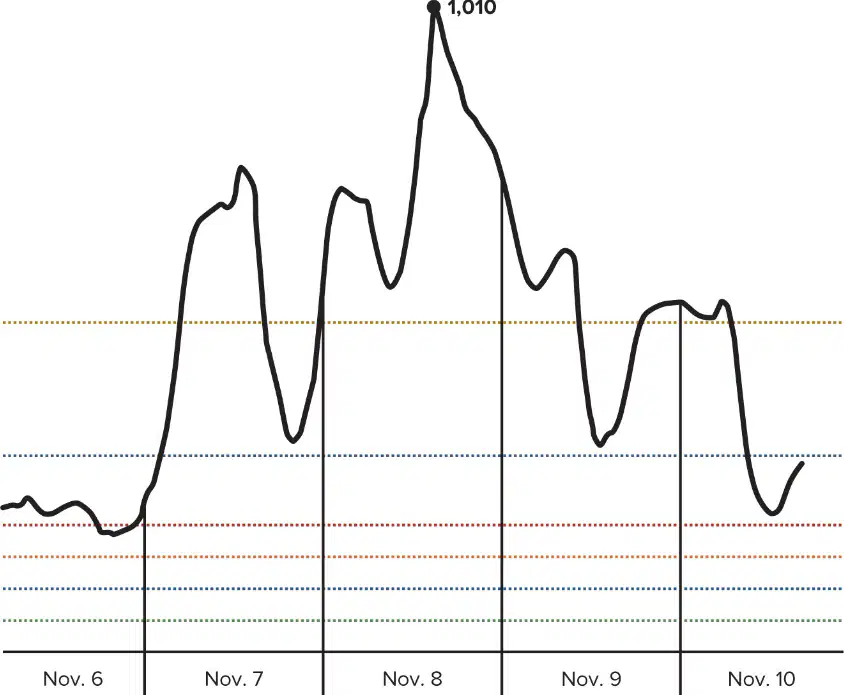
What is the air quality index value at its peak on Nov. 8?
1,010
500
750
900
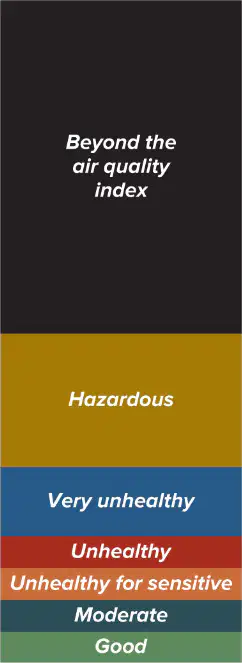
On which date did the air quality index reach the 'Hazardous' level?
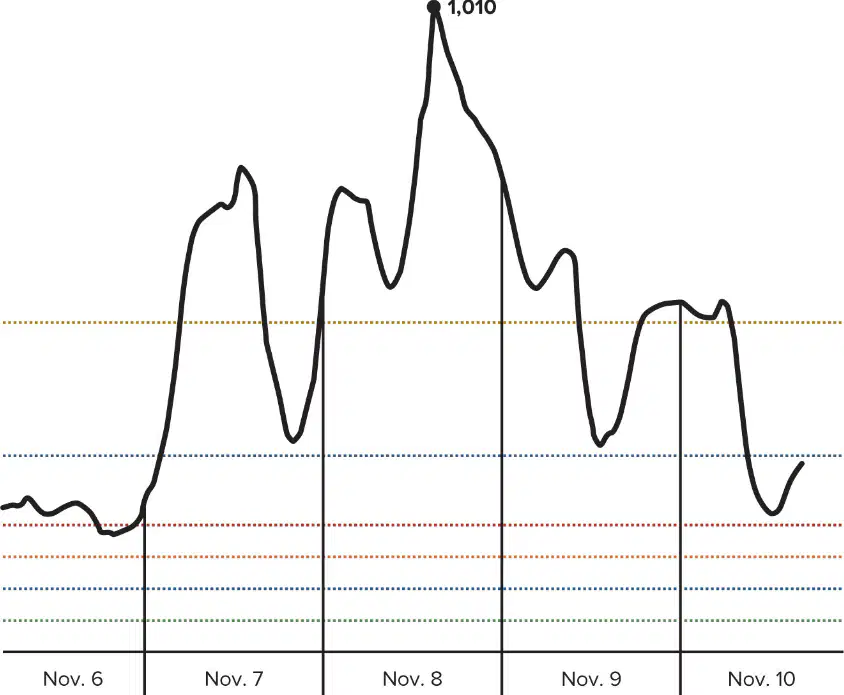
Describe the trend of the air quality index from Nov. 6 to Nov. 10.
The air quality index improved over the period.
The air quality index worsened over the period.
The air quality index remained stable over the period.
The air quality index fluctuated without a clear trend.
What does the quote 'If you think education is expensive, try ignorance.' by Derek Bok mean to you?
Education is costly, but ignorance costs more.
Ignorance is cheaper than education.
Education and ignorance have the same cost.
Neither education nor ignorance is expensive.
What are some of the most widespread pollutants mentioned in the text?
Carbon dioxide and methane
Ozone and nitrogen oxides
Lead and mercury
All of the above
Pollutants affect human health by causing:
respiratory issues and cardiovascular diseases
improved immune system
better mental health
increased energy levels
According to the Organization for Economic Cooperation and Development, by what year is chronic exposure to pollutants projected to cause 3.6 million premature deaths every year?
2040
2050
2060
2070
The text states that pollutants can enter our bloodstream when we breathe them.
True
False
In 1970, The Clean Air Act designated new air quality standards for how many major pollutants?
Six
Four
Eight
Ten
Which of the following is not a major pollutant regulated by the Clean Air Act?
Sulfur dioxide
Nitrogen oxides
Water vapor
Carbon monoxide
Transportation and power plants are the dominant sources of most criteria pollutants.
True
False
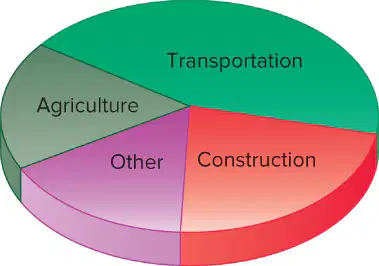
What is the largest source of particulate materials according to the pie chart?
Transportation
Agriculture
Construction
Other
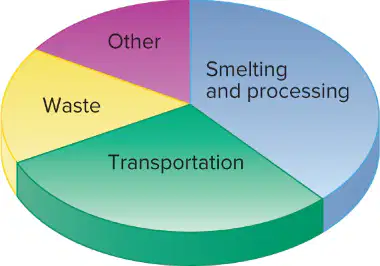
What is the largest source of lead according to the pie chart?
Waste
Transportation
Smelting and processing
Other
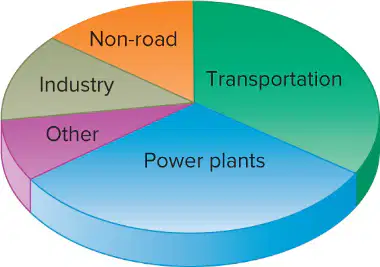
What is the largest source of nitrogen oxides according to the pie chart?
Non-road
Transportation
Industry
Power plants
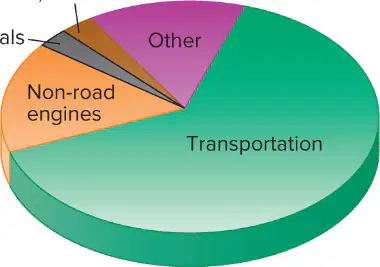
What is the largest source of carbon monoxide according to the pie chart?
Solvents, waste disposal, etc.
Metals
Non-road engines
Transportation
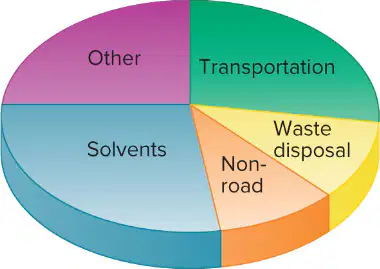
What is the largest source of Volatile Organic Compounds (VOCs) according to the pie chart?
Other
Solvents
Waste disposal
Non-road
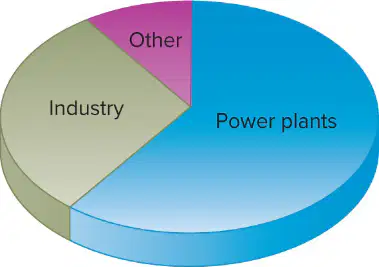
What is the largest source of sulfur dioxide according to the pie chart?
Other
Industry
Power plants
Transportation
What are unconventional pollutants?
Pollutants not commonly found in the environment
Pollutants that are beneficial to the environment
Pollutants that are only found in water
Pollutants that are man-made
Which of the following is considered an unconventional pollutant?
Carbon dioxide
Asbestos
Water
Oxygen
In what year did the EPA announce it would add CO2 and other greenhouse gases to its list of regulated pollutants?
2007
2009
2011
2013
_______ emissions are those that do not go through a smokestack.
Fugitive or nonpoint-source
Point-source
Industrial
Vehicular
What is sulfur dioxide (SO₂)?
A colorless, corrosive gas that damages both plants and animals.
A highly reactive gas formed from nitrogen and oxygen.
A gas that forms photochemical smog.
A gas that is harmless to the environment
Fill in the blank: Nitrogen oxides (NOx) are highly reactive gases formed when the heat of combustion initiates reactions between atmospheric nitrogen (N₂) and ________.
oxygen (O₂)
carbon dioxide (CO₂)
hydrogen (H₂)
argon (Ar)
What is carbon monoxide (CO)?
A colorless, odorless, and highly toxic gas
A sweet-smelling, non-toxic gas
A visible, harmless gas
A fragrant, safe gas
Fill in the blank: Ozone (O3) is a highly reactive oxidizing agent that damages ______, lungs, and plant tissues.
eyes
skin
hair
nails
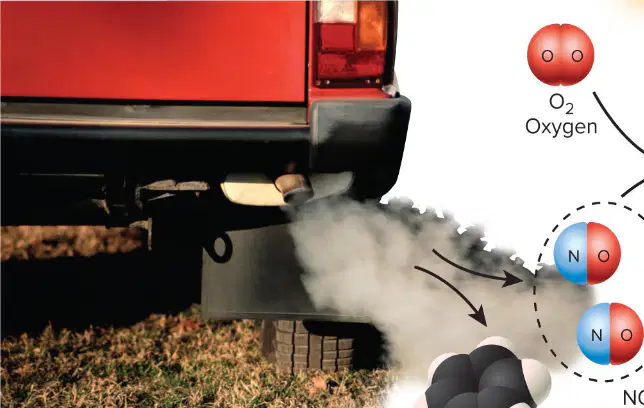
What is the primary component released from vehicle exhaust that contributes to ground-level ozone formation?
Volatile organic compound (VOC)
Carbon dioxide (CO2)
Nitrogen gas (N2)
Water vapor (H2O)
Which of the following is a product of the reaction between NO (Nitric oxide) and O2 (Oxygen) in the presence of sunlight?
H2O
O3 (Ozone)
HNO3 (Nitric acid)
CO2
What role does sunlight play in the formation of ground-level ozone?
Sunlight provides the energy needed for the chemical reactions that form ozone.
Sunlight directly combines with oxygen to form ozone.
Sunlight cools the atmosphere, allowing ozone to form.
Sunlight breaks down ozone into oxygen molecules.
What do volatile organic compounds (VOCs) contribute to?
The formation of ozone and other photochemical oxidants.
Global cooling effects.
Reduction of greenhouse gases.
Decrease in air pollution.
Which of the following processes can lead to the release of volatile organic compounds (VOCs)?
Refining of oil and gas
Manufacturing of electronics
Textile production
Agriculture
What is the most abundantly produced metal air pollutant that impairs nerve and brain functions?
Mercury
Lead
Copper
Zinc
Particulate material includes dust, ash, soot, lint, smoke, pollen, spores, algal cells, and many other suspended materials like _______.
aerosols
water droplets
sand particles
metal shavings
What are hazardous air pollutants (HAPs) known to cause?
Cancer and nerve damage
Heart disease
Diabetes
Asthma
Why does the U.S. EPA monitor a special category of toxins?
To ensure public safety
To increase pollution
To reduce government spending
To promote industrial growth
What is the impact of hazardous air pollutants on ecosystems?
They have no impact on ecosystems.
They can cause harm to wildlife and plants.
They improve the health of ecosystems.
They only affect human health.
In what year was the Toxic Release Inventory (TRI) established?
1986
1980
1990
1995
What is the purpose of the Toxic Release Inventory (TRI)?
To increase production of toxic substances
To inform communities about toxic substances
To reduce the number of factories
To promote chemical manufacturing
What is the primary source of airborne metals?
Combustion of fuel, especially coal.
Natural soil erosion.
Volcanic eruptions.
Industrial metal smelting.
Why has airborne mercury received special attention?
Because it is a persistent neurotoxin that damages the brain and nervous system.
Because it is beneficial for the environment.
Because it is a common household item.
Because it is used in many food products.
What can minute doses of mercury cause, especially in young children and developing fetuses?
Nerve damage and other impairments.
Improved cognitive function.
Increased energy levels.
Enhanced immune response.
What percentage of airborne mercury is released by coal-burning power plants?
70%
50%
30%
10%
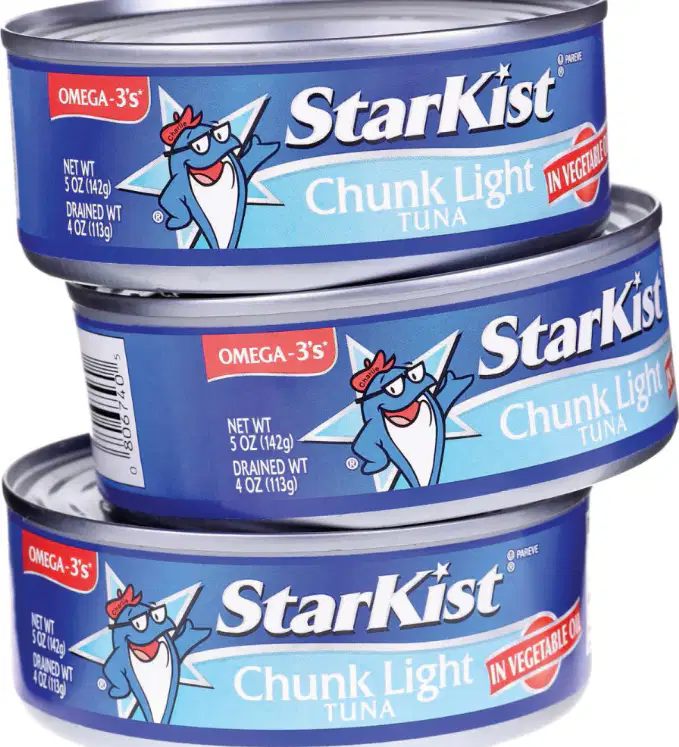
Is canned tuna a source of mercury?
Yes
No
Which physical processes in the atmosphere affect air pollutants?
Condensation, evaporation, and precipitation
Photosynthesis and respiration
Erosion and sedimentation
Nuclear fusion and fission
What is the best-known case of interaction between anthropogenic pollutants and the atmosphere?
Acid rain
Global warming
Ozone depletion
Smog formation
Global warming is altering the earth’s energy budget.
True
False
Dust and fine aerosols can travel great distances due to:
wind currents
ocean currents
animal migration
human transportation
Which regions are affected by pollution from the industrial belt between the Great Lakes and the Ohio River Valley?
Northeastern United States
Southeastern United States
Western United States
Southern United States
Dust storms from which deserts routinely close schools, factories, and airports in Korea, Japan, and the U.S.?
Sahara Desert
Gobi Desert
Arabian Desert
Kalahari Desert
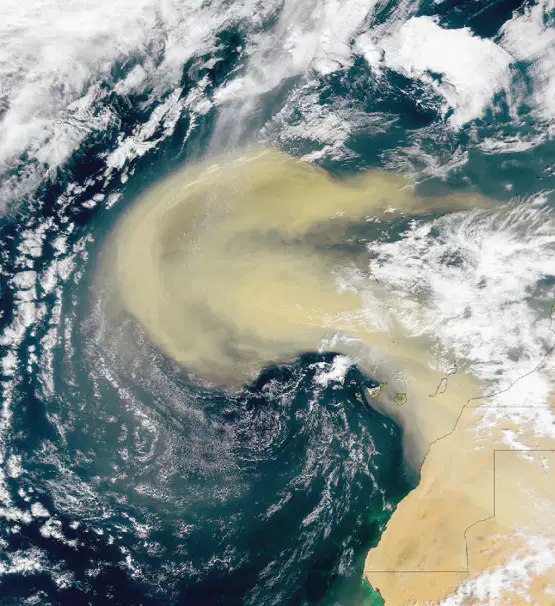
What is the source of the dust that regularly crosses the Atlantic and contaminates the air in Florida and the Caribbean Islands?
South America
North Africa
Europe
Asia
Which gas is not alone as a greenhouse gas?
CO₂
CH₄
N₂O
O₂
Which of the following are greenhouse gases?
Methane
Nitrous
Oxide
All of the above
True or False: CO₂ is the only greenhouse gas responsible for climate change.
True
False
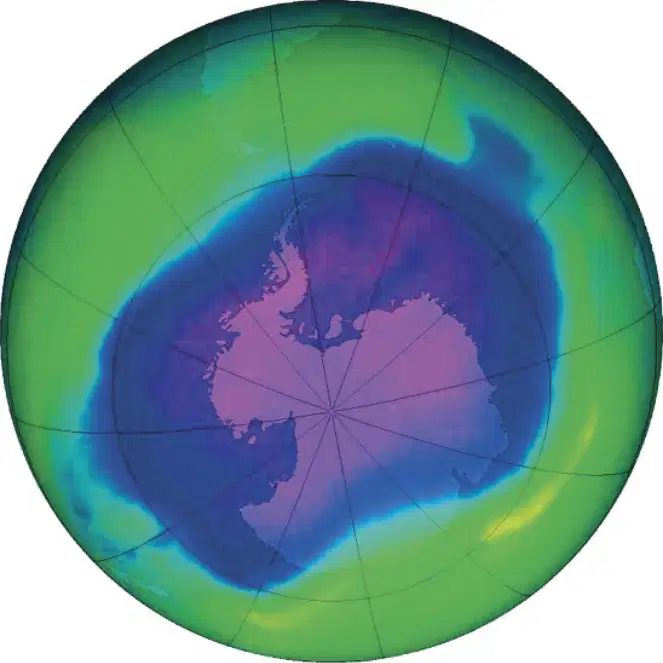
What phenomenon is produced by chemical reactions of atmospheric gases and pollution?
Ozone hole
Greenhouse effect
Acid rain
Smog
Which of the following are the principal agents of ozone depletion?
CFCs and HCFCs
CO2 and CH4
O2 and N2
Excessive UV exposure can lead to:
Increased plant growth
Depletion of the ozone layer
Improved air quality
Reduction in greenhouse gases
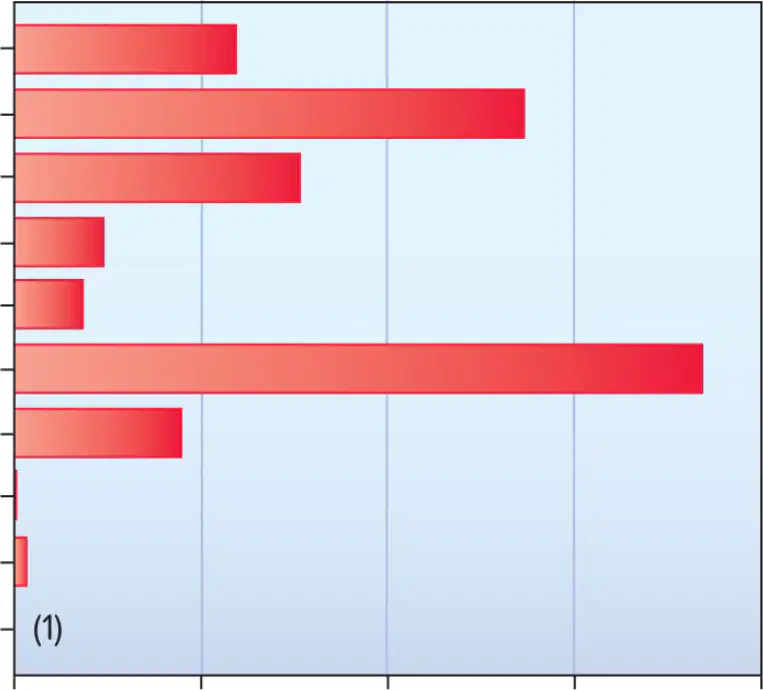
Which greenhouse gas has the highest global warming potential according to the chart?
CFC-11
HFC-23
Methane
Carbon dioxide
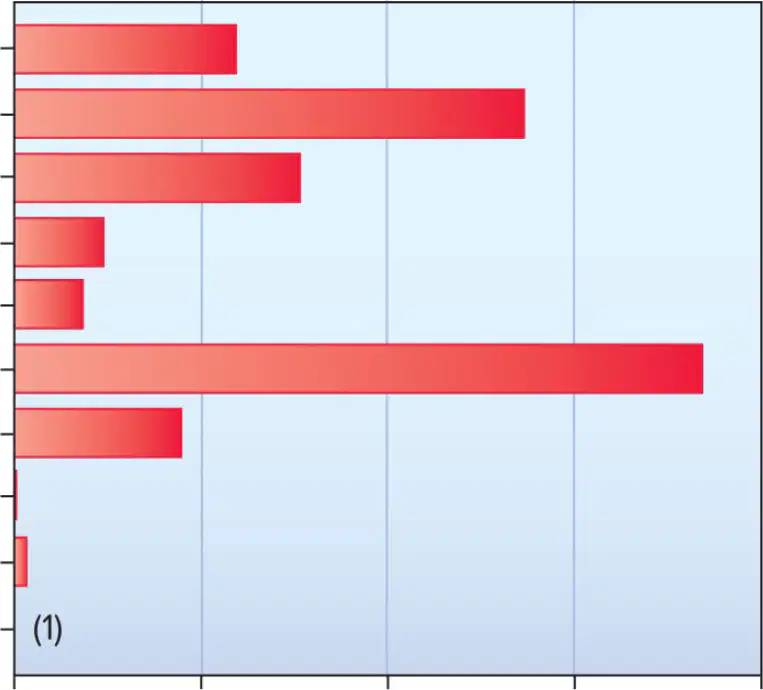
The global warming potential of CFC-12 is approximately _______ according to the chart.
10,000
1,000
5,000
20,000
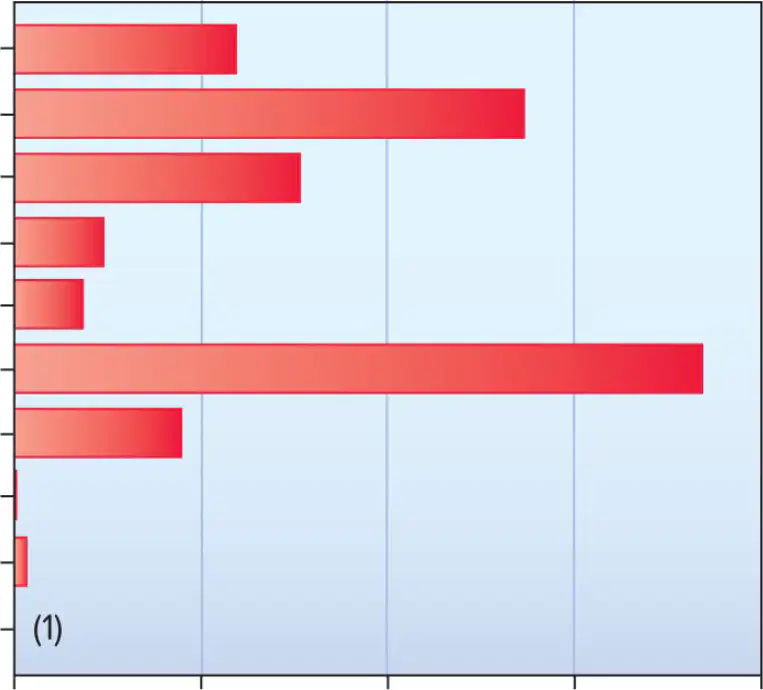
Methane has a higher global warming potential than Nitrous oxide according to the chart.
True
False
What was the deadline for the elimination of all CFCs according to the Montreal Protocol?
1990
1996
2000
2010
CFCs are now being removed from the atmosphere more _______ than they are being added.
rapidly
slowly
steadily
gradually

