
 Worksheets
FOOD SECURITY, WATER CYCLE, CLIMATE CHANGE
Total questions: 66
Worksheet time: 38mins
What is the energy source for the water cycle?
the Sun
the Earth
water
the Moon

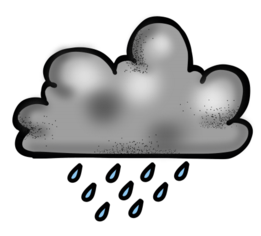
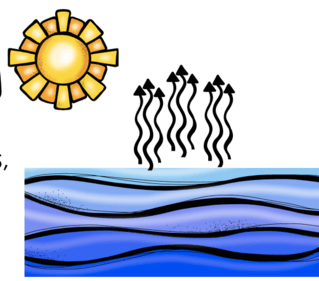

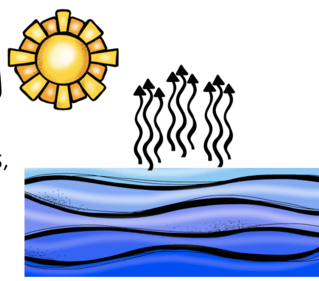


The water cycle has no start or end
True
False
In our Water Cycle Game/Simulation, where did most students end up spending their time? (2 answers)
Lake
Ocean
Atmosphere
Soil
What is the main cause of the phenomenon known as the greenhouse effect?
Water vapor
Ozone particles
Carbon dioxide
Nitrous oxide
How have human activities increased the amount of CO2 in the atmosphere?
By burning fossil fuels
By reducing industrial activities
By planting more trees
By using renewable energy sources
What do ice sheets melting cause?
Formation of new ice sheets
No impact on sea levels
Increase in sea levels
Decrease in sea levels
What are the consequences of warmer temperatures on weather?
More intense major storms
No impact on weather
Less frequent droughts
Decrease in heavy snowfall
How does exposure to higher levels of smog affect human health?
No impact on health
Causes lung cancer
Causes diabetes
Improves respiratory health
What can combat the rapid rate of climate change?
Deforestation
Increasing greenhouse gas emissions
Using renewable energy sources
Burning more fossil fuels
Which gases in the atmosphere contribute to the greenhouse effect?
Carbon dioxide and methane
Hydrogen and helium
Argon and krypton
Oxygen and nitrogen
What challenges does climate change pose for agriculture?
No impact on agriculture
Decreased water supplies
Easier crop cultivation
Shift in areas where plants can live
What are the consequences of climate change for our oceans?
Increase in water supplies
Shift in areas where animals can live
No impact on oceans
Decreased sea levels
What can help prevent some of the worst effects of climate change?
Burning more fossil fuels
Reducing renewable energy sources
Using renewable energy sources
Increasing greenhouse gas emissions
Which of the following is the biggest cause of global warming?
Decomposing plants
Burning oil, gas and coal
Natural variation of the planet
Pollution from wildfires
What has the scientific community concluded about climate change?
The consensus is that it is both real and man-made.
Scientists have shown it to be real but aren’t sure whether it is man-made.
Scientists do not think climate change is real.
There is little consensus.
Which of these factors most contributes to current global warming?
Sunspots
The hole in the ozone layer
Littering
Carbon dioxide emissions
The likelihood of which extreme weather event is expected to increase with climate change?
Heat waves
Droughts
Hurricanes
all of these
Which of the following is a greenhouse gas (GHG)
CO2
CH4
Water vapor
all of the above
Which greenhouse gas is released from landfill sites?
Carbon dioxide
Methane
Nitrous Oxide
How much has sea level risen since 1900 (global average)?
21cm
12cm
40cm
3m
What percentage of scientists agree that climate change is likely generated by human activities?
97%
37%
Bongbong
50%
The price that is announced before the sowing season is called
Issue price
Fair price
Market price
Minimum support price
Which of the following crops are related to Green revolution?
wheat, Rice
Maize,rice
Cotton, bajra
Bajra, wheat
What does food security mean?
Availability of food
Accessibility of food
Availability and accessibility of food to all at all times.
Availability, accessibility and affordability of food to all at all the times.
In which of the following states the most devastating famine of India in the year 1943 occurred?
Bengal
Orissa
Bihar
UP
When did the word food security came into exist?
1970
1972
1974
1976
MSP stands for_
Maximum support price
Minimum support price
Marginal support price
Main support price
The official document entitling the holder to a ration of food issued by the government of India is known as_
Ration card
Food card
Health card
Insurance card
How many pillars are there in food security according to WHO?
One
Two
Three
Four
F.C.I stands for
Food Center of India
Food Center of Investigation
Food Complex of Integrity
Food Corporation of India
Though farmers are aware that chemical fertilizers cause damage to the soil of the field they are using it because
Output is low
Output is high
For healthy crop
For healthy soil
Which of the following is not a dimension of food security?
a. AFFORDABILITY
b. ACCESSIBILITY
c. SCARCITY
d. AVAILABILITY
THE FAMINE OF BENGAL OCCURRED IN THE YEAR______
A. 1960
B. 1943
C. 1973
D. 1983
What does availability of food mean for Avani, Aditi, and Aarav?
A. Food production within the country
B. Food imports
C. The previous years stock stored in government granaries
D. All of these
What does affordability imply?
a. Naira doesn't have enough money to buy sufficient, safe and nutritious food
b. Aisha has enough money to buy sufficient, safe and nutritious food
c. All persons do not have the capacity to buy food of acceptable quality
d. None of these
Food security is important for which of the following reasons?
A. To face food scarcity
B. For the well-being of everyone, including Krish, Sanya, and Asher
C. To ensure everyone has access to nutritious food
D. To ensure food is available at all times
How do you calculate an average/mean?
The most common score
Line up the scores from highest to lowest and identify the middle number
Sum of all the scores divided by the number of scores.
What is the average of: 10, 30, 20?
30
20
10
Food security is...
when a country is able to grow diverse foods with nutrient quality.
when an individual has consistent, reliable, affordable access to food with nutrient quality that is sufficient to sustain life.
when a group of people are able to afford the food available to them.
What is the effect of population growth on food security?
A growing population will require increased food supplies in order to adequately sustain life.
Population growth will not affect food security as we currently have an oversupply of food.
A growing population will increase food security as more people are available to grow food in rural areas.

Identify the average rainfall for the May
90
120
160
200

Identify the biome (Max rainfall 300mm a month), Temperature between 20-30 degrees C.
Temperate forest
Tropical rainforest
Boreal
Grassland

Identify the types of biome: found between the tropical and boreal regions. It is within the second largest biome on the planet. Contains deciduous trees are trees that lose their leaves in winter. 4 seasons.
Tropical rainforest
Temperate forest
Boreal forest
Grassland
Select all of the factors that affect food security
Climate change
Overuse of resources
Pollution
Drought
Population decline
Which biomes receives less than 250mm of rain each year?
Grassland
Desert
Tundra
Temperate forest
Which animals and plants typically live in a hot and dry desert? (2 answers)
Cold blooded animals such as snakes and lizards
Grazing animals such as horses, buffalo, kangaroos and zebras,
Wildflowers, buffalo grass and sagebrush.
Plants with deep, extensive root systems and thick leaves.

Select all information that is relevant for Tropical Rainforest
Heavy rainfall - at least 2000 mm per year.
Dense, layered and varied vegetation that remove most of the nutrients out of the soil (can be a poor soil for growing food).
Major locations include Canada and Europe.
Home to the largest number of animals (monkeys, birds, snakes, frogs).
__________ is a community of plants and animals that have common characteristics for the environment they exist in.
Climate
Biome
Forest
Ecosystem

Which is NOT a feature of Taiga/Boreal forest
Temperature range from -30 to 15
Animals include polar bears and Arctic foxes.
Located in between tundra and temperate forests (Russia, Canada)
Vegetation includes needleleaf, coniferous trees, pine trees.
Four pillars of food security: Utilisation is:
Economic and physical access to food - do individuals have enough money to purchase food? Or means to produce it independently?
Consistency of food security.
The quantity, quality and diversity of food supply and trade.
A person's heath, feeding practices, food preparation, food storage and diversity of diet.
Four pillars of food security: Access is:
Economic and physical access to food - do individuals have enough money to purchase food? Or means to produce it independently?
Consistency of food security.
The quantity, quality and diversity of food supply and trade.
A person's heath, feeding practices, food preparation, food storage and diversity of diet.
Four pillars of food security: Stability is:
Economic and physical access to food - do individuals have enough money to purchase food? Or means to produce it independently?
Consistency of food security.
The quantity, quality and diversity of food supply and trade.
A person's heath, feeding practices, food preparation, food storage and diversity of diet.
Four pillars of food security: Availability is:
Economic and physical access to food - do individuals have enough money to purchase food? Or means to produce it independently?
Consistency of food security.
The quantity, quality and diversity of food supply and trade.
A person's heath, feeding practices, food preparation, food storage and diversity of diet.

