
 Worksheets
Biomes & Biodiversity
Total questions: 64
Worksheet time: 32mins
Antarctica is the only continent without grasslands. What biome is in Antarctica?
Arctic Tundra
Tropical Rainforest
Savannah
Freshwater Biome
Biomes are....
A large region characterized by a specific type of climate and types of plant and animal communities
Where organisms live
A small specialized habitat, such as the space in a log
An organisms role in an ecosystem
The number, and variety of living organisms in a given area, during a specific period of time.
Biodiversity
Population
Ecosystem
Species
Biodiversity is...
The number and variety of organisms in a given area, during a specific period of time.
All of the non-living part in an ecosystem.
All of the living parts in an ecosystem.
A place where an organism lives.
What happens when you take away one species from an ecosystem?
a new species comes to the area
nothing
biodiversity
It affects everything else
What biome is dry and has prickly plants?
Desert
Rainforest
Tundra
Ocean
___________ is the variability of life on Earth.
Biodiversity
Microhabitat
Primary Succession
Biome
Which of these describes the taiga biome?
largest land biome, 100 cm of rain,60 degrees C to -60deg C, snow very few reptiles
40 to 25 degrees C, 25cm of rain fall,gets down to -15 deg C
hot,wet dry sesons,grazing mammals
dry, 50 to 90 cm of rain

Name this biome
Deciduous Forest
Tropical Forest
Taiga
Savannah
What are the three main types of biodiversity?
Gentic,Species,and Ecosystem
Genetic,Trex,and Ecosystem
Species,Ecosystem,and Tundra
Ecosystem,Gentic, and Chocolate egg
Which biome has many coniferous trees with needle leaves?
The Desert
The Tundra
The Grasslands
The Taiga
What biome has the most biodiversity?
Tropical rainforest
Deciduous Forest
Tundra
Temperate grasslands
What is a biome?
A large region with a variety of different plants and animals
Where a variety of species live in a area for a short time
All the living parts of an ecosystem
All of the non living parts of an ecosystem
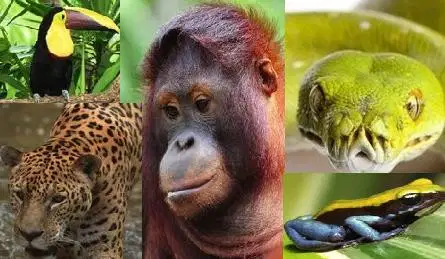
Which biome is home to these species?
Tropical Rainforest
Savannah
Temperate Forest
Taiga
What biome would you find few trees and lots of grass in?
Desert
Taiga
Grassland
Tundra
Why aren't polar ice caps considered Biomes
Plants do not exist there, biomes consists of both plants and animals.
The Biodiversity stays the same as the altitude.
They have soil.
Plants and communities change depending on elevation.
Which biome will be the most sustainable?
one with a few types of animals and one or two plant species
one type of tree and no animals
one with many diverse trees, animals and plants
one with harsh winter temperatures
What are the 5 causes of recent declines in Biodiversity?
Habitat Loss and Destruction, Introduction of Invasive Alien species, Pollution, Population Growth, and Over exploitation of respurces.
Habitat gain, loss if invasive species, Pollution, Population Decreases, and Under exploitation
Climate changes, weathering, eroding, depositing, and reducing animal environments
Floods, Volcanic Eruptions, Earthquakes, and Hurricanes
Which one of these describes a desert biome?
heavy rainfall, snowy & cold
rocky mountain ranges
forest, lots of trees
sandy, little vegetation,hot
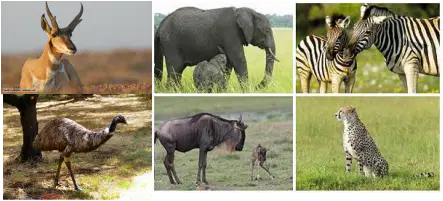
Which biome is home to these species?
Savannah/Grasslands
Tundra
Taiga
Desert

Name this biome
Desert
Tundra
Taiga
Savannah
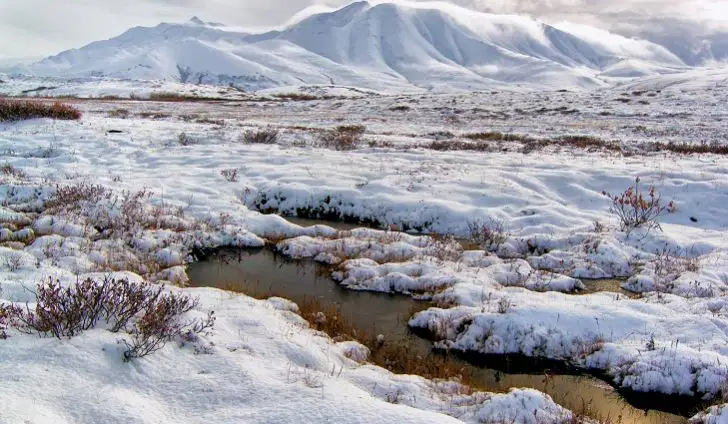
Name this biome
Tundra
Desert
Taiga
Temperate Forest
Which biome is known for having the coldest average yearly temperatures?
Rainforest
Tundra
Deciduous forest
Desert
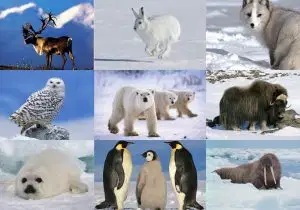
Which biome is home to these species?
Tundra
Temperate Forest
Taiga
Savannah
A biome with four distinct seasons.
Deciduous Forest
Taiga
Rain Forest
Tundra
What would happen if you took out one part of an ecosystem?
it would decrease sustainability
it would be the same
it would get bigger
population will grow
A biome where grasses are the main plant life.
Grasslands
Tundra
Desert
Rain Forest
Which biome would you find the following organisms: Lichens, white fox, reindeer?
Tundra
Taiga
Grassland
Deciduous Forest
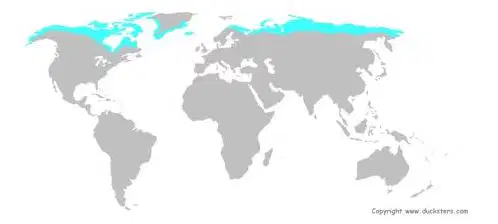
What biome is shown in light blue in the picture?
Tundra
Grasslands
Rain Forest
Taiga
There are more plant and animal species in this biome than any others.
Rain Forest
Grasslands
Deciduous Forest
Tundra
Most of the animals in this biome are noctural (come out at night) because of the heat.
Desert
Grasslands
Taiga
Rain Forest
Something in an environment that is non-living is considered
abiotic
biotic
biome
community
Something in an environment that is living is considered
biotic
abiotic
community
biome
Which of the following is not an example of an organism?
water
puppy
tree
bacteria
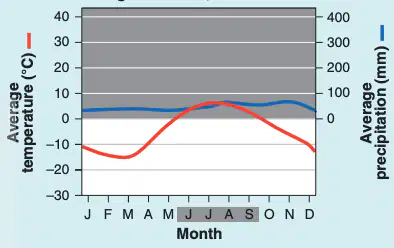
Cold, treeless, and during winter the soil is completely frozen. Which biome is likely represented by the climatogram?
Tundra
Boreal forest
Temperate rainforest
Temperate grassland
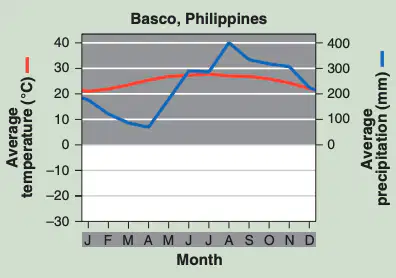
Hot, wet year-round with very poor soil quality. Which biome is likely represented by the climatogram?
Tropical Rainforest
Savanna
Temperate seasonal forest
Boreal forest
climax community
A stable, mature community that undergoes little or no change in species over time
building of an ecological community after a disturbance has altered the community, but not destroyed all living things or organic matter in the soil
Disturbances such as floods or excess nutrient runoff
primary succession
primary succession
building of a community when bare rock, sand, or sediment is exposed for the first time
primary succession
no - pollinate most of America's commercial crops, so they are beneficial to plants and the economy
a nonnative organism that spreads widely in a community
pioneer species
species that first colonize newly exposed land (ex. lichens)
yes - originally from Japan, introduced to U.S.A., quickly spread from Texas to southern New Jersey
primary succession
no - pollinate most of America's commercial crops, so they are beneficial to plants and the economy
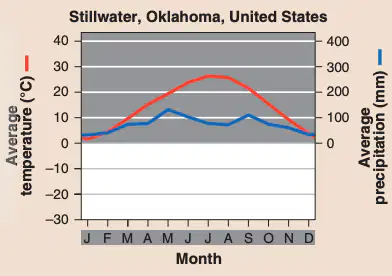
Cold, harsh winters and hot, dry summers. Which biome is likely represented by the climatogram?
Temperate Grassland
Savanna
Subtropical Desert
Chaparral
invasive species
a nonnative organism that spreads widely in a community
when an area fills with water for the first time
A stable, mature community that undergoes little or no change in species over time
primary succession
which succession takes longer to establish a climax community?
primary succession
species that first colonize newly exposed land (ex. lichens)
building of an ecological community after a disturbance has altered the community, but not destroyed all living things or organic matter in the soil
yes - invaded Great Lakes and have out-competed native organisms for resources
secondary succession
building of an ecological community after a disturbance has altered the community, but not destroyed all living things or organic matter in the soil
A series of predictable and orderly changes within an ecosystem over time.
building of a community when bare rock, sand, or sediment is exposed for the first time
A stable, mature community that undergoes little or no change in species over time
succession
A series of predictable and orderly changes within an ecosystem over time.
Disturbances such as floods or excess nutrient runoff
A stable, mature community that undergoes little or no change in species over time
no - pollinate most of America's commercial crops, so they are beneficial to plants and the economy
Which of the following is NOT a characteristic of Invasive plants?
produces lots of seeds
easily establishes itself
has effective seed dispersal methods
larger than any other plants
A species indigenous to a given region or ecosystem naturally.
Native Species
Introduced Species
Accidental Species
Threatened Species
A species that maintain biodiversity by keeping prey populations controlled are called...
Introduced Species
Invasive Species
Apex Predators
Keystone Species
The term biodiversity means:
a wide variety of plants and animals in an ecosystem
an ecosystem composed mostly of plants
only a few types of plants and animals in an ecosystem
an ecosystem composed mostly of animals HIDE ANSWER
A species that maintain biodiversity by keeping prey populations controlled are called...
Introduced Species
Invasive Species
Apex Predators
Keystone Species
Invasive species have a negative impact on...
the ecosystem
Both the ecosystem and the economy
the economy
None of these
An increase of biodiversity is normally a result of introducing an invasive species into an ecosystem.
True
False
Sometimes
can not be determined
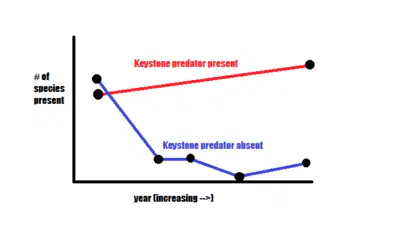
Based on the graph shown, what is the effect of removing a keystone species from an ecosystem?
biodiversity goes up
biodiversity stays about the same
biodiversity goes down
not enough information to tell
How do invasive plants damage the environment?
by competing with native species
by decreasing diversity
by changing plant communities
all of these damage an ecosystem
A sea otter and a sea star are examples of...
invasive species
native species
keystone species
symbiotic species
What is species diversity?
the different living things (plants and animals) in an area
the different animals in an area
the different habitats in an area
the different plants in an area
Which of these words does NOT describe an invasive species?
alien
non-native
intruder
natural
A keystone species has...
big impact on ecosystem, big population
big impact on ecosystem, small population
small impact on ecosystem, small population
None of these
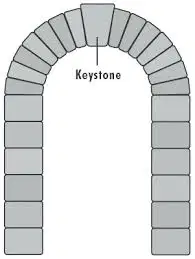
What is a keystone species?
A species that helps to hold an ecosystem together
Keys and stones have nothing to do with ecology
A species that lives in or around rocks
A keystone isn't a living thing, it's just a stone
The primary cause of invasive species introduction is
too much food
weather events
human actions
asteroids
This invasive species came over in boats from Europe in the 1980's. They harm native fish, clog pipes and ruin beaches.
Sea Lamprey
Asian Carp
Zebra Mussel
Feral Swine
What is an invasive species?
an organism that IS native to an area and causes harm to the environment/humans
an organism that is NOT native to an area and causes harm to the environment/humans
an organism that is NOT native to an area and helps the environment/humans
an organism that IS native to an area and helps the environment/humans
Invasive species can have a major impact on the ecosystem.
True
False
Sometimes
cannot determine impact of invasive species
Why do the populations of invasive species grow so quickly?
Invasive Species are native to an area.
Invasive species have no natural predators.
Invasive species are prey to many animals.
Invasive species keep the ecosystems in equilibrium.
Invasive species can crowd out native species.
True
False
Sometimes
depends on the location

