wayground logo

Free Printable Worksheets

Font size

S
M
L
XL
Worksheets

Physical Science Year Review

Total questions: 111

Worksheet time: 3hrs 36mins

Name
Class
Date
1.
Subatomic particles that are neutral in charge
a)
Neutrons
b)
Protons
c)
Nucleus 
d)
Electrons
2.
Where electrons are likely to be found as they travel around the nucleus
a)
Nucleus
b)
Electron Cloud
c)
Within a Proton
d)
Within a Neutron
3.

All matter is made of _________.

a)
energy 
b)
atoms 
c)
electrons 
d)
compounds 
4.
What is at the center of every atom?
a)
An electron
b)
A compound
c)
A molecule
d)
A nucleus
5.
The positively charged particles of an atom are the ________.
a)
electrons
b)
protons
c)
neutrons
d)
protons & neutrons
6.
What does the nucleus of an atom contain?
a)
Electrons and neutrons
b)
Protons and neutrons
c)
Neutrinos and positrons
d)
DNA and RN
7.

__________ are negatively charged particles that are in the orbitals around the nucleus.

a)

protons

b)

nucleus

c)

neutrons

d)

electrons

8.

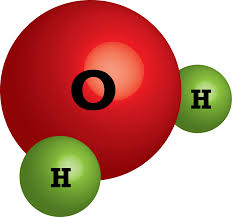
How many atoms of Hydrogen are in this compound?

a)

1

b)

2

c)

3

d)

4

9.

Solid to gas

a)

Deposition

b)

Freezing

c)

Sublimation

d)

Vaporization

10.

Gas to solid

a)

Deposition

b)

Freezing

c)

Sublimation

d)

Vaporization

11.

Liquid to gas

a)

Melting

b)

Freezing

c)

Condensation

d)

Vaporization

e)

Sublimation

12.

Gas to liquid

a)

Melting

b)

Freezing

c)

Condensation

d)

Vaporization

e)

Sublimation

13.

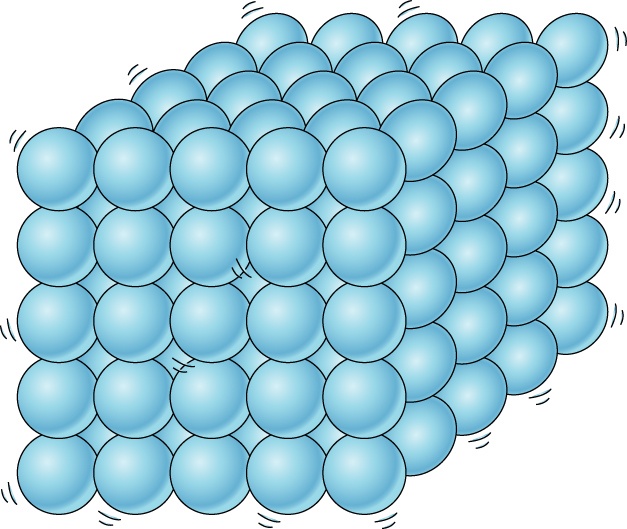
The slower the particles in a substance move,

a)

the colder it is.

b)

the warmer it is.

c)

the more energy it has.

14.

Which statement best describes what happens when heat is added to a substance?

a)

Energy moves out of the substance causing the molecules to slow down.

b)

Energy moves out of the substance causing the molecules to speed up.
c)

Energy moves into the substance causing the molecules to slow down.

d)

Energy moves into the substance causing the molecules to speed up.

15.

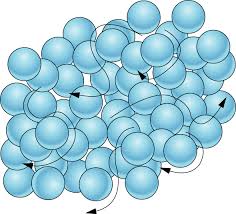
What state of matter?

a)

Solid

b)

Liquid

c)

Gas

d)

Plasma!!!

16.

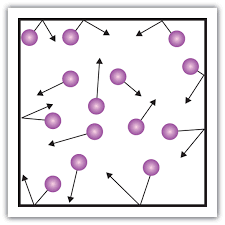
What state of matter?

a)

Solid

b)

Liquid

c)

Gas

17.

What state of matter?

a)

Solid

b)

Liquid

c)

Gas

18.

What state of matter is pictured?

a)

Solid

b)

Liquid

c)

Gas

d)

Plasma

19.
The atomic number tells you what?
a)
number of electrons
b)
number of protons
c)
number of neutrons
d)
both electrons and protons in an atom.
20.
Elements which are shiny, conduct electricity and heat are called
a)
metal
b)
nonmetal
c)
metalloid
d)
nonexistent
21.
What does the 1.00794 stand for?
a)
Hydrogen
b)
atomic number
c)
atomic mass
d)
atomic explosion
22.
Particles in an atom that are neutral and have no charge are 
a)
negatrons 
b)
electrons 
c)
neutrons 
d)
protons 
23.
What is the atomic mass equal to?
a)
the number of protons
b)
the number of protons and neutrons
c)
the number of neutrons
d)
the number of protons and electrons
24.
In the modern periodic table elements are arranged by:
a)
atomic mass
b)
atomic number
c)
valence electrons
d)
number of isotopes
25.

What is the atomic mass of the element shown?

a)

14

b)

28

c)

42

26.

Elements that have the same number of energy levels are said to be in the same ______.

a)

group

b)

period

c)

family

d)

classification

27.

The smallest building block of all matter is the ________.

a)

molecule

b)

atom

c)

element

d)

compound

28.

A ___________ is a mixture of two or more elements.

a)

atom

b)

element

c)

periodic table

d)

compound

29.

Water, salt, sugar, and other common items are __________.

a)

elements

b)

compounds

c)

energy

d)

tables

30.
Is Iron (Fe) an element or a compound?
a)
Element
b)
Compound
31.
What is gold?
a)
element
b)
compound
c)
mixture
32.
What is sugar?
a)
element
b)
compound
c)
mixture
33.
What is water?
a)
element
b)
compound
c)
mixture
34.
a)

Element

b)

Compound

c)

Mixture

35.
a)

Element

b)

Compound

c)

Mixture

36.
a)
Element
b)
Compound
37.
a)

Element

b)

Compound

c)

Mixture

38.

Water changing from gas to liquid.

a)

atmosphere

b)

cooling

c)

condensation

d)

evaporation

39.

Freshly brewed black coffee

a)

Heterogeneous

b)

Homogeneous

40.

Lucky Charms

a)

Heterogeneous

b)

Homogeneous

41.

Dirt

a)

Heterogeneous

b)

Homogeneous

42.

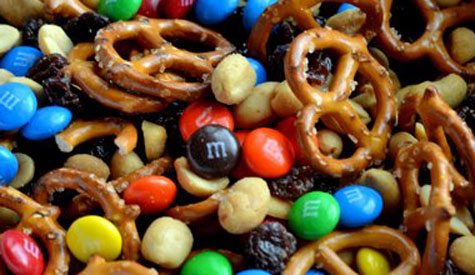
M&Ms

a)

Heterogeneous

b)

Homogeneous

43.
A combination that can be separated by physical processes is a .....
a)
Atom
b)
Compound
c)
Element
d)
Mixture
44.
What type of mixture is this?
a)
homogenous mixture
b)
chemical
c)
heterogeneous mixture 
d)
solid mix
45.
Chicken soup is an example of what kind of substance?
a)
homogenous mixture
b)
solution
c)
heterogeneous mixture
d)
compound
46.
Kool-Aid
a)
Element
b)
Compound
c)
Homogeneous Mixture
d)
Heterogeneous Mixture
47.
Carbon
a)
Element
b)
Compound
c)
Homogeneous Mixture
d)
Heterogeneous Mixture
48.
Aluminum
a)
Element
b)
Compound
c)
Homogeneous Mixture
d)
Heterogeneous Mixture
49.

A physical property__________________.

a)

can be observed by trying to change the identity of an object or substance

b)

can be observed without changing the identity of an object or substance

50.

A pure substance that cannot be broken down into any other substance.

a)

Elements

b)

Compounds

c)

Mixtures

51.
____________ is the property that tells us how well something dissolves.
a)
Liquidness
b)
Density
c)
Dissolvability
d)
Solubility
52.

A Gas has:

a)

a definite shape but not a definite volume

b)

a definite shape and a definite volume

c)

a definite volume but not a definite shape

d)

Neither a definite shape nor a definite volume

53.

The three common states of matter are

a)

Solid, Liquid, Plasma

b)

Solid, Plasma, Gas

c)

Plasma, Gas, Liquid

d)

Solid, Liquid, Gas

54.

What is matter? (choose the best answer)

a)

Anything with mass and takes up space

b)

Where to begin?

c)

Solids

d)

things I can see and touch

55.

What is volume?

a)

The distance around a 3D object

b)

The amount of space that matter takes up

c)

The amount of space on the surface of a 3D object

56.

What is the formula for measuring volume?

a)

length x width

b)

length x length

c)

length + width + height

d)

length x width x height

57.

An attraction or pull between two objects is called

a)

weight

b)

gravity

c)

mass

d)

meniscus

58.

Measure the volume.

a)

38

b)

34

c)

35

59.

_______________ is a measure of the amount of gravitational pull on an object.

a)

mass

b)

volume

c)

weight

60.
What is mass?
a)
the distance between two points
b)
the amount of matter (stuff) in an object
c)
the amount of space an object takes up
d)
the distance between three points
61.

What is the SI unit used to measure weight?

a)

pounds

b)

grams

c)

newtons

d)

friction

62.
If Earth's mass was cut in half, what would happen to your mass?
a)
increase because gravitational force increases
b)
decrease because gravitational force decreases
c)
decrease because gravitational force increases
d)
nothing, mass is not affected by gravitational force
63.
Two factors effecting the magnitude of the force of gravity between 2 objects are...
a)
mass and distance 
b)
mass and matter
c)
distance and weight 
d)
weight and mass
64.
Which model has greater gravitational attraction (if any)
a)
Model A
b)
Model B
c)
Both Model A and Model B (same gravity)
65.
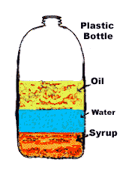
Which liquid is the least dense?
a)
oil
b)
water
c)
syrup 
d)
plastic bottle
66.
What is this tool to get mass?
a)
triple beam balance
b)
ruler
c)
thermometer
d)
graduate cylinder
67.
Why do some substances float on water?
a)
they are warmer than water
b)
they are cooler than water
c)
they are more dense than water
d)
they are less dense than water
68.
What is the density of a substance that has a mass of 30g and a volume of 6 liters?
a)
24 g/l
b)
5 g/l
c)
36 g/l
d)
180 g/l
69.
A piece of copper has a mass of 89g and a volume of 10 cm3.  What would be the density of the copper?
a)
0.89 g/cm3
b)
89 g/cm3
c)
8.9 g/cm3
d)
890 g/cm3
70.

Why does increasing the temperature speed up chemical reactions?

a)

The particles are moving faster

b)

The particles are moving slower

c)

The particles are bouncing off the wall

d)

The particles all merge together and become one giant particle

71.

What is acceleration?

a)

The rate of an object's motion

b)

How fast an object's speed changes

c)

Any push or pull

72.

What is force?

a)

The rate of an object's motion with direction

b)

The rate of an object's motion

c)

any push or pull

73.

What is the net force in this tug of war?

a)

400 N

b)

300 N

c)

700 N

d)

100 N

74.

As mass increases, acceleration _________.

a)

increases

b)

decreases

c)

stays the same

75.

What is the definition of net force?

a)

a push or a pull that acts on an object

b)

Net force equal 0N and there is no change in the object's motion

c)

the overall force acting on an object after all the forces are combined

d)

The force does not equal 0N, the object accelerates

76.

What is the magnitude and direction of the force in the free body diagram shown?

a)

20 N, no change in motion

b)

20 N right

c)

20 N left

d)

0 N , no change in motion

77.

What is the magnitude and direction of the force in the free body diagram shown?

a)

35 N right

b)

17 N right

c)

11 N right

d)

5 N right

78.

What is the magnitude and direction of the force in the free body diagram shown?

a)

2 N right

b)

2 N left

c)

4 N right

d)

2 N up and 2 N right

79.
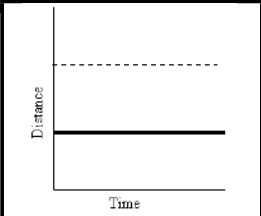
What does this graph represent?
a)
Constant speed
b)
Acceleration
c)
Not moving
80.

Describe the motion in the graph:

a)

Constant Speed (positive slope)

b)

Stopped (at rest)

c)

Acceleration (increasing speed)

d)

Return Home (negative slope)

81.
What is this graph showing?
a)
Constant Speed
b)
Acceleration (speeding up)
c)
Deceleration (slowing down)
d)
No motion
82.
Which graph shows an object not moving?
a)
A
b)
B
c)
C
d)
D
83.

During which segment did the car travel the fastest?

a)

Segment A to B

b)

Segment B to C

c)

Segment C to D

d)

Segment D to E

84.

During which segment is the object increasing speed?

a)

X

b)

Y

c)

Z

85.
Which runner had a head start?
a)
A
b)
B
c)
C
86.

The higher an object is, the more__________energy it has.

a)

Kinetic

b)

Potiential

c)

Thermal

d)

Radiation

87.

The more an object weights, the more___________energy it has.

a)

Kinetic

b)

Potiential

c)

Thermal

d)

Radiation

88.

Mass and speed both affect the amount of kinetic energy an object has, but ____________ has a greater effect.

a)

mass

b)

speed

c)

volume

d)

weight

89.

Increasing an object's mass will increase its kinetic energy.

a)

true

b)

false

90.

The amount of matter present in an object:

a)

Weight

b)

Speed

c)

Distance

d)

Mass

91.

What kind of energy does the picture demonstrate?

a)

kinetic energy

b)

potential energy

92.

Determine whether the following example is Potential Energy (PE) or Kinetic Energy (KE):


flashlight turned off

a)

Potential Energy

b)

Kinetic Energy

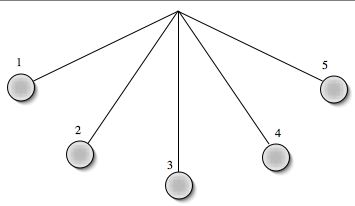
93.
When a pendulum swings, at which point is potential energy at its greatest?
a)
1
b)
2
c)
3
d)
4
94.
At which point is potential energy greatest?
a)
W
b)
X
c)
Y
d)
Z
95.
__________ is stored energy. 
a)
Potential
b)
Kinetic
c)
None of the above 
d)
All of the above 
96.
Energy can not be created or destroyed, only converted from one form to another.
a)
true
b)
false
97.
A baseball held by a pitcher has _____________energy.
a)
Kinetic
b)
Chemical 
c)
Potential
d)
Thermal
98.
What type of energy is in this picture?
a)
Kinetic
b)
Potential
c)
Chemical
d)
Sound
99.
What type of heat transfer happens in liquids and gases?
a)
Conduction
b)
Convection
c)
Radiation
100.
Heat transfers from ______ objects to cold objects. 
a)
Cold
b)
Hot
c)
Convection
d)
Radiation 
101.
Hot air rising from a campfire is...
a)
Conduction
b)
Convection
c)
Radiation 
102.
Hot air ______ while cool air ____
a)
Sinks, Rises
b)
Rises, Rises
c)
Rises, Sinks
d)
Convection, Radiation 
103.
When water from a lake evaporates...
a)
Conduction
b)
Convection
c)
Radiation 
104.
Which example below is an example of radiation?
a)
Standing on a hot metal bridge
b)
The attic is warmer than the basement
c)
The Sun heating the Earth
d)
Touching hot sand with your feet
105.
Which example below is an example of convection?
a)
Standing on a hot metal bridge
b)
The attic is warmer than the basement
c)
The Sun heating the Earth
d)
Touching hot sand with your feet
106.
A group of friends gather around a fire to stay warm.
a)
conduction
b)
convection
c)
radiation
107.
The Gulf Stream is a current that brings warm ocean water from the south to the north.
a)
conduction
b)
convection
c)
radiation
108.
Blow drying your wet hair.
a)
conduction
b)
convection
c)
radiation
109.
Walking on the warm sand sand with your bare feet.
a)
conduction
b)
convection
c)
radiation
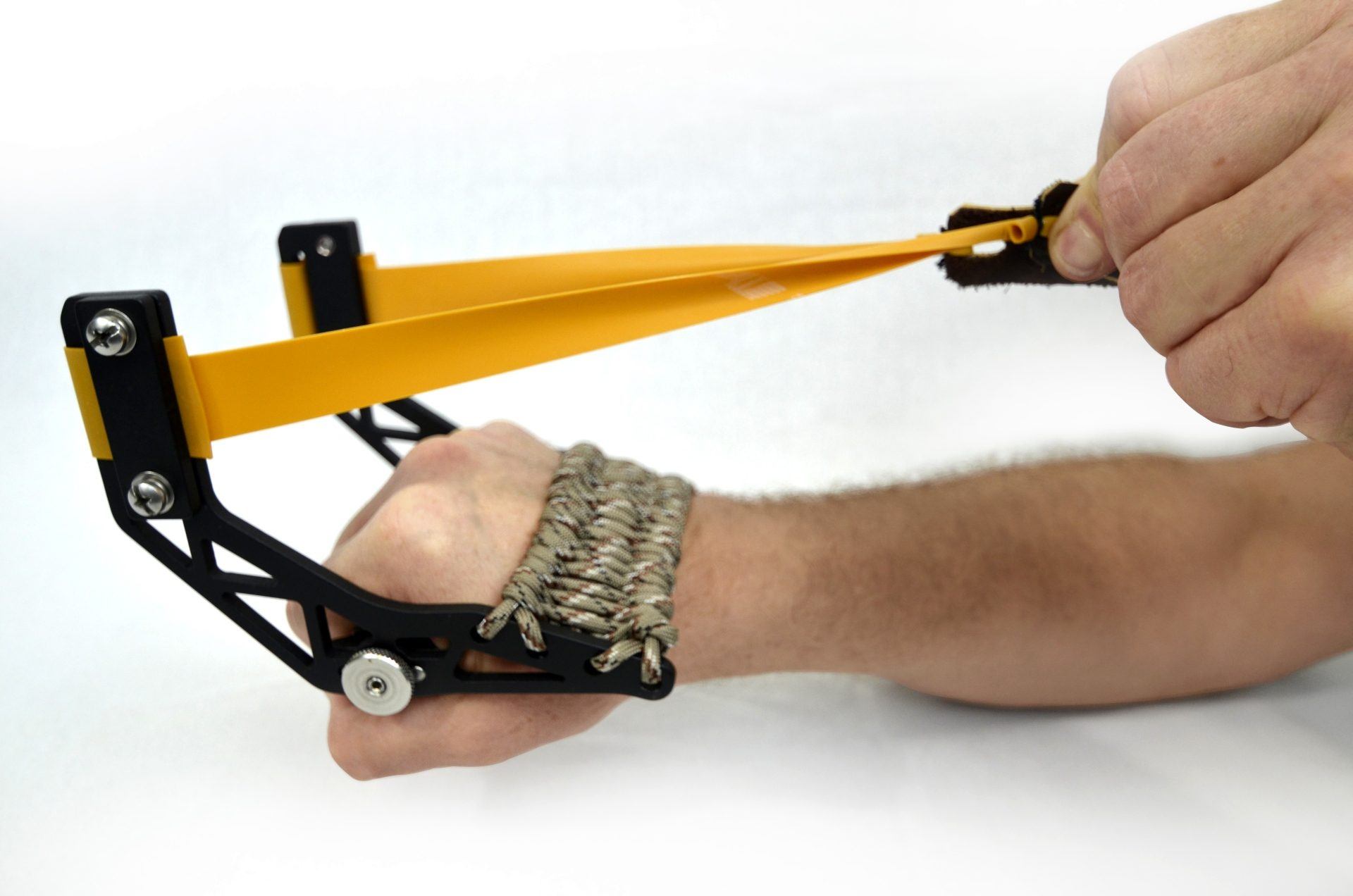
110.

This is a type of kinetic energy.

a)

Gravitational energy

b)

Elastic energy

c)

Sound energy

d)

Nuclear energy

111.

This is they type of energy stored in a battery.

a)

Gravitational energy

b)

Elastic energy

c)

Nuclear energy

d)

Chemical energy