wayground logo

Free Printable Worksheets

Font size

S
M
L
XL
Worksheets

Space Landscapes Elements molecules compounds mixtures

Total questions: 112

Worksheet time: 1hrs 4mins

Name
Class
Date
1.

Elements are made of

a)

Many types of atoms

b)

the Periodic Table

c)

One type of atom

d)

Molecules

2.

Molecules are

a)

2 atoms joined together

b)

2 elements joined together

c)

2 or more atoms mixed together

d)

2 or more atoms (same or different) joined together

3.

The smallest particle that makes everything

a)

atom

b)

element

c)

compound

d)

mixture

4.

All ____________ are made up of two or more atoms bonded together.

a)

atoms

b)

molecules

c)

electrons

d)

elements

5.
What is gold?
a)
element
b)
compound
c)
mixture
6.
What is krypton?
a)
element
b)
compound
c)
mixture
7.

What is water (H2O)?

a)

element

b)

compound

c)

mixture

8.

When two or more different types of atoms join together

a)

element

b)

compound

c)

mixture

d)

solution

9.
Which one can be found on the periodic table?
a)
Compound 
b)
Element
10.
What is the term for combining 2 or more DIFFERENT atoms together?
a)
atoms
b)
elements
c)
molecules
d)
compounds
11.
TRUE OR FALSE:
Every compound is a molecule but not every molecule is a compound.
a)
TRUE
b)
FALSE
12.

What is the picture displayed?

a)

atom

b)

element

c)

molecule

d)

compound

13.
Which part of an atom is POSITIVELY charged?
a)
protons
b)
neutrons
c)
electrons
d)
atoms
14.
What part of an atom is NEGATIVELY charged?
a)
protons
b)
neutrons
c)
electrons
d)
atoms
15.
Which part of an atom has no charge?
a)
protons
b)
neutrons
c)
electrons
d)
atoms
16.
What is the name of a single type of atom?
a)
cell
b)
proton
c)
element
d)
atom
17.

Which of the following is an example of the formation of a mixture?

a)

Rust forming on an iron nail.

b)

Sugar crystals dissolving in water.

c)

Sodium and chlorine forming table salt.

d)

Hydrogen and oxygen reacting to produce oxygen.

18.

Which statement identifies why oxygen is classified as a pure substance and air is classified as a mixture?

a)

Oxygen is more reactive than air.

b)

Oxygen has a higher density than air.

c)

Oxygen goes under a phase change, whereas air is always a gas.

d)

Oxygen contains only one substance, but air contains several substances.

19.

Which of the following is an example of of a container filled with a pure substance rather than with a mixture?

a)

A tire filled with air.

b)

A jar filled with salt water.

c)

A balloon filled with helium.

d)

A glass filled with chocolate milk.

20.

When electricity passes through water, hydrogen and oxygen are produced. Which table correctly labels the compounds and elements involved in the process?

a)

Water-->Compound

Hydrogen-->Compound

Oxygen--->Element

b)

Water-->Compound

Hydrogen--->Element

Oxygen--->Compound

c)

Water--->Compound

Hydrogen--->Element

Oxygen--->Element

21.

Which changes MUST happen for elements to become a compound?

a)

elements are heated

b)

a gas becomes a liquid

c)

elements dissolve in water

d)

chemical bonds form between atoms.

22.

When the elements copper (Cu) and oxygen (O) chemically combine, they form...

a)

an ion

b)

a gas

c)

a compound

d)

a mixture

23.

The image below is an example of

a)

an atom

b)

a molecule

c)

a homogeneous mixture

d)

a heterogeneous mixture

24.

The image below is an example of

a)

a homogeneous mixture

b)

a compound

c)

a heterogeneous mixture

d)

an element

25.
Which of the following represents an element?
a)
H2O
b)
H2
c)
NaCl
d)
CaCO3
26.
Which of the following is not a compound?
a)
HCl
b)
Cl
c)
NaCl
d)
CO2
27.
Salt has a chemical formula of NaCl.  Salt is a...
a)
Compound
b)
Element
c)
Mixture
d)
None of the Above
28.
What cannot be broken down into other substances?
a)
Compound
b)
Mixture
c)
Solids
d)
Element
29.
How many elements are represented in the compound?
Na2CO3
a)
1
b)
2
c)
3
d)
4
30.
A combination of substances that are not chemically combined is called a(n)____________. 
a)
mixture
b)
compound
c)
physical
31.
An element is made up of only one kind of _____.
a)
isotope
b)
plastic
c)
atom
d)
metal
32.
_____ small particles that make up most types of matter on Earth.
a)
compounds
b)
atoms
c)
mixtures
d)
elements
33.
In general, metals are _____. 
a)
poor conductors of heat
b)
brittle
c)
poor conductors of electricity 
d)
good conductors of heat
34.
Vertical columns in the periodic table are called _________ of elements and have similar properties. 
a)
groups
b)
periods
35.
What is H2SO4 
 made up of?
a)
2 hydrogen, 1 sulfur, 4 oxygen
b)
1 hydrogen, 2 sulfur, 4 oxygen
c)
2 hydrogen & 4 sodium
d)
1 hydrogen & 6 sodium
36.
A mixture that appears to be evenly mixed throughout:
a)
an atom
b)
a compound
c)
a homogeneous mixture
d)
a heterogeneous mixture
37.
A pure substance...
a)
is an element or a compound
b)
is an element or a mixture
c)
is a compound or a mixture
d)
is a mixture
38.
1 A substance made up of two or more chemically combinedelements is —
a)
an element
b)
mixture
c)
compound
d)
solution
39.
 A substance that cannot be broken down into any other substance by ordinarychemical means is called —
a)
molecule
b)
mixture
c)
element
d)
compound
40.
What is an example of a mixture?
a)
Table salt
b)
Salt water
c)
Oxygen
d)
Air
41.
NaHCO3 is an example of —
a)
an abbreviation
b)
a compound
c)
a mixture
d)
an element
42.
Which of these substances is an example of a solution?
a)
milk
b)
sweet tea
c)
mercury
d)
concrete
43.
Which of the following is an example of a colloid?
a)
Trail mix
b)
Kool-aid
c)
Fog
d)
Oxygen
44.
Two or more substances in the same place but NOT chemically combined or in a specific ratio is called —
a)
a compound 
b)
a pure substance
c)
an element
d)
a mixture
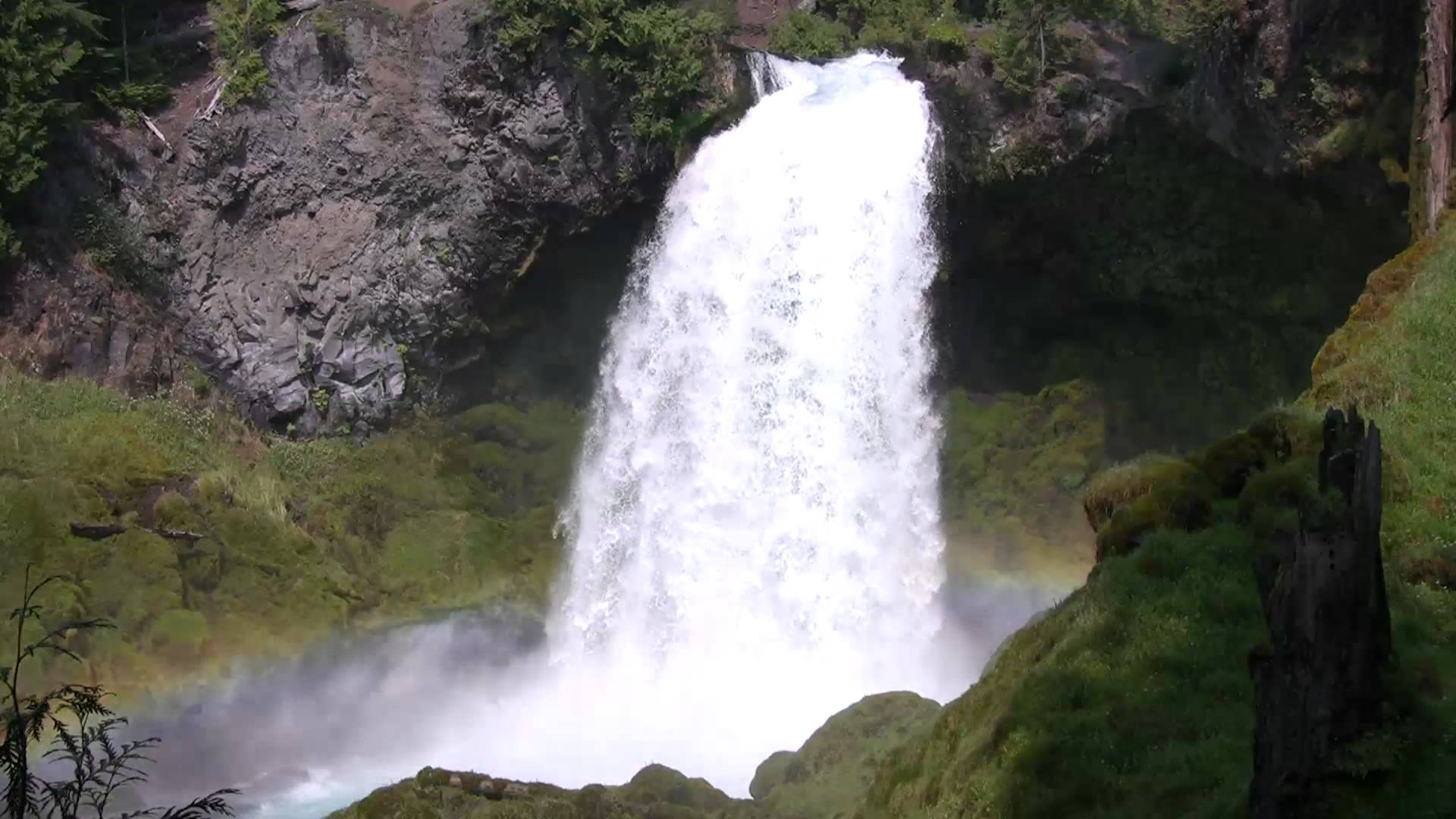
45.
How do we call this landscape feature?
a)
a river
b)
a desert
c)
a waterfall
d)
a lake
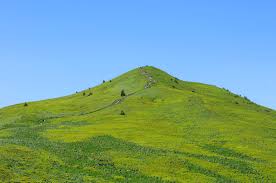
46.
How do we call this landscape feature?
a)
a valley
b)
a river bank
c)
a forest
d)
a hill
47.

What are the 2 types of weathering?

a)

Physical and Chemical

b)

Mechanical and Chemical

c)

Rainy and Sunny

48.

When PHYSICAL FORCES break down rock into sediment, it is...

a)

Mechanical Weathering

b)

Chemical Weathering

49.
What evidence was found that this place was once under the ocean?
a)
a shark tooth
b)
ancient saltwater
c)
dinosaur skeleton
d)
an old boat
50.
What provides evidence of past life?
a)
microscope
b)
books
c)
weather data
d)
fossils
51.
Where did the silt surrounding the fossils come from?
a)
mountains
b)
ocean
c)
plains
d)
glacier
52.
What is a rock layer with lots of skeletons called?
a)
bone bed
b)
bone pile
c)
river bed
d)
biological layer
53.
How do scientists accurately determine how old a fossil is?
a)
count rings
b)
radiocarbon dating
c)
radio waves
d)
compare to other fossils
54.
What formed the Grand Canyon?
a)
a river
b)
dinosaurs
c)
a glacier
d)
humans
55.
What is the study of fossils called?
a)
dinosaur science
b)
fossilology
c)
paleontology
d)
archaeology
56.
Which of these caused the Sharktooth Hill bone bed to form?
a)
a river stopped and started flowing
b)
volcanic eruption
c)
sharks ate all the animals
d)
major earthquake
57.

MOUNTAIN RANGE is...

a)

It is series of mountains that are connected together to form a long line

b)

Landscapes created by people with buildings or changes in the land or the area

c)

It is a land along the coast. The particular shape of the land next to the sea

d)

They are made up of a variety of geographical features known as landforms such as mountains, hills, valleys, volcanos and coastlines

58.

Seas and ocean surrounding Spain

a)

Atlantic ocean

b)

Mediterranean sea

c)

Pacific ocean

d)

Cantabrian sea

59.

MAN-MADE landscapes are...

a)

created by people with buildings or changes in the land or the area

b)

with no changes in the land or the area

60.

A tropical rainforest is...

a)

It is a desert

b)

It is a type of grassland

c)

It is a forest in which there is no dry season. Wet area with a lot of vegetation

61.

Can we see rivers in Canary Islands?

a)

Yes

b)

No

62.

What does an island mean?

a)

A deep semicircle of land, surrounded by water

b)

Extensions of land entering the sea

c)

Land surrounded by water

63.

Do we have to protect our landscapes?

a)

Yes

b)

No

64.

The sea is very ____________ here, so only go into the water if you’re a good swimmer.

a)

shallow

b)

deep

c)

steep

d)

icy

65.

The man was close to the __________________ when it erupted.

a)

volcano

b)

waterfall

c)

shore

d)

cliff

66.

We can’t jump across this stream because it’s very ___________ .

a)

shallow

b)

icy

c)

narrow

d)

wide

67.

Stay away from that _____________ – it’s easy to fall!

a)

mountain

b)

cliff

c)

hill

d)

stream

68.

What is this?

a)

sea

b)

city

c)

desert

d)

lake

69.

What is this?

a)

desert

b)

volcano

c)

forest

d)

town

70.

What is this?

a)

sea

b)

river

c)

forest

d)

island

71.

What is this?

a)

island

b)

mountain

c)

city

d)

volcano

72.

What is this?

a)

beach

b)

city

c)

island

d)

waterfall

73.

What is this?

a)

sea

b)

river

c)

volcano

d)

desert

74.

What is this?

a)

lake

b)

city

c)

waterfall

d)

beach

75.

What is this?

a)

lake

b)

desert

c)

sea

d)

mountain

76.

How do we say to this kind of maps?

a)

Landscape map

b)

Physical map

c)

Political map

d)

Natural map

77.

a road is a ...

a)

natural feature

b)

landscape feature

c)

man-made feature

78.

The peak of a mountain is the...

a)

foot

b)

summit

c)

slope

79.

A naturally raised area of land, not as high as a mountain is a ...

a)

valley

b)

hill

c)

cliff

d)

plain

80.

A low area of land between mountains, tipically with a river flowing through it is a...

a)

cliff

b)

valley

c)

island

d)

mountain range

81.

Which part of the mountain is this?

a)

slope

b)

foot

c)

summit

82.

Which one of these is a natural feature?

a)

a road

b)

a church

c)

a tree

d)

a traffic sign

83.

are those urban or rural areas?

a)

urban areas

b)

rural areas

84.
Which causes the day-and-night cycle on earth?
a)
Earth moving around the sun
b)
The sun moving around the Earth
c)
Earth tilting on its axis
d)
Earth spinning on its axis
85.
What causes the different phases of the moon?
a)
Earth's shadow falling on the moon
b)
The change in the positions of Earth, the moon, and the sun
c)
The change in Earth's position in its orbit around the sun
d)
The moon's revolution around Earth
86.
When a planet spins on its axis, it is said to ___________________.
a)
orbit
b)
rotate
c)
revolve
d)
eclipse
87.
To "revolve" means to _________________
a)
rotate
b)
spin
c)
move
d)
orbit
88.
The lunar cycle begins with which moon phase?
a)
New Moon
b)
Full Moon
c)
Waxing Crescent
d)
Waning Gibbous 
89.
What galaxy do we live in?
a)
Black Hole
b)
Milky Way
c)
Milk Dud
d)
Three Musketeers 
90.
Asteroids are composed mostly of _________.
a)
ice
b)
dirt
c)
rock
d)
gas
91.
What does "Gibbous" mean?
a)
Smaller than 1/2
b)
Larger than 1/2
c)
Crescent shaped
d)
Gigantic 
92.
What causes seasons?
a)
The distance of a planet from the sun
b)
The gravitational pull of the Earth and Moon
c)
The tilt and revolution of Earth around the sun
d)
Changing temperatures on Earth
93.
What happens when the area you live in tilts away from the sun?
a)
It is summer
b)
It is spring
c)
It is fall
d)
It is winter
94.
If it is winter in the Northern Hemisphere, what season is it in the Southern Hemisphere?
a)
Spring
b)
Fall
c)
Winter
d)
Summer
95.
What tool would you use to study stars and space?
a)
microscope
b)
oscilloscope
c)
telescope
d)
nanoscope
96.
Which of the following is true?
a)
Earth is the center of the solar system
b)
The sun orbits the earth
c)
Gravity exists only on Earth
d)
The sun is the center of the solar system
97.
A pattern of stars is called what?
a)
constellation
b)
solar system
c)
galaxy
d)
bunch
98.
Stars are made of what?
a)
rock
b)
gas
c)
ice
d)
fire
99.
Which of the following is true?
a)
The sun is not a star
b)
The sun is bigger than most stars
c)
The sun is made of helium and hydrogen
d)
The sun has a solid surface
100.
How long is Earth's revolution?
a)
one day
b)
one year
c)
one decade
d)
one hour
101.
How long is Earth's rotation?
a)
one day
b)
one year
c)
one decade
d)
one hour
102.
Earth's rotation causes what?
a)
one year
b)
day and night
c)
moon phases
d)
seasons
103.
What makes the sun, stars, and moon to appear to change position in the sky?
a)
earth's revolution
b)
moon phases
c)
seasons
d)
earth's rotation
104.
The imaginary line that represents earth's tilt is called what?
a)
axis
b)
equator
c)
prime meridian
d)
degrees
105.
The sun is a __________ sized star.
a)
small
b)
medium
c)
large
d)
x-large
106.
Why does the sun appear to be the largest star in the sky?
a)
It is far away
b)
It is very big
c)
It is the closest star to earth
d)
It is a planet
107.
Why do planets orbit the sun (and not float around in space)?
a)
the moons are keeping them in place
b)
They were hit by an asteroid
c)
they were hit by a comet
d)
the sun's gravity keeps them in place
108.

An object that revolves around another object in space (natural or manmade)

a)

mirror

b)

microscope

c)

oscilloscope

d)

satellite

109.
Fill in the blanks.
The sun rises in the ______ and sets in the ___________.
a)
north, south
b)
south, north
c)
east, west
d)
west, east
110.
What is a meteor?
a)
rocky, metallic tiny planet that orbits the sun
b)
chunk of dirt and ices
c)
a mixture of gases
d)
a smaller chunk of stony matter, also known as a shooting star
111.
What is a comet?
a)
rocky, metallic tiny planet that orbits the sun
b)
chunk of dirt and ices
c)
a mixture of gases
d)
a smaller chunk of stony matter, also known as a shooting star
112.
How many planets are there?
a)
6
b)
7
c)
8
d)
9