
 Worksheets
🚀Brainy Starts, 12.09 (Strike and Shield)
Total questions: 110
Worksheet time: 1hrs 20mins

Match each of these terms with its correct meaning.
Chlorophyll a
Green pigment molecule that captures sunlight energy during photosynthesis.
Chloroplast
Cellular organelle, site of photosynthesis.
Thylakoid
Flattened sacs in the chloroplasts, location of light reaction.
Mitochondria
Cellular organelle, site of cellular respiration.
Photosynthesis
Process of carbon dioxide, water and sunlight converting into glucose and oxygen.

Identify the parts of this cell.
E
Ribosome
F
Cytoplasm
G
Mitochondria
H
Golgi Body
I
Endoplasmic
Reticulum

Match each of these terms with its definition.
Leaves
Part of the plant where the majority of photosynthesis happens.
Stomata
Openings in the leaves of plants that allow for gas exchange.
Glucose Sugar
One of two products created during photosynthesis.
Water
Required reactant of photosynthesis.
Chloroplast
Required organelle of every autotrophic organism.

Match each of these terms with its correct meaning.
Cellular Respiration
Process of breaking down food (energy) into ATP.
Photosynthesis
Process of creating glucose (sugar) from carbon dioxide, water and sunlight energy.
Aerobic
Requires oxygen.
Anaerobic
Does NOT require oxygen.
ATP
Cellular Energy Molecule.

Match each term with its correct meaning.
Stoma
Openings on the underside of leaves; allow for Gas Exchange.
Chloroplast
Cellular Organelle, Site of Photosynthesis in Autotrophic Organisms.
Mitochondria
Cellular Organelle, location of MOST of the Cellular Respiration in Eukaryotes.
Cytoplasm
Cellular Organelle, location where all Cellular Respiration starts.
Plasma Membrane
Cellular Organelle location of MOST of the Cellular Respiration in Prokaryotes.

Match each of the essential components with its name.
C6H12O6
Glucose
O2
Oxygen
H2O
Water
CO2
Carbon Dioxide
→
makes/produces

Match each of these terms with its correct meaning.
Glucose
Simple sugars made by plants during photosynthesis.
ATP
Cellular Energy Molecule created by cellular respiration.
Roots
Part of the plant that absorbs needed water from the soil.
Sun
Energy source required during photosynthesis.
All Organisms
Individuals that perform cellular respiration.

Match each protist with its image.

Euglena

Ameba

Paramecium

Match each image with its accurate kingdom.

Fungi

Plantae

Animalia

Protista

Archaebacteria

Match each of these organelles with its specific function (job).
Mitchondria
Converts cell food into cell energy (ATP)
Nucleus
Controls all cell activity
Golgi Vesicles
"Fedex Trucks". Shipper of the substances in and out of cell
Lysosome
Removes waste and toxins from cell
Plasma Membrane
Regulates which substances may come in and out of cell

Match each term with its correct definition.
Thylakoids
Flat sacs inside chloroplast
Cristae
Zig-zag folds of the mitochondria
Photosynthesis
Process of converting sunlight to plant food
Cytoplasm
Jelly of cell; Maintains pressure and allows organelles to move
ATP
Cellular energy molecule

For each Biological Hierarchical Level match its image.

Population

Tissue

Community

Biome

Organ System

Match each term with its correct meaning.
Photosynthesis
Converting sunlight, water, and carbon dioxide into glucose sugar.
Cellular Respiration
Breaking down glucose sugar into ATP energy molecule.
Passive Transport
Movement of substances without ATP energy along the concentration gradient.
Active Transport
Movement of substances with ATP energy from low to high concentration.
Homeostasis
Balance of life; natural set point of maintenance.

Identify the parts of this cell.
A
Chloroplast
B
Plasma
Membrane
C
Cell Wall
D
Cytoplasm
E
Nucleolus

Match each set of properties to the correct kingdom.
Non-motile
Cells have nuclei
Multicellular
Cell wall
Reproduces sexually
Plantae
Cells have nuclei
Membrane-Bound Organelles
No cell wall
Unicellular
Protista
Multicellular
Reproduces via spores
Heterotrophic
Cells have nuclei
Fungi
Multicellular
No cell wall
Small vacuoles
Reproduces sexually
Motile
Animalia
Unicellular
No Nuclei
Reproduces asexually
Pathogenic
Eubacteria

Match each of the terms with its correct definition.
Photosynthesis
Process of converting solar energy, carbon dioxide and water into glucose sugar and oxygen.
Cellular Respiration
Process of creating ATP (cell energy) from glucose sugar and oxygen.
Carbon Dioxide
Reactant needed by autotrophs, found in the air, exhaled from non-autotrophic beings.
Glucose
Created by producers and used as a reactant in respiration.
Decomposition
Process that continues the cycling of nutrients throughout the ecosystem from decaying parts.

Match each of the classes of elements with its characteristics.
Shiny
Ductile
Great Electrical Conductor
Metal
Dull
Brittle
Poor Electrical Conductor
Non-Metal
Dull or Shiny
Semi-Conductor
Metalloid

Match each of these parts with its corresponding part.
State of Matter, definite Shape, definite Volume.
Solid
State of Matter, indefinite Shape, definite Volume.
Liquid
State of Matter, indefinite Shape, indefinite Volume.
Gas
One Form of Matter.
State of Matter
Exactly Measurable.
Definite
Match each of these parts with its corresponding part.
Outline of an object.
Shape
Amount of space something takes up.
Volume
Amount of amounts in an object.
Mass
Anything with mass and volume.
Matter
Exactly Measurable.
Definite

Match each of these terms with its definition.
Description of Matter.
Property
Action of Matter.
Change
Description of matter, indicates features of a sample of matter
Physical Property
Description of matter, depicts the ability of a sample of matter to participate in a reaction.
Chemical Property
Action of matter, results in the creation of a new substance.
Chemical Change

Match each state of matter with its particle arrangement.

Solid

Liquid

Gas

Arrange the states of matter in order, MOST compacted (close) to LEAST compacted (farthest away).
SOLID
L I Q U I D
G A S
Arrange the states of matter in order, MOST compacted (close) to LEAST compacted (farthest away).


Match each of these state changes with its meaning.
State Change, Solid to Gas.
Sublimation
State Change, Gas to Solid.
Deposition
State Change, Gas to Liquid.
Condensation
State Change, Liquid to Gas (Artificial Heat).
Boiling
State Change, Liquid to Gas (Natural Heat).
Evaporation
Correctly identify these samples (for simplicity: we'll assume "mixture" is refers to heterogenous mixtures, as all samples of more than one, could be identified as a "mixture"😉).

Compounds

Mixture of Elements

Mixture of Elements and Elemental Molecules

Mixture of Elemental Molecules

Elemental Molecules

Match each term with its definition.
Solid
Definite Shape and Definite Volume
Liquid
Indefinite Shape and Definite Volume
Gas
Indefinite Shape and Indefinite Volume
Matter
Anything with Mass and Volume
Mass
Amount of Atoms
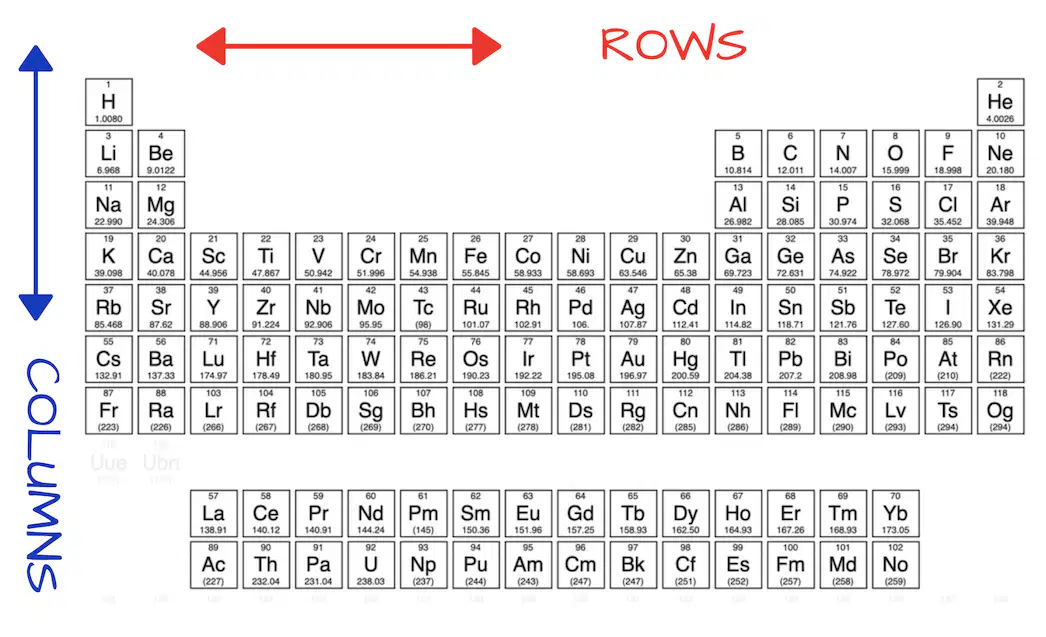
Identifying Properties of the Element Classes.
Correctly identify each of the characteristics of each element class.
Ductile
Malleable
Shiny
Great Electrical Conductors
M+
Includes Transitions
Includes Lanthanide and Actinide Series
Properties of Metals and non-Metals
ML
Semi-Conductors
8 Elements
B, Si, Ge, As, Sb, Te, Po, At
Staircase that separates the Periodic Table into 2-Halves
Most populated Class
Mostly on the LEFT of the PT
Brittle
Dull
Poor Electrical Conductors
NM-
Includes Noble Gases

Match each of these parts with its correct match.
On the Periodic Table, left to right
Row
On the Periodic Table, up and down
Column
Outermost electrons; responsible for reactions
Valence Electrons
Number of protons; periodic table is arranged by this number
Atomic Number
Total amount of p+ and n0
Mass Number
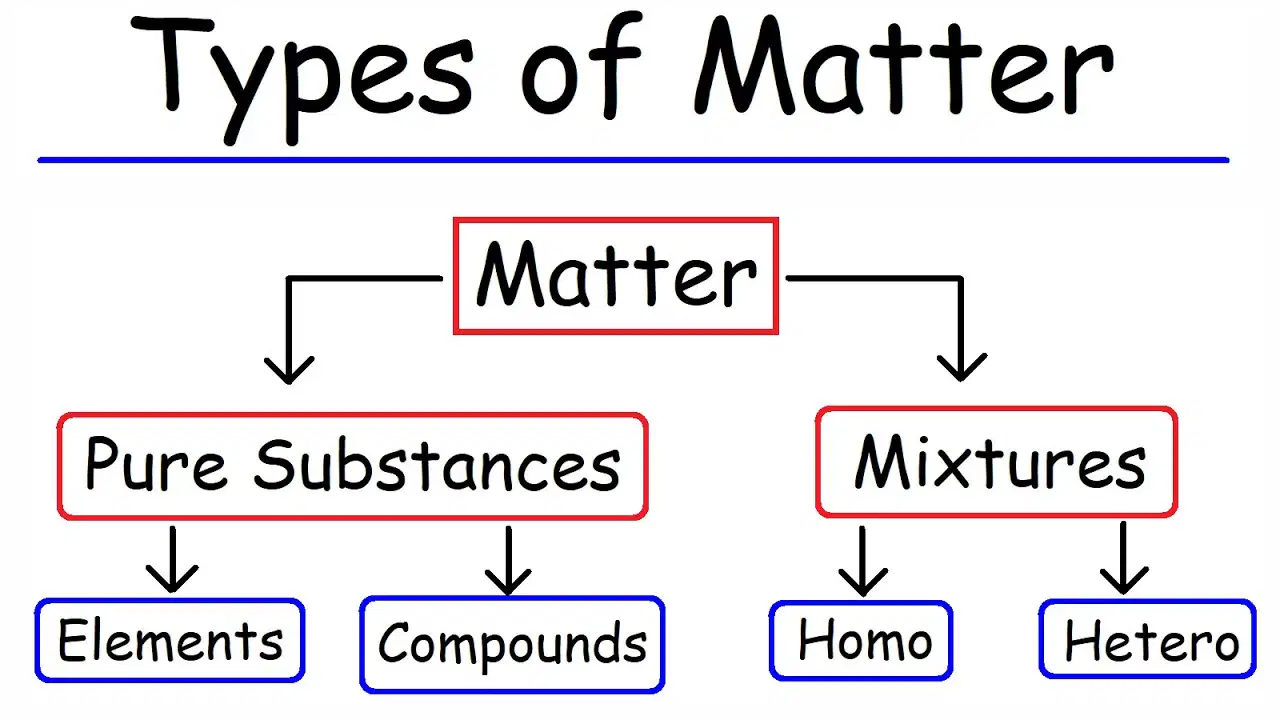
Classifying Matter.
Sort each of these images in its correct grouping.


Labeling the Heating Curve.
Indicate the parts of this Heating Curve.
Place your Label on each numbered part.
L -> G (Boiling)
Solid
Liquid
Gas
S -> L (Melting)
Labeling the Cooling Curve.
Indicate the parts of this Cooling Curve.
Place your Label on each numbered part.
L -> S (Freezing)
G -> L (Condensation)
Solid
Liquid
Gas
Labeling the Triple-Point Diagram.
Indicate the parts of this Phase Diagram.
Place your Label on each lettered part.
Solid
Liquid
Triple-Point
Gas

Identifying the States of Matter.
Accurately select characteristics of each State of Matter.
Defintion: Definite, Definite
Definition: Indefinite, Definite
Definition: Indefinite, Indefinite
Particles: Packed Close
Movement: Vibrates
Intermolecular Force: Strongest

Temperature: Coolest
Particles: Loosely Touching
Movement: Slide Past One Another
Intermolecular Forces: Medium

Particles: Farthest apart
Movement: Zippy Bumper Cars
Intermolecular Forces: Weakest

Temperature: Warm
Temperature: Hottest
Labeling the State Change Triangle.
Indicate the parts of this State Change Triangle.
Place your Label on each numbered part.
Freezing
Sublimation
Deposition
Boiling/Evaporation
Condensation
Melting

Understanding the Atom's Structure.
Accurately identify the property of each subatomic particle.
Negatively charged subatomic.
e-
Located in the Electron Cloud.
Smallest of the three subatomics.
Positively charged subatomic.
p+
Located in the Nucleus with n0.
Unique to each element.
Neutrally charged subatomic.
n0
Located in the Nucleus with p+.
Does not affect the charge of the Nucleus.

Blue subatomic particle

Green subatomic particle

Red subatomic particle
Identify the parts of this cell.
A
Plasma Membrane
B
Nucleus
C
Nucleolus
D
Lysosome
E
Ribosome
Identify the parts of this cell.
A
Chloroplast
B
Plasma
Membrane
C
Cell Wall
D
Cytoplasm
E
Nucleolus
Identify the parts of this cell.
B
Cell Membrane
F
Nucleus
G
Endoplasmic Reticulum
H
Mitochondria
I
Central Vacuole
Identify the parts of this cell.
E
Ribosome
F
Cytoplasm
G
Mitochondria
H
Golgi Body
I
Endoplasmic
Reticulum

Match each of these terms with its definition.
Domain
Highest Taxonomic Ranking; Most Biodiversity
Kingdom
Taxonomic Ranking that comprises Domain
Genus
Taxonomic Ranking above Species; First part of Binomial Nomenclature
Species
Smallest Taxonomic Ranking; Least Biodiversity
Scientific Name
Two-Part Name; Provides each organism with unique name

Match each of these images with its description.

Sunlight: Required - Photosynthesis

Central Vacuole

Chloroplasts - Required of Autotrophs

Plasma Membrane - Semi-Permeable

Glucose - C6H12O6

Place these Hierarchical Levels in order, from MOST members to LEAST members.
Domain
Class
Order
Family
Species

Match each of these images with its description.

Mix of Elements

Mix of Compounds, and Elements

Elemental Molecules

Compounds

Mix of Elemental Molecules, and Elements

Match each of these images with its correct description.

Chloroplast: Site of Photosynthesis

Cellular Respiration: Creation of ATP

Golgi Body: Shipping of Materials

Mitochondria: Site of Eukaryotic ATP

Glucose (C6H12O6)
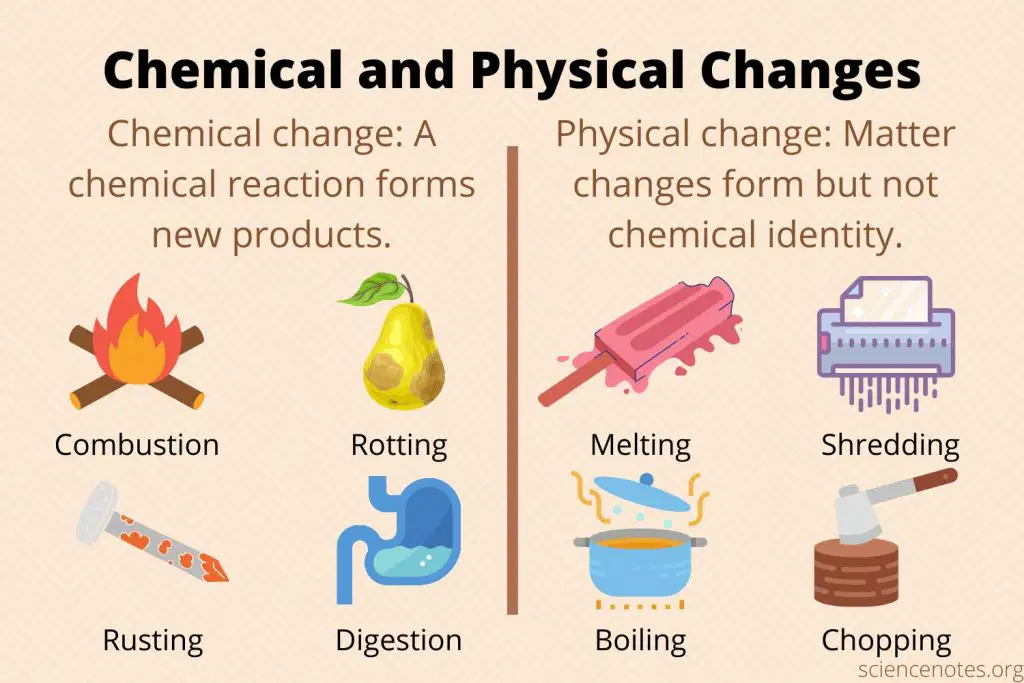
Identification of Physical and Chemical Changes
Classify each of these ACTIONS of matter as PC or CC.


Action does not result in NEW Substance
Action results in NEW substance

Match each of these terms with its definition.
Photosynthesis
Process results in creation of C6H12O6
Cellular Respiration
Process results in creation of ATP
Chloroplast
Location of Photosynthesis
Mitochondria
Location of Eukaryotic Cell Respiration
Cytoplasm; Cell Membrane
Location of Prokaryotic Cell Respiration
Place these Hierarchical Levels in order, from MOST members to LEAST members.
Kingdoms
Phylum
Family
Genus
Species
Match each of these organelles with its specific function (job).
Vacuole
Stores water, food and waste
Mitchondria
Converts cell food into cell energy (ATP)
Nucleolus
Location of MOST of cell DNA
Golgi Body
Packages and ships substances in and out of cell
Cell Wall
Provides rigid structure and maintains plant pressure
Match each of these terms with its correct definition.
Homeostasis
Energy Molecule of the cell
DNA
Maintenance of the internal environment
Internal
Blueprint of creation for the cell
ATP
Means "inside"
Chloroplast
Location of photosynthesis
For each Biological Hierarchical Level match its image.
Population

Biosphere

Organism

Organ System

Ecosystem

Match each of these terms with its correct definition.
Heterotroph
Organism must consume others for food (energy)
Autotroph
Organism may make its own food (energy)
Decomposer
Organism that consumes dead or breaks down nutrients for food (energy)
Diversity
Numbers and kinds of organisms
Bio-
Means "living or life"
Match each of these terms with its correct meaning.
Glucose
Simple sugars made by plants during photosynthesis.
ATP
Cellular Energy Molecule created by cellular respiration.
Roots
Part of the plant that absorbs needed water from the soil.
Sun
Energy source required during photosynthesis.
All Organisms
Individuals that perform cellular respiration.

Identifying Prokaryotes and Eukaryotes.
Identify which are prokaryotic and which are eukaryotic.


No Nucleus
Only Microscopic; unicellular
Pathogens
Extremophiles
Has a nucleus
Some unicellular, some multicellular
Has membrane-bound organelles

I am eukaryotic
I reproduce sexually
I am multicellular
What kingdom do I belong to?

I am an autotroph
I am multicellular
What am I?

I am prokaryotic
I am found in extreme ecosystems
What kingdom do I belong to?
Match each of these parts with its corresponding part.
State of Matter, definite Shape, definite Volume.
Solid
State of Matter, indefinite Shape, definite Volume.
Liquid
State of Matter, indefinite Shape, indefinite Volume.
Gas
One Form of Matter.
State of Matter
Exactly Measurable.
Definite
Identify the parts of this cell.
E
Ribosome
F
Cytoplasm
G
Mitochondria
H
Golgi Body
I
Endoplasmic
Reticulum

Select the correct Domain, Kingdom Combination. I am a free swimming single cell and have a nucleus.
Eukarya, Animalia
Eukarya, Protista
Bacteria, Eubacteria
Bacteria, Archaebacteria
Archaea, Archaebacteria

What is the order of the taxonomic levels from least specific to most specific?
Kingdom, Family, Species, Order, Class, Phylum, Genus
Kingdom, Phylum, Class, Order, Family, Genus, Species
Species, Order, Kingdom, Family, Genus, Phylum, Class
Species, Genus, Family, Order, Class, Phylum, Kingdom
Select the correct Domain, Kingdom Combination. I am a single cell, no nucleus no peptidoglycan in cell wall. I can live in a very extreme and harsh environment.
Eukarya, Animalia
Eukarya, Protista
Bacteria, Eubacteria
Bacteria, Archaebacteria
Archaea, Archaebacteria
Select the correct Domain, Kingdom Combination. I am a multicellular and autotroph .
Eukarya, Animalia
Eukarya, Plantae
Bacteria, Eubacteria
Bacteria, Archaebacteria
Archaea, Archaebacteria

Match the description with the protist.
Euglena
Plant-like Protist with flagella
Ameba
Protozoan with pseudopods.
Paramecium
Protozoan with cilia.
Match each image with its accurate kingdom.
Fungi
Plantae
Animalia
Protista
Archaebacteria

Correctly match each of the levels with its example.

Organism

Cell

Tissue

Population

Ecosystem

Arrange these levels in order, from least to greatest.
organism
organ
population
biome
biosphere
Match each of these organelles with its specific function (job).
Vacuole
Stores water, food and waste
Mitchondria
Converts cell food into cell energy (ATP)
Nucleolus
Location of MOST of cell DNA
Golgi Body
Packages and ships substances in and out of cell
Cell Wall
Provides rigid structure and maintains plant pressure
Match each of these organelles with its specific function (job).
Mitchondria
Converts cell food into cell energy (ATP)
Nucleus
Controls all cell activity
Golgi Vesicles
"Fedex Trucks". Shipper of the substances in and out of cell
Lysosome
Removes waste and toxins from cell
Plasma Membrane
Regulates which substances may come in and out of cell

Match each of these organelles with its relatable role.
Lysosome
Trashman
Nucleus
Mayor
Vacuole
Ziploc Bag
Cell/ Plasma Membrane
Doorman
Golgi Body
Fedex Shipper
Match each of these organelles with its relatable role.
Ribosomes
Small Protein Factory
Cytoplasm
Jelly
SER
Factory for Lipids
Cell/ Plasma Membrane
Doorman
Golgi Body
Fedex Shipper
Labeling Plant Cell.
Place a DOT on the organelle.
Ribosomes
Cell Wall
Cell/Plasma Membrane
Central Vacuole
Chloroplast
Labeling the Animal Cell.
Place a dot on the organelle.
RER
SER
Nucleolus
Nucleus
Cytoplasm
Golgi Body
Labeling the Animal Cell.
Place a dot on the organelle.
RER
SER
Nucleolus
Nucleus
Cytoplasm
Golgi Body
Labeling the Animal Cell.
Place a dot on the organelle.
Plasma Membrane
Lysosome
Mitochondria
RER
SER
Nucleolus
Labeling the Animal Cell.
Place a dot on the organelle.
Plasma Membrane
Lysosome
Mitochondria
RER
SER
Nucleolus
Labeling Plant Cell.
Place a DOT on the organelle.
Ribosomes
Cell Wall
Cell/Plasma Membrane
Central Vacuole
Chloroplast

What kingdom does yeast belong to?
Kingdom Animalia
Kingdom Plantae
Kingdom Protista
Kingdom Fungi
Kingdom Eubacteria

I am prokaryotic
I am found in extreme ecosystems
What kingdom do I belong to?
Kingdom Fungi

The image shows an organism growing on the surface of the bread. Which kingdom would this organism belong to?
Kingdom Fungi
Kingdom Protista
Kingdom Animalia
Kingdom Plantae

Animals are not
Autotroph
Multicellular
Heterotroph
Eukaryote

What are the kingdoms that are eukaryotic? (select all that apply)
animalia
Fungi
Protista
Plantae
Eubacteria

Match each missing word statement with the correct term.
A balanced chemical reaction obeys the law of ___.
conservation of matter
Within the electron cloud there are different ___ of electrons.
energy levels
Rusting metal is an example of a ___ change.
chemical
Sugar dissolving, water boiling and ice melting are examples of ___ changes.
physical

The "doorman" of the cell is its (a) . Substances moving along the (b) travel from (c) concentrations (d) ATP . This process is referred to as (e) .
Match each set of properties to the correct kingdom.
Non-motile
Cells have nuclei
Multicellular
Cell wall
Reproduces sexually
Plantae
Cells have nuclei
Membrane-Bound Organelles
No cell wall
Unicellular
Protista
Multicellular
Reproduces via spores
Heterotrophic
Cells have nuclei
Fungi
Multicellular
No cell wall
Small vacuoles
Reproduces sexually
Motile
Animalia
Unicellular
No Nuclei
Reproduces asexually
Pathogenic
Eubacteria

What distinguishes a plant cell from an animal cell? (How do you tell them apart) Hint: There's 3 ways (Check all 3)
Central Vacuole
Mitochondria
Cell Wall
Ribosomes
Chloroplasts

Match each of these definitions with its term.
Pure substance made of one type of atom.
element
Two or more different elements chemically combined.
compound
Two or more different substances physically combined.
mixture
Exactly Measurable.
definite
Another term for homogeneous mixture.
solution

Match each term with its correct definition.
Prokaryote
A single-celled organism that does not have a nucleus or membrane-bound organelles.
Eukaryote
Organism made of cells that have nucleus enclosed by membrane.
Cell
Basic building block of living things.
Organism
One individual living thing; anything that can carry out life processes independently.
Organelle
Tiny parts of a cell with a specific function.

Match each of these terms with its correct definition.
unicellular
organism made of one cell
multicellular
organism made of many cells
cell
basic building block of all living things
microscope
tool used for making really small things → BIG
hierarchy
order of organization
Correctly match each of the levels with its example.

Organism

Cell

Tissue

Population

Ecosystem
For each Biological Hierarchical Level match its image.
Population
Biosphere
Organism
Organ System
Ecosystem
Match each of these parts with its corresponding part.
Outline of an object.
Shape
Amount of space something takes up.
Volume
Amount of amounts in an object.
Mass
Anything with mass and volume.
Matter
Exactly Measurable.
Definite
Match each of these terms with its definition.
Description of Matter.
Property
Action of Matter.
Change
Description of matter, indicates features of a sample of matter
Physical Property
Description of matter, depicts the ability of a sample of matter to participate in a reaction.
Chemical Property
Action of matter, results in the creation of a new substance.
Chemical Change
Label the major parts of the circulatory system (pay attention to placement of your labels).
Label the major parts of the skeletal system (pay attention to placement of your labels).
Label the major parts of the skeletal system (pay attention to placement of your labels).
Label the major parts of the muscular system (pay attention to placement of your labels).
Label the major parts of the circulatory system (pay attention to placement of your labels).
Match each term with its correct definition.
Prokaryote
A single-celled organism that does not have a nucleus or membrane-bound organelles.
Eukaryote
Organism made of cells that have nucleus enclosed by membrane.
Cell
Basic building block of living things.
Organism
One individual living thing; anything that can carry out life processes independently.
Organelle
Tiny parts of a cell with a specific function.

Match each subsystem with its major function.
Respiratory
Gas Exchange. Oxygen in, Carbon Dioxide out.
Nervous
Collects Info & Responds by Sending Electrical Messages.
Skeletal
Protects Organs & Makes Blood Cells.
Muscular
Allows Locomotion.
Digestive
Physical & Chemical Breakdown of Food into Nutrients.

Muscles are working in your body even when you are asleep and still.
True
False

How should you care for your muscular system (Select all that apply)?
Exercise regularly.
Eat fast food on a daily basis.
Warm-up before and cool-down after exercise.
Stretch to remain flexible.
Eat healthy foods, especially foods high in protein.

Voluntary muscles are attached to ____.
Cardiac muscles
Smooth muscles
Skeletal muscles
All of the above

When muscles contract, the length of the muscle.
lengthens
extends
shortens
stretches

Muscles that you DO NOT control.
Involuntary
Fast Twitch
Voluntary
Slow Twitch

Muscles that you control.
Involuntary
Fast Twitch
Voluntary
Slow Twitch

What are the functions of the muscular system (Select all the apply)?
Helps you see
Helps you move
Helps fight diseases
Creates heat
Helps your heart beat

Match each of these terms with its definition.
Joint
Connects Bones.
Tendon
Soft, Flexible Tissue that attaches Skeletal Muscle to Bone.
Homeostasis
Balance of the External System; Natural Setpoint.
Fracture
Broken Bone - will heal over time.
Cardiac
Means Heart.

Which pair of systems work together to bring in oxygen into the body and deliver it to the cells?
Muscular System, Skeletal System
Circulatory System, Respiratory System
Nervous System, Respiratory System
Digestive System, Circulatory System

What three systems work together to move the body?
Skeletal, Muscular, Nervous
Skeletal, Respiratory, Digestive
Nervous, Circulatory, Skeletal
Circulatory, Respiratory, Digestive

What does homeostasis maintain in the body?
A changing internal environment
A constant or stable internal environment
A changing external environment
A constant or stable external environment

