
 Worksheets
Chapter 24- Systems of Fire Detection; Suppression, Smoke Contro
Total questions: 48
Worksheet time: 48mins
Fire protection systems include various components and functions. Which of the following is NOT a basic component of fire alarm systems?
Smoke detectors
Sprinkler systems
Fire extinguishers
Control panels
Describe residential smoke and carbon monoxide alarms.
Residential smoke and carbon monoxide alarms detect smoke and carbon monoxide levels in the home.
Residential smoke and carbon monoxide alarms are used for cooking purposes.
Residential smoke and carbon monoxide alarms are decorative items for homes.
Residential smoke and carbon monoxide alarms are used to increase home temperature.
Explain the purpose of the emergency control function interface.
To provide a user interface for emergency situations
To control the power supply in emergency conditions
To ensure safety by managing emergency protocols
To interface with emergency response systems
Describe different types of special hazard systems and identify hazards associated with these systems that firefighters may encounter.
Special hazard systems include fire suppression systems, gas detection systems, and explosion prevention systems. Hazards include toxic gas release, explosion risk, and electrical hazards.
Special hazard systems include only fire suppression systems. Hazards include only explosion risk.
Special hazard systems include gas detection systems and explosion prevention systems only. Hazards include only toxic gas release.
Special hazard systems include fire suppression systems, gas detection systems, and explosion prevention systems. Hazards include only electrical hazards.
Describe the application of smoke control systems.
Smoke control systems are used to manage smoke during a fire.
Smoke control systems are used to enhance building aesthetics.
Smoke control systems are used to improve air conditioning efficiency.
Smoke control systems are used to reduce noise pollution.
Explain the importance of inspecting, testing, and maintaining fire protection systems and the process of documenting these processes.
To ensure the systems are functional and compliant with safety regulations
To increase the cost of maintenance
To make the systems look aesthetically pleasing
To avoid any form of documentation
The two main purposes of fire protection systems are:
To detect and suppress fires
To prevent and extinguish fires
To alert and evacuate people
To monitor and control temperature
What should one understand about the operational capabilities and limitations of fire protection systems?
The basic functions and constraints of fire protection systems
The installation process of fire protection systems
The cost of maintaining fire protection systems
The history of fire protection systems
Why is it important to explain the workings of fire protection systems to owners and occupants?
To ensure they know how to operate the systems in case of an emergency
To increase the value of the property
To comply with legal requirements
To reduce insurance costs
What is one type of fire protection system?
Fire alarm systems
Water sprinkler systems
Emergency lighting systems
Security cameras
Which system is used for detecting fires?
Fire alarm systems
Fire detection systems
Fire suppression systems
Smoke control systems
What type of system is used to suppress fires?
Fire alarm systems
Fire detection systems
Fire suppression systems
Smoke control systems
Which system is designed to control smoke?
Fire alarm systems
Fire detection systems
Fire suppression systems
Smoke control systems
What is an alarm initiating device?
An alarm initiating device is a component of a fire alarm system that detects a fire and sends a signal to the fire alarm control unit.
An alarm initiating device is a type of clock used to set alarms for waking up.
An alarm initiating device is a gadget used to measure temperature in a room.
An alarm initiating device is a tool used to control the volume of a sound system.
What is another name for a fire alarm control unit (FACU)?
Fire alarm control panel (FACP).
Fire suppression system.
Smoke detector.
Emergency exit sign.
What is one of the functions of a Fire Alarm Control Unit?
Manages and monitors the operation of the fire alarm system
Cools down the building
Provides internet access
Controls lighting systems
What does the Fire Alarm Control Unit link together?
Alarm initiating devices and alarm notification appliances
Computers and printers
Televisions and speakers
Doors and windows
The Fire Alarm Control Unit manages the primary and backup _______.
power supplies
alarm signals
fire detectors
control panels
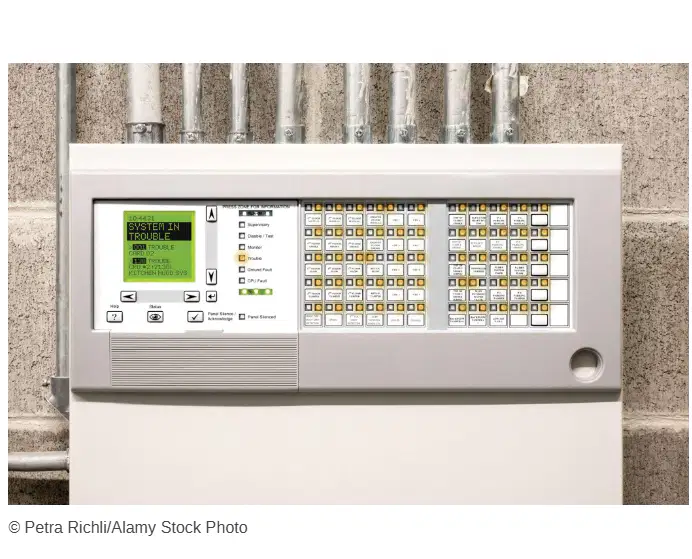
What type of display does the Fire Alarm Control Unit have?
Annunciator display
LCD display
LED display
Touchscreen display
What is a zoned system in fire alarm control systems?
Identify the type or location of initiating devices by identifying the zone where each device is located.
Monitor the temperature of each room individually.
Control the lighting system based on occupancy.
Automatically extinguish fires without human intervention.
What is an addressable system in fire alarm control systems?
Assigns a number to each initiating device and notification appliance.
Connects all devices in a single loop without identification.
Operates only manually without automatic detection.
Functions only during power outages.

What is the purpose of remote annunciators in fire alarm control systems?
To display information shown on the annunciator at the FACU.
To control the sprinkler system directly.
To detect smoke and fire.
To sound the fire alarm bell.

Where are remote annunciators typically located in a building?
Near the building entrances.
In the basement.
On the roof.
In the parking lot.
In high-rise buildings, who are often alerted by the fire alarm system?
Occupants on the floor of the alarm and immediately above and below.
Only the building security personnel.
Fire department only.
All occupants of the building.
Depending on the system, a fire alarm may sound throughout the building or only in areas where a fire is detected.
True
False

What type of circuit is used on the building's electrical system for the fire alarm?
240-volt
120-volt
60-volt
12-volt
Fill in the blank: NFPA requires a secondary power source such as _______ or automatic generator for fire alarm systems.
Batteries
Solar Panels
Wind Turbines
Hydroelectric Power
Which of the following is a condition monitored by the FACU?
Weather conditions
Trouble conditions
Traffic conditions
Economic conditions
FACUs should always be locked.
True
False
Alarms should be silenced or reset before identifying the source.
True
False
How can alarm initiating devices be operated?
Manually by a person
Automatically when a fire condition is detected
Automatically by a fire suppression system
All of the above
Which of the following is a method of operating alarm initiating devices?
Manually by a person
By voice command
By remote control
By smartphone app
Alarm initiating devices can be operated automatically by which of the following?
A fire suppression system
A security guard
A maintenance worker
A building manager
What is the purpose of manual initiating devices in a building?
To allow building occupants to activate the alarm system by pulling a lever or turning a switch.
To automatically detect smoke and activate the alarm system.
To provide emergency lighting during a power outage.
To control the temperature within the building.
Which of the following is a type of manual pull station?
Single-action pull station
Double-action pull station
Both A and B

Identify the device shown in image A.
Manual fire alarm box
Smoke detector
Fire extinguisher
What do smoke detectors do when they detect smoke?
Activate the alarm
Turn off the lights
Release water
Send a notification to the fire department
Smoke detectors may be stand alone or part of a ________.
system
network
device
circuit
What are the most common types of smoke detectors?
Ionization and photoelectric spot-type detectors
Heat and gas detectors
Water and chemical detectors
Beam and laser detectors
Smoke detectors are tested by ________.
independent testing laboratory
homeowners
fire departments
manufacturers
What do burning materials release that is detected by ionization smoke detectors?
Electrically charged microscopic particles
Water vapor
Carbon dioxide
Heat
What is contained in ionization smoke detectors that helps in detecting smoke?
Miniscule amount of radioactive material
Small electric current
Infrared sensors
Carbon monoxide
When visible smoke particles enter a photoelectric smoke detector, what happens to the light?
The light bounces off the particles, reflects light onto the photocell, and activates the alarm.
The light is absorbed by the particles, preventing it from reaching the photocell.
The light passes through the particles without any interaction.
The light is scattered in all directions, deactivating the alarm.
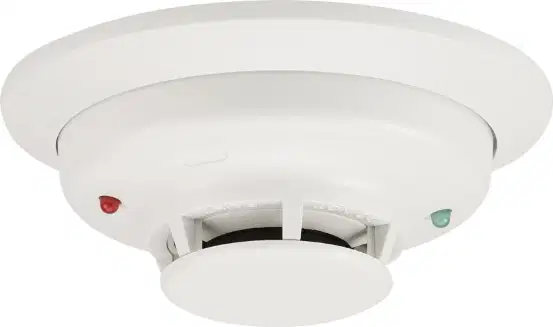
What do ionization and photoelectric smoke detectors look like?
They look alike.
They have different shapes.
They are both transparent.
They are both circular.
What should you refer to in order to determine the type and applications of smoke detectors?
Refer to the label.
Consult the user manual.
Check the manufacturer's website.
Ask a professional technician.
What must an ionization detector indicate?
It must indicate it contains radioactive material.
It must indicate it is battery-operated.
It must indicate it is waterproof.
It must indicate it is fire-resistant.
Which type of smoke detector reacts more quickly to fast-burning fires?
Ionization smoke detectors.
Photoelectric smoke detectors.
Dual sensor smoke detectors.
Heat detectors.
Which type of smoke detector is more responsive to slow-burning or smoldering fires?
Photoelectric smoke detectors.
Ionization smoke detectors.
Dual-sensor smoke detectors.
Heat detectors.

