
 Worksheets
The Human Body
Total questions: 55
Worksheet time: 28mins
Why is it important for first aid providers to be familiar with the basic structure and functions of the human body?
To effectively assess and manage injuries
To perform surgeries
To diagnose diseases
To prescribe medication
Using proper medical terms benefits communication with medical care providers by:
Improving understanding and accuracy
Causing confusion
Increasing the time of consultation
Reducing the need for medical tests
What does the term 'Anterior' refer to?
Front of body
Back of body
Top of body
Bottom of body
What does the term 'Posterior' refer to?
Back of body
Front of body
Side of body
Top of body
What does the term 'Superior' refer to?
Closer to head
Farther from the head
Closer to the feet
Farther from the feet
What does the term 'Inferior' refer to?
Closer to feet
Closer to head
Towards the back
Towards the side
Which of the following terms refers to the person's right and left?
A) Anterior
B) Posterior
C) Right and left
D) Superior
How many quadrants is the stomach separated into?
4
2
6
1
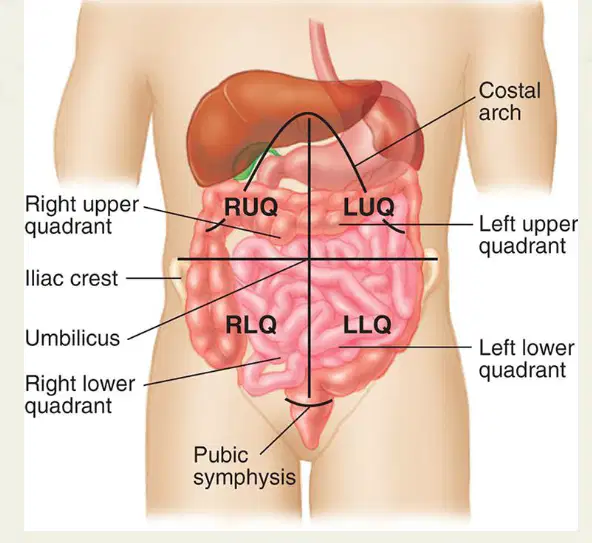
What organ could be the cause of right upper quadrant pain?
Gall bladder
Pancreas
Appendix
Stomach
Which of the following is an important and sensitive organ for oxygen exchange?
Liver
Lungs
Kidneys
Stomach
Which of the following is an important and sensitive organ for circulation?
Heart
Pancreas
Intestines
Gallbladder
Which of the following is an important and sensitive organ that could be considered a control center?
Skin
Brain
Spleen
Appendix
Where is cerebrospinal fluid located?
Spinal cord and brain
Bladder
Esophagus
Thyroid
What will happen if the body's oxygen supply is cut off for about 4 to 6 minutes?
Death will result.
The body will become stronger.
The body will start to heal itself.
Nothing will happen.
How is oxygen from air made available to the blood?
Through the respiratory system.
Through the digestive system.
Through the circulatory system.
Through the nervous system.
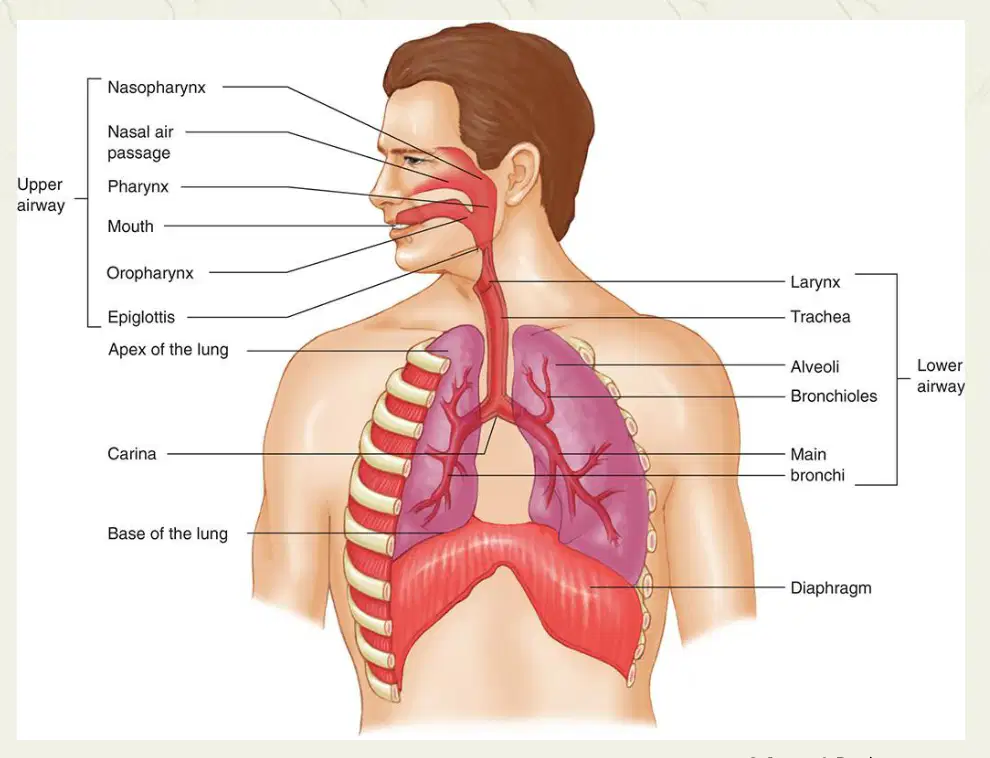
What helps warm and filter air as it is taken into the body?
Nasal air passage
Trachea
Bronchi
Alveoli

Identify the part in the respiratory system that blocks the trachea while you swallow so fluids don't go down the wrong pipe
Epiglottis
Trachea
Larynx
Pharynx
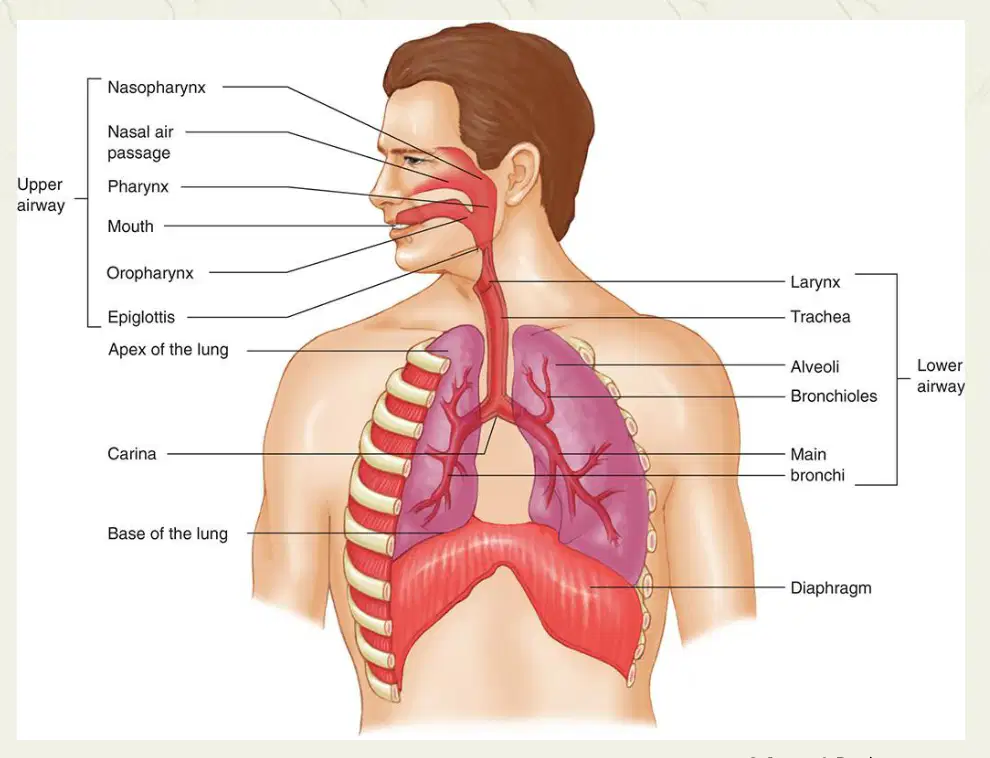
What is also referred to as the voice box?
Larynx
Trachea
Bronchi
Alveoli
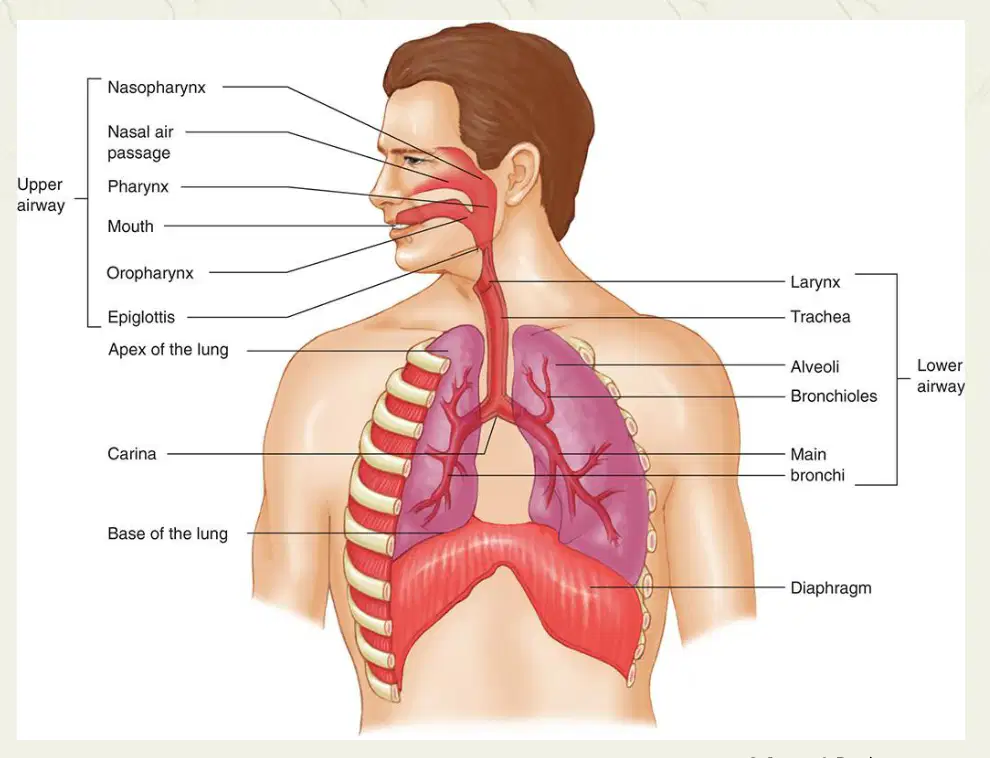
What is the tube that carries air down to the bronchi?
Trachea
Larynx
Bronchi
Esophagus
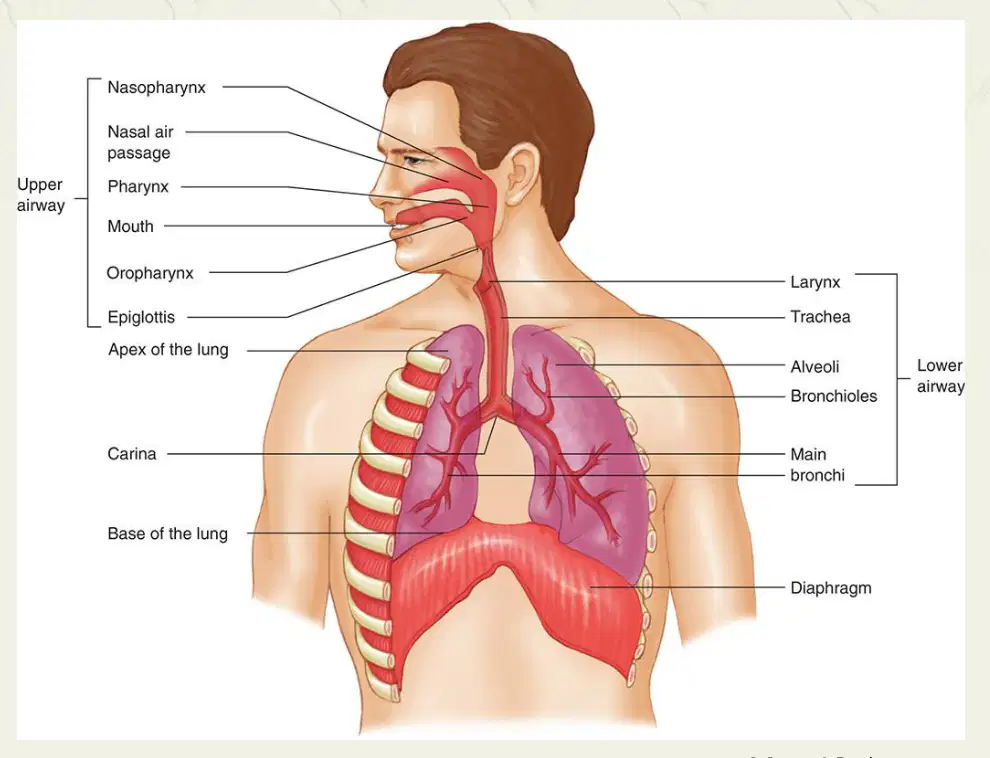
What are the small sacs in the lungs that are responsible for oxygen exchange?
Alveoli
Bronchi
Trachea
Diaphragm

What comes after the trachea in the respiratory system?
bronchi
Trachea
Alveoli
Larynx
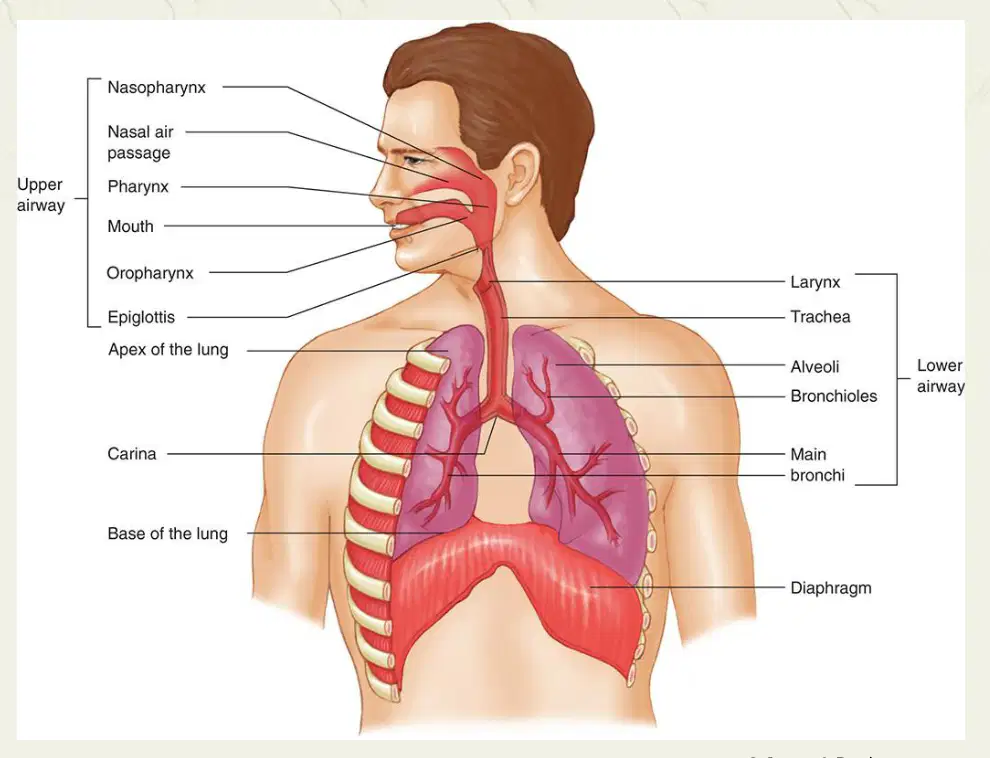
What moves up and down when you breathe?
Diaphragm
Lung
Trachea
Bronchus
What is the passage of air into and out of the lungs called?
Respiration
Inhalation
Exhalation
Ventilation
In the mechanics of breathing, what is inhalation?
Inhalation is breathing in.
Inhalation is breathing out.
Inhalation is holding breath.
Inhalation is the process of gas exchange.
In the mechanics of breathing, what is exhalation?
Exhalation is breathing out.
Exhalation is breathing in.
Exhalation is holding breath.
Exhalation is the process of gas exchange.
What is a characteristic of the respiratory structures in infants and children?
Larger respiratory structures
Smaller respiratory structures
No respiratory structures
Infants and children have easily obstructed airways.
True
False
In infants and children, what takes up more space in the mouth?
Tongues
Teeth
Gums
What is the primary cause of cardiac arrest in infants and children?
Heart disease
Uncorrected respiratory problem
High blood pressure
What happens to respiratory rates at rest?
Decreases
Increases
Remains the same
Fluctuates
What happens to respiratory rates during exercise?
Increases
Decreases
Stays the same
Varies randomly
What controls the respiratory rates?
The brain
The heart
The lungs
The liver
What is the normal range of breaths per minute for adults?
12 to 20
8 to 14
15 to 25
20 to 30
Which of the following is a sign of inadequate breathing?
A) A rate within the normal range
B) A rate outside the normal range
C) Warm and dry skin
D) Normal breathing pattern
Fill in the blank: Cool or clammy skin that is pale or _______ is a sign of inadequate breathing.
cyanotic
flushed
rosy
normal
What is a sign of inadequate breathing related to the nose?
Nasal congestion
Nasal flaring
Nasal dryness
Nasal bleeding
What is the main function of blood in the circulatory system?
To transport nutrients and oxygen to cells
To regulate body temperature
To protect against infections
To maintain blood pressure
Which organ is primarily responsible for pumping blood throughout the body?
(a)
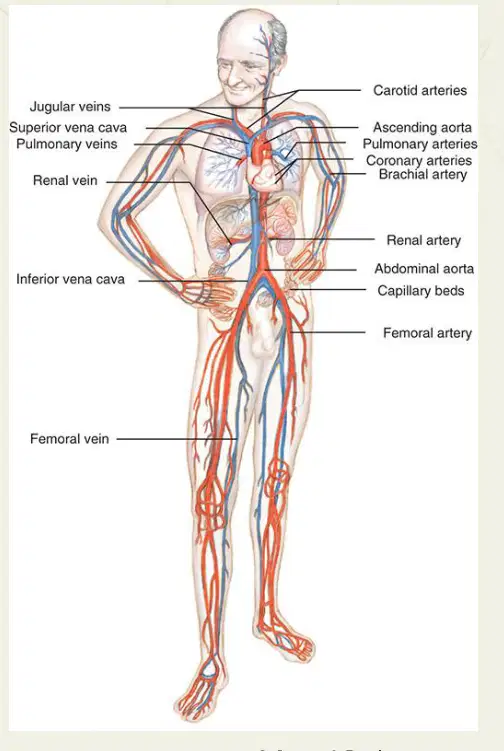
What are the vessels called that carry blood away from the heart?
(a)
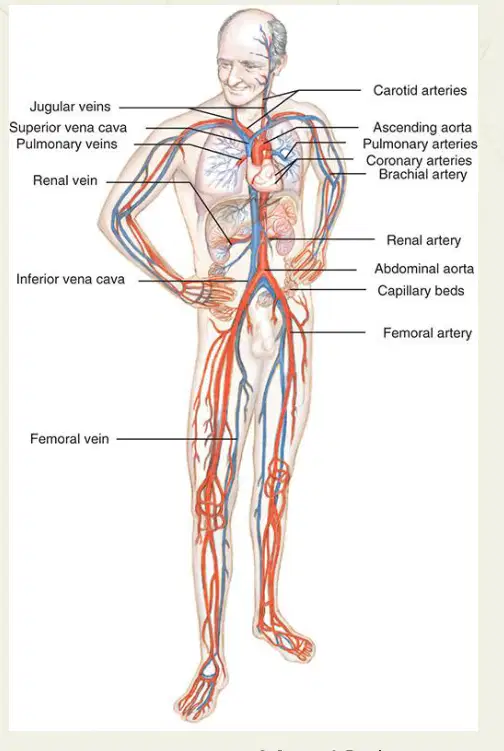
List the three main components of the circulatory system.
Heart, blood, blood vessels
Heart, lungs, brain
Blood, lymph, nerves
Arteries, veins, capillaries
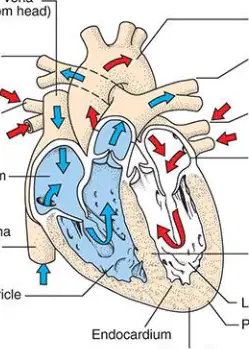
What is the primary function of the heart?
To digest food
To pump blood through the vessels
To filter waste
To produce hormones
Where is the heart located in the body?
Right side of the chest
Left center of the chest
Center of the back
Lower abdomen
The compartments of the heart are divided into which chambers?
Atrium above, Ventricle below
Ventricle above, Atrium below
Left and Right Atrium
Left and Right Ventricle
During each contraction, what does the heart pump from the right ventricle to the lungs?
Deoxygenated Blood
Oxygen
Nutrients
Hormones
During each contraction, where is oxygen-rich blood returned to from the lungs?
Left atrium
Right atrium
Left ventricle
Right ventricle
During each contraction, what does the left ventricle push to the rest of the body?
Oxygen-rich blood
Carbon dioxide-rich blood
Lymph
Nutrients
During each contraction, what does the right atrium receive?
Oxygen-poor blood
Oxygen-rich blood
Nutrients
Carbon dioxide
What is the longest/strongest bone in the body?
Humerus
Ulna
Radius
Femur
What is the largest joint in the body?
Hip
Knee
Shoulder
Wrist
What is the average heart rate for an adult?
12-20
100-160
60-100
50-60
What are the bones in the lower leg?
Radius and Ulna
Femur and Humerus
Femur and tibia
Tibia and Fibula
What blood cell helps fight infection?
White Blood Cell
Red Blood Cell
Platelets
Thrombim
What is the pulse located in a person's neck?
Femoral
Carotid
Radial
Apical
What term means distant from the point of attachment?
Proximal
Medial
Distal
Lateral
What is the role of platelets in the body?
to fight infection
to help oxygenate cells
to help form clots
to help with breathing

