
 Worksheets
Africa Brochure- Amnesty Opportunity / FINAL review
Total questions: 95
Worksheet time: 47mins

_______ is when a stronger country dominates a weaker country politically, economically, and socially.
Isolationism
Nationalism
Globalization
Imperialism

What was one motivation for European Imperialism in Africa?
Camels. They needed camels.
the Atlantic Slave Trade
Access to the Congo.
natural resources and raw materials.
Which statement best describes the purpose of the Berlin Conference.
So European countries could divide Africa in a civil manner.
To decide how European countries would help Africa.
To end the slave trade.

Which statement is correct about Imperialism and it's effects on Africa.
Imperialism caused alliances (friendships) between African and European countries.
Imperialism redrew political borders, putting warlike tribes together and dividing friendly tribes.
Imperialism caused many Europeans to move to Africa creating a problem with over population.
Imperialism in the late 1800's caused the slave trade to start again.
What mountain range is located in North Africa?
Mt. Kilimanjaro
Atlas Mountains
Sahel Mountains
The Alps
What landform lies along the Atlantic Coast near the equator?
Sahel
Savanah
Niger River
Tropical Rain Forest
What landform has rolling grassland and scattered trees?
Savanna
Nile River
Tropical Rain Forest
Niger River

What number marks South Africa?
11
13
14
15
Why is the population of the Sahara so low?
Too much water
Too much oil
Limited access to oil
Limited access to water
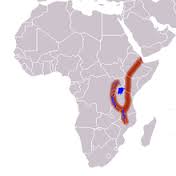

What is the highest peak in Africa?
Mt. Kilimanjaro
Mt. Everest
Himalayan Mountains
Rocky Mountains

Feature #1
Niger River
Nile River
Congo River
Danube River

Feature #4
Sahara Desert
Kalahari Desert
Sahel
Congo Basin
What is the name of the large desert that covers most of northern Africa?
The Sahara Desert
The Mojave Desert
The Nile Desert
I don't know
What is Africa's largest river?
The Mississippi River
The Nile River
The Yellow River
The Congo River
Extensive commercial logging, the use of wood for cooking and heating, and excessive clearing of land by subsistence farmers has led to __________________ in most areas of Sub-Saharan Africa.
erosion
deforestation
desertification
water pollution
A religious belief that bodies of water, animals, trees, and other natural objects have spirits.
Apartheid
Animism
Swahili
Souks
The South African government policy of separation of races, which began to disappear in the 1980s.
Dialect
Griots
Apartheid
Ergs
A Bantu language that is widely spoken in areas of Africa.
Griots
Malaria
Ivory
Swahili
A dry grasslands region with a steppe climate south of the Sahara.
Ergs
Sahel
Malaria
Silt

During the 1800s, the ___________ colonized Africa
Americans
Europeans
Asians
Australians

Africa was most likely colonized for what reason?
Economic profit
Access to raw materials
Valuable resources
All of them

What was the central purpose of South Africa’s apartheid policy?
Sustainable development
Conflict Resolution
Division of Labor
Racial Segregation

Who is Nelson Mandela?
The leader of the ANC and the face of the Anti-Apartheid movement. He was arrested in 1964 on charges of terrorism
Founder of the Soweto Revolution
African conqueror who fought European rule during early European exploration
Leader of the white minority government in 1953

Who is F. W. de Klerk?
Outspoken anti-Apartheid activist
President of S. Africa who worked to repeal Apartheid laws
Diamond mining company executive who supported Apartheid
Manager of S. African National Rugby Team

What happened in South Africa in 1994?
F.W. de Klerk was elected president
Nelson Mandela was elected the first black president of South Africa
Apartheid was made legal
Apartheid laws were renewed and made more strict.

What were the roles of Nelson Mandela and F.W. de Klerk in the evolution of apartheid in South Africa?
They created apartheid.
They enhanced apartheid.
They worked to abolish apartheid
They helped maintain apartheid

What did people of the Pan-African movement want the Africans on the continent of Africa to do?
to rise up against their governments
to think of themselves as one & work for the betterment of all Africans on the continent
to move to another continent
to start farming and raising their own food

What was the impact of the Pan-African movement?
sparked the independence movements across the continent
the peaceful unification of Africa has never taken place
Neither of the above
both of the above

What does this image depict?
The slave trade
The Berlin Conference
Pan-Africanism
The Berlin Treaty
What did Europeans create that caused conflict between ethnic, tribal and religious groups?
They allowed one religious group to prosper but not others.
They spoke with ethnic groups for advice on how to draw up the boundaries.
They created artificial governments to place in African countries so they could have more influence.
They created artificial political boundaries.
What are similarities between the Kenyan and Nigerian independence movements?
colonized by the British
intellectuals grew solidarity for nationalists movements
now have unstable governments lacking civil rights
gained independence peacefully with no violence
What is the correct chronological order of events?
Colonization --> Pan Africanism --> Independnce
Independence --> Colonization --> Pan Africanism
Pan Africanism --> Independence --> Colinization
they all happened simultaneously
Which country's independence movement involved the Mau Mau uprising?
Kenya
Nigeria
South Africa
South Africa & Nigeria
Why was the Pan African movement so important?
It forced African countries to become members of the United Nations.
It created an ethnic division that led to civil war in many African countries.
It granted African countries sovereignty from their European colonizers.
It allowed unity to exist among Africans and ignited nationalist movements.
1. To unite people of African descent (still in Africa and around the world), reminding them that they have a common culture and history, so they should work to the same goals.
2. To end European Colonization in Africa (get all African nations their own political freedom.)


What is Nigeria’s main export?
Oil
Cotton
Fish
Textiles
What is an example of a physical trade barrier in Africa?
Quota on Egyptian cotton sheets
Tariff on Nigerian oil
The Sahara desert
Embargo on South Africa
During Nigeria’s long period of military rule, what type of economic system did it have?
Traditional
Command
Market
Mixed
Which country has the strongest economy in Africa?
Nigeria
Botswana
South Africa
Sudan
Today, both South Africa and Nigeria have ___________ economic systems.
Traditional
Command
Market
Mixed
In which has South Africa specialized?
oil production
textiles
meat processing
gold and diamond mining
Why did several members of the United Nations have an embargo on South Africa?
South Africa refused to participate in international trade.
They were holding out for better oil deals.
South Africa needed to lower the price of its gold and diamonds.
They wanted South Africa to end its apartheid system.
If Sudan’s government puts a limit on how much Nigerian oil it will import this year, what trade barrier is this?
Embargo
Tariff
Quota
Opportunity Cost
Tribes in Kenya use bartering to trade and practice which type of economy?
Traditional
Command
Market
Mixed
In which area has Nigeria invested heavily in capital goods?
education
agriculture
communications technology
oil production
What is the total amount of a good or service available for purchase?
Producer
Consumer
Demand
Supply
What is a good which is produced domestically but sold in a foreign country?
Import
Export
Gross Domestic Product
Human Development Index
Why did Europeans "claim" colonies in the 1800s? (choose all that apply)
To gain access to new technologies
To obtain more raw materials
To have new markets for selling goods
To learn about new cultures and traditions
How is the president of South Africa chosen?
He is appointed by the king
He is chosen by the country's religious leader
The citizens elect parliament and then parliament elects the president
Citizens directly vote for the President in Kenya. Therefore, Kenya has a __________.
Presidential Democracy
Autocracy
Communist Government
In South Africa, citizens elect members to the National Assembly (House of Parliament), then parliament selects one of its members to be the president. South Africa has what type of government?
Parliamentary Democracy
Dictatorship
Communist
In a democracy, citizens play an important role because they are able to vote for leaders.
True
False: Oligarchy
False: Autocracy
South Africa has a presidential democracy.
Ture
False: Parliamentary Democracy
False: Autocracy
South Africa is a parliamentary democracy in which the chief executive is elected by the citizens.
True
False: selected by parliament
False: selected by heredity
Citizens directly vote for the president in Kenya.
True
False: Parliament votes for Prime Minister
False: vote for Autocratic Dictator
Women’s rights and government corruption are serious flaws in Kenya and Nigeria’s democratic governments.
True
False: Autocratic
False: Absolute Monarchy
In a democracy, a ruler has absolute power and the citizens do not possess the right to choose their own leaders.
True
False: Monarchy
False: Autocracy
In Kenya and Nigeria, citizens elect the chief executive.
True
False: Kenya and South Africa
False: South Africa and Nigeria
In South Africa, the president comes to the role by hereditary line.
True
False: He or she is selected from the legislature
False: He or she is elected directly by the citizens
In a/an presidential democracy, citizens vote for members of the legislature and the members select the country’s leader.
True
False: Autocracy
False: Parliamentary Democracy
Kenya and Nigeria are presidential democracies in which the citizens are responsible for electing the president and members of the legislature.
True
False: electing Parliament and the Parliament selects the Prime Minister.
False: The citizens have no responsibility in elections.
In a/an democracy, a single ruler or party holds unlimited power over the government & its people.
True
False: Oligarchy
False: Autocracy
In Kenya, voting starts at age 18 and is not required by law.
True
False: 21 and IS required by law.
False: 18 and IS required by law
The head of Kenya’s government (person with the most political power) is the president.
True
False: King/Queen
False: Prime Minister
What is one main difference between a president and a prime minister?
A prime minister has more power than a president.
A president has be elected while a prime minister does not.
A prime minister does not belong to a particular political party, while a president always does.
A president is separate from the legislature, while a prime minister answers directly to the legislature.
Which branch of government passed laws in a presidential system of government?
Judicial
Executive
Legislature
Bureaucracy

