
 Worksheets
Mid-Term Exam in Social Studies
Total questions: 86
Worksheet time: 2hrs 32mins
It is an approach to learning that holds that people actively construct or make own knowledge and that reality is determined the experience of the learners.
Re- constructivism
Constructiosm
Constructivism
Constructionism
It was developed by Ernst Von Glasersfeld and states that all knowledge is constructed rather than perceived through senses
Radical constructivism
Cognitive constructivism
Social constructivism
Sociological constructivism
Which one is true statement of constructivist classroom?
Students work primarily in groups (cooperative)
Teacher's role is directive, rooted in authority.
Students work primarily alone (competitive)
Learning is based on repetition
The following statements are the principles of constructivism? EXCEPT
Knowledge is constructed, rather than innate, or passively absorbed
All knowledge is socially constructed
Learning is a passive process
Learning exists in the mind
A pedagogical (i.e. teaching) goals of constructivist classrooms is
To provide experience with the knowledge construction process (students determine how they will learn).
To provide experience in and appreciation for multiple perspectives (evaluation of alternative solutions)
To embed learning in realistic contexts (authentic tasks).
All of the above
In this theory learning is collaboratively process and knowledge develops from individuals' interactions with their culture and society
Radical constructivism
Cognitive constructivism
Social constructivism
Sociological constructivism
Learning groups will consist of small numbers of _____ students
homogeneous
different
heterogeneous
diverse
The teacher makes sure he/she understands the students' preexisting conceptions, and guides the activity to address them and then build on them.
Lev Vygotsky
Jean Piaget
Oliver
John Dewey
A key feature of effective teaching, where the adult continually adjusts the level of his or her help in response to the learner's level of performance.
Scaffolding
Constructivism
Constructivist
Constructionist
Teacher James is a Social Studies 6 teacher. In his class, he ensures that his learners will be directly engage into different learning experiences. He divides the class into 4 and employs differentiated instructions. He provides fact sheets and instructs them to brainstorm and collaborate to come up creative presentations. What learning philosophy does Teacher James apply?
Essentialism
Cognitivism
Constructivism
Perennialism
The following are proponents of Constructivist Theory of Learning, except
Dewey
Freud
Hegel
Kant
He reiterated the idea that, in order to know something, one must know the parts and how they have been fit together.
Vico
Freud
Hegel
Kant
Which of the following best describes the role of the teacher in a constructivist classroom?
To facilitate learning by guiding students in their exploration.
To maintain strict discipline and control over the classroom.
To assess students' knowledge through standardized tests.
To deliver content through lectures and direct instruction.
In a constructivist approach, assessment is primarily used to:
Determine eligibility for advanced courses.
Inform instruction and support student learning.
Measure the retention of facts and information.
Rank students based on their performance.
Which of the following is NOT a characteristic of constructivist learning environments?
Emphasis on collaborative learning.
Focus on memorization of facts.
Encouragement of critical thinking and problem-solving.
Integration of real-world tasks and projects.
Which of the following is the most important step in lesson planning?
Setting learning objectives
Selecting learning activities
Developing instructional materials
Assessing student learning
Which of the following should be considered when setting learning objectives?
Student needs and interests
Curriculum standards
Assessment methods
All of the above
Which of the following is an example of a differentiated instructional activity?
Providing students with different levels of scaffolding
Offering students a choice of learning tasks
Grouping students based on their ability levels
All of the above
Which of the following is NOT an effective way to check for understanding during a lesson?
Asking students direct questions
Having students write down their understanding
Calling on students to answer questions
Using technology to assess student understanding
Which of the following is an important element of formative assessment?
Providing timely and specific feedback to students
Using assessment data to inform instruction
Involving students in the assessment process
All of the above
Which of the following is a characteristic of a safe and inclusive learning environment?
Respect for all students
Opportunities for all students to participate
A climate of mutual trust and support
All of the above
Which of the following is an effective way to incorporate technology into a lesson?
Using technology to support the learning objectives
Using technology to differentiate instruction
Using technology to assess student learning
All of the above
Which of the following is a key component of differentiated instruction?
Providing students with multiple pathways to learning
Assessing students' readiness for learning
Providing students with opportunities to demonstrate their understanding in different ways
All of the above
Which of the following is an important step in reflecting on your teaching?
Gathering data about student learning
Analyzing your teaching strategies
Identifying areas for improvement
All of the above
Which of the following is an effective way to set goals for future learning?
Involving students in the goal-setting process
Setting goals that are challenging but achievable
Providing students with feedback on their progress towards their goals
All of the above
Which of the following is an effective way to engage students during a lesson?
Using a variety of teaching methods and activities
Providing opportunities for students to ask questions
Encouraging students to collaborate and work together
All of the above
Which of the following is an important consideration when designing assessments?
Aligning assessments with learning objectives
Choosing appropriate assessment methods
Providing clear and concise assessment directions
All of the above
Which of the following is a key characteristic of effective feedback?
Specificity and clarity
Timeliness and relevance
Actionability and guidance
All of the above
Which of the following is an effective way to manage behavior during a lesson?
Establishing clear rules and expectations
Implementing positive reinforcement strategies
Using positive redirection and redirection
All of the above
Which of the following is a key component of differentiating instruction for English language learners (ELLs)?
Providing scaffolding and support for language acquisition
Incorporating culturally relevant materials and activities
Offering opportunities for ELLs to practice their English skills in a safe environment
All of the above
Which of the following is an effective way to promote student collaboration?
Providing clear goals and expectations for group work
Encouraging students to share ideas and perspectives
Fostering a sense of responsibility and accountability within groups
All of the above
Which of the following is an important consideration when using real-world examples in a lesson?
Selecting examples that are relevant to students' lives and interests
Connecting the examples to the learning objectives
Using the examples to promote critical thinking and problem-solving skills
All of the above
Which of the following is a key component of effective curriculum planning?
Aligning the curriculum with state or national standards
Ensuring that the curriculum is engaging and relevant to students
Providing opportunities for students to apply their knowledge and skills in real-world contexts
All of the above
Which of the following is an important consideration when assessing student learning?
Using a variety of assessment methods
Providing students with opportunities to demonstrate their learning in different ways
Using assessment data to inform instruction and make adjustments as needed
All of the above
A teacher used Quizziz to increase student engagement. Which component of TPACK is represented?
TCK
TPK
PCK
TPACK
Sir. Paolo, an expert on the Philippine flag, made and posted a video on the evolution of the flag. Which component of TPACK is represented?
TCK
TPK
PCK
TPACK
Prof. Dacanay taught statistics for three decades, he already mastered all available statistical treatments and how to make it sound easy to non-statisticians. Which component of TPACK is represented?
TCK
TPK
PCK
TPACK
Dr. Carlos has a full understanding of the economic theories and how to introduce them to his students one by one. Using his knowledge, he made an online course about them. Which component of TPACK is represented?
TCK
TPK
PCK
TPACK
A teacher knows that he needs to review linear and quadratic equations first before teaching radical equations since he knows that the latter topics could make the former more relatable to students. Which component of TPACK is represented?
TCK
TPK
PCK
TPACK
Ms. Santos knows that students learn better by doing. She made her students use MS Excel to learn how to make financial statements. Which component of TPACK is represented?
TCK
TPK
PCK
TPACK
A teacher who is a former Chemical Engineer compiled recorded lectures and online quizzes for his Chemistry online course. Which component of TPACK is represented?
TCK
TPK
PCK
TPACK
Mr. Collins has read several articles on the Philippine Revolution, but he also knows that a mere lecture would not work for his high school students. So, he used an annotation app for the whole class to dissect the articles he read. Which component of TPACK is represented?
TCK
TPK
PCK
TPACK
Based on ADDIE, arrange the order of letters representing each activity in making a Math online course (e.g. ABCDE).
A. Determine the lesson and time allotment for each competency.
B. Check the progression of students using the online quiz scores.
C. Decide on the difficulty of the material based on the pre-test results.
D. Record the instructional videos and make the online quizzes.
E. Assign the online course to students.
(a)
Based on ADDIE, arrange the order of letters representing each activity in planning and implementing a flipped classroom (e.g. ABCDE).
A. Make an online self-paced homework and F2F activities.
B. Assign the online homework and perform the F2F activities the next day.
C. Decide on the extent of content that will be given online and face-to-face.
D. Give a quiz at the end of F2F to measure students' competency.
E. Check students' self-regulation skills using data from the counselor.
(a)
Based on ASSURE, arrange the order of letters representing each part of a lesson plan on World Religions (e.g. ABCDEF).
A. Collaborative learning; Laptop, TV
B. PPT Presentation; Chairs and tables in groups
C. The students will write a reflection on each religion.
D. Age, gender, SES, and religion of students
E. The students who will be grouped (same religion if possible) and present a religion.
F. Students will be able to appreciate the diversity of beliefs.
(a)
Based on ASSURE, arrange the order of letters representing each part of a lesson plan on Algebra (e.g. ABCDEF).
A. Inquiry-based learning; Computer, Projector
B. Students' scores in previous Algebra tests.
C. Graphing Online Application; Two students per computer station.
D. The student will take a test on graphing linear functions.
E. Students will be able to graph linear functions.
F. The students will be given equations; using the app, they will make tables and plot points.
(a)
1. What is the correct order of the semi-lesson plan format?
A.objectives, Procedure, subject-matter, Evaluation, and Assignment
B.Objectives, Subject matter, Procedure, Evaluation, and Assignment.
C.Objectives, Subject matter, Evaluation, Procedure, and Assignment
D.Objectives, Subject matter, Procedure, Assignment, and Evaluation.
2 .which of the following statements are true?
a.Detailed plans focus on conversations and questions and answers between students and the teacher
b. Semi-detailed plans are less intricate than detailed
C Detail lesson plan covers what to teach and all the activities students will complete in that lesson.
d.All of the above
3.What DLL stand for?
4. This is the systematic process of organizing several lesson plans.
a.Sequencing
b.Timing
C.Assesment
d.Differentiation
5. Which of the following is NOT a domain in objectives?
a.Cognitive
b.pscychomotor
c. affective
d. affirmitive
6. where do teachers weigh up how well children understand what they've been in that lesson?
a.Evaluation
b. assignment
c. objectives
sequencing
7. The task to be given to students by their teacher to answer at home will reinforce the skill they recently learned.
a. evaluation
b. assignments
c. objectives
d.timing
8. What are the most important elements of a lesson plan?
a. Timing
b. Differentiation
c. Objectives
d. All of the above
9. Which of the following is NOT a type of lesson plan?
a.Detailed lesson plan
b.Daily lesson plan
C.Semi lesson plan
d.Brief lesson plan
10._______teacher's daily guide for what students need to learn, how it will be taught, and how learning will be measured.
a.lesson plan
b.Textbook
c.Teacher guide
d. outline
11. An objective domain that focuses on the skills of the learner.
a. Cognitive
b.Psychomotor
c.Affective
d. Lesson plan
12. Which is the most important part of a lesson plan?
a. Learning content
b.Learning assessment
c. Learning objectives
d.Learning activities
13. The following are the Objectives domain except?
a. Affective
b. Psychomotor
c. Activities
d. Cognitive
14. These are the statement that describe the expected learning outcomes of the learners at the end of the lesson.
A. Materials B. Evaluation
B. Evaluation
C. Assessment
D. Learning Objectives
15. Which of the following is important to remember when writing your lesson procedures?
A. A general idea of the lesson is good enough
B. Step-by-step directions to your lesson
C. Be short, sweet and direct to the point
D. There's not enough detail
16. It is a description of a course or subject and also known as learning trajectory.
a. Lesson plan
b. timing
c. course
d. assessment
17. This elements describes what will happen during the lesson.
a. Timing
b.Sequencing
c. Differentiation
d. Assessment
18. In order to implement a good lesson you need to know what_______________are necessary like books and hand out.
a. Sequencing
b.Materials
c.Lesson
d.Planning
19. This element include the balance of interaction?
a.Assessment
b.DIifferentiation
c.Timing
d.Sequencing
20. The sequencing of a lesson should support the lesson_________?
a. Timing
b.behaviuor
c.notes
d. Objective
Graphic organizers...
Summarize and organize information
Activate prior knowledge and help create connections
Visualize conceptual relationships
What are some examples of Graphic Organizers?
K-W-L Chart, Timeline, Main Idea and Details Map
Concept Map, Problem-Solution Map, Word Study Chart
Cause and Effect, Process Steps, Brainstorm Web
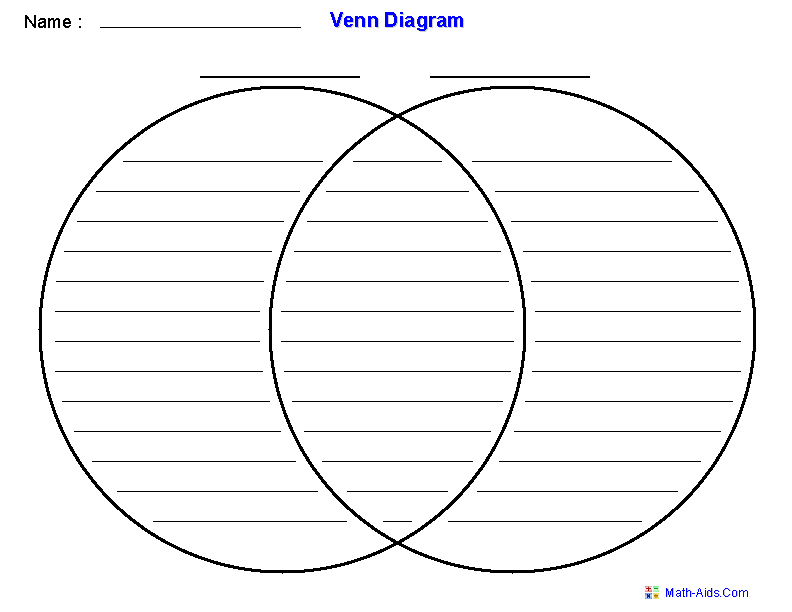
Plot Line, Sequence Map, Venn Diagram
Kate has read the passages and the writing prompt. She types her response into the computer. What mistake is Kate making?
She is typing too slowly.
She did not use a graphic organizer or strategy.
She did not read the writing prompt.
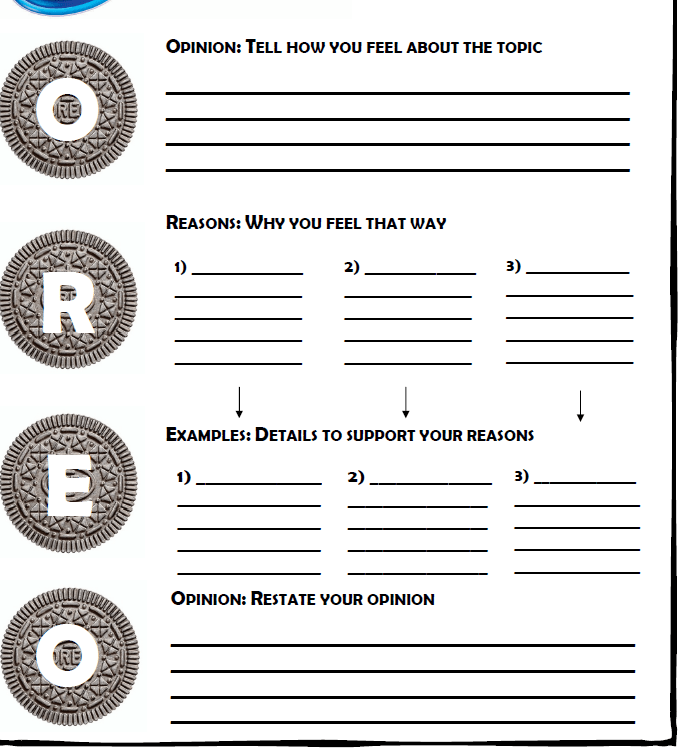
Frank read two passages about the American flag. He was asked to write an opinion essay about whether or not it should be changed. What should he use?
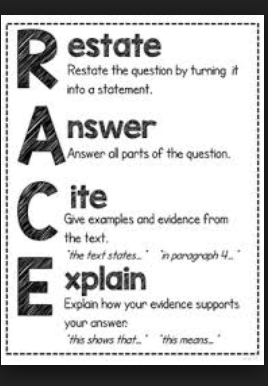
How does Abe resolve the conflict in the passage? Support your answers with clear details from the text. What should you use?
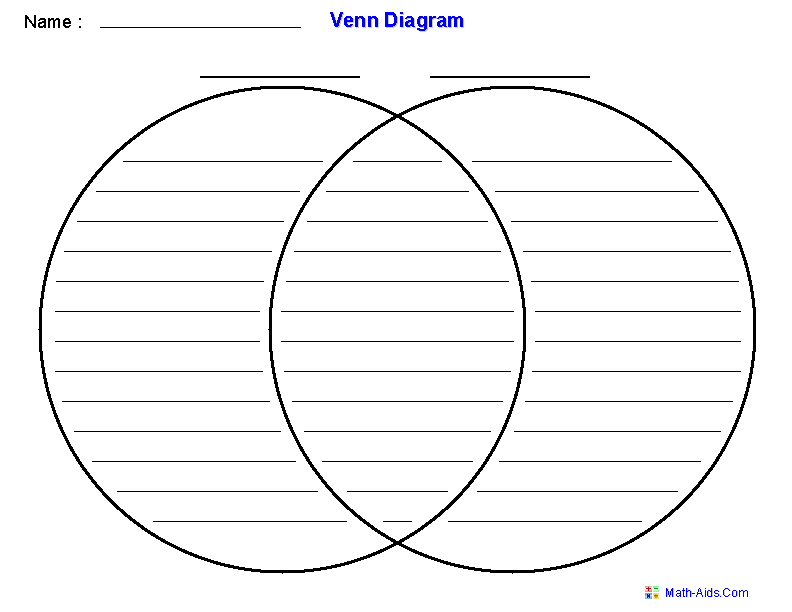
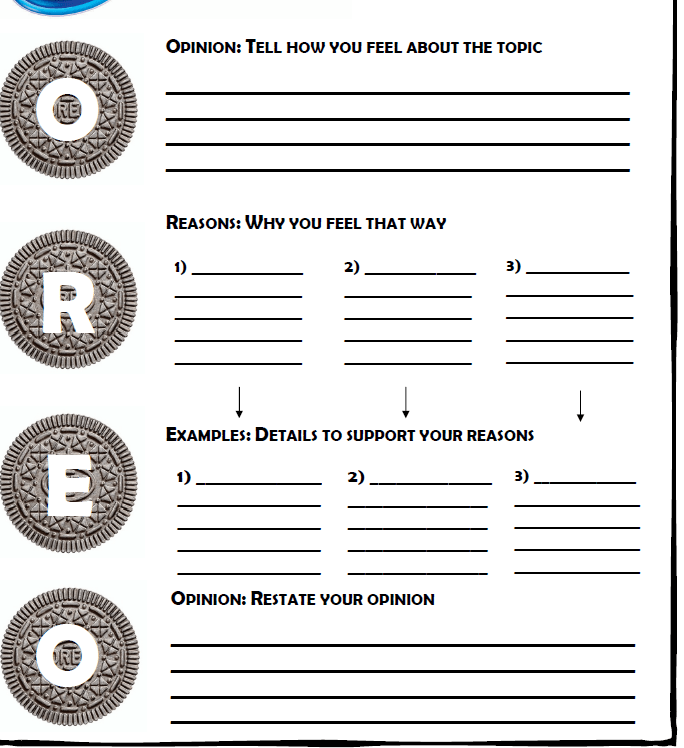
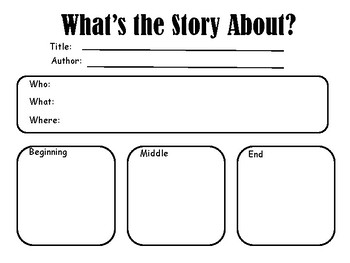
Keisha has just reread Goldilocks and the Three Bears. She has to rewrite the conclusion to the passage. Which graphic organizer should she use?


Graphic organizers can be used to...
Organize writing.
Make information more accessible to students
Brainstorm
All of the above!


Identify the type of organization that uses this visual
Compare/contrast
Cause/effect
problem/solution
argument/support

What type of text structure uses this type of graphic organizer?
Compare/contrast
Cause/effect
Description
Chronological

What type of text structure uses this type of graphic organizer?
problem/solution
chronological
cause/effect
argument/support

What type of text structure uses this type of graphic organizer?
Cause/effect
problem/solution
chronological
description

What type of text structure uses this type of graphic organizer?
description
argument/support
cause/effect
problem/solution

What text structure will be used with the graphic organizer?
Problem and Solution
Sequence
Cause and Effect
Compare and Contrast

What text structure will be used with the graphic organizer?
Cause and Effect
Problem and Solution
Chronological
Compare and Contrast

What text structure will be used with the graphic organizer?
problem/solution
Descriptive
Chronological
Cause and Effect

What type of text structure uses this graphic organizer?
Cause and Effect
Problem and solution
Description

What type of text structure uses this graphic organizer?
Compare and Contrast
Cause and Effect
Chronological
Sequence

