
 Worksheets
Understanding Material Changes
Total questions: 60
Worksheet time: 41mins
What is a physical change? (物理变化是什么?)
A physical change involves a reaction that produces new substances.
A physical change is a change that affects the mass of a substance.
A physical change is a change that does not affect the chemical composition of a substance.
A physical change alters the chemical structure of a substance.
Which of the following is a chemical change? (以下哪个是化学变化?)
Rust forming on iron
Ice melting into water
Boiling water into steam
Sugar dissolving in water
What is a sign of a chemical reaction? (化学反应的迹象是什么?)
Release of light without heat
Changes in color, temperature, gas production, formation of a precipitate.
No change in mass
Formation of a solid layer
How do you balance the equation H2 + O2 → H2O? (如何平衡方程式 H2 + O2 → H2O?)
2H2 + 2O2 → 2H2O
H2 + O2 → H2O2
2H2 + O2 → 2H2O
H2 + O2 → H2O
What happens during corrosion? (腐蚀过程中发生了什么?)
Metals become stronger and more durable.
Corrosion leads to the formation of protective coatings.
Environmental elements enhance the metal's properties.
During corrosion, metals oxidize and deteriorate due to reactions with environmental elements.
Which of the following is a sign of a physical change? (以下哪个是物理变化的迹象?)
Change in chemical composition
Change in state or appearance without altering chemical composition.
Formation of a new substance
Release of gas during a reaction
What is the word equation for the reaction of sodium and chlorine? (钠和氯反应的文字方程式是什么?)
Chlorine + Water -> Hydrochloric Acid
Sodium + Fluorine -> Sodium Fluoride
Sodium + Oxygen -> Sodium Oxide
Sodium + Chlorine -> Sodium Chloride
What is produced when an acid reacts with a base? (酸与碱反应时产生什么?)
Hydrogen gas and salt
Carbon dioxide and water
Oxygen and hydrogen chloride
Water and salt
How do you identify a chemical change? (如何识别化学变化?)
Look for changes in color, temperature, gas production, precipitate formation, or odor change.
The substance remains the same
Changes in mass only
No visible changes occur
What is rust? (生锈是什么?)
Rust is a type of metal used in construction.
Rust is a type of fungus that grows on wood.
Rust is a paint used to protect surfaces.
Rust is the corrosion of iron, resulting in a reddish-brown oxide.
What is the word equation for making salt from an acid and a base? (从酸和碱制盐的文字方程式是什么?)
Base + Water → Acid + Salt
Acid + Base → Salt + Water
Acid + Salt → Base + Water
Salt + Water → Acid + Base
Which of the following is NOT a sign of a chemical reaction? (以下哪个不是化学反应的迹象?)
Release of heat energy
A physical change (e.g., melting or freezing)
Formation of a gas
Change in color
What is the balanced equation for the combustion of methane? (甲烷燃烧的平衡方程式是什么?)
C2H6 + O2 → 2 CO2 + 3 H2O
CH4 + O2 → CO + H2O
CH4 + 3 O2 → 2 CO2 + 2 H2O
CH4 + 2 O2 → CO2 + 2 H2O
What is the process of a metal reacting with oxygen called? (金属与氧气反应的过程称为什么?)
Combustion
Oxidation
Corrosion
Reduction
What is the word equation for the reaction of magnesium and hydrochloric acid? (镁与盐酸反应的文字方程式是什么?)
Magnesium + Sulfuric Acid → Magnesium Sulfate + Hydrogen
Magnesium + Nitric Acid → Magnesium Nitrate + Nitrogen
Magnesium + Water → Magnesium Hydroxide + Oxygen
Magnesium + Hydrochloric Acid → Magnesium Chloride + Hydrogen
What is a common example of a physical change? (物理变化的常见例子是什么?)
Melting ice
Boiling water
Breaking a glass
Dissolving sugar in water
What does it mean to balance a chemical equation? (平衡化学方程式是什么意思?)
It means to simplify the equation by removing unnecessary elements.
Balancing a chemical equation involves adding more reactants to increase the reaction rate.
To balance a chemical equation means to make sure that the number of atoms for each element is equal on both sides of the equation.
To balance a chemical equation means to change the chemical properties of the substances involved.
What is the main product of the corrosion of iron? (铁腐蚀的主要产物是什么?)
Iron carbonate
Iron oxide (rust)
Iron chloride
Iron sulfate
What is the word equation for the reaction of calcium carbonate and hydrochloric acid? (碳酸钙与盐酸反应的文字方程式是什么?)
Calcium carbonate + Hydrochloric acid → Calcium chloride + Water + Carbon dioxide
Calcium chloride + Water → Calcium carbonate + Hydrochloric acid
Calcium carbonate + Nitric acid → Calcium nitrate + Water + Carbon dioxide
Calcium carbonate + Sulfuric acid → Calcium sulfate + Water + Carbon dioxide
What is the effect of heat on a chemical reaction? (热对化学反应的影响是什么?)
Heat has no effect on chemical reactions.
Heat decreases the rate of chemical reactions.
Heat only affects physical changes, not chemical reactions.
Heat generally increases the rate of chemical reactions.
What is the main characteristic of an endothermic reaction? (吸热反应的主要特征是什么?)
It releases heat to the surroundings.
It absorbs heat from the surroundings.
It occurs spontaneously without energy input.
It produces light as a byproduct.
Predict the products of this reaction.
HCl + Ca(OH)2
NaCl
CaCl2
CaCl2 + H2O
H2O
HCl + Zn --> ZnCl2 + H2
Complete the following reaction:
Hydrochloric acid + magnesium hydroxide -->
Magnesium chloride + water
Magnesium + water
Magnesium chloride + hydrogen
Magnesium chloride + water + carbon dioxide
Which of the following is a neutralization reaction?
2Na + Cl2 → 2NaCl
CH4 + 2O2 → CO2 + 2H2O
HCl + KOH → KCl + H2O
CaCO3 → CO2 + CaO
Acid + Metal --> Salt + ?
water
oxygen
hydrogen
carbon dioxide
What is the test for carbon dioxide produced from a reaction?
the burning splint test
the glowing splint test
bubbling the gas through limewater
Which gas gives out a 'pop' sound when a lighted splint is placed in it?
hydrogen
oxygen
carbon dioxide
nitrogen
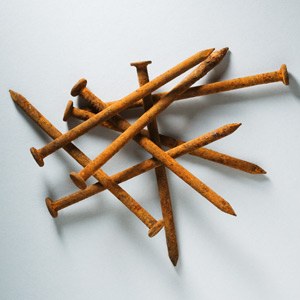
Rusting is a _____________ process.
Mechanical
Chemical
Physical
Rusting is a special term, given to the corrosion metal is... .
Au
Pt
Fe
Ag
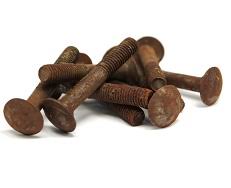
What two things cause Iron to Rust ?
Air and Oxygen
Oxygen and Water
Water and Carbon dioxide
Carbon dioxide and Air
Mary is drinking soda. She takes the mass of the soda and finds it to be 50 grams. She leaves the cap off of the soda and the mass changes to 49.6 grams. What substances were lost?
water and CO2
Sugar and CO2
Sugar and water
Food coloring and water
What word describes the water in a solution?
solute
solvent
indicator
wet
What happens to the volume of water when frozen?
Increases
Decreases
Stays the same
Evaporates
What is the physical state of wax at 20°C?
gas
liquid
solid
plasma
What happens to limewater when mixed with carbon dioxide?
Turns blue
Turns cloudy
Bubbles form
It dances
What happens to a burning splint in oxygen?
It goes out
It burns more brightly
Pops
Turns Green
Which two substances are needed for iron to rust?
Water and oxygen
Salt and carbon dioxide
hydrogen and a dream
nitrogen and oil
How does Wax Seal prevent rust?
Blocks contact with oxygen/water
Absorbs moisture
Changes iron’s color
Releases protective gas fighters
What air pollution accelerates corrosion?
Oxygen
Acid rain
Nitrogen
Hydrogen
What indicates a chemical reaction between iron and sulfur?
Color change to black
Bright glow during reaction
Sulfur melts
Iron floats
What type of substance is iron sulfide?
solution
element
compound
mixture
What is formed when zinc reacts with sulfur?
Zinc oxide
Zinc sulfide
Zinc sulfate
Zinc carbonate
Why does iron sulfide weigh more than the original iron?
Iron expanded
Sulfur combined with iron
Water was absorbed
Gas was trapped
What is the product of copper + chlorine?
Copper oxide
Copper chloride
Copper sulfate
Copper carbonate
What gas extinguishes burning magnesium?
Oxygen
Nitrogen
Hydrogen
Carbon dioxide

