
 Worksheets
2nd year April test
Total questions: 78
Worksheet time: 2hrs 13mins

What is the function of the cardiovascular system?
Break down food for nutrients.
Carry materials like gasses, nutrients, and waste around the body.
Movement of body parts.
Collect information and respond with electrical messages.
What type of blood vessel returns blood back to the heart?
vein
artery
capillary
none of the above
What type of blood vessels brings blood AWAY from the heart?
Vein
Artery
Capillary
None of the above
Which component of blood helps stop bleeding and forms clots?
Platelets
White Blood Cell
Red Blood Cell
Plasma
Which component of blood helps deliver oxygen with the protein hemoglobin?
Platelet
White Blood Cell
Red Blood Cell
Plasma

What is the main function of the respiratory system?
break down food for nutrients
produce hormones (chemical messages)
Structure, support, and protection of body parts.
Bring in oxygen to the body and get rid of carbon dioxide.
What are the tiny air sacs in the lungs that exchange gases (oxygen for carbon dioxide)?
capillary
bronchi
alveoli
bronchiole
What is the dome shaped muscle in the respiratory system that helps control breathing by contracting and relaxing?
diaphragm
biceps
trachea
pharynx

On this picture of the respiratory system, what organ is letter A?
Alveoli
Bronchus (Bronchi)
Nose
Pharynx
On this picture of the respiratory system, what organ is letter C?
Alveoli
Bronchus (Bronchi)
Trachea
Lung
Which is the smallest of the 3 blood vessels?
Veins
Arteries
Capillaries
Your lungs are ___________ air
My lungs are __________________ air.
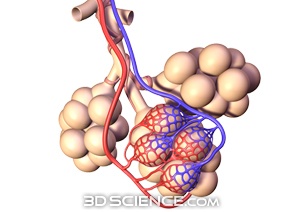
When you breathe, your lungs take in ___ and remove ___.
air/oxygen
oxygen/carbon dioxide
carbon dioxide/oxygen
nitrogen/oxygen
What is White Blood Cells role in the blood?
They carry oxygen around the body
They help the blood clot
They help fight disease and infection
They help the body build muscles
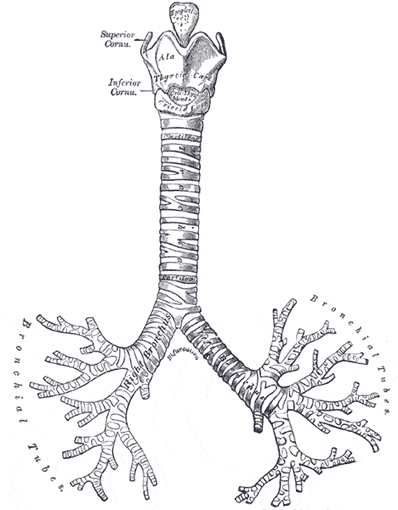

As your physical activity ____________, your heart rate ___________ and your breathing rate _______________
decreases, increases, stays the same
increases, increases, increases
increases, decreases, increases
decreases, stays the same, increases
Which of these is NOT part of the circulatory system?
capillary
vein
artery
trachea
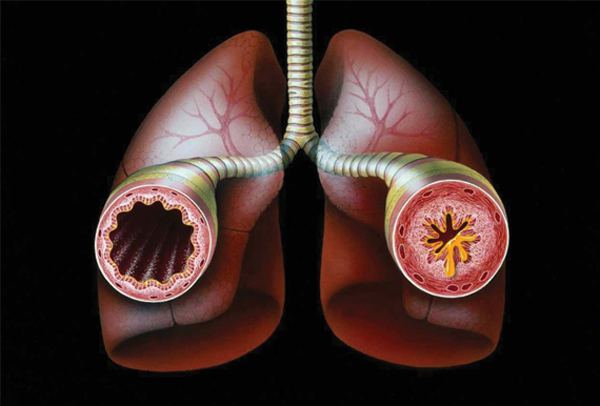
meningitis
What is the purpose of hairs inside the nose
Keep your nose warm
Filters the air of any dusts/particles and moisturises the air
Stops mucous coming out
Looks good
What structure is keeping the trachea open?
Rings of Bone
Rings of Muscle
Rings of cartilage
Nothing, it keeps itself open
During inhalation, the intercostal muscles
relax
contract
move up
move down
During exhalation, the ribs move .....
up and down
in and out
down and out
down and in
During inhalation the diaphragm
contracts causing it to move up
contracts causing it to move down
relaxes causing it to move up
relaxes causing it to move down

What gas do we breath out as waste?
Nitrogen
Oxygen
Hydrogen
Carbon Dioxide
What is the process of respiration?
Breathing
The release of energy from food
Inhalation
Oxygen transfer
What separates the right and left sides of the heart?
Aorta
Septum
Valves
Coronary arteries
What is the role of coronary arteries?
Supply oxygen to the muscles
Supply oxygen to the brain
Supply oxygen to the heart
Supply oxygen to the lungs
What is the role of the pulmonary artery?
Carry deoxygenated blood to the heart
Carry oxygenated blood to the body
Carry oxygenated blood to the lungs
Carry deoxygenated blood to the lungs

Which of the following are chambers of the heart?
Valves
Atrium and ventricle
Arteries and veins
Sinoatrial nerve

The right side of the heart contains...
Oxygenated Blood
De-oxygenated Blood
Both Oxygenated and De-oxygenated Blood
Water
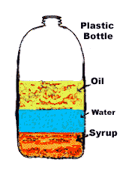

Which box has a higher density?
A
B
They are the same
What is a substance made up of only one type of atom?
molecule
compound
element
mixture
What is a compound?
a substance made up of only one type of atom
a substance made up of two or more different elements chemically combined
a substance made up of two or more different substances mingled together but not chemically combined
Which of these is an example of a compound?
oxygen
carbon
water
nitrogen
What is the definition of a mixture?
a substance made up of two or more elements chemically combined
a substance made up of only one type of atom
two or more different substances mingled together but not chemically combined

Which of following are elements?
b only
d only
a and c
b and d

Which of the following are compounds
b only
d only
a and c
a only

Which of the following is a mixture?
c only
d only
b only
b and d

How many different elements are there in CO₂?
1
2
3

Table Salt (NaCl)
element
compound
mixture

What does this illustrate
Elements
Compunds
Mixture of Elements and Compunds
Mixture of Compounds

If you INCREASE the force applied to a 50 kg crate, what happens to the ACCELERATION of the crate
acceleration increases
acceleration decreases
force increases
this cannot be determined
Two equal forces acting in opposite directions on an object
Inertia
Balanced Force
Push
Unbalanced Force
Forces are measured in:
Inertia
Grams
Tons
Newtons
Force equal mass times _.
(a)
What will happen to ball moving in a straight line if no other force is applied?
The ball will stop
The ball will move at the same speed on a different path
The ball will move with the same speed on the same path
None of the above
What are examples of tension force?
Kicking a ball
Tug-of-war
Jumping on a trampoline
A falling apple
Which direction does frictional force work on an object?
Opposite to applied force
Downwards
In the direction of applied force
net force
The total of all forces acting on an object
velocity /time. The rate of change in velocity over time.
The property of a moving object that depends on its mass and velocity
The tendency of an object to resist a change in its movement
speed
The speed of an object in a particular direction
distance / time; The rate at which an object moves.
The force applied = the object's mass times the acceleration; F=ma
The constant velocity after which an object stops accelerating
The more mass an object has, the _______ force it takes to accelerate it.
more
less

Forces that cause a change in motion of an object are called
balanced forces
net forces
motion forces
unbalanced forces

Calculate the net force
25
65
20
15

