
 Worksheets
13.2 Renewable Energy Quiz
Total questions: 69
Worksheet time: 35mins
What is renewable energy?
Energy that is naturally replenished and comes from sources like the sun, wind, and biomass
Energy that is finite and comes from fossil fuels
Energy that is artificially created in laboratories
Energy that is only used in industrial applications
Which of the following actions can make renewable energy cheaper?
Eliminating inequitable subsidies
Increasing taxes on renewable energy
Reducing the use of solar panels
Promoting the use of nonrenewable energy
What are the two types of solar heating systems mentioned?
Passive and active
Direct and indirect
Thermal and electrical
Simple and complex
What is happening to the costs of using direct sunlight to produce high-temperature heat and electricity?
They are increasing
They are coming down
They are stable
They are unpredictable
What is a characteristic of a passive solar heating system?
Uses a heat-absorbing fluid
Absorbs and stores heat within a well-insulated structure
Requires electricity to function
Uses mirrors to concentrate sunlight
How does an active solar heating system capture energy?
By using photovoltaic cells
By storing heat in a well-insulated structure
By capturing energy in a heat-absorbing fluid
By reflecting sunlight with mirrors
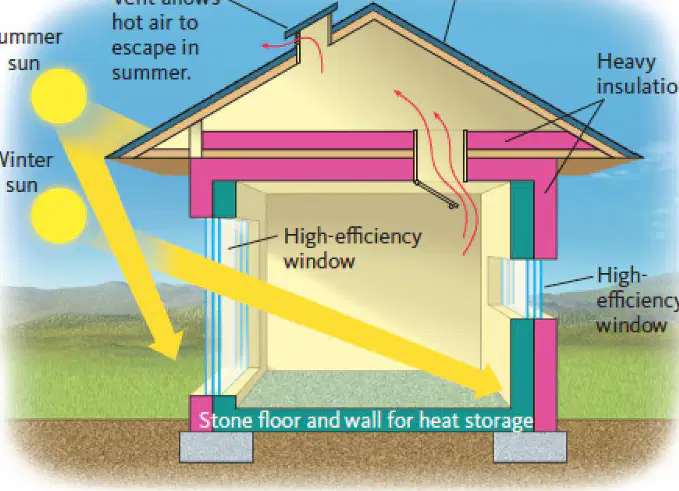
What is the purpose of high-efficiency windows in passive solar heating systems?
To allow more sunlight to enter the house
To reduce heat loss
To increase air circulation
To block UV rays
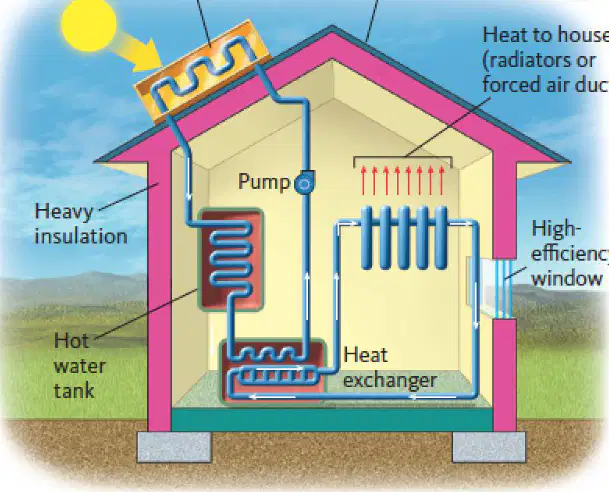
In an active solar heating system, what component is used to transfer heat to the house?
Solar collector
Heat exchanger
High-efficiency window
Vent
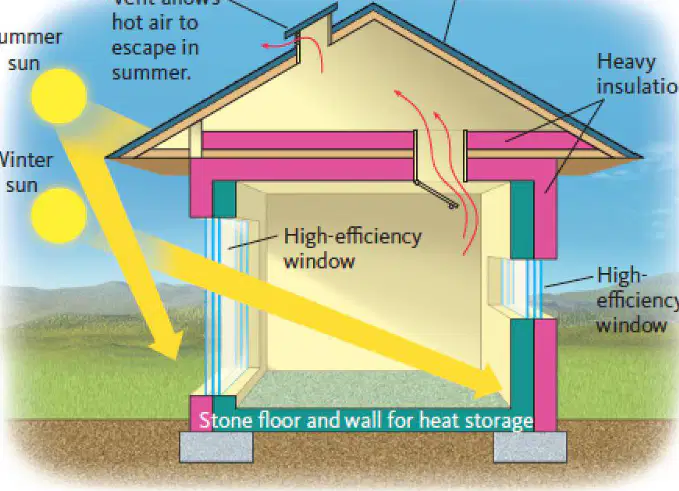
How do white or light-colored roofs contribute to solar heating systems?
They absorb more sunlight
They reduce overheating
They increase heat storage
They enhance insulation
Which of the following is a natural way to cool buildings?
Use of air conditioners
Open windows when cooler outside
Install heating systems
Use dark-colored roofs
What is the purpose of using overhangs or awnings on windows?
To increase sunlight exposure
To enhance building aesthetics
To reduce heat from direct sunlight
To block rainwater
Why might a light-colored roof be beneficial for cooling a building?
It absorbs more heat
It reflects more sunlight
It is more durable
It is cheaper to install
What is the primary purpose of solar thermal systems?
To store solar energy for nighttime use
To collect sunlight to boil water and produce steam for electricity
To convert sunlight directly into electricity
To provide heating for residential homes
How do some solar thermal systems focus energy on a central power tower?
By using photovoltaic cells
By using arrays of mirrors to track the sun
By using wind turbines
By using geothermal heat
What is a disadvantage of solar thermal systems?
They produce high net energy
They require minimal water usage
They can disrupt desert ecosystems
They are effective on cloudy days without backup
What do photovoltaic (PV) cells convert?
Wind energy to mechanical energy
Solar energy to electric energy
Chemical energy to thermal energy
Nuclear energy to light energy
What is a key design feature of solar cells?
Thick opaque layers of metal
Thin transparent wafers of silicon
Solid blocks of carbon
Liquid crystal layers
What happens when sunlight strikes solar cells?
It heats the cells, causing them to expand
It releases electrons into wires
It reflects off the surface, creating light
It absorbs moisture from the air
What do arrays of solar cells make up?
Batteries
Panels
Generators
Transformers
Where are solar energy systems best located?
In urban areas
In snowy regions
In sunny desert areas
In coastal regions
What is one way the cost of solar energy could be reduced?
Increasing fossil fuel usage
Reducing government subsidies
Mass production and new designs
Limiting production to small scales
What is a concern regarding the materials used in solar cells?
They are biodegradable
They contain toxic materials
They are made from recycled materials
They are abundant and cheap
What are some sources of hydropower mentioned in the text?
Solar panels and wind turbines
Water flowing over dams, tidal flows, and ocean waves
Geothermal vents and biomass
Fossil fuels and nuclear reactors
What are some limitations of using hydropower as an energy resource?
High cost of solar panels
Environmental concerns and limited availability of suitable sites
Dependence on fossil fuels
Lack of technological advancement
What type of energy does hydropower use?
Thermal energy
Kinetic energy
Chemical energy
Nuclear energy
Hydropower is an indirect form of which type of energy?
Wind energy
Geothermal energy
Solar energy
Biomass energy
Which of the following is the world's leading renewable energy source used to produce electricity?
Wind power
Solar power
Hydropower
Biomass power
How does a hydropower plant generate electricity?
By burning fossil fuels
By using wind turbines
By using water from a dam to turn turbines
By using solar panels
What is the primary function of a hydroelectric dam?
To store water for irrigation
To generate electricity
To provide drinking water
To prevent flooding
Which component of a hydroelectric dam is responsible for converting water flow into mechanical energy?
Reservoir
Intake
Turbine
Powerhouse
In a hydroelectric dam, what is the role of the generator?
To store water
To convert mechanical energy into electrical energy
To control water flow
To support the dam structure
What natural phenomena can be used to produce electricity in coastal bays and estuaries?
Ocean tides and waves
Wind currents
Solar radiation
Geothermal heat
What is one limitation of power systems that use tides and waves?
Unlimited suitable sites
Low costs
Equipment damaged by storms and corrosion
High efficiency
What is the world's second-fastest growing source of electricity?
Solar cells
Wind power
Hydroelectric power
Nuclear power
When considering environmental costs, which energy source is the least expensive and least polluting way to produce electricity?
Coal
Natural gas
Wind power
Nuclear power
What is one advantage of tall, long-blade turbines in wind energy production?
They are cheaper to produce.
They can extract more energy from the wind.
They require less maintenance.
They are easier to transport.
Which regions are mentioned as rapidly growing sources of wind power?
Africa, South America, and Australia
United States, Europe, and China
Canada, Russia, and India
Japan, Brazil, and Mexico
What is the future trend in wind power development mentioned in the text?
Building smaller turbines
Offshore wind farms
Solar and wind hybrid systems
Urban wind farms
What is the primary purpose of a wind farm?
To generate electricity using wind energy
To provide a habitat for birds
To serve as a tourist attraction
To store solar energy
What is the primary function of wind farms?
To store solar energy
To convert wind energy to electrical energy
To produce fossil fuels
To generate geothermal energy
Which statement about wind power is true?
Wind power is limited
Wind power is exhaustible
Wind power is inexhaustible
Wind power is non-renewable
Which states are top producers of wind energy in the United States?
Florida and New York
Texas and California
Nevada and Arizona
Ohio and Michigan
Which of the following is an advantage of wind power?
High electricity cost
Nonpolluting
Limited distribution
Exhaustible
What is a disadvantage of wind power?
High net energy
Abundant and inexhaustible
May be considered noisy, eyesore
Low electricity cost
Why might wind power require a backup power source?
It is nonpolluting
It is abundant
It is widely distributed
Calm days reduce energy production
Where are the largest potential areas for wind power usually located?
Urban areas
Coastal areas
Rural areas
Industrial areas
What is biomass primarily composed of?
Organic matter found in animals
Organic matter found in plants or plant-related material
Inorganic matter found in rocks
Synthetic materials
Which of the following is an example of biomass fuel?
Coal
Natural gas
Wood
Nuclear fuel
For what purposes is biomass commonly used?
Building construction
Heating, cooking, industrial processes, generating electricity
Manufacturing plastics
Producing metals
Why is wood considered renewable only under certain conditions?
It is always renewable regardless of usage
It is renewable if not harvested more quickly than planted
It is renewable if used for construction
It is renewable if used in developed countries
What are biofuels derived from?
Fossil fuels
Biomass
Minerals
Metals
Which of the following is an advantage of biofuels over gasoline/diesel fuel?
Increases carbon dioxide emissions
Difficult to store and transport
Can be grown in many places
Increases dependence on imported oil
How do biofuels impact carbon dioxide emissions with careful harvesting?
Increase emissions
No net increase in emissions
Decrease emissions significantly
Double the emissions
Which region produces 95% of the world’s biodiesel?
North America
Asia
European Union
South America
Which of the following materials can be used to produce ethanol?
Sugarcane, corn, switchgrass, and various wastes
Only sugarcane and corn
Only switchgrass and various wastes
Only corn and various wastes
What is the primary source of ethanol production in the United States?
Sugarcane
Corn
Switchgrass
Various wastes
What is geothermal energy?
Heat stored in the ocean
Heat stored in soil, underground rocks, and fluids in Earth’s mantle
Heat generated by the sun
Heat produced by burning fossil fuels
What is one advantage of geothermal energy?
High environmental impact
Limited potential for electricity supply
Great potential for supplying heat and electricity with low environmental impact
Abundant economic production sites
What is a limitation of geothermal energy production?
High cost of production
Limited sites for economic production
High environmental pollution
Limited technological development
What is one advantage of a geothermal heat pump system?
It is expensive to install.
It is environmentally clean.
It requires a lot of maintenance.
It is not reliable.
What is the process used in hot dry rock systems to produce steam?
Burning coal
Injecting water into rock
Using solar panels
Drilling for oil
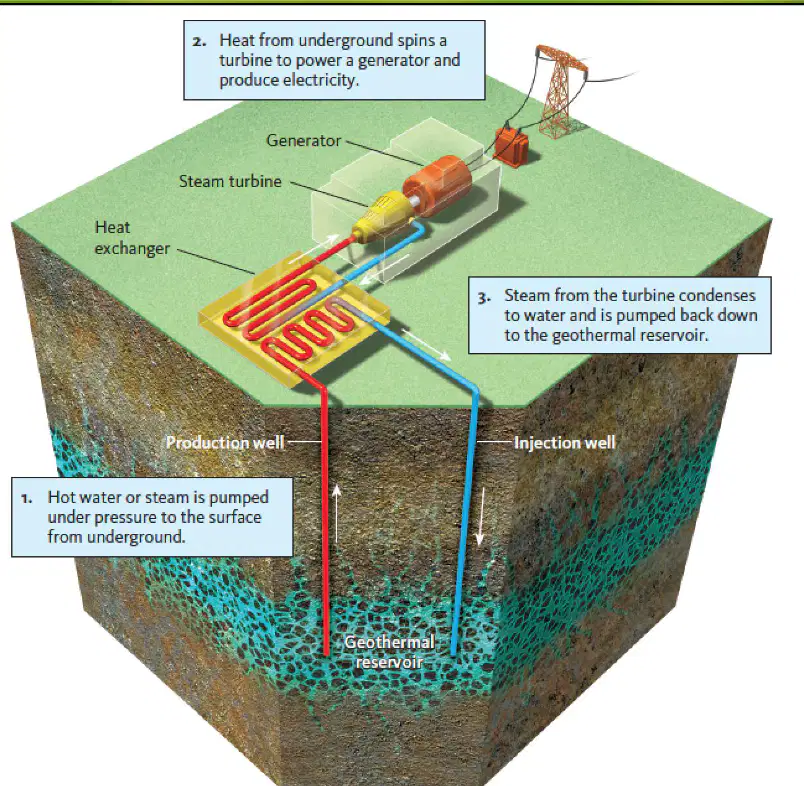
What is the first step in the process of generating geothermal energy as shown in the diagram?
Steam from the turbine condenses to water and is pumped back down.
Heat from underground spins a turbine to power a generator.
Hot water or steam is pumped under pressure to the surface from underground.
The generator produces electricity directly from the heat.
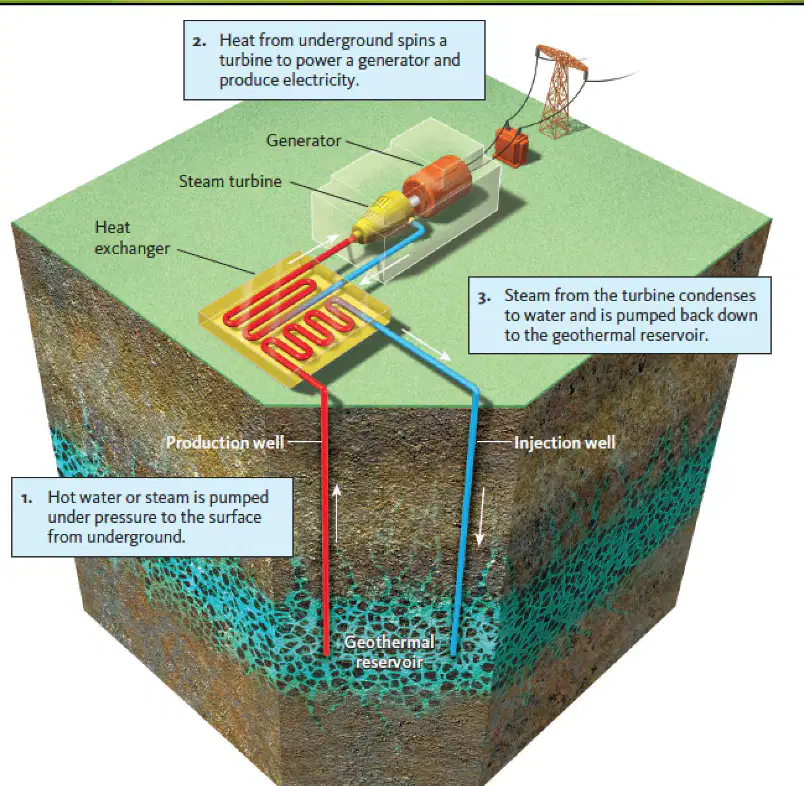
What happens to the steam after it powers the turbine in the geothermal energy process?
It is released into the atmosphere.
It condenses to water and is pumped back down to the geothermal reservoir.
It is used to heat nearby buildings.
It is stored for future use.
Which of the following is a challenge associated with geothermal energy?
Abundance of suitable sites
Low cost of tapping hydrothermal reservoirs
Noise and some carbon dioxide emissions
No risk of earthquakes
What is one potential environmental impact of geothermal energy?
Decrease in carbon dioxide emissions
Creation of earthquakes
Increase in biodiversity
Reduction in noise pollution
Why is the cost of tapping hydrothermal reservoirs considered a problem for geothermal energy?
It is very low and not profitable
It is high, making it expensive
It is unpredictable
It is subsidized by the government
What is a limitation in finding locations for geothermal energy production?
Abundance of suitable sites
Scarcity of suitable sites
Unlimited site availability
Sites are only found in urban areas
Why is hydrogen considered a clean energy source?
It is always produced using fossil fuels.
It does not produce any emissions.
It is a renewable resource.
It is not produced with the use of fossil fuels.
What is a disadvantage of hydrogen as an energy source?
It is expensive to produce.
It has a negative net energy yield.
It is not renewable.
It is difficult to store.

