
Font size
 Worksheets
Alterations in Tissue Integrity
Total questions: 75
Worksheet time: 41mins
What are the two broad etiologic categories of alterations in tissue integrity?
Inflammatory/Infectious and Proliferative/Neoplastic
Viral and Bacterial
Acute and Chronic
Genetic and Environmental
Fill in the blank: Inflammatory disorders occur in those with __________ reactions to substances in the environment.
hypothermic
hypotensive
hypoglycemic
hypersensitivity
Infectious agents that alter tissue integrity can range from viruses to insects.
True
False
What is the pathogenesis/etiology of Herpes Simplex Virus (HSV)?
Bacterial infection of the skin, presents with painful vesicles
virus contact with skin and mucous membranes; persists in latent form in trigeminal nerve and other ganglia
Fungal infection of the mouth, white patches
Viral infection of the lungs, airborne transmission
Which type of Herpes Simplex Virus (HSV) is common above the waist, especially on the lips, face, and mouth?
HSV-1
HSV-2
Both HSV-1 and HSV-2
Neither
Fill in the blank: Healing of HSV-1 infections typically occurs in ____ to ____ days and persists in a latent form.
2 to 4
10 to 14
20 to 30
5 to 7
Clinical manifestations of Herpes Simplex Virus (HSV) usually begin with burning or tingling sensation, followed by ________, ulcers, vesicles, and erythema; pain is common.
crusts
scabs
pustules
papules
Is there a cure for Herpes Simplex Virus (HSV)?
Yes
No
What is the focus of management for Herpes Simplex Virus (HSV)?
Focus on increasing viral replication
Complete eradication of the virus
No treatment required
Focus on symptom management
What is herpes zoster (shingles)?
A) A chronic inflammatory disease of the lungs
B) An acute localized inflammatory disease of a dermatomal segment of the skin
C) A bacterial infection of the blood
D) A genetic disorder
Fill in the blank: In herpes zoster, vesicles develop with redness along the ________ and then dry, crust, and fall off.
dorsal root ganglia
arterial walls
lymph nodes
muscle fibers
What virus causes Herpes-Zoster (shingles)?
Influenza virus
Herpesvirus that causes varicella zoster virus (chickenpox)
Epstein-Barr virus
Human papillomavirus
The reactivation of the latent virus results in shingles.
True
False
What is a common diagnostic sign of the Herpes-Zoster Virus?
Fever
Rash
Cough
Headache
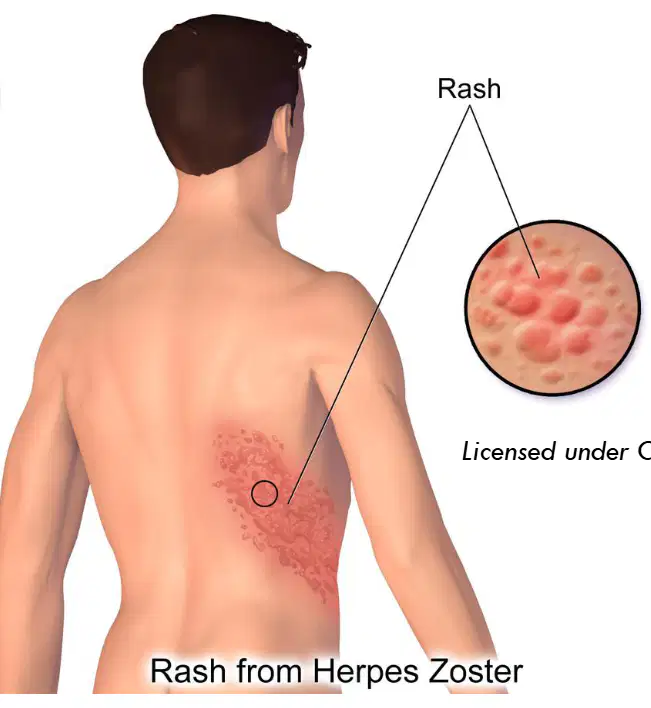
The image shows a rash on the back as a symptom of Herpes-Zoster Virus.
True
False
What are the clinical manifestations of Herpes-Zoster Virus?
Vesicles with erythematous bases, lesions, paresthesia (numbness and tingling), and pain
Fever and cough
Joint pain and swelling
Sore throat and runny nose
What is a common complication of Herpes-Zoster Virus?
Hypertension
Pneumonia
Diabetes
Postherpetic neuralgia
Postherpetic neuralgia is characterized by recurring pain after rash, can persist for months to years, and is most common in individuals older than (a) .
What are the three genera of fungi that infect human skin in superficial fungal infections?
Microsporum, Trichophyton, Epidermophyton
Candida, Aspergillus, Penicillium
Histoplasma, Blastomyces, Coccidioides
Cryptococcus, Mucor, Rhizopus
What is the term for a superficial fungal infection of the scalp?
alopecia areata
tinea capitis
seborrheic dermatitis
psoriasis
What is the term for a superficial fungal infection of the foot?
tinea pedis
onychomycosis
tinea capitis
impetigo
Which of the following is used for the diagnosis of superficial fungal infections?
Blood test
Microscopy and culture
X-ray
Urine analysis
Fill in the blank: One of the clinical manifestations of superficial fungal infections is ________.
Erythematous
Cyanotic
Jaundiced
Necrotic
Which of the following is a clinical manifestation of superficial fungal infections?
Macules/papules or plaques with peripheral scaling and central clearing
Fever
Headache
Cough
Fill in the blank: Nail ________ and discoloration are clinical manifestations of superficial fungal infections.
elongation
brittleness
curvature
thickening
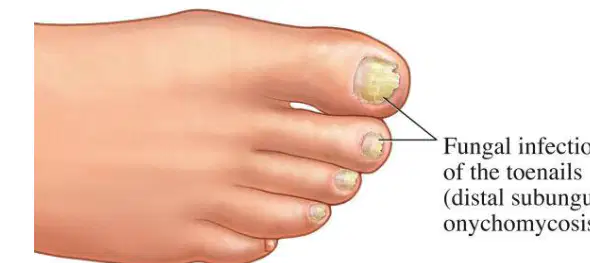
What is the medical term for this condition?
Tinea pedis
Distal subungual onychomycosis
Candidiasis
Tinea capitis
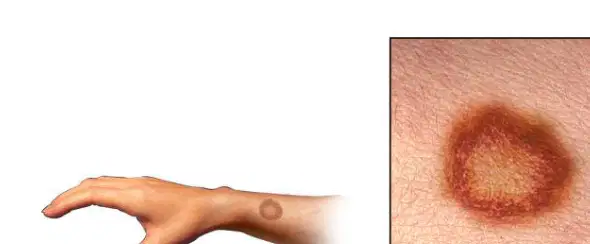
Look at the image labeled 'Ringworm Rash.' What type of infection does this image show?
Bacterial infection
Viral infection
Fungal infection
Parasitic infection
What is the pathology of yeast infections caused by Candida albicans?
Undiagnosed immunodeficiency disorder of superficial infection of skin and/or mucous membranes
Bacterial overgrowth in the gastrointestinal tract
Autoimmune destruction of red blood cells
Viral infection of the central nervous system

What is this?
(a)
Diagnosis of yeast infections caused by Candida albicans varies on location and may include which of the following methods?
Blood pressure measurement
Samples, microscope, and visual
X-ray
Ultrasound
Which type of yeast infection is commonly found in infants?
Thrush
Athlete's foot
Ringworm
Jock itch
Fill in the blank: The clinical manifestations of Candida albicans infections usually present as ______ lesions.
white
red
yellow
blue
Pathology: Bacteria found in ______ causes impetigo. Fill in the blank.
nares
lungs
intestine
liver
Etiology: Impetigo is caused by which of the following? Choose the correct answer.
Viruses
Fungi
Staphylococci or streptococci
Parasites
Diagnosis: Impetigo is diagnosed by ______ of sores. Fill in the blank.
visualization
biopsy
ultrasound
blood test
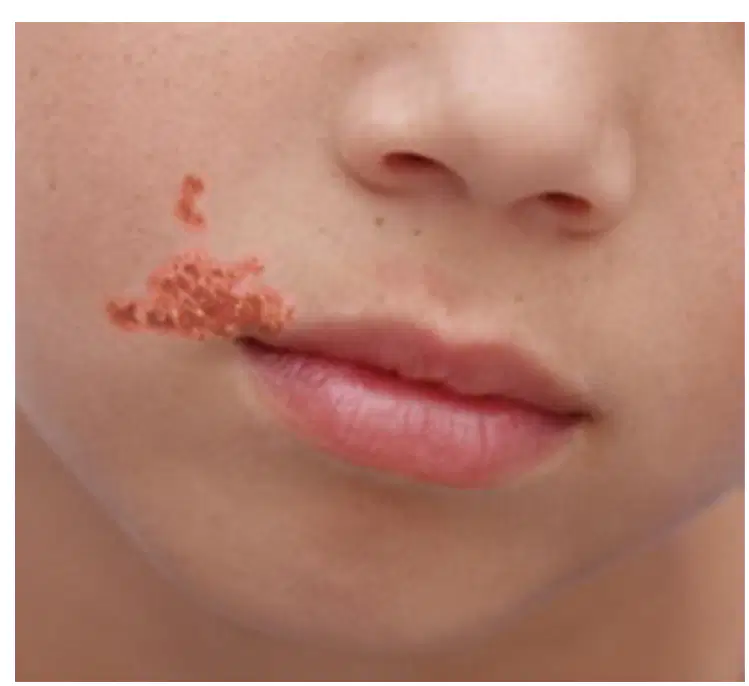
What bacterial infection is shown in the image on the left?
Cellulitis
Impetigo
Erysipelas
Folliculitis
What is the pathogenesis of Seborrheic Dermatitis?
Papular-squamous skin disease caused by high oil production.
Autoimmune destruction of melanocytes.
Bacterial infection of the dermis.
Allergic reaction to environmental allergens.
What is the etiology of Seborrheic Dermatitis? (Fill in the blank)
Vitamin C deficiency.
Low protein intake.
Excessive sun exposure.
High oil production
What is the diagnosis method for Seborrheic Dermatitis?
Blood test.
Biopsy
Urine analysis.
X-ray.
What are the clinical manifestations of Seborrheic Dermatitis? (Fill in the blank)
Various degrees of scaling and erythema in areas of high oil gland concentration; for example cradle cap and dandruff.
Painful blisters and ulcers on the mucous membranes.
Thick, silvery scales and sharply demarcated plaques on extensor surfaces.
Bullous lesions with a positive Nikolsky sign.
What is the pathogenesis of psoriasis?
Chronic skin condition of papules and plaques of silvery scales, periods of exacerbation and remission
Acute bacterial infection causing pustules and fever
Autoimmune destruction of melanocytes leading to depigmentation
Fungal infection resulting in ring-shaped lesions
What is the etiology of psoriasis?
Viral infection
Bacterial infection
unknown, inherited autoimmune
Nutritional deficiency
What is the pathogenesis of Acne Vulgaris? Fill in the blank: The obstruction of follicles due to cells and oils results in an inflamed lesion; arises when sludging of sebaceous oils and deposition of loose epithelial cells.
Obstruction of follicles due to cells and oils results in an inflamed lesion; arises when sludging of sebaceous oils and deposition of loose epithelial cells.
Increased melanin production in the dermis leads to hyperpigmented lesions and scarring.
Autoimmune destruction of sebaceous glands causes dry, scaly patches on the skin.
Bacterial invasion of sweat glands results in purulent discharge and ulcer formation.
Sex hormones, heredity, bacterial flora of skin, stress, mechanical occlusion, and cosmetic use are all examples of _______.
treatment methods for Acne Vulgaris
etiological factors of Acne Vulgaris
symptoms of Acne Vulgaris
preventive measures for Acne Vulgaris
What is the pathogenesis of atopic dermatitis? (Fill in the blank)
What is the etiology of atopic dermatitis? (Fill in the blank)
Genetic Chromosome 11.
Viral infection.
Nutritional deficiency.
Bacterial contamination.
How is atopic dermatitis diagnosed? (Fill in the blank)
EKG
Blood glucose test.
Urine analysis.
Biopsy and physical exam
What are the clinical manifestations of atopic dermatitis? (Fill in the blank)
Pruritis, inflammation, dermatitis, eczematous, rhinitis, allergic rhinitis; risk factor is history of asthma.
Fever, cough, chest pain, and hemoptysis; risk factor is smoking.
Polyuria, polydipsia, weight loss, and blurred vision; risk factor is obesity.
Jaundice, abdominal pain, dark urine, and pale stools; risk factor is hepatitis infection.
What is the pathology of Contact Dermatitis?
viral infection
Genetic mutation
exposure to high levels of irritating agent
Bacterial infection
Which of the following is an example of Allergic Contact Dermatitis?
Hypersensitivity to a specific agent such as detergent or lotion
Exposure to sunlight
Fungal infection
Insect bite
Rhus Dermatitis is caused by exposure to which of the following?
pet dander
Detergent
Poison ivy, oak, sumac
Animal fur
The etiology of Contact Dermatitis is ______ or irritation level.
allergy
infection
heredity
nutrition
The diagnosis of Contact Dermatitis is made using a ______ test.
urine
skin prick
blood
patch
What are the clinical manifestations of Rhus Dermatitis?
Itching, erythema, vesicle formation (may be in linear fashion)
Fever, cough, headache
Nausea, vomiting, diarrhea
Joint pain, swelling, stiffness
Fill in the blank: One of the clinical manifestations of Rhus Dermatitis is (a) .
fever
cough
headache
Vesicle formation in Rhus Dermatitis may be in a linear fashion.
True
False
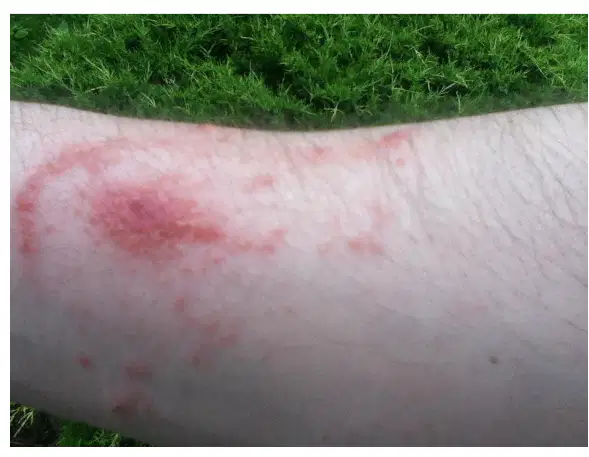
The image shows a skin rash associated with which condition?
Psoriasis
Rhus Dermatitis
Herpes Zoster
Scabies
What is the pathogenesis of Rocky Mountain Spotted Fever? Fill in the blank: Infected tick bites and burrows into the host and feeds releasing _______ into the blood stream; followed by a rash – within 4 to 8 days symptomatic.
rickettsiae
spirochetes
protozoa
viruses
Which of the following is an initial clinical manifestation of Rocky Mountain Spotted Fever?
generalized edema
Petechial lesions
papule or macule
Photophobia
After 4 to 8 days, which symptoms may develop in a patient with Rocky Mountain Spotted Fever?
A) Fever, headache, muscle aches, nausea, vomiting
B) Rash on wrist or ankle
C) Burrows
D) Cranial nerve deficits
Fill in the blank: The rash in Rocky Mountain Spotted Fever typically appears on the ______ or ankle, then spreads; it has a macule and maculopapular appearance.
forearm
elbow
wrist
shoulder
Which of the following are other symptoms of Rocky Mountain Spotted Fever?
Photophobia
Conjunctivitis
Petechial lesions
Lethargy
Generalized edema
Burrows may be observed in patients with Rocky Mountain Spotted Fever.
True
False
Fill in the blank: The clinical manifestations of Rocky Mountain Spotted Fever initially include ______ or macule.
papule
vesicle
pustule
nodule
Pathology: Eggs laid by ________ mite (called scabies) on the stratum corneum, eggs hatch into larvae, and in 3 to 4 days they grow to adulthood; usually contracted after close contact with infested person. Fill in the blank.
Demodex folliculorum
Sarcoptes scabiei
Ixodes scapularis
Dermatophagoides pteronyssinus
Etiology: Scabies is caused by infestation of which mite? Choose the correct answer.
Demodex folliculorum
Sarcoptes scabiei
Ixodes scapularis
Pediculus humanus
What is the pathology of Pediculosis (Lice)? Fill in the blank: Parasitic insects (lice), survive by ________ on human blood.
swimming
sleeping
jumping
feeding
What is the most common way Pediculosis (Lice) is spread? Fill in the blank: Spread most commonly by ________ or from surface dwelling.
person-to-person contact
airborne droplets
contaminated food
animal bites
How is Pediculosis (Lice) diagnosed? Fill in the blank: Diagnosis is made by observation of ________ or louse (lice).
spores
nymph
cysts
eggshells
What are the clinical manifestations of Pediculosis (Lice)? Clinical manifestations include ________ and visualization.
rash
fever
itching
nausea
Fill in the blank: The pathology of bedbugs is that Cimex lectularius insect feed on _________.
human blood
plant leaves
wood fibers
animal fur
Fill in the blank: The diagnosis of bedbug infestation is based on ________ and examination of insect.
bites
fever
rash
cough
What is the pathology of Lyme Disease? (Fill in the blank)
Bite of tick that carries the spirochete Borrelia burgdorferi.
Inhalation of airborne Mycobacterium tuberculosis.
Consumption of contaminated water with Vibrio cholerae.
Direct contact with herpes simplex virus.
What is the etiology of Lyme Disease? (Fill in the blank)
Tick bite that carriers Borrelia burgdorferi; common locations are groin, thigh, and axillae.
Mosquito bite that transmits Plasmodium falciparum; common in tropical regions.
Flea bite that transmits Yersinia pestis; common in rodents.
Direct contact with infected respiratory droplets; common in crowded places.
What test is used for the diagnosis of Lyme Disease? (Fill in the blank)
Enzyme-linked immunosorbent assay (ELISA) test – detects antibodies to B. burgdorferi.
Mantoux test – detects tuberculosis infection.
Widal test – detects typhoid fever.
Paul-Bunnell test – detects infectious mononucleosis.

