wayground logo

Free Printable Worksheets

Font size

S
M
L
XL
Worksheets

Force and motion

Total questions: 91

Worksheet time: 3hrs 24mins

Name
Class
Date
1.

A small metal spoon containing iron is on a table. What will happen to the spoon if a magnet is moved under the table?

a)

The spoon will move because of friction under the table.

b)

The spoon will move, but only if the magnet is made of plastic

c)

The spoon will move, but only if the table is made of wood.

d)

The spoon will move because of magnetic attraction.

2.

Which will be attracted to a magnet?

a)

a plastic soda bottle

b)

a glass milk bottle

c)

a cloth sock

d)

an iron nail

3.

Which best explains why magnets can cause some objects to move?

a)

Magnets can pull or push other magnets but must be touching them.

b)

Magnets can pull objects made out of iron but must be touching them.

c)

Magnets can pull objects without touching if the objects are made out of iron.

d)

Magnets can push objects without touching if the objects are made of copper.

4.

Juan adds a charge to a balloon by rubbing it on his hair. What will happen if the balloon is placed near a pile of metal paper clips?

a)

The paper clips will not be affected by the balloon.

b)

The paper clips will move away from the balloon.

c)

The paper clips will move towards the balloon.

d)

The paper clips will add more charges to the balloon.

5.

How could a paper clip move across a sheet of paper without anything touching the magnet?

a)

The paper clip is made from iron and there is a moving magnet under the paper.

b)

The paper clip is made from plastic and there is a moving magnet under the paper.

c)

The paper clip is made from copper and there is a moving magnet under the paper.

d)

The paper clip is made from brass and there is a moving magnet under the paper.

6.

The picture shows six objects. Each object is hanging from a string. Three of the objects have a positive charge and three have a negative charge.


Which statement explains the movement of the objects based on their charges?

a)

Like charges pull on each other.

b)

Opposite charges push each other apart.

c)

Opposite charges and like charges pull on each other.

d)

Opposite charges pull on each other, but like charges push each other apart.

7.

Which statement best explains how electrically charged objects produce motion?

a)

Objects with opposite electrical charges repel each other.

b)

Objects with the same electrical charge produce magnets.

c)

Objects with opposite electrical charges attract each other.

d)

Objects with the same electrical charge produce opposite charges.

8.

Sara rubbed her feet on the carpet while wearing socks. She then touched the doorknob and felt a small shock. Why did Sara feel a shock when she touched the doorknob?

a)

because her hand was repelled from the doorknob

b)

because her feet became attracted to the floor

c)

because air moved when she rubbed her feet on the floor

d)

because an electric charge was created when she rubbed her feet on the carpet

9.

What will happen when two balloons are each rubbed against a piece of wool and then put next to a person’s hair?

a)

The two balloons will break.

b)

The two balloons will stick together.

c)

The person’s hair will be attracted to the balloons.

d)

The person’s hair will not be attracted to the balloons.

10.

What can be the result when static electric charges build up in storm clouds?

a)

Rain will fall.

b)

Lightning will strike.

c)

A tornado will occur.

d)

Strong winds will blow.

11.
What is a PUSH or PULL of an object?
a)
Motion
b)
Force
c)
Friction
d)
Gravity
12.
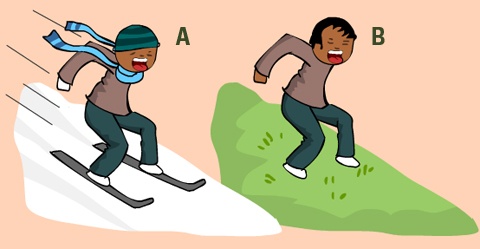
Why is it harder for the boy in Image B to get down the hill?
a)
Motion
b)
Friction
c)
Work
d)
Displacement
13.
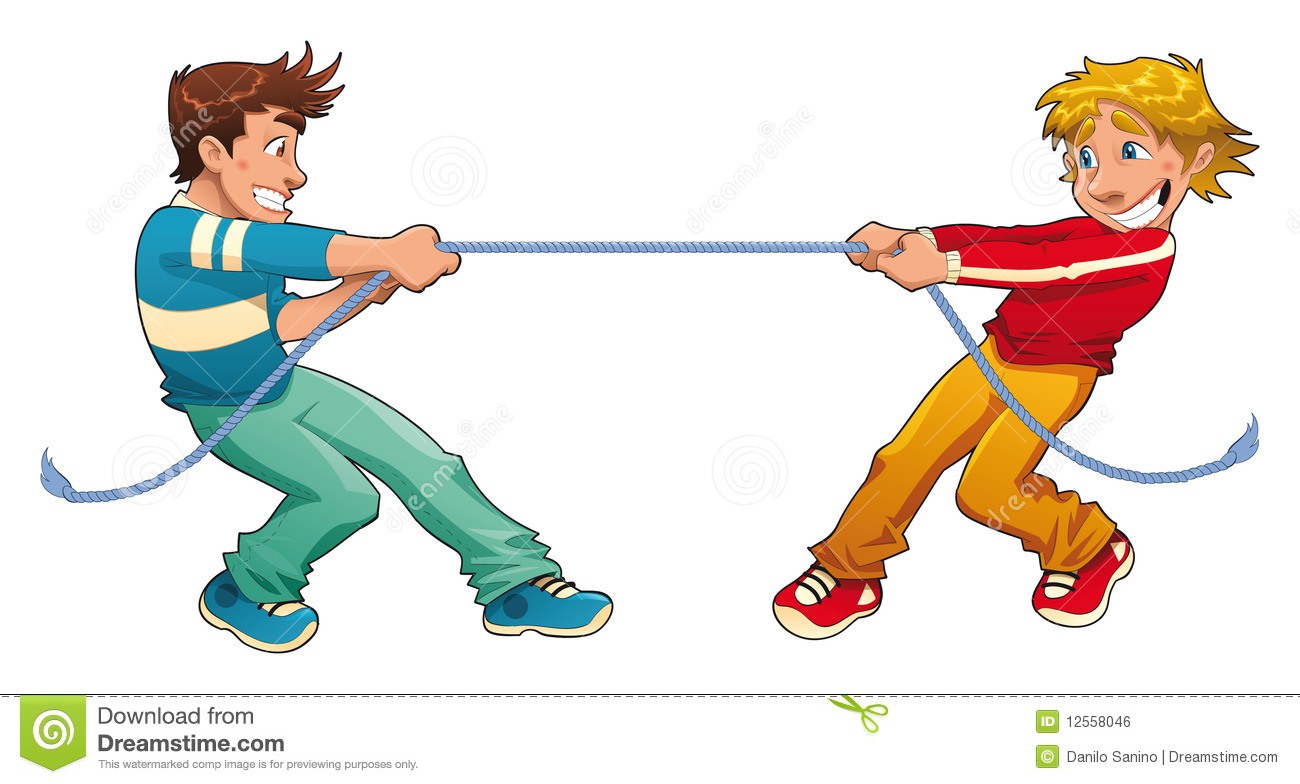
If these boys are pulling with the same amount of force.  What will happen?
a)
The boy in blue will win.
b)
They will not move at all.
c)
The boy in red will win.
d)
Both will fall down.
14.
Which force produces a change in motion?
a)
unbalanced force
b)
balanced force
c)
gravitational force
d)
frictional force
15.
Two girls are pulling on opposite ends of a thick rope. Both girls pull on the rope with the same force but in opposite directions. If both girls continue to pull with the same force, what will most likely happen? 
a)
One girl will pull the other toward her.
b)
Both girls will stay in the same place. 
c)
Gravity will cause the rope to sag. 
d)
The rope will break.
16.
The change in a objects position is________.
a)
Force
b)
Motion
c)
Reaction
d)
movement
17.
The force that pulls all objects toward each other is called_______?
a)
push
b)
pull
c)
gravity
d)
mass
18.
Why do we need friction?
a)
It helps objects go faster. 
b)
It helps objects go up higher.
c)
It helps make objects go slower or stop.
19.
Ted was rolling a pencil on his desk and the pencil fell down to the ground. What force made this occur?
a)
Magnetism
b)
Gravity
c)
Friction
20.
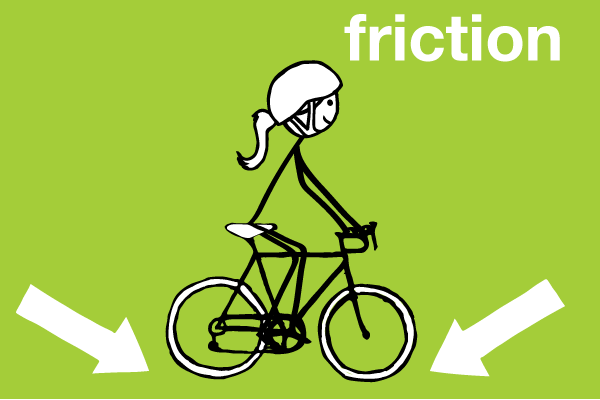
Look at the image. What two forces are happening in this picture? 
a)
Friction & Magnetism
b)
Magnetism & Gravity
c)
Friction & Gravity
21.

A student designs an experiment by stacking 1, 3 and 5 books to change the height of the ramp. The surface of the ramp did not change, but the car rolled farther when released from the ramp that was 5 books high. Why?

a)

The higher ramp caused a greater push on the car.

b)

The car would not have rolled farther with 5 books.

c)

The car was pulled down by gravity and received less force from the ramp because the ramp was more steep.

22.

If we get up to close the door, what type of force do we use?

(a)  

23.

Yesterday, we moved a cart down the hallway. What type of force did we use?

(a)  

24.

Does not cause a change in motion.

a)

Balanced force

b)

Unbalanced force

25.

This will cause a still object to go into motion.

a)

Balance Force

b)

Unbalance force

26.

Acceleration is the ____________.

a)

rate of speed

b)

weight

c)

how hard you push or pull

27.

The mass is the ____________.

a)

rate of speed

b)

weight

c)

how hard you push or pull

28.

The net force is ____________.

a)

the rate of speed

b)

weight

c)

how hard you push or pull

29.

Newton's First Law means _______________.

a)

acceleration is based on the net force and mass.

b)

an object at rest remains at rest and an motion remains in motion.

30.

Newton's Second Law means __________.

a)

acceleration depends on the net force and mass.

b)

an object at rest remains at rest and object in motion remains in motion

31.

How are you enjoying Science Camp?

4 lines
32.
What is a PUSH or PULL of an object?
a)
Motion
b)
Force
c)
Friction
d)
Gravity
33.
Which force produces a change in motion?
a)
unbalanced force
b)
balanced force
c)
gravitational force
d)
frictional force
34.
If these boys are pulling with the same amount of force.  What will happen?
a)
The boy in blue will win.
b)
They will not move at all.
c)
The boy in red will win.
d)
Both will fall down.
35.
What are two examples of forces?
a)
Art and Music
b)
A push or pull
c)
A stand or ground
d)
The dark side and the light side
36.
What pulls a ball back to earth?
a)
Gas
b)
Gravity
c)
Friction
d)
Molecules
37.
What is a force that works AGAINST MOTION?
a)
Force
b)
Motion
c)
Gravity
d)
Friction
38.
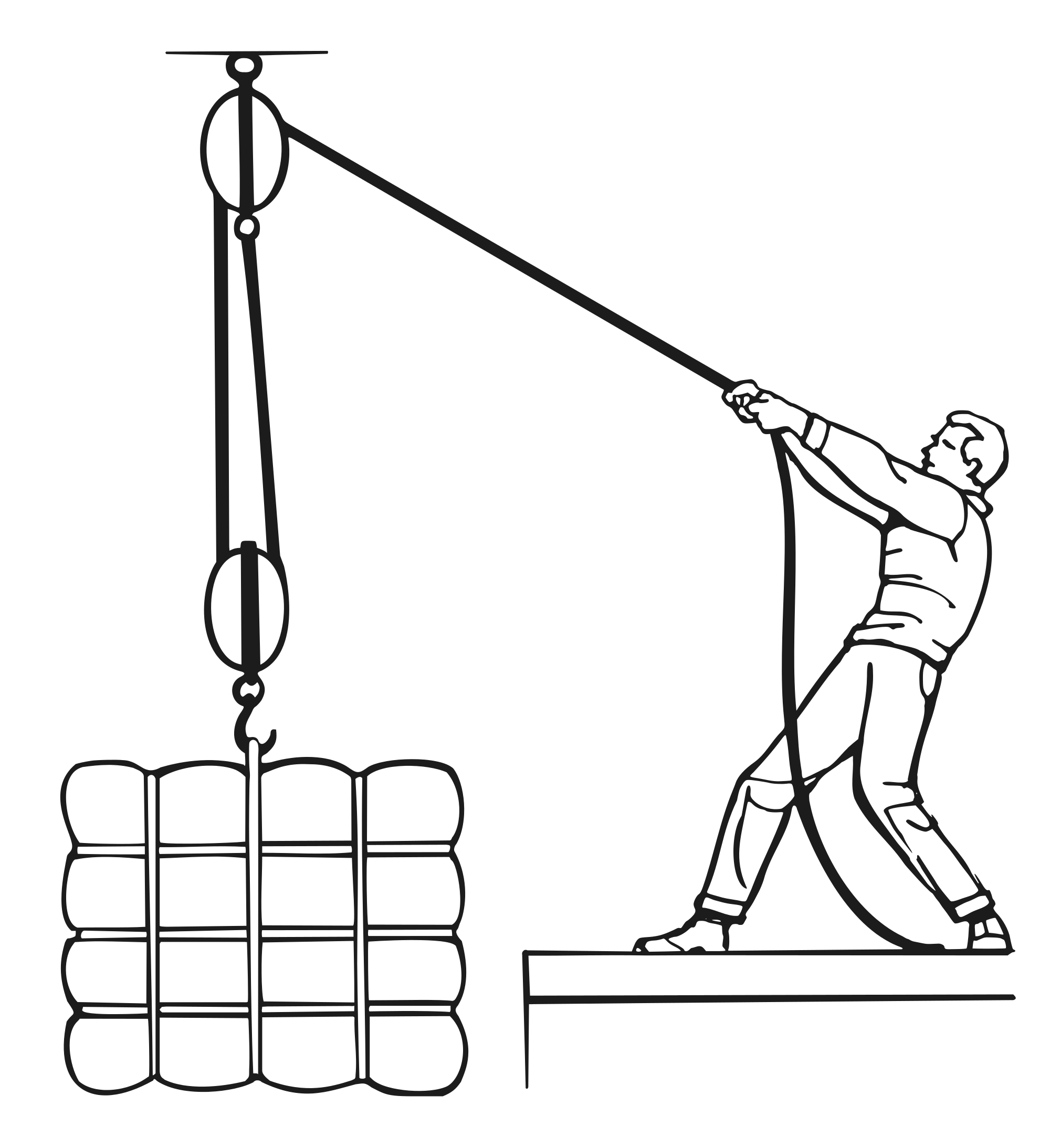
If you pull the cord, what direction will the box move?
a)
Up
b)
Down
c)
Left
d)
Right
39.
_______ is a force that acts between two objects which are touching. This force slows any movement between the two objects.
a)
pressure
b)
magnetism
c)
friction
40.
A _____ is a pull or a push.
a)
force
b)
friction
c)
gravity
d)
speed
41.
One way that a force can cause the change in an object's motion is to...
a)
do nothing.
b)
eat ice cream.
c)
start the object moving.
d)
shine on the object.
42.
When you type on the keys of your Chromebook you are using a
a)
pull
b)
push
c)
gravity
d)
friction
43.
A _____ moves an object closer to you.
a)
push
b)
pull
c)
friction
d)
cat
44.
_____ is the force that slows and stops motion between touching objects.
a)
Friction
b)
Gravity
c)
Pull
d)
Push
45.
Is gravity a push or a pull?
a)
push
b)
pull
c)
neither
d)
both
46.

What is the name of an weight hung from a fixed point so that it can swing freely back and forth?

a)

Rope

b)

Electromagnet

c)

Pendulum

d)

Bridge

47.
What is a change of position of an object?
a)
motion
b)
weight
c)
mass
48.
What is the meaning of acceleration?
a)
any change in the speed or direction of an object
b)
where an object is located
c)
the pull of gravity on an object
49.
Which scientist gave us the laws of motion?
a)
George Washington
b)
John Adams
c)
Sir Isaac Newton
50.
If I kick a soccer ball across the field, what vocabulary word tells me why the ball would slow down in the grass?
a)
acceleration
b)
friction
c)
gravity
51.
Which is harder to stop - an 18 wheeler or a motorcycle?
a)
motorcycle
b)
18 wheeler
52.
The scientist who developed three Laws of Motion was?
a)
Mr. Caramagno
b)
Sir Isaac Newton
c)
Albert Einstein
53.
When the force on the object is _______  the object will not move.
a)
unbalanced
b)
rest
c)
balanced
54.
A _______ force is any force that requires contact to be enforced.
a)
equal
b)
push
c)
contact
55.
The second Law is about inertia: the motion of an object depends on the_____ of the object and the amount of ____ used.
a)
outside and equal
b)
mass and force
c)
force and Sir Isaac Newton
56.
Gravity and magnetism are ________ forces.
a)
outside or motion
b)
pull or non-contact
c)
rest or action
57.
A force is a _______ or a ________.
a)
pull and non-contact
b)
push and pull
c)
push and mass
58.
The First Law of Motion says: An object at ______ tends to stay at ______ and an object in ________ tends to stay in _________ unless acted upon by an _________ force.
a)
push, pull, non-contact, opposite
b)
rest, rest, motion, motion, unbalanced
c)
mass, force, contact, balanced
59.
Newton's Third Law says that for every ______ there is an ________ and _________ reaction.
a)
action, equal, opposite
b)
push, pull, contact
c)
motion, unbalanced, equal
60.
A foot kicking a soccer ball is a ________ force.
a)
equal
b)
non-contact
c)
contact
61.
Which Law? An object at rest tends to stay at rest unless acted upon by an unbalanced force.  An object in motion tends to stay in motion unless acted upon by an unbalanced force.
a)
Newton's First Law
b)
Newton's Second Law
c)
Newton's Third Law
62.
Which Law?  For every action there is an equal and opposite reaction.
a)
Newton's First Law
b)
Newton's Second Law
c)
Newton's Third Law
63.
Inertia is: 
a)
Is a property of matter, the more mass an object has the more force is required to move the object.
b)
The resistance that one surface has when moving over another surface.
c)
Is a force which tries to pull two objects toward each other.
64.
Friction is 
a)
Is a property of matter, the more mass an object has the more force is required to move the object.
b)
The resistance that one surface has when moving over another surface.
c)
Is a force which tries to pull two objects toward each other.
65.
Frank kicks a soccer ball and it rolls on the grass before coming to a complete stop.  What made the soccer ball slow down?
a)
Sir Isaac Newton
b)
Friction
c)
Garfield
66.
You toss a football into the air as high as you can.  What makes it come back down to earth?
a)
Friction
b)
Gravity
c)
Motion
67.
During our paper football experiment what made the paper football come to a complete stop?
a)
gravity and friction
b)
mass and contact
c)
force and non-contact
68.
During our straw and peanut experiment the peanut moved when we blew air through a straw.  What vocabulary word made the peanut move?
a)
a push
b)
a pull
c)
mass
69.
Charlie Brown loves to kick footballs!!  What force makes the football fly off his foot?
a)
non-contact
b)
contact
c)
mass
70.
Gravity is a _________ force.
a)
Non-contact or a pull
b)
mass
c)
equal
71.
Which Law? To cause an object to speed up, a force must be applied, the more force you apply the quicker you accelerate.
a)
Newton's First Law
b)
Newton's Third Law
c)
Newton's Second Law
72.
The scientist who developed three Laws of Motion was?
a)
Mr. Caramagno
b)
Sir Isaac Newton
c)
Albert Einstein
73.
When the force on the object is _______  the object will not move.
a)
unbalanced
b)
rest
c)
balanced
74.
A _______ force is any force that requires contact to be enforced.
a)
equal
b)
push
c)
contact
75.
The second Law is about inertia: the motion of an object depends on the_____ of the object and the amount of ____ used.
a)
outside and equal
b)
mass and force
c)
force and Sir Isaac Newton
76.
Gravity and magnetism are ________ forces.
a)
outside or motion
b)
pull or non-contact
c)
rest or action
77.
A force is a _______ or a ________.
a)
pull and non-contact
b)
push and pull
c)
push and mass
78.
The First Law of Motion says: An object at ______ tends to stay at ______ and an object in ________ tends to stay in _________ unless acted upon by an _________ force.
a)
push, pull, non-contact, opposite
b)
rest, rest, motion, motion, unbalanced
c)
mass, force, contact, balanced
79.
Newton's Third Law says that for every ______ there is an ________ and _________ reaction.
a)
action, equal, opposite
b)
push, pull, contact
c)
motion, unbalanced, equal
80.
A foot kicking a soccer ball is a ________ force.
a)
equal
b)
non-contact
c)
contact
81.
Which Law? An object at rest tends to stay at rest unless acted upon by an unbalanced force.  An object in motion tends to stay in motion unless acted upon by an unbalanced force.
a)
Newton's First Law
b)
Newton's Second Law
c)
Newton's Third Law
82.
Which Law?  For every action there is an equal and opposite reaction.
a)
Newton's First Law
b)
Newton's Second Law
c)
Newton's Third Law
83.
Inertia is: 
a)
Is a property of matter, the more mass an object has the more force is required to move the object.
b)
The resistance that one surface has when moving over another surface.
c)
Is a force which tries to pull two objects toward each other.
84.
Friction is 
a)
Is a property of matter, the more mass an object has the more force is required to move the object.
b)
The resistance that one surface has when moving over another surface.
c)
Is a force which tries to pull two objects toward each other.
85.
Frank kicks a soccer ball and it rolls on the grass before coming to a complete stop.  What made the soccer ball slow down?
a)
Sir Isaac Newton
b)
Friction
c)
Garfield
86.
You toss a football into the air as high as you can.  What makes it come back down to earth?
a)
Friction
b)
Gravity
c)
Motion
87.
During our paper football experiment what made the paper football come to a complete stop?
a)
gravity and friction
b)
mass and contact
c)
force and non-contact
88.
During our straw and peanut experiment the peanut moved when we blew air through a straw.  What vocabulary word made the peanut move?
a)
a push
b)
a pull
c)
mass
89.
Charlie Brown loves to kick footballs!!  What force makes the football fly off his foot?
a)
non-contact
b)
contact
c)
mass
90.
Gravity is a _________ force.
a)
Non-contact or a pull
b)
mass
c)
equal
91.
Which Law? To cause an object to speed up, a force must be applied, the more force you apply the quicker you accelerate.
a)
Newton's First Law
b)
Newton's Third Law
c)
Newton's Second Law