
 Worksheets
Chemistry Part 2 Unit Review
Total questions: 62
Worksheet time: 31mins
Which of the following elements can never be found alone in nature?
Helium
Sulfur
Aluminum
Silver
Which of the following elements need a subscript of 2 if they are alone in a chemical reaction?
Magnesium
Oxygen
Aluminum
Copper
Which of the following elements need a subscript of 2 if they are alone in a chemical reaction?
Sodium
Nitrogen
Potassium
Nickel
What is the pH of a neutral solution?
0
7
14
10
Which of the following students are not following proper lab safety?
Priest is wearing safety goggles
Kealie has her hair tied back in a ponytail
Chelsea has placed the test tubes pointing away from her and her peers during a chemical reaction
Cole is throwing a bottle of HCl to Jaidisen across the room
Which of these students is not following lab safety protocols?
Alex is wearing a lab coat
Jordan is eating a snack in the lab
Taylor is wearing goggles even though they are not actively using chemicals
Riley is cleaning up spills immediately
What are the ions released by an acid?
H+
OH-
H-
OH+
What are the ions released by a base?
H+
OH-
H-
OH+
What is the general formula for a single replacement reaction?
A + B --> AB
AB --> A + B
A + BC --> B + AC
AB + CD --> AD + CB
What is the general formula for a double replacement reaction?
A + B --> AB
AB --> A + B
A + BC --> B + AC
AB + CD --> AD + CB
What is the general formula for a synthesis reaction?
A + B --> AB
AB --> A + B
CnHn + O2 --> H2O + CO2
AB + CD --> AD + CB
What is the general formula for a decomposition reaction?
A + B --> AB
AB --> A + B
CnHn + O2 --> H2O + CO2
AB + CD --> AD + CB
What is the general formula for a combustion reaction?
A + B --> AB
AB --> A + B
CnHn + O2 --> H2O + CO2
AB + CD --> AD + CB
What is always a reactant in a combustion reaction?
Water
Carbon dioxide
Hydrogen
Oxygen
The energy of motion is called
Potential energy
Movement energy
Kinetic energy
Collision energy
Which of the following is an acid?
HCl
KOH
MgO
H2O
Which of the following is an acid?
H2SO3
Mg(OH)2
H2O
O2
Which of the following is a base?
H2SO3
Mg(OH)2
H2O
O2
Which of the following is a base?
HCl
KOH
H2O
HNO2
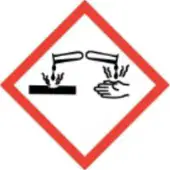
Identify the WHMIS symbol
Biohazard
Health Hazard
Oxidizing Material
Corrosive
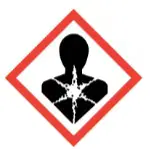
Identify the WHMIS symbol
Poisonous
Health Hazard
Harmful/Toxic
Corrosive
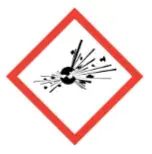
Identify the WHMIS symbol
Dangerously Reactive
Flammable
Oxidizing Material
Corrosive
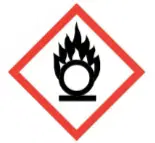
Identify the WHMIS symbol
Dangerously Reactive
Flammable
Oxidizing Material
Corrosive
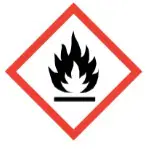
Identify the WHMIS symbol
Dangerously Reactive
Flammable
Oxidizing Material
Corrosive
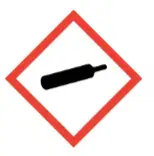
Identify the WHMIS symbol
Poisonous
Compressed Gas
Oxidizing Material
Environment
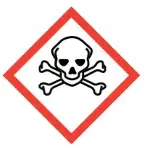
Identify the WHMIS symbol
Poisonous
Compressed Gas
Oxidizing Material
Biohazard
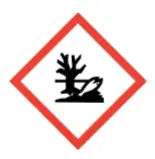
Identify the WHMIS symbol
Poisonous
Health Hazard
Harmful/Toxic
Environment
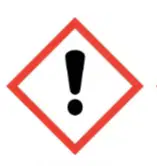
Identify the WHMIS symbol
Poisonous
Health Hazard
Harmful/Toxic
Environment

Identify the WHMIS symbol
Poisonous
Health Hazard
Harmful/Toxic
Biohazard
What are we measuring when we find the pH of a substance?
The amount of phosphorus and hydrogen atoms
The amount of phosphorus monohydride
The amount of hydrogen ions in a solution
The amount of hydroxide ions in a solution
Which of the following is NOT a part of the collision theory states need to happen for a chemical reaction to occur?
Molecules must collide
Molecules must collide with enough energy
There must be a catalyst present
Molecules must collide in the correct orientation
Water will have a ______ pH
High
Low
No
When balancing chemical reactions, we need to have:
The same number of each element present on both sides of the arrow
The same number of only some elements present, like oxygen and hydrogen
Different numbers of each element present on each side of the arrow
Different numbers of only some elements, like phosphorus and sulfur
In the reaction FeS + HCl → FeCl₂ + H₂S. What are the products?
FeS and HCl
HCl and H₂S
FeS and FeCl₂
FeCl₂ and H₂S
In the reaction FeS + HCl → FeCl₂ + H₂S. What are the reactants?
FeS and HCl
HCl and H₂S
FeS and FeCl₂
FeCl₂ and H₂S
Which of the following students is following proper lab safety?
Ajok started the lab before Ms. Bzdell said it was okay to do so
Nylah read through all the lab procedures, even though Ms. Bzdell went through them already
Ben put his whole hand on the hot plate to check the temperature
Marcus handed a pair of scissors to Mack by aggressively shoving the pointy end at Mack
The law of conservation of mass states:
The total mass of reactants equals the total mass of products in a chemical reaction.
Mass can be created during a chemical reaction.
The total mass of products is always greater than the mass of reactants.
Mass is destroyed in every chemical reaction.
Do we need to follow proper naming and formula conventions when we are writing word and skeleton equations?
NEVER!!!!
It depends on the question
Only if there are covalent compounds present
ALWAYS!!!!
Water (H₂O) is:
A base
An acid
Neutral
Explosive
Hydrochloric acid will have a _______ pH
b. Low
a. High
c. Neutral
d. Variable
When we are balancing equations, the only numbers we can change are:
Subscripts
Subscripts if they are in the middle of the formula
Subscripts if they are at the end of the formula
Coefficients
Molecules are __________ in motion
Always
Never
Sometimes
Always, but only if they are a liquid or gas
Increasing the concentration of hydrochloric acid in a reaction with magnesium will _________ the rate of reaction
Increase
Decrease
No change
Mixing iodine and a starch solution in the fridge will _________ the rate of reaction
Increase
Decrease
No change
Using a whole piece of chalk in a reaction with hydrochloric acid instead of finely powdered chalk will _________ the rate of reaction
Increase
Decrease
No change
Using a catalyst in the decomposition of hydrogen peroxide will _________ the rate of reaction
Increase
Decrease
No change
Stirring a mixture of sodium bicarbonate and acetic acid on a hot plate (increasing the temperature) will _________ the rate of reaction
Increase
Decrease
No change
Mixing two solutions in a beaker over a hot plate (increasing the temperature) will _________ the rate of reaction
Increase
Decrease
No change
Methane (CH4) burns in oxygen to produce carbon dioxide and water. What is the word equation for this reaction?
Methane + Oxygen → Carbon dioxide + Water
Methane + Water → Carbon dioxide + Oxygen
Methane + Carbon dioxide → Oxygen + Water
CH4 + O2 --> CO2 + H2O
Identify the type of reaction: C5H10 + O2 --> CO2 + H2O
Synthesis
Decomposition
Single Replacement
Double Replacement
Combustion
Identify the type of reaction: Ag + S8 --> Ag2S
Synthesis
Decomposition
Single Replacement
Double Replacement
Combustion
Identify the type of reaction: KClO3 --> KClO4 + KCl
Synthesis
Decomposition
Single Replacement
Double Replacement
Combustion
Identify the type of reaction: Zn + HCl --> ZnCl2 + H2
Synthesis
Decomposition
Single Replacement
Double Replacement
Combustion
Identify the type of reaction: Na + Cl2 --> NaCl
Synthesis
Decomposition
Single Replacement
Double Replacement
Combustion
Identify the type of reaction: NaCl --> Na + Cl2
Synthesis
Decomposition
Single Replacement
Double Replacement
Combustion
Identify the type of reaction: Al2(SO4)3 + Ca(OH)2 --> Al(OH)3 + CaSO4
Synthesis
Decomposition
Single Replacement
Double Replacement
Combustion
Identify the type of reaction: H2O2 --> H2O + O2
Synthesis
Decomposition
Single Replacement
Double Replacement
Combustion
Identify the type of reaction: Mg + HCl --> Mg(Cl)2 + H2
Synthesis
Decomposition
Single Replacement
Double Replacement
Combustion
Identify the type of reaction: CH4 + O2 --> CO2 + H2O
Synthesis
Decomposition
Single Replacement
Double Replacement
Combustion
Identify the type of reaction: AgNO3 + NaCl --> AgCl + NaNO3
Synthesis
Decomposition
Single Replacement
Double Replacement
Combustion
Identify the type of reaction: NaCl + AgNO3 → NaNO3 + AgCl
Synthesis
Decomposition
Single Replacement
Double Replacement
Combustion
Identify the type of reaction: H2 + O2 → H2O
Synthesis
Decomposition
Single Replacement
Double Replacement
Combustion

