
 Worksheets
Waves Unit Exam
Total questions: 43
Worksheet time: 22mins
Name
Class
Date
1.
As a wave travels from one place to another, it transfers__________.
a)
Matter Only
b)
Energy Only
c)
Both Energy and Matter
2.
What do mechanical waves require that an electromagnetic wave does not?
a)
Energy
b)
Light
c)
A medium
3.
In a ____________ wave, the particles of the medium move perpendicular to the direction the wave is traveling.
a)
Transverse
b)
Longitudinal
c)
Ocean
4.
In a _________ wave, the particles of the medium move parallel to the direction the wave is traveling.
a)
Transverse
b)
Longitudinal
c)
Surface
5.
In a ___________ wave the particles of the medium move in a circular motion.
a)
Longitudinal
b)
Surface
c)
Electromagnetic
6.

The diagram below represents which type of wave?
a)
Transverse
b)
Longitudinal
c)
Newtonian
7.

Which letter represents the wavelength?
a)
A
b)
B
c)
C
8.

Which letter represents Equilibrium or Rest point?
a)
A
b)
B
c)
C
d)
D
e)
E
9.

Which letter represents the Amplitude?
a)
A
b)
B
c)
C
d)
D
e)
E
10.

Which letter represents a Crest?
a)
A
b)
B
c)
C
d)
D
e)
E
11.

Which letter represents a Trough?
a)
A
b)
B
c)
C
d)
D
e)
E
12.

The diagram below represents what type of wave?
a)
Transverse
b)
Longitudinal
c)
Electromagnetic
13.
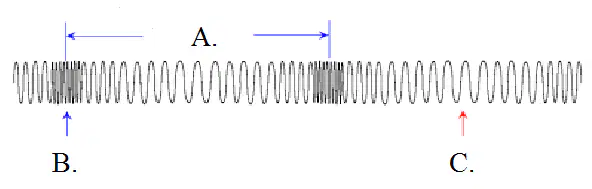
The diagram below, what does letter A represent
a)
Wavelength
b)
Frequency
c)
Crest
14.

The diagram below, what does letter B represent
a)
Crest
b)
Compression
c)
Rarefaction
15.
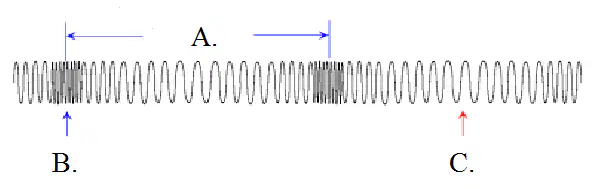
The diagram below, what does letter C represent
a)
Crest
b)
Compression
c)
Rarefaction
d)
Trough
16.
Which of the following is true about the relationship between wavelength and frequency?
a)
As wavelength increases, Frequency Decreases
b)
As Wavelength decreases, Frequency Decreases
c)
As Wavelength increases, Frequency Increases
17.
The number of waves that pass a certain point in a given time is the waves ________.
a)
Amplitude
b)
Frequency
c)
Speed
18.
The Unit Hertz (Hz) measures the ___________ of a wave
a)
Frequency
b)
Wavelength
c)
Speed
19.

Which waves in the diagram below has the highest frequency?
a)
A
b)
B
c)
C
d)
D
20.

Which waves in the diagram below has the longest wavelength?
a)
A
b)
B
c)
C
d)
D
21.

Which waves in the diagram below has the highest amplitude?
a)
A
b)
B
c)
C
d)
D
22.

What is the speed of a wave that has a frequency of 20,000 Hz and a wavelength of 0.25 meters?
a)
5,000 m/s
b)
10,000 m/s
c)
5,000 s
d)
10,000 s
23.

What is the frequency of a wave that has a speed of 340 m/s and a wavelength of 2 meters?
a)
170 m/s
b)
680 Hz
c)
170 Hz
d)
680 m/s
24.

What is the wavelength of a wave with a speed of 1,700 m/s and a frequency of 25 Hz?
a)
42,500 m
b)
68 cm
c)
42,500 cm
d)
68 m
25.
Which of the pictures below shows diffraction?
a)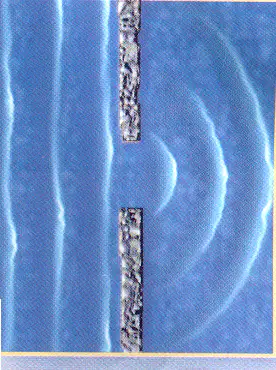
Option 1
b)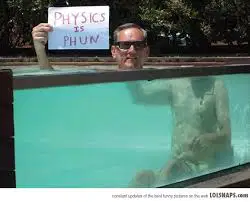
Option 2
26.
Which of the pictures below shows constructive interference?
a)
Option 1
b)
Option 2
27.
Which of the pictures below shows resonance?
a)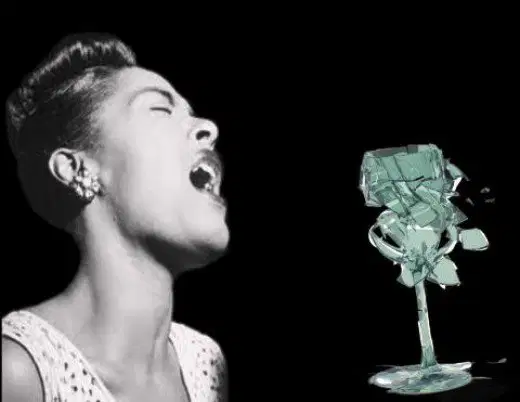
Option 1
b)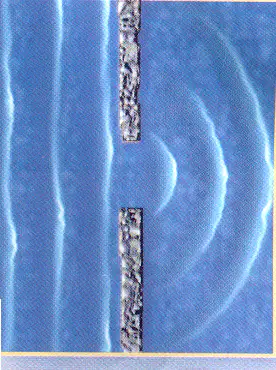
Option 2
28.
What type of wave interaction is an echo?
a)
Reflection
b)
Refraction
c)
Interference
d)
Diffraction
29.
Sound waves are classified as both __________ and _____________ waves.
a)
Mechanical, Electromagnetic
b)
Mechanical, Longitudinal
c)
Mechanical, Transverse
30.
The pitch of a sound is related the ____________ of the soundwave.
a)
Amplitude
b)
Frequency
c)
Speed
31.
The loudness or intensity of a sound is related to the sound waves ______________.
a)
Amplitude
b)
Energy
c)
Both Amplitude and Energy
32.
Which of the following is true about the doppler effect?
a)
It is observed when an object is in motion relative to the observer.
b)
As an object is moving toward the observer, the waves produced are pushed together and are observed as having a shorter wavelength and higher frequency or pitch.
c)
As an object is moving away from the observer, the waves produced spread out and are observes as having a longer wavelength and a lower frequency or pitch.
d)
All of these statements are true.
33.

Which type of EM wave has the longest wavelength?
a)
Gamma Rays
b)
Microwaves
c)
Visible Light
d)
Radio Waves
34.
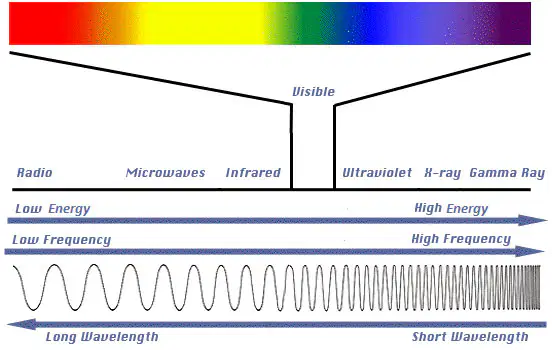
Which EM waves have the highest Energy?
a)
Ultraviolet Rays
b)
X-Rays
c)
Gamma Rays
d)
Infrared Rays
35.

As you look from left to right in the diagram, what happens to the energy of the EM Waves?
a)
Energy Increases
b)
Energy Decrease
c)
Energy Stays the Same
d)
It goes up and down
36.
What part of the EM Spectrum can be seen with the human eye?
a)
Visible Light
b)
Infrared Rays
c)
X-Rays
d)
Ultraviolet Rays.
37.

What color of visible light has the shortest wavelength and the highest frequency
a)
Red
b)
Green
c)
Blue
d)
Violet
38.
What type of EM wave is know to cause sunburns?
a)
Microwaves
b)
Radio waves
c)
Visible Light
d)
Ultraviolet Rays
39.
What types of EM waves can be used to cook food?
a)
Microwaves and Infrared Rays
b)
Infrared Rays and Ultraviolet Rays
c)
Visible Light and Gamma Rays
40.
Which of the following is true about EM waves?
a)
They do not require a medium
b)
They can travel through the vacuum of space
c)
They all travel at the speed of light
d)
All of these are true
41.
What EM waves are used to treat cancer.
a)
X-Rays
b)
Ultraviolet Rays
c)
Gamma Rays
d)
Visible Light
42.
A thermal imaging camera sees what type of EM waves?
a)
Infrared Rays
b)
Visible Light
c)
X-Rays
d)
Radio Waves
43.
What are the colors of the visible light spectrum when ranked from highest to lowest energy?
a)
Red, Orange, Yellow, Green, Blue, Indigo, Violet
b)
Violet, Indigo, Blue, Green, Yellow, Orange, Red
c)
Red, Violet, Yellow, Indigo, Orange, Blue, Green
d)
Green, Red, Yellow, Indigo, Orange, Blue, Violet
100 %

