wayground logo

Free Printable Worksheets

NEW

Font size

S
M
L
XL
Worksheets

Biology

Total questions: 50

Worksheet time: 3600secs

Name
Class
Date
1.

During translation, this type of ribonucleic acid is responsible for delivering amino acids to help make a protein.

a)

mRNA

b)

rRNA

c)

tRNA

d)

dRNA

2.

During transcription, this type of ribonucleic acid is responsible for copying the DNA and brining it out of the nucleus.

a)

tRNA

b)

mRNA

c)

rRNA

d)

dRNA

3.
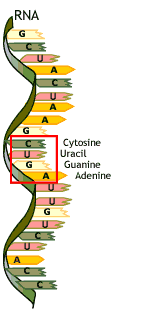
The base Uracil is only found in which molecule?
a)
DNA
b)
RNA
c)
Carbohydrates
4.

Proteins are not created directly from DNA, instead these are used to assemble proteins.

a)

RNA

b)

Ligase

c)

Spindle fibers

d)

Phospholipids

5.
Why is DNA important?
a)
it is very small and very complicated
b)
it's in everything
c)
it serves as the blueprint for traits of all living things
d)
because we eat it every day for energy
6.
One difference between DNA and RNA is that RNA....
a)
is double stranded 
b)
contains the base Thymine
c)
contains the base Uracil 
d)
contained the base Guanine
7.
What kind of sugar is found in DNA?
a)
Glucose
b)
Fructose
c)
Sucrose
d)
Deoxyribose
8.
What are the four bases found in DNA?
a)

A, T, G, C

b)

U, T G C

c)

G, P, T, C

d)

A, U, G, C

9.
What is the function of mRNA?
a)
provide energy for the duplication of cells
b)
stores food material for keeping cells alive
c)
preventing mutations
d)
carrying the gentic message
10.
RNA is
a)
double stranded
b)
single stranded
11.
DNA travels outside of the nucleus.
a)
true
b)
false
12.
The building block of nucleic acids are nucleotides.  Nucleotides are composed of a sugar, a phosphate group, and a _________________ base.
a)
oxygen
b)
hydrogen
c)
nitrogen
d)
carbon
13.
Nitrogenous bases are joined by which type of bond?
a)
polar bonds
b)
ionic bonds
c)
covalent bonds
d)
hydrogen bonds
14.
Guanine bonds with ______________.
a)
Adenine
b)
Guanine
c)
Cytosine
d)
Thymine
15.
the base that pairs with Thymine in DNA
a)
adenine
b)
guanine
c)
helicase
d)
nucleotide
16.

What would the other side of this strand of DNA be:  AATCATGGA

a)
AATCATGGA
b)
TTAGTACCT
c)

AGGTACTAA

d)
GGATAUCUA
17.
Which of the following statements is true?
a)
DNA is single-stranded
b)
RNA is single-stranded
c)
DNA contains uracil
d)
RNA contains deoxyribose
18.
I travel outside of the nucleus.
a)
DNA
b)
RNA
19.
DNA has a _____________ structure. 
a)
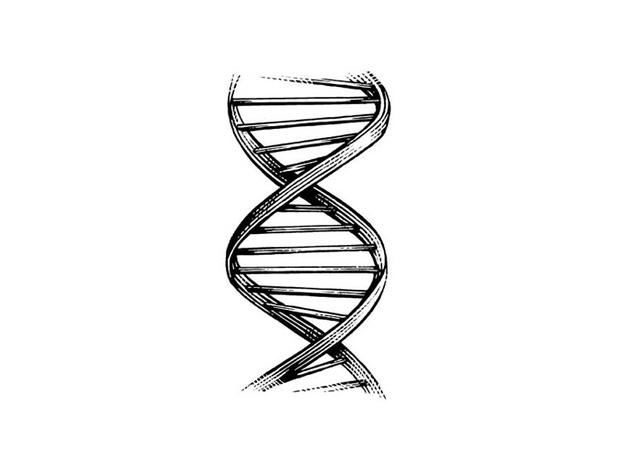
double helix
b)
single strand
c)
ring 
d)
chain
20.
In RNA, Uracil pairs with ______. 
a)
cytosine
b)
adenine
c)
guanine
d)
thymine
21.

Which is the first step?

a)

DNA Helicase unwinds original DNA strand

b)

RNA Primase lays down RNA primer for new nucleotide bases.

c)

DNA polymerase builds new strands by bring in new nucleotide bases.

d)

Ligase knits together fragments on lagging strand

22.

Enzymes responsible for breaking H bonds between strands

a)

Helicase

b)

Ligase

c)

Polymerase

d)

Topoisomerase

23.

Which enzyme works directly after helicase during DNA replication?

a)

DNA polymerase

b)

RNA primase

c)

Ligase

d)

Topoisomerase

24.

Helicase is crucial for which of the following processes?

a)

Transcription

b)

Translation

c)

DNA replication

d)

Protein folding

25.

In which direction does helicase move along the DNA strand?

a)

5' to 3'

b)

3' to 5'

c)

Both directions

d)

Randomly

26.
In a molecule of double-stranded DNA, the amount of Adenine present is always equal to the amount of
a)
cytosine
b)
guanine
c)
thymine
d)
uracil
27.
Which sequence of DNA bases would pair with this partial strand
ATG TGA CAG
a)
ATG TGA CAG
b)
TAC ACT GTC
c)
GTA AGT GAC
d)
CAT TCA CTG
28.

An example of a physical/structural adaptation is...

a)

a turtle hiding inside its shell

b)

The spikes on a porcupine fish

c)

a rabbit burrowing underground

d)

a viper biting when threatened

29.
An example of a behavioral adaptation is
a)
The long neck of a giraffe
b)
Penguins huddling together for warmth
c)
A camel's hump used to store water
d)
A polar bear's white fur used for camouflage
30.
An animal's color or pattern that helps it blend into its surroundings
a)
Environment 
b)
Mimicry
c)
Camouflage
31.

A monkey has a long tail to help it swing from branch to branch.

a)

Behavioral Adaptation

b)

Physical/Structural Adaptation

32.

A squid will squirt black ink (born with this instinct) at predators when frightened.

a)

Behavioral Adaptation

b)

Physical/Structural Adaptation

33.

A lion has pointed teeth to help it tear meat off of the bone.

a)

Behavioral Adaptation

b)

Physical/Structural Adaptation

34.

A black bear hibernates during the winter months.

a)

Behavioral Adaptation

b)

Physical/Structural Adaptation

35.

A penguin is white on its belly and black on its back so it harder to see underwater from above and below.

a)

Behavioral Adaptation

b)

Physical/Structural Adaptation

36.

An owl is mostly nocturnal meaning it hunts and is active at night.

a)

Behavioral Adaptation

b)

Physical/Structural Adaptation

37.

Parrots have special feet, with two toes on the front and back to help them cling to branches.

a)

Behavioral Adaptation

b)

Physical/Structural Adaptation

38.
The slight differences in stripe patterns in a zebra population is known as 
a)
Adaptation
b)
Variation
39.
When an animal looks like another animal it is called ______________.
a)
camouflage
b)
mimicry
c)
warning coloration
d)
protective resemblance
40.
A Viceroy butterfly looking like a bright colored poisonous Monarch butterfly is an example of __________.
a)
camouflage
b)
mimicry
c)
warning coloration
d)
protective resemblance
41.
The colors & patterns on a turtles shell help it blend in with the forest floor.  This is:
a)
hibernation.
b)
behavior.
c)
migration.
d)
camouflage.
42.
The praying mantis looks very much like a blade of grass. What is it called when animals look like other animals or plants?
a)
camouflage
b)
mimicry
c)
locomotion
d)
hibernation
43.
Instinct or Learned Behavior?
Dogs pant when they are hot. 
a)
Instinct
b)
Learned
44.
When a cheetah teaches it's cub to hunt, this is called a  __________. 
a)
learned behavior
b)
predator
c)
physical characteristic
d)
migration
45.
What are adaptations?
a)
traits that help an organism to survive and reproduce
b)
traits that help an organism hide
c)
traits that help an organism to seek protection
d)
traits that help an organism to see.
46.

The ability of an organism to survive and reproduce.

a)

fitness

b)

energy

c)

agility

d)

instinct

47.

Variations of traits within the same species, are caused by...

a)

mutations in genes

b)

dominant alleles

c)

recessive alleles

d)

random chance

48.

How do you "win" at natural selection?

a)

survive

b)

go extinct

c)

survive & reproduce

49.
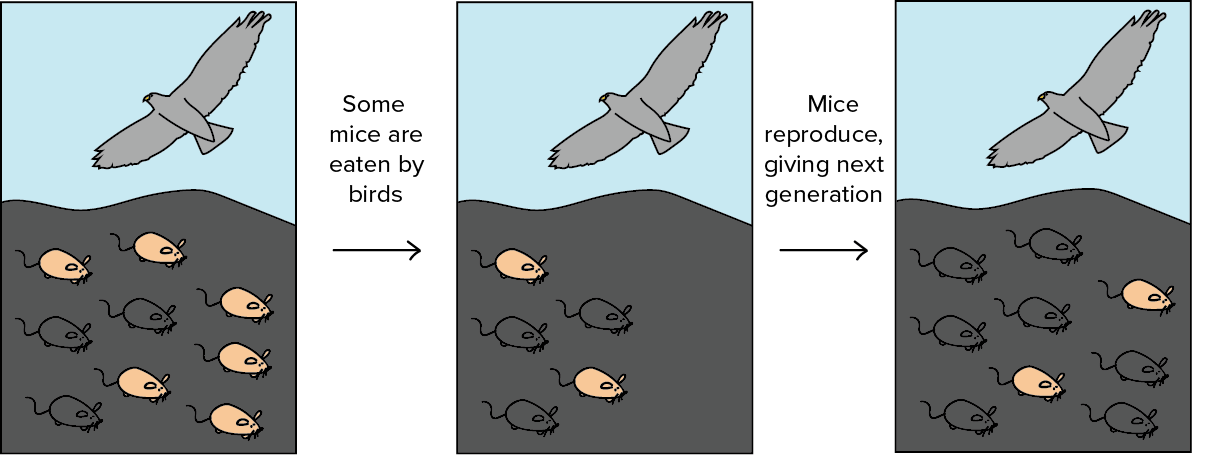
Why is the mouse population changing over time?
a)
The light mice can reproduce more successfully than the dark mice
b)
The hawks eat more dark mice than light mice because the dark mice taste better
c)
The hawks eat more light mice than dark mice because they can see the light mice more easily
d)
The hawks eat more dark mice than light mice because they can see the dark mice more easily
50.
Which of the following explains adaptation.
a)
An individual organism changes to meet its needs in the environment. These changes pass down to their offspring.
b)
The species as a whole changes their characteristics.
c)
Beneficial traits allow organism to survive and pass on those traits
d)
New characteristics arise in a species as needed.  If these traits are helpful, they are passed down.