
Font size
 Worksheets
Powers of Executive Branch
Total questions: 61
Worksheet time: 33mins
What did the framers of the U.S. Constitution create according to the slide?
A) A weak central government without an executive leader
B) A strong central government with a ceremonial leader
C) A strong central government with an executive leader to carry out acts of Congress
D) A decentralized government system with multiple executive leaders
Which of the following is NOT part of the Executive Branch of the American government?
The President
The Vice President
The Executive Cabinet
The Supreme Court
How many branches are there in the American government?
Two
Three
Four
Five
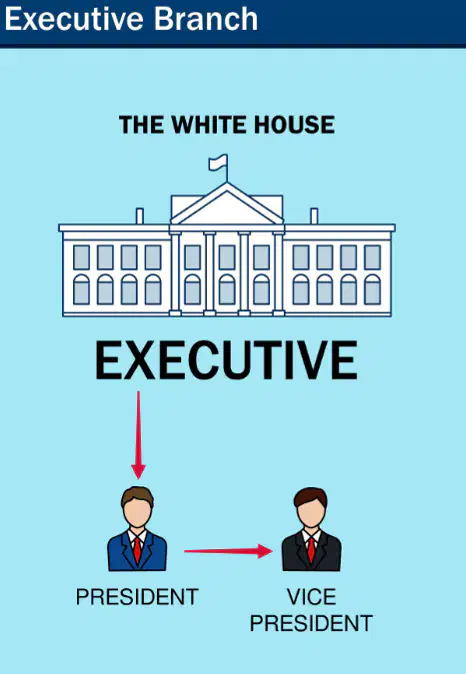
Where does the Executive Branch of the American government operate from?
The Capitol Building
The Supreme Court
The White House
The Pentagon
How many main roles does the President have?
Five
Six
Seven
Eight
Which of the following is NOT a role of the President?
Chief Executive
Commander in Chief
Chief Diplomat
Chief Justice
What is one of the roles of the President related to the legislative branch of the government?
Chief Legislator or Legislative Leader
Chief of Staff
Chief Justice
Chief of Security
As the President, which role involves being the leader of their political party?
Chief Executive
Chief of Party or Party Leader
Chief Diplomat
Chief Economist
What is the role of the President as the head of the Executive Branch?
Chief Justice
Chief Executive
Chief of Staff
Chief Diplomat
As Commander in Chief, whom does the President lead?
The Senate
The Armed Forces
The House of Representatives
The Supreme Court
What is one of the President's roles in foreign relations?
Chief Justice
Chief Legislator
Chief Diplomat
Chief Economist
Which title is given to the President in their role of working with Congress to pass laws?
Chief of the Party
Chief Citizen
Chief Legislator
Chief Executive
What is the President's role in the economic planning for the U.S.?
Chief Justice
Chief Economist
Chief Diplomat
Chief Legislator
What role does the President play in their political party?
Chief Citizen
Chief of Staff
Chief Justice
Chief of the Party
In what capacity does the President serve as the Chief Citizen?
Representing the Senate
Representing the American public
Representing the Executive Branch
Representing the Supreme Court
According to the U.S. Constitution, which of the following is NOT a power given to the President?
Veto laws passed by Congress
Execute or enforce laws
Command the military
Appoint state governors
Which power allows the President to interact with leaders of other countries?
Veto laws
Execute laws
Command the military
Engage with foreign leaders
What power does the U.S. Constitution grant the President in relation to the military?
Provide military funding
Command the military
Enlist soldiers
Declare war
What is Executive Privilege?
The right of the President to declare war without Congress approval
The right to withhold information discussed between the President and their advisors from Congress or the courts
The ability of the President to veto legislation
The President's power to appoint Supreme Court Justices without Senate confirmation
Which President tried to use Executive Privilege to withhold information during the Watergate Scandal?
John F. Kennedy
Richard Nixon
Ronald Reagan
George H. W. Bush
What did the Supreme Court decide regarding Nixon's claim to Executive Privilege during the Watergate Scandal?
They upheld his claim and allowed him to withhold the tapes
They decided that Executive Privilege was unconstitutional
They ruled that Executive Privilege did not apply and ordered him to turn over recordings
They did not make a decision on the matter
What did the 22nd Amendment to the U.S. Constitution limit?
The number of terms a Senator can serve
The number of terms a President can serve
The number of Supreme Court Justices
The age requirement for presidential candidates
In what year was the 22nd Amendment to the U.S. Constitution passed?
1941
1951
1961
1971
Before the 22nd Amendment, how many terms was Franklin D. Roosevelt elected to as President?
Two terms
Three terms
Four terms
Five terms
What did the 25th Amendment to the U.S. Constitution establish?
The procedures for electing the President
The line of succession of the Presidency and Vice Presidency in 1965
The term limits for the President
The powers of the Executive Branch
According to the 25th Amendment, who becomes President if the current President resigns, dies, or is unable to serve?
The Secretary of State
The Speaker of the House
The Vice President
The President Pro Tempore of the Senate
Which act established the Speaker of the House and the President Pro Tempore of the Senate as the next in line after the Vice President?
The Presidential Succession Act of 1947
The 25th Amendment
The Presidential Succession Act of 1951
The Executive Branch Succession Act
What does the 25th Amendment state about the removal of the President from office?
The President can be removed by the Supreme Court
The President can be removed by a public vote
The President can be removed if the Vice President and a majority of the Executive Cabinet state the President is unable to do their job
The President can be removed by the Speaker of the House alone
Who is considered the Head of State or the Chief of State according to the learning material?
The Vice President
The Secretary of State
The President
The Chief Justice
What is one of the responsibilities of the President as the Head of State?
Enacting legislation
Commanding the military
Performing ceremonial duties
Prosecuting federal crimes
As the Head of State, what role does the President play in relation to foreign dignitaries?
Negotiating trade agreements
Representing the nation and receiving foreign dignitaries
Directing foreign policy
Serving as the ambassador to the United Nations
As the Chief Executive, who does the President lead?
The Legislative Branch
The Executive Branch
The Judicial Branch
The State Government
What is one of the responsibilities of the Executive Branch?
Creating laws
Enforcing laws
Interpreting laws
Amending laws
Who does the President appoint as part of their duties as Chief Executive?
Members of Congress
State Governors
Executive Cabinet members, diplomats, federal agencies, and Supreme Court Justices
Mayors of cities
What does the Ordinance Power allow the President to do?
Veto bills from Congress
Issue executive orders as part of the U.S. Constitution
Declare war without Congress approval
Appoint members of the Supreme Court
What must happen for Executive Orders to become law?
They must be ratified by the Supreme Court
They must be approved by a national referendum
They must be signed by the President and do not require approval from Congress
They must be passed by both houses of Congress
What is a commutation?
A full pardon for a crime
A reduction of the length of a sentence or fine
A declaration of innocence
A temporary suspension of a sentence
What is the difference between amnesty and clemency?
Clemency is a blanket pardon for a group, while amnesty is leniency for an individual
Amnesty is a blanket pardon for a group, while clemency is leniency for an individual
Clemency is a reduction of a sentence, while amnesty is a full pardon
Amnesty is a temporary suspension of punishment, while clemency is a permanent pardon
Which of the following can the President issue to forgive a person for their crimes?
A reprieve or pardon
An executive order
A legislative bill
A judicial ruling
What is Veto Power?
The ability for the President to sign a law passed by Congress
The ability for the President to reject a law passed by Congress
The ability for Congress to pass a law without the President's approval
The ability for the Supreme Court to reject a law passed by Congress
What can Congress do to override a Presidential Veto?
Have a simple majority vote to pass the law
Have 3/4 of Congress vote to pass the law
Have 2/3 of Congress vote to pass the law
Have unanimous consent from Congress to pass the law
What is a Line-Item Veto?
When the President rejects the entire law passed by Congress
When the President approves all sections of a law without any changes
When the President removes sections of a law, vetoing just that part
When Congress removes sections of a law before sending it to the President
When was the Line-Item Veto declared unconstitutional by the Supreme Court?
1988
1992
1998
2002
Who is the Commander in Chief of the Armed Forces?
The Secretary of Defense
The Vice President
The President
The Speaker of the House
What can the President do with federal troops within the United States?
Declare war
Use them to keep order or protect the nation from foreign threats
Disband them
Transfer them to state control
Who has the power to declare war?
The President
The Supreme Court
The Vice President
Congress
What is required of the President by the War Powers Act?
Who is considered the Chief Diplomat according to the provided material?
The Vice President
The Secretary of State
The President
The Speaker of the House
What fraction of the Senate must approve a treaty negotiated and signed by the President?
1/2
2/3
3/4
1/3
What are Executive Agreements?
Agreements that require the approval of Congress
Formal agreements between three or more sovereign nations
A pact made between the President and another head of state that does not require the approval of Congress
Treaties that must be approved by the United Nations
Do Treaties have the same force of law as Executive Agreements?
No, Treaties are less significant than Executive Agreements
Yes, but Treaties require the approval of Congress
Yes, and both do not require any approval
No, only Treaties have the force of law
What role does the President serve as that allows them to have significant influence over the laws passed by Congress?
Chief Justice
Chief Executive
Chief Legislator
Chief Diplomat
What can the President do as Chief Legislator?
Appoint Supreme Court Justices
Command the armed forces
Propose new legislation and veto laws
Negotiate treaties with other countries
Who is referred to as the Chief Economist or the Economic Planner according to the provided learning material?
The Secretary of the Treasury
The Federal Reserve Chairman
The President
The Chief Justice
What has the Presidency's approach to the economy become compared to when it began?
More laissez-faire
More regulatory
More socialist
More protectionist
Which of the following is a role of the President in the economy?
Appoints Supreme Court Justices
Vetoes legislation
Appoints Federal Reserve Members
Signs trade agreements
What is one of the responsibilities of the President as the Chief Economist?
Issues a monthly economic report
Submits the federal budget to Congress
Approves the federal budget
Conducts monetary policy
What does the President issue annually in their role in the economy?
An annual financial statement
An annual economic report
An annual budget proposal
An annual trade summary
What role does the President serve in their political party?
Chief Financial Officer
Chief of the Party
Party Secretary
Party Advisor
What can Presidents do within their political parties?
They can only vote for party decisions
They can appoint party members to their cabinet
They have a lot of political influence and may endorse candidates
They are not allowed to participate in party activities
What is political patronage?
A system where the President has no influence on appointments
A fundraising method for political parties
The practice of appointing people from their political party into key government positions
A strategy for winning elections without party support

