
 Worksheets
Environmental Science EOC TEST review
Total questions: 70
Worksheet time: 2hrs 31mins
The need for more cropland has led to the ______________________ of large wooded areas.
Deforestation
Conservation
Rotation farming
Tilling
Finite
Without limits
Having limits
Sea surface temperatures have been
Increasing
Decreasing
Staying the same
What nutrients are responsible for eutrophication in water? Select all that apply.
Carbon
Nitrogen
Oxygen
Phosphorous
Most energy in the United States comes from...
Renewable sources
Nonrenewable sources
This electricity source has very few CO2 emissions.
Natural gas
Coal
Petroleum
Nuclear
Excess nitrogen and phosphorous in waterways can cause
Eutrophication
CAFOs
Asthma
I know we've talked about this...
1.1 All of the living and nonliving things in an area that interact with each other are called a/an ______.
community
habitat
population
ecosystem

1.1 In the mountain river ecosystem pictured above, what would be an abiotic factor?
trees
swans
grasses
water
1.2-1.3 Which biome, because of its climate, has the largest number of species of plants and animals?
tundra
desert
tropical rainforest
pine forest
2.1-2.2 Process in which individuals that have favorable variations and are better adapted to their environment, survive and reproduce more successfully than those less well adapted (survival of the fittest)
Evolution
Natural Selection
Artificial Selection
Resistance
2.3 Globally, the leading cause of biodiversity loss is
invasive species
poaching and overharvesting
pollution
habitat change and loss
2.4-2.5 Succession that occurs in an area with NO SOIL
ecological succession
primary succession
secondary succession
pioneer speciles

2.6-2.8 Biotic or abiotic things that control the size of a population
Limiting factor
density- dependent factor
density- independent factot
tolerance
3.3-3.4 An organism that uses an outside source of energy like the sun to create energy-rich food molecules.
Consumer
Producer
Decomposer
Parasite
3.3-3.4 An organism that obtains energy by eating other organisms.
Consumer
Producer
Decomposer
Detriov
3.3-3.4 The efficiency of energy transfer from a lower trophic level to the next highest level is roughly
1%
10%
100%
1000%
3.3-3.4 What is the original source of almost all energy in most ecosystems?
carbohydrates
sunlight
water
carbon
5.2 Which type of mining is associated with disturbing more land?
Surface mining
Subsurface mining
Ocean mining
Placer mining

5.5 Another word for farming
agriculture
technology
specialization
shrine
6.3 An underground layer of rock or sediment that holds water
watershed
groundwater
permeability
aquifer
6.4 __________________ pollution is harder to control, because it can't be traced back to a single source
point-source
nonpoint-source
7.1 Which of the following is an example of a nonrenewable natural resource?
wind energy
sunlight
natural gas
geothermal energy
7.3-7.4 Which human activity contributes the most carbon dioxide to the atmosphere?
fishing
breathing
burning fossil fuels
farming
8.2 During which period in human history were most of our modern environmental problems introduced?
Hunter-gatherer
Agricultural
Industrial Revolution
Biotechnology Era
8.6-8.8 Sprawl increases carbon dioxide emissions by
generating more factories.
increasing the need to drive.
resulting in more tree growth.
expanding the use of public transportation.
The birds, insects, plants, fungi, and other organisms that reside in a nearby wetland.
Population
Organism
Molecules
Community
A(n) _________ species is one that moves into an ecosystem as a result of human intervention.
endemic
endangered
invasive
Which of the following is an example of secondary succession?
growth of plants after a forest is destroyed by fire
breaking down of bare rock by fungi and mosses
appearance of weeds in cracks in a concrete surface
In an African savanna, there are communities of giraffe, zebra, lion and acacia trees. What factors would you need to include to accurately describe the savanna's ecosystem?
remove the zebra and lion
include the temperature, intensity of light and soil pH
include ants and grasses
remove the acacia trees

The photosynthetic algae shown in Figure 2.4 are classified as
decomposers
consumers
parasites
producers
The term "biodiversity" refers to
The number and variety of species that live in an area.
The number and variety of species living on Earth.
The number and variety of species that are considered renewable.

The diagram shows a model that Peter made of the carbon cycle. CO₂ cycle. Which mistake did Peter make in the model?
Plants do not lose carbon through respiration.
The burning of fossil fuel does not release carbon.
Organisms that decay do not deposit carbon in the soil.
Animals do not breathe carbon dioxide from the atmosphere.
In developing countries, you are most likely to find biomass used
for heating and cooking.
as a source of hydropower.
for manufacturing.
to generate electricity.
Acid precipitation can be traced back to
thermal inversions.
the use of electrostatic precipitators.
the burning of fossil fuels.
the release of particulate matter into the atmosphere.

According to the US Energy Consumption graph. Approximately, what percentage of the energy used in the US comes from non-renewable resources?
8%
17%
78%
90%

Between 1988 and 1995, the North America cod (fish) population collapsed due of overharvesting. What might the government have done to help the population begin to grow in 1996?
Set limits on cod fishing.
Allow unlimited fishing of cod.
Increased cod fishing in some areas.
Ordered people to stop eating cod.
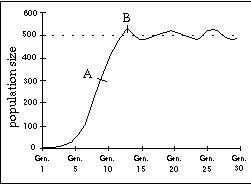
What is the carrying capacity of the graph?
around 500
more than 800
less than 300
around 700
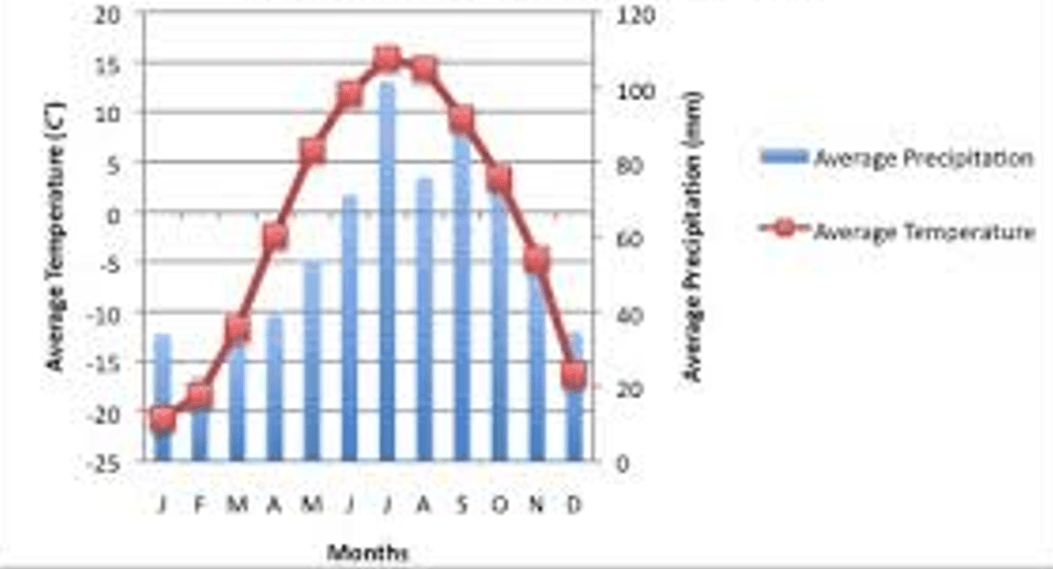

Based on the graph, what happens to the amount of kelp as sea otter numbers decrease?
As the sea otter population decreases, kelp increases.
As the sea otter population decreases, kelp decreases.
As the sea otter population decreases, kelp doesn't change.
Which of the following is NOT an example of the “Tragedy of the Commons”?
How excess greenhouse gas emissions lead to climate change
When someone doesn't clean up after themselves in a shared space
The overuse of antibiotics which can lead to antibiotic-resistant bacteria
When someone only takes what they need of a shared resource
All of the following are ways to reduce the urban heat island effect, EXCEPT….
Planting trees and creating more green spaces in cities
Painting reflective surfaces on rooftops
Promoting walking and cycling instead of driving
Increasing the amount of impervious surfaces such as asphalt
Which of the following best describes eutrophication?
The process by which excess nutrients in water bodies lead to an increase in plant and algae growth, often resulting in oxygen depletion and harm to aquatic life.
The natural purification process of water bodies through the breakdown of organic matter by microorganisms.
The introduction of invasive species into an ecosystem, disrupting the natural balance and biodiversity.
The process of soil erosion due to human activities such as deforestation and improper agricultural practices.
If something is “unsustainable”, this means…..
It’s time for everyone to get as many resources as possible and hoard them.
Resources are used or depleted faster than they can be replenished.
The resources cannot be used anymore.
Resources can continue to be used for many generations.
Which sentence best describes the relationships and differences between the greenhouse effect, global warming, and climate change?
The strengthening of the greenhouse effect leads to global warming which causes climate change.
The greenhouse effect is a bad thing that is made even worse through global warming which leads to climate change.
Climate change causes global warming which strengthens the greenhouse effect.
They’re all basically the same thing.
In science, claims cannot be made without....
Having a science degree
Having had taken at least 3 science classes
Evidence
Belief
Which of the following is NOT an effect of global warming?
Earth’s rotation will slow down and eventually stop
Polar ice caps will melt
Some areas will experience serious droughts
Coastal regions will be covered with rising sea levels
What do you call a “win-win” relationship where two organisms of different species benefit each other?
Commensalism
Mutualism
Parasitism
Predation
What word describes the variety of life found in nature?
Ecosystem Services
Biodiversity
Emergent Properties
Systems
What is a hypothesis?
a statement of a prediction that can be tested
a belief that some but not all scientists share
a theory that is widely accepted by the majority of scientists
Resource depletion is a major and crucial concern of the twenty-first century. Using alternative energy sources and recycling our resources is our best solution.
True
False
An interdisciplinary science that studies the ENVIRONMENT and how HUMANS interact with it is known as..
environmental science
biology
chemistry
What is the definition of an ecosystem?
classification for a broad type of habitat, such as a savannah or tropical rainforest
group of interacting communities in a defined place and the nonliving factors that affect them
all the animal and plant species within a geographical area

In which type of symbiosis does one species benefit at the expense of another?
parasitism
mutualism
commensalism
Which of the following scenarios is true to the scientific method and scientific ethics?
Scientist A reports only those findings that support his hypothesis.
Scientist B changes his data so that they support his hypothesis.
Scientist C mentions experiments that did support as well as those that did not support his hypothesis.

Mutualism, commensalism, and parasitism are all types of symbiotic relationships. Which of the following is the best definition for symbiosis?
relationship that harms one species and helps the other
relationship that helps one species and neither helps nor harms the other
relationship that helps both species
close association between two or more species in an ecosystem.
Which cycle is not a major biogeochemical cycle?
carbon cycle
oxygen cycle
nitrogen cycle
atmosphere cycle

The image above is a good representation of a population reaching its carrying capacity. Which of the following limiting factors is most likely at play here?
lack of space
lack of available mates
lack of food


Cannot easily be traced to the source of the pollution.
Point Source Pollution
Non-point source pollution
Which of the following is NOT a residential use of water>
cooking and drinking
washing dishes and clothes
washing cars and watering the lawn
watering the crops
showers and toilets
What is the best way to CONSERVE water use in an agricultural setting...
low flow toilets
reuse cooling water
drip irrigation
high power overhead irrigation
Which of the following is a disadvantage of dams and reservoirs?
man made lakes used for drinking water, recreation and industry
hydroelectric power
existing ecosystems changed, displacing species and humans
flood control
The largest single use of water for industrial purposes is for
canning and food processing.
cooling.
power production.
washing produce in food processing industries.
In general, water use worldwide is dominated by
Agricultural use
Domestic needs
Industrial activities
All of these are sectors that use water about equally

