
 Worksheets
24-25 Spring Exam Review
Total questions: 91
Worksheet time: 46mins
Name
Class
Date
1.
A/an ____________ is a negatively charged particle involved in the flow of electricity.
a)
Proton
b)
Neutron
c)
Electron
2.
A/an ____________ is a positively charged particle involved in attracting the flow of electricity.
a)
Proton
b)
Neutron
c)
Electron
3.
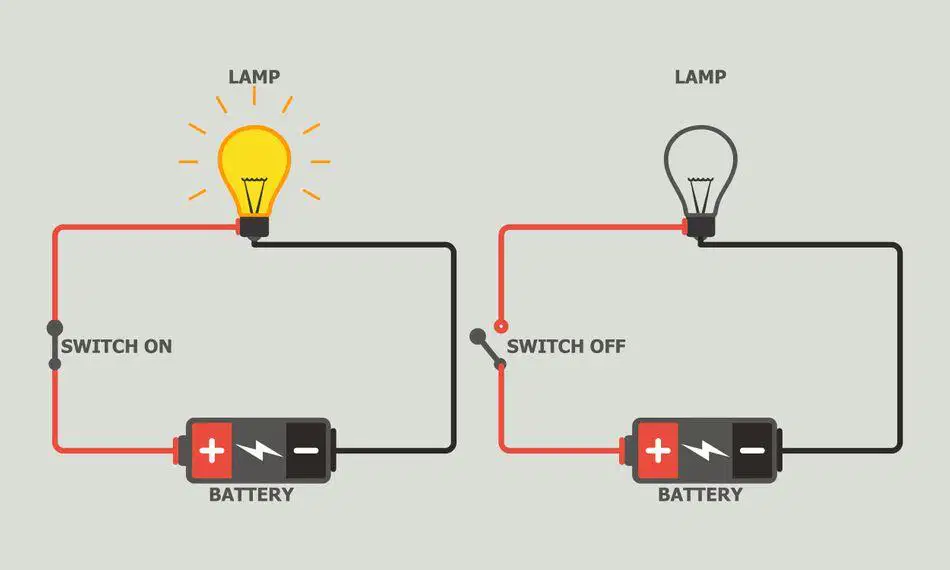
The circuit shown below on the LEFT is a(an)__________ circuit.
a)
Open
b)
Closed
4.
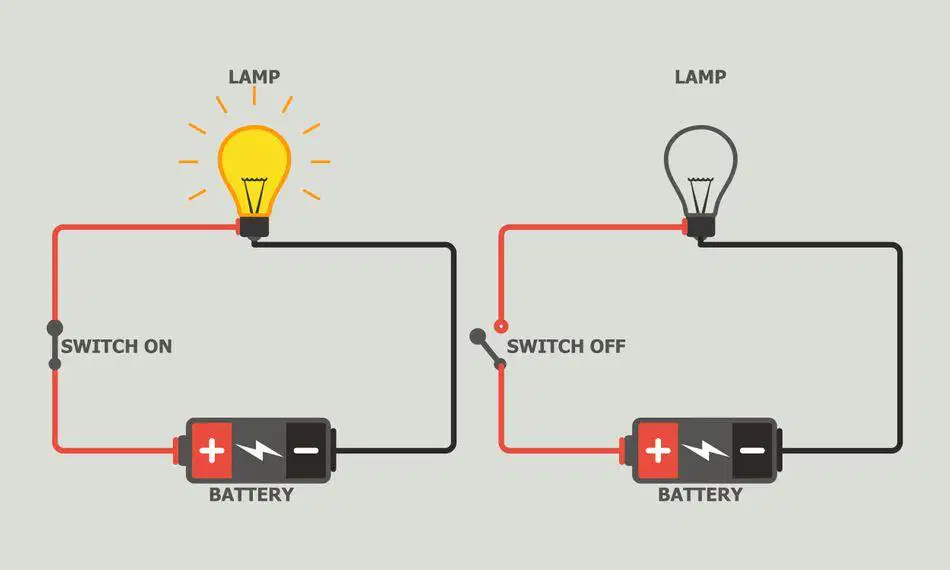
The circuit shown below on the RIGHT is a(an)__________ circuit.
a)
Open
b)
Closed
5.

When an object with loosely held electrons transfers electrons to another object with more tightly held electrons that it touches, this is transfer by...
a)
contact
b)
electric field
c)
induction
d)
conduction
6.

Calculate the current flowing through the lightbulb. (round to 1 decimal place)
a)
4.2 Amps
b)
600 Amps
c)
.2 Amps
7.
The strength of an object's electric force between two charged objects depends on which 2 variables?
a)
the distance between them and mass of each
b)
the thickness and weight
c)
the total amount of charge on both objects and the distance between them
8.

Calculate the Voltage across the lightbulb.
a)
500 V
b)
5 V
c)
50 V
9.
An object is _____________ when opposite charges (protons and electrons) in the object are gathered on opposite ends.
a)
grounded
b)
neutral
c)
polarized
d)
negative
10.
What are 3 ways that electrons can be transferred from one object to another?
a)
Contact, Insulators, Conductors
b)
Induction, Conduction, Reduction
c)
Induction, Conduction, Contact
d)
Resistance, Conduction, Contact
11.
When objects of unequal charge are connected by a conductor, electrons transfer by...
a)
touch
b)
induction
c)
conduction
d)
resistance
12.
Copper is an example of a good...
a)
voltage
b)
resistance
c)
conductor
d)
insulator
13.
A mathematical equation that describes the relationship between Voltage, Current, and Resistance
a)
Law of Conservation of Mass
b)
Law of Gravity
c)
Ohm's Law
d)
Law of Motion
14.
Negatively charging a balloon and having it repel electrons in a metal soda can by holding it close to the can is an example of
a)
Contact
b)
Conduction
c)
Induction
15.
Which choice describes the behavior of an electric charge?
a)
Like charges attract. Opposite charges repel.
b)
Like charges repel. Opposite charges attract.
c)
Like charges attract. Opposite charges attract.
d)
Like charges repel. Opposite charges repel.
16.
Lightning is an example of _______________.
a)
static electicity
b)
watts
c)
current electricity
d)
voltage
17.
This is used to describe the force or pushing of electrons through a circuit
a)
Volts
b)
Amps
c)
Watts
d)
Current
18.
This is the unit of measurement for the amount of electrical current in a circuit.
a)
Volts
b)
Amps
c)
Watts
d)
Current
19.

Calculate the resistance of the lightbulb below.
a)
1.8 Ohms
b)
.05 Ohms
c)
20 Ohms
d)
5.7 Ohms
20.
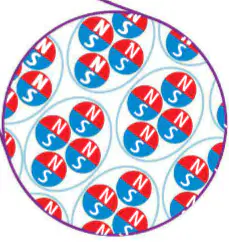
The image below is an example of a _______________ because ...
a)
permanent magnet; the magnetic domains all line up.
b)
non-magnetic material; the individual atoms do not line up.
c)
temporary magnet; the atoms in the domain and the domains are all in align
d)
temporary magnet; the atoms in the domain are aligned, but the domains are not.
21.
If the south pole of a magnet is brought near the south pole of another magnet, what would happen?
a)
They would repel each other.
b)
They would be attracted to each other.
c)
There wouldn't be any magnetic force.
d)
They would cancel each other out.
22.
What particles are responsible for the formation of magnetic poles?
a)
Protons
b)
Neutrons
c)
Electrons
23.
A bar magnet is placed on a table, and a sheet of blank paper is placed over a magnet. If you sprinkled iron filings on the paper, what would it show you?
a)
Strength of the magnetic field
b)
Shape of the magnetic field
c)
Number of electrons in motion in the current
d)
Strength of the current forming the magnet
24.
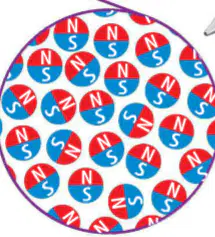
The image below is an example of a _______________ because ...
a)
permanent magnet; the magnetic domains all lign up.
b)
non-magnetic material; the individual atoms do not line up.
c)
temporary magnet; the atoms in the domain and the domains are all in align
d)
temporary magnet; the atoms in the domain are aligned, but the domains are not.
25.
Earth's magnetic field is caused by.. .
a)
a molten outer core of iron and aluminum
b)
metallic elements on the earth's surface
c)
a molten inner core of iron and nickel
d)
a molten outer core of iron and nickel
26.
Which physicist discovered that a magnetic field is formed around a current carrying wire/conductor?
a)
Thomas Edison
b)
Nikola Tesla
c)
Albert Einstein
d)
Hans Oersted
27.
As you bring a compass near a current carrying wire the needle will...
a)
Not be altered because it is only altered by non live wires
b)
Move due to a force being applied on the needle from the wire's magnetic field
c)
Move due to a force of gravity being applied
d)
Not move because the compass must touch the wire to be affected
28.
The area of a magnet that is strongest is...
a)
at the poles.
b)
in the center
c)
all areas are equally strong
29.
If you were to pick up magnetic material on a magnet, on which part of the magnet would you be able to get the most material collected...AND...why?
a)
the center of the magnet; because the middle is the strongest
b)
it would be equally distributed; because the entire magnet is made of the same material
c)
at both poles; because the magnetic force is stronger at the poles
d)
the northern pole of the magnet; because the northern end has the greatest magnetic force
30.
An electromagnet is a type of a/an _______________________.
a)
electrical circuit
b)
temporary magnet
c)
horseshoe magnet
d)
cobalt magnet
31.
Which of the following is NOT a Ferromagnetic Element?
a)
Iron
b)
Zinc
c)
Nickel
d)
Cobalt
32.
When current is reversed in a wire, it causes the magnetic field to...
a)
stop
b)
change direction
c)
speed up
d)
become stronger
33.
If the south pole of a magnet is brought near the north pole of another magnet, what would happen?
a)
They would repel each other.
b)
They would be attracted to each other.
c)
There wouldn't be any magnetic force.
d)
They would cancel each other out.
34.
When you _____________ the current flowing through a wire, you _____________ the magnetic field.
a)
increase; increase
b)
increase; decrease
c)
decrease; increase
d)
none of the above
35.
How can the strength of an electromagnet be increased?
a)
A. increase the electric current in the coil
b)
B. increase the number of loops in the coil around the material
c)
C. use a material with more aluminum
d)
D. both A and B
e)
E. both B and C
36.

According to the graph below, the electromagnet showed the greatest increase of strength when the number of coils changed from _________ to _________
a)
10 to 15
b)
15 to 20
c)
20 to 25
d)
25 to 30
37.
A step-up transformer has __________ number of loops on the primary coil and _________ number of loops on the secondary coil.
a)
greater ; fewer
b)
fewer; greater
c)
greater; same
d)
fewer; same
38.
A step-down transformer ___________ the output voltage and step-up transformer __________ the output voltage.
a)
increases ; decreases
b)
decreases; increases
c)
decreases; decreases
d)
increases; increases
39.
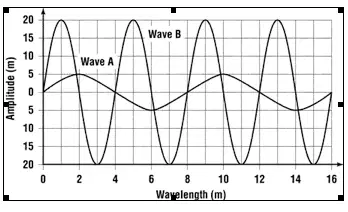
What is the amplitude of Wave B?
a)
8 m
b)
6 m
c)
5 m
d)
20 m
40.
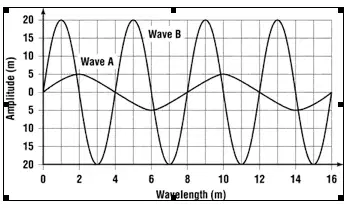
What is the wavelength of Wave A?
a)
20 m
b)
5 m
c)
8 m
d)
4 m
41.
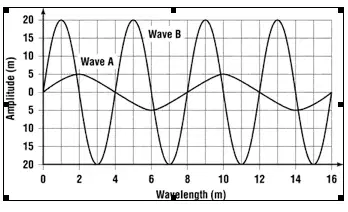
Which wave has the greater frequency?
a)
Wave A
b)
Wave B
42.
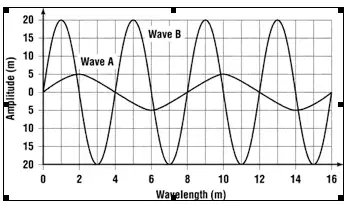
Which wave has the lowest amount of energy?
a)
Wave A
b)
wave B
43.
As the frequency of a wave increases, the wavelength _______________.
a)
increases
b)
decreases
c)
stays the same
44.
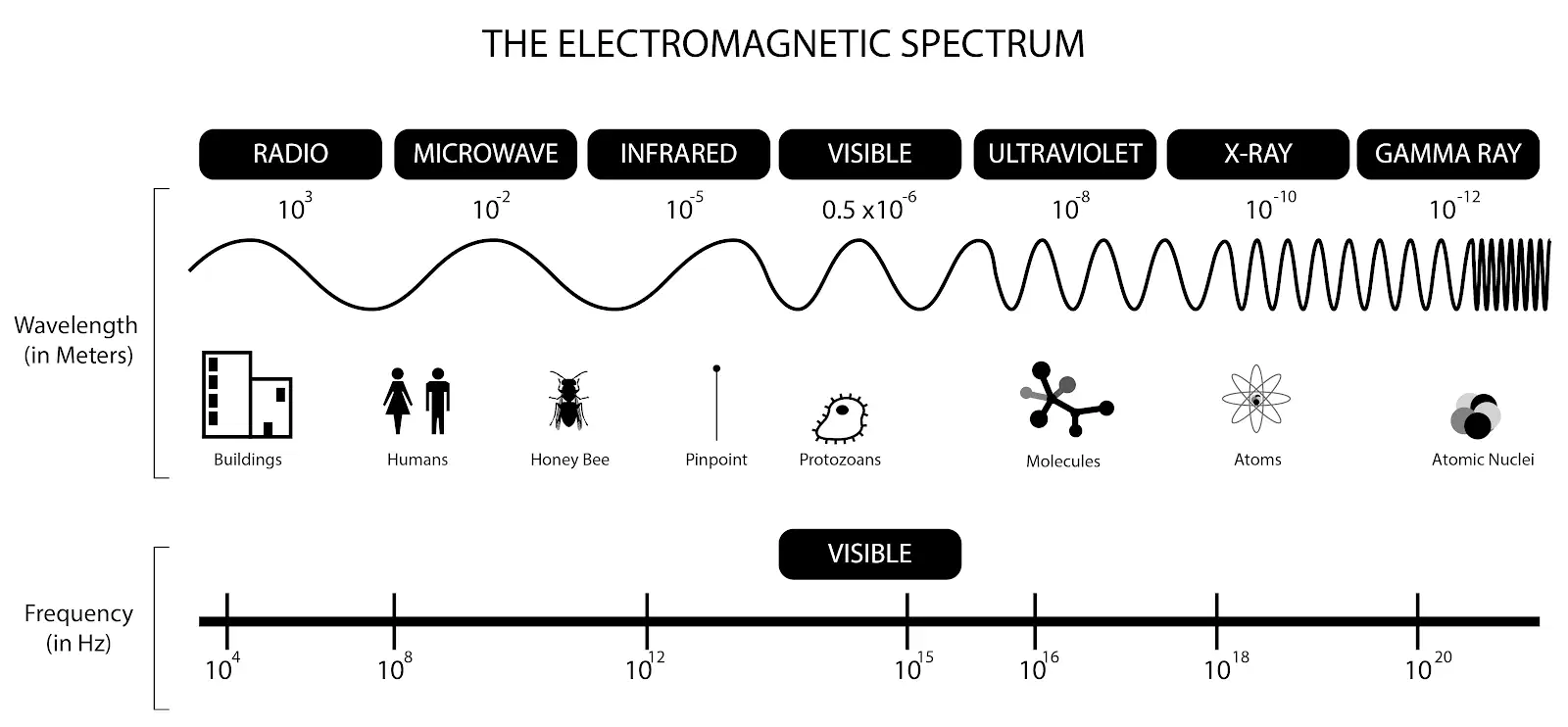
What is the correct order of the electromagnetic spectrum starting with the longest wavelength and moving to the shortest wavelength?
a)
gamma ray, visible, radio
b)
visible, gamma ray, radio
c)
visible, radio, gamma ray
d)
radio, visible, gamma ray
45.
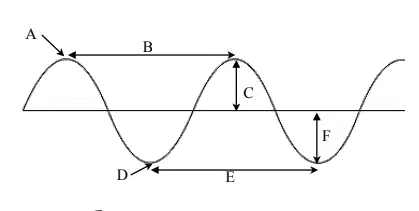
Which part of this Transverse wave is identified by letters C and F?
a)
Crest
b)
Trough
c)
Amplitude
d)
Wavelength
46.
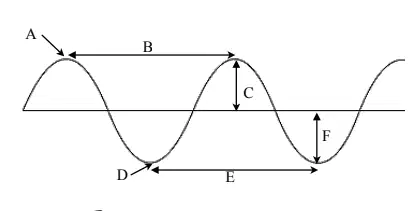
Which part of this Transverse wave is identified by letter A?
a)
Trough
b)
Wavelength
c)
Amplitude
d)
Crest
47.
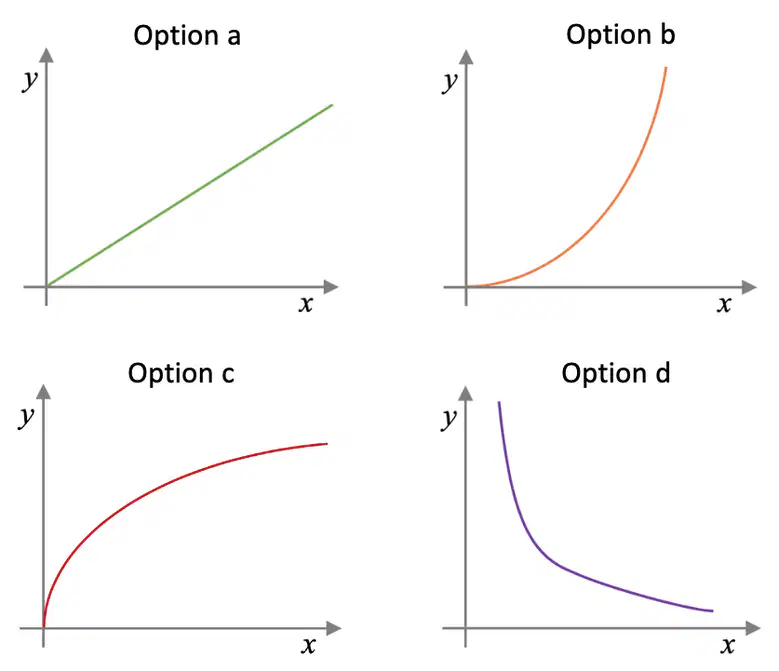
Which graph correctly demonstrates the relationship between Energy and Amplitude?
a)
Option A
b)
Option B
c)
Option C
d)
Option D
48.

What type of wave is used to warm food and to transmit information between cell phones?
a)
gamma ray
b)
visible
c)
radio
d)
microwave
49.
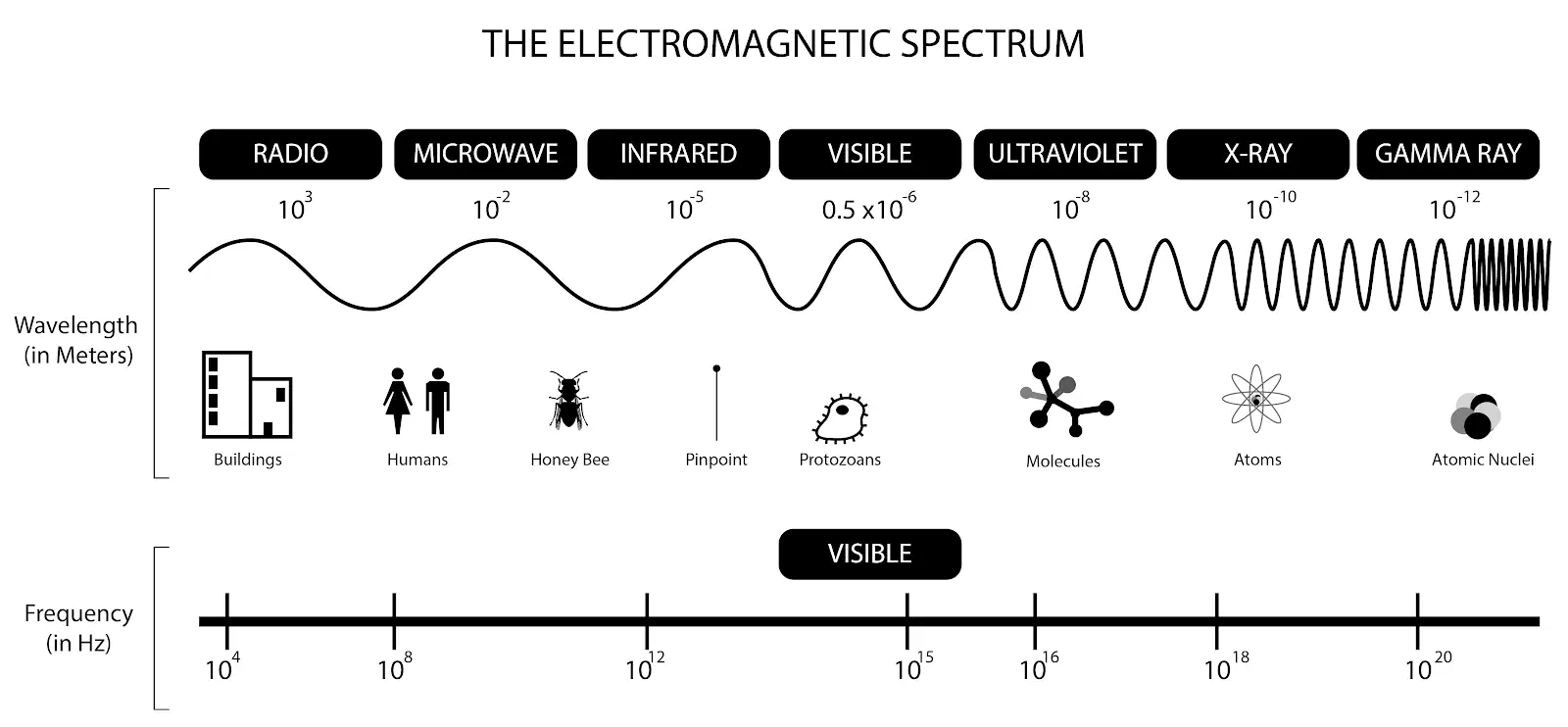
Which of the following waves has the highest frequency?
a)
radio waves
b)
microwave
c)
infrared waves
d)
ultraviolet waves
50.
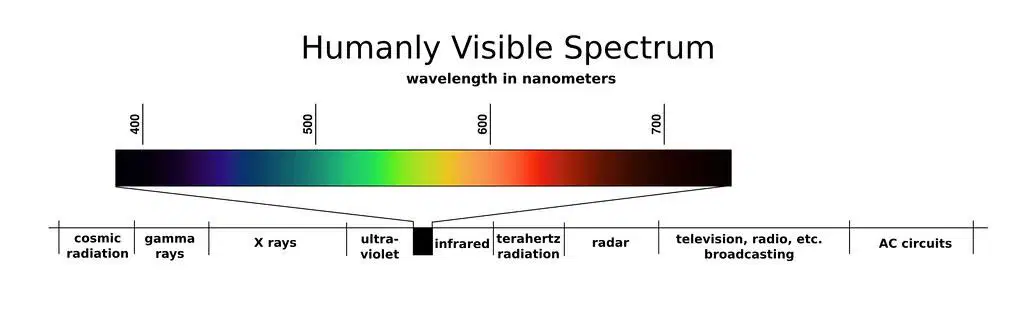
What is the correct order of the visible light spectrum starting with the shortest wavelength?
a)
red, yellow, green, blue
b)
blue, green, yellow, red
c)
green, blue, red, yellow
51.
In any wave, frequency is defined as
a)
the amount of energy carried by a wave
b)
the number of waves passing a given point per second
c)
the distance from the resting point to the crest OR trough of a wave
d)
The distance from the crest of one wave to the crest of another
52.
Which two things impact the speed of a wave?
a)
Frequency
b)
Temperature
c)
Wavelength
d)
Medium
53.
The musical note A above middle C has a frequency of 440 Hz. If the speed of sound is known to be 350 m/s, what is the wavelength of this note?
a)
154000 m
b)
1.26 m
c)
.80 m
d)
154 m
54.
Cicadas produce a buzzing sound that has a wavelength in air of 2.69 m. If the speed of sound in air is 346 m/s, what is the frequency of the sound produced by a cicada?
a)
930.7 Hz
b)
128.6 Hz
c)
.008 Hz
d)
.8 Hz
55.
Which type of EM waves are the most abundantly emitted from the Sun?
a)
Ultraviolet
b)
Infrared
c)
Visible
56.
When waves bounce of a surface they are
a)
Reflecting
b)
Refracting
c)
Diffracting
d)
Absorbing
57.
A wave with a frequency of 65.0 Hz travels through vulcanized rubber with a wavelength of 0.93 m. What is the speed of this wave?
a)
60.5 Hz
b)
69.9 m/s
c)
.014 m/s
d)
60.5 m/s
58.
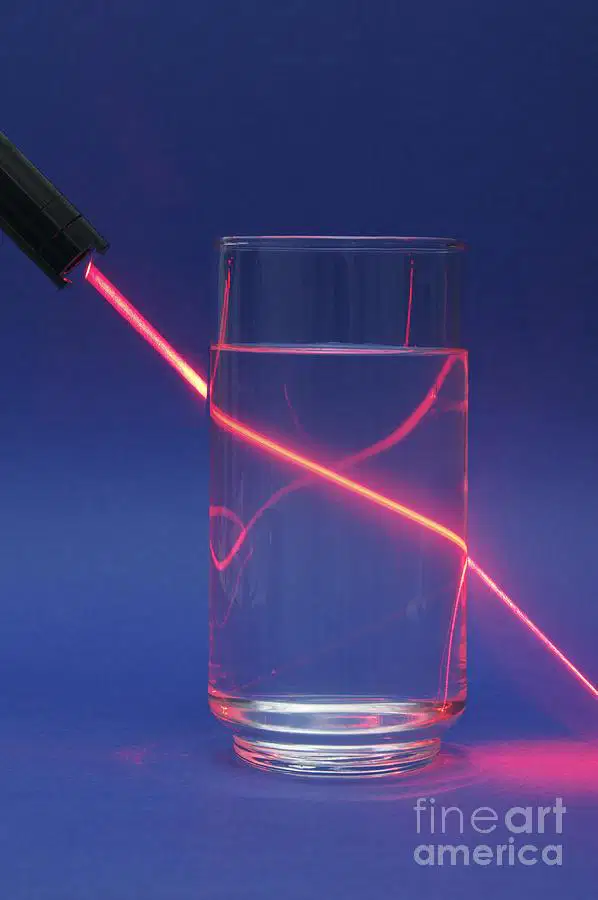
Why does the light appear to bend?
a)
Reflection
b)
Transmission
c)
Refraction
d)
Interference
59.
Would a light wave or sound wave be more efficient at diffracting through a door way and being seen/heard in another room?
a)
Light Wave
b)
Sound Wave
60.
In a wave, wavelength is defined as
a)
the amount of energy carried by a wave
b)
the number of waves passing a given point per second
c)
the distance from the resting point to the crest OR trough of a wave
d)
The distance from one point on a wave to the same point on the next wave.
61.
What is a wave?
a)
a disturbance that transfers energy and matter from one place to another
b)
a disturbance that transfers matter from one place to another without transferring energy
c)
a disturbance that transfers energy from one place to another without transferring matter
d)
a disturbance that transfers neither energy nor matter from one place to another
62.
What type of waves cause a sunburn?
a)
Ultraviolet waves
b)
radio waves
c)
infrared waves
d)
microwaves
63.
When you look into a mirror or shiny surface, the image you see is caused by the _______________ of light waves. If you don't see an image, it is because the light waves are being____________.
a)
reflection; refracted
b)
reflection; absorbed
c)
diffusion; reflected
d)
refraction; diffused
64.
What is the unit of measurement of energy?
a)
Newton
b)
Watt
c)
Joule
d)
Meter
65.
Potential energy depends on the ______ and ______ of the object.
a)
Height (position), Speed
b)
Height (position), Mass
c)
Friction, Speed
d)
Mass and speed
66.
Kinetic energy depends on the _____ and _______ of the object.
a)
Height (position), speed
b)
Height (position), mass
c)
Friction, speed
d)
Mass, speed
67.
Energy in motion is an example of what type of energy?
a)
potential
b)
kinetic
c)
chemical
d)
nuclear
68.
Energy from the sunlight is an example of what kind of energy?
a)
radiant
b)
sound
c)
chemical
d)
mechanical
69.
According to the law of conservation of energy...
a)
individuals should conserve energy by reducing waste.
b)
turning off water when not being used will help save the earth.
c)
energy is neither created or destroyed.
d)
stored up energy will lose its power over time.
70.
Another word for radiant energy is ___________ energy.
a)
light
b)
electrical
c)
thermal
d)
mechanical
71.
As an object falls, its _____________ energy is decreasing as its ______________ energy is increasing.
a)
potential, kinetic
b)
kinetic, potential
c)
mechanical, thermal
d)
elastic, mechanical
72.

A student is investigating potential and kinetic energy by stretching a spring across a table. When the student lets go, the spring recoils. At which time is potential energy in the spring being converted into kinetic energy?
a)
when the spring is stretching
b)
when the spring is fully stretched
c)
when the spring is recoiling
d)
when the spring is fully recoiled
73.

A student is investigating potential and kinetic energy by stretching a spring across a table. When the student lets go, the spring recoils. Which picture shows the spring when it has the most potential energy?
a)
when the spring is stretching
b)
when the spring is fully stretched
c)
when the spring is recoiling
d)
when the spring is fully recoiled
74.
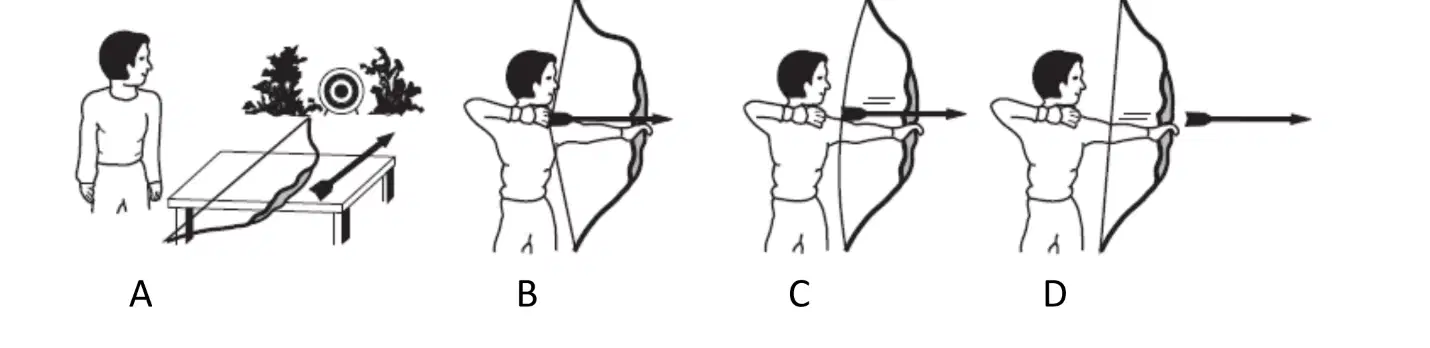
A person uses a bow to shoot an arrow at a target. In which diagram does the bow and arrow have the greatest amount of potential energy?
a)
A
b)
B
c)
C
d)
D
75.
A bowling ball is rolled down a bowling alley towards some pins. If you wanted to make the bowling ball hit the pins with more kinetic energy, what could you change?
a)
Use a bowling ball with a bigger mass
b)
make the bowling alley longer
c)
decrease the speed of the bowling ball
d)
set the bowling pins closer together
76.
Two marbles that both have a mass of 10 grams are dropped to the ground. The green marble is dropped from 1 meter high and the blue marble is dropped from 2 meters high. Which statement best describes the amount of energy when each marble hits the ground?
a)
they will have the same amount of energy because they have the same mass
b)
the green marble will have more energy because it was dropped closer to the ground
c)
the blue marble will have more energy because it has more gravitational potential energy.
d)
None of the above.
77.
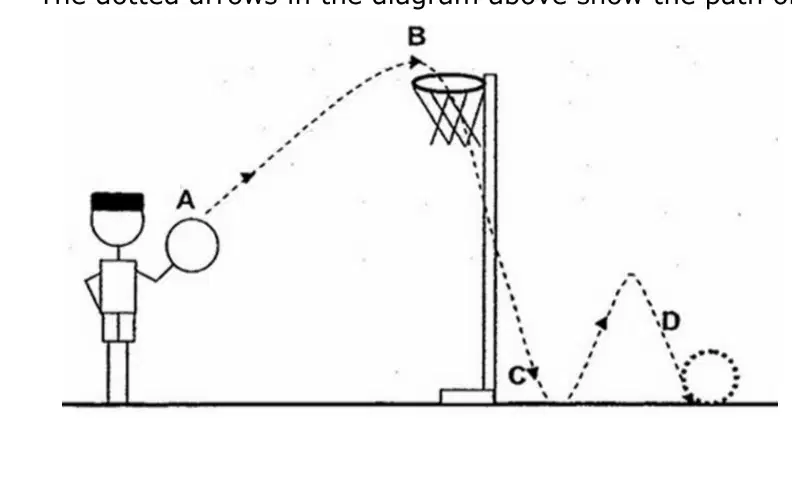
David aims and shoots a basketball into the net. The dotted arrows in the diagram above show the path of the basketball. At which point is the potential energy the highest?
a)
A
b)
B
c)
C
d)
D
78.
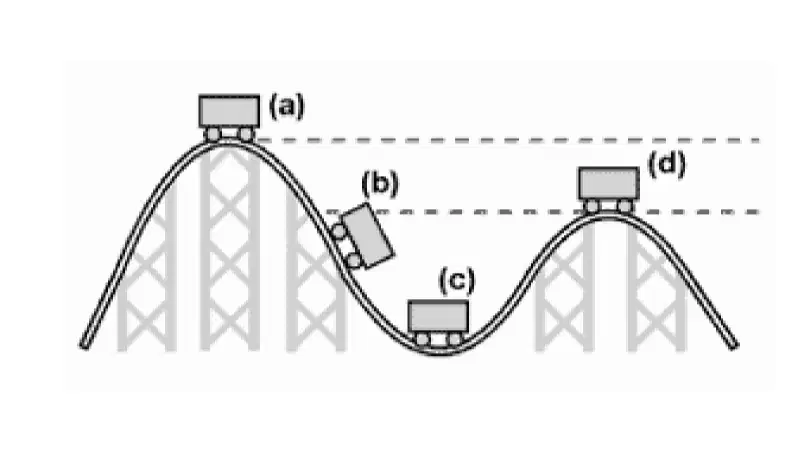
What kind of energy does the car have at point a?
a)
potential
b)
kinetic
79.
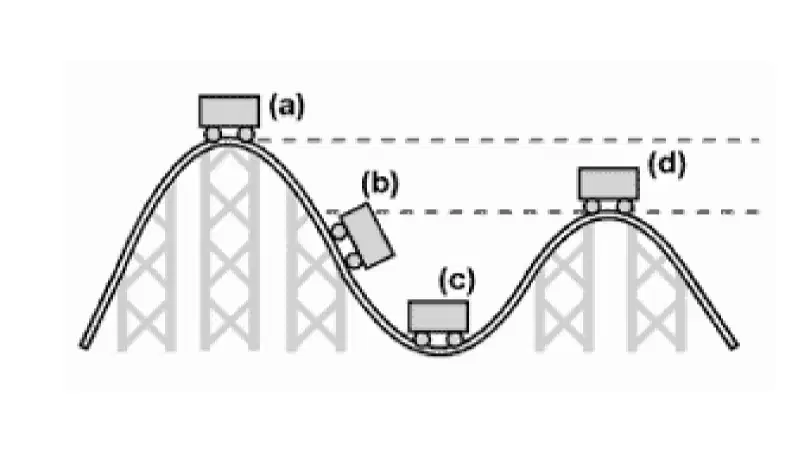
What kind of energy does the car have at point c?
a)
potential
b)
kinetic
80.
What is the acceleration of a wagon with a mass of 20 kg if a horizontal force of 64 N is applied to it? (ignore
friction)
a)
.31 m/s²
b)
3.2 m/s
c)
1280 m/s²
d)
3.2 m/s²
81.
A truck has a mass of 2500 kg and is moving at 50 m/s. What is its momentum?
a)
50 kg x m/s
b)
.02 kg x m/x
c)
125,000 kg x m/s
d)
250 kg x m/s
82.
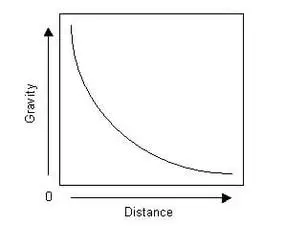
According to the graph, what happens to gravity as distance increases?
a)
It also increases
b)
It decreases
c)
It does not change
83.
A force that resists the motion of two objects/surfaces that are touching is
a)
Acceleration
b)
Friction
c)
Momentum
d)
Inertia
84.
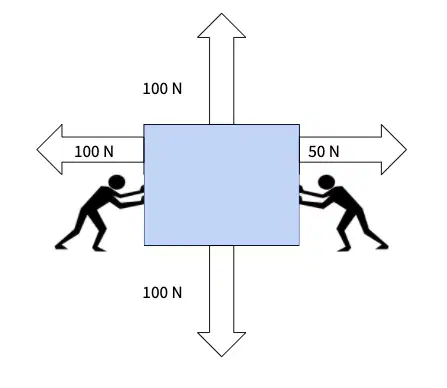
Is the Net Force on this object balanced or unbalanced?
a)
Balanced
b)
Unbalanced
85.
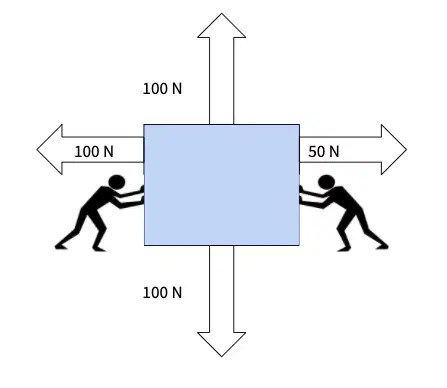
What is the Net Force on this object?
a)
150 N left
b)
50 N right
c)
100 N down
d)
50 N left
86.
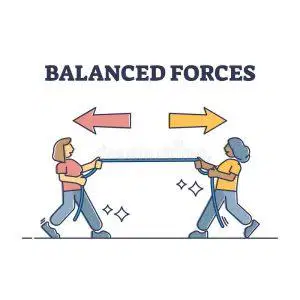
If the net force on an object is balanced, the object will
a)
Move slightly
b)
Not move
c)
Move intensely
87.
Newton's 1st Law is often referred to as the Law of
a)
Friction
b)
Net Force
c)
Inertia
d)
Momentum
88.
Newton's 2nd law of motion states that
a)
An object will remain at rest or keep moving in a straight line with constant speed unless a force acts on it
b)
When a force is applied on an object, there is an equal force applied by the object in the opposite direction
c)
The force on an object can be found by dividing its mass by its acceleration
d)
Acceleration is equal to an object's force divided by its mass
89.
Newton's 1st law of motion states that
a)
An object will remain at rest or keep moving in a straight line with constant speed unless a force acts on it
b)
When a force is applied on an object, there is an equal force applied by the object in the opposite direction
c)
The force on an object can be found by dividing its mass by its acceleration
d)
Acceleration is equal to an object's force divided by its mass
90.
For every action force, there is a reaction force that is equal in magnitude and in the opposite direction of the action force (this describes Newton's ___ Law)
a)
1
b)
2
c)
3
d)
None
91.
How can an object accelerate?
a)
Speed Up
b)
Slow Down
c)
Change Direction
d)
All of the above
100 %

