Wayground logo

Free Printable Worksheets

Font size

S
M
L
XL
Worksheets

Finals Review II

Total questions: 51

Worksheet time: 46mins

Name
Class
Date
1.

Check all the options that have an unbalanced force.

a)

A plate sitting on the table.

b)

A person rocking back & forth in a rocking chair.

c)

A ball accelerating down a ramp.

d)

A train traveling at a steady 40 mph.

e)

Leaning against a wall.

2.

How would you solve for the acceleration of a 20 kg box being moved with 50 N?

a)

50N x 20 kg

b)

20 kg / 50N

c)

20 kg + 50N

d)

50N / 20 kg

3.

What is the net force being applied to the crate?

a)

10 N to the left

b)

70 N to the left

c)

10 N to the right

d)

70 N to the right

4.
When an object’s distance from another object is changing,
a)
it is in motion.
b)
it is speeding. 
c)
it is accelerating.
d)
it is moving at a high velocity.
5.
Speed equals distance divided by
a)
time
b)
velocity
c)
size
d)
motion
6.
The rate at which velocity changes is called
a)
speed
b)
direction
c)
acceleration
d)
motion
7.
A train that travels 100 kilometers in 4 hours is traveling at what average speed?
a)
50 km/h
b)
100 km/h
c)
2 km/h
d)
25 km/h
8.

Which of the graphs shows that one of runners started 10 yards further ahead of the

other?

a)
b)
c)
d)
9.

In which of the following graphs below are both runners moving at the same speed?

a)
b)
c)
d)
10.

Match the description to the graph:

"The car is stopped."

a)
b)
c)
d)
11.

Match the description to the graph:

"The car is traveling at a constant speed."

a)
b)
c)
d)
12.

Which of the following is not a factor in PEg?

a)

Acceleration due to gravity.

b)

The height of an object.

c)

The speed of travel of an object.

d)

The mass of an object.

13.

Potential energy is

a)

energy due to position.

b)

energy due to motion.

14.

Kinetic energy is

a)

energy due to position.

b)

energy of motion.

15.

What type of electromagnetic wave has a higher frequency than visible light and a larger wavelength than x-rays

a)

Infrared

b)

Gamma

c)

visible

d)

Ultraviolet

16.

Indicate the electromagnetic waves that are longer than Visible light.

a)

Ultraviolet

b)

Infrared

c)

X ray

d)

Microwaves

17.

Electromagnetic waves can travel through the vacuum of (a)   .

18.

Electromagnetic waves all have the same __________ and _______________.

a)

wavelength and speed

b)

speed and amplitude

c)

Frequency and amplitude

d)

Amplitude and wavelength

19.

What season is the northern hemisphere having in position A?

a)

winter

b)

fall

c)

summer

d)

spring

20.

What season is the northern hemisphere having in position B?

a)

winter

b)

fall

c)

summer

d)

spring

21.

What season is the northern hemisphere having in position D?

a)

winter

b)

fall

c)

summer

d)

spring

22.

What season is it in the northern hemisphere when the southern hemisphere is having winter?

a)

winter

b)

fall

c)

summer

d)

spring

23.
What is a difference between spring and neap tides?
a)
Spring tides occur when the earth and sun are IN LINE with the new or full moon. 
b)
Spring tides occur when moon in 3rd or 1st quarter phases
c)
Spring tides are LOWER than neap tides
d)
Spring tides occur in Spring and neap tides can occur in any season
24.
Which body has the greater effect on Earth's tides?
a)
Sun
b)
Saturn
c)
Moon 
d)
Venus
25.
What type of tide would this arrangement of earth-moon-sun create?
a)
full moon tide
b)
new moon tide
c)
neap tide
d)
spring tide
26.
The diagram below shows the alignment of the sun, the moon, and Earth. In which locations are neap tides taking place?
a)
1 and 2
b)
1 and 3
c)
2 and 4
d)
3 and 4
27.

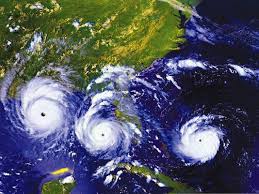
Where do hurricanes form?

a)

In the warm waters of the Atlantic Ocean near the equator

b)

In the cool waters of the North Sea

c)

In the Pacific Ocean near Japan

d)

In

28.
In which direction does a hurricane rotate?
a)
clockwise
b)
counterclockwise
c)
north to south
29.

Where are hurricanes formed?

a)

On cold water

b)

On Warm water

c)

Anywhere near the ocean

d)

In the clouds

30.
What is responsible for delivering oxygen and removing carbon dioxide from the body?
a)
cell nucleus
b)
excretory system
c)
nervous tissue
d)
respiratory system
31.
The __________ system directs the body to inner and outer changes.
a)
digestive
b)
circulatory
c)
nervous
d)
skeletal
32.
The __________ is the main organ of the nervous system.
a)
heart
b)
lungs
c)
brain
d)
skin
33.

The circulatory system uses _________ to deliver oxygen to the rest of the body.

a)

blood cells

b)

lungs and nose

c)

Stomach

d)

brain and spinal cord

34.
___________ are the building blocks of life.
a)
cells
b)
legos
c)
blocks
d)
blood
35.
In multicellular organisms, tissues are comprised of _______.
a)
organs
b)
systems
c)
cells
d)
blood
36.
When tissues come together, they form ___________.
a)
cells
b)
atoms
c)
organs
d)
systems
37.
A(n) _________ is made of small parts connected together to make a whole.
a)
system
b)
problem
c)
evidence
d)
illustration
38.
Which of the following body systems work together for support, protection, and movement?
a)
respiratory and cardiovascular
b)
skeletal and muscular
c)
skeletal and integumentary
d)
digestive and respiratory
39.
Which of the following shows the levels of organization of an organism from LEAST to MOST complex.
a)
cells-tissues-systems-organs
b)
organs-cells-systems-tissues
c)
systems-organs-tissues-cells
d)
cells-tissues-organs-systems
40.
This system includes the spinal cord, brain and nerves
a)
Nervous System
b)
Digestive System
c)
Circulatory System
41.
All energy transformations in an ecosystem begin with
a)
a scavenger
b)
the sun
c)
a decomposer
d)
a herbivore
42.
__________ is an organism that only eats plants for energy.
a)
Carnivore
b)
Herbivore
c)
Omnivore
d)
Terivore
43.

Using food web which of the following is a secondary consumer?

a)

snake

b)

worm

c)

butterfy

d)

squirrel

44.
__________ is an organism that only eats meat for energy.
a)
Omnivore
b)
Borivore
c)
Herbivore
d)
Carnivore
45.

Using the food web what would happen if the eagle became extinct?

a)

The frog population would decrease.

b)

The frog population would increase.

c)

The butterfly population would increase.

d)

The snake population would decrease.

46.

Which is the primary source of energy for plants?

a)

producer

b)

consumer

c)

decomposer

d)

sun

47.

Which of the following would be the most likely effect, if there were a sudden increase in the cricket population?

a)

There would be a decrease in the small bird population.

b)

There would be a decrease in the grass/flowers population.

c)

There would be a decrease in the mice population.

d)

There would be an increase in the grass/flowers population.

48.

What type of organism makes its own food?

a)

Autotroph

b)

Heterotroph

49.

Which category of organism cannot make its own food?

a)

Autotroph

b)

Heterotroph

50.
Which best describes the main job of most cells in multicellular organisms?
a)
Cells work to keep themselves alive.
b)
Cells work to keep the organism alive.
c)
Cells work to release needed materials.
d)
Cells work to store unneeded materials.
51.
Which organism performs all life processes in one cell?
a)
grass
b)
bacteria
c)
mushroom
d)
butterfly