
 Worksheets
Earth System # 1 Practice Test
Total questions: 35
Worksheet time: 18mins
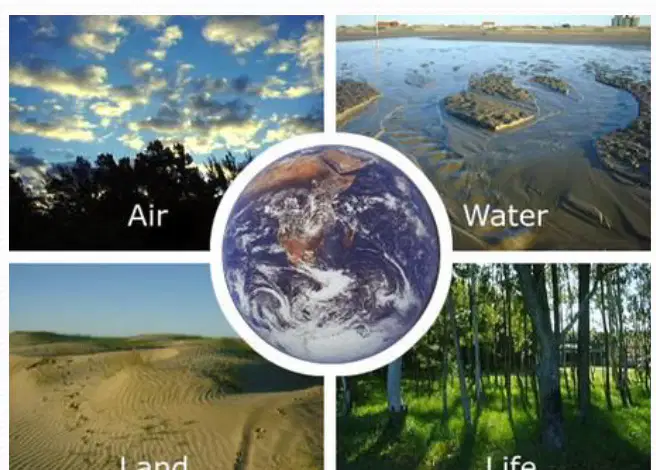
What can leave Earth's boundaries according to the Earth system?
Matter
Energy
Solids
Liquids
Where does all life exist on Earth?
Geosphere
Biosphere
Atmosphere
Hydrosphere
What are biotic factors in an ecosystem?
Nonliving components
Living components
Chemical components
Physical components
What are abiotic factors in an ecosystem?
Living components
Nonliving components
Biological components
Organic components
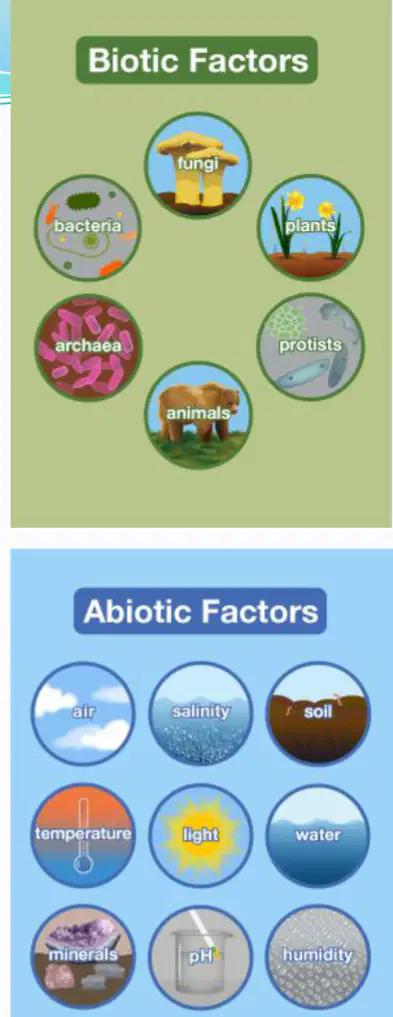
What does the biosphere consist of?
Only biotic components
Only abiotic components
Both biotic and abiotic components
Neither biotic nor abiotic components
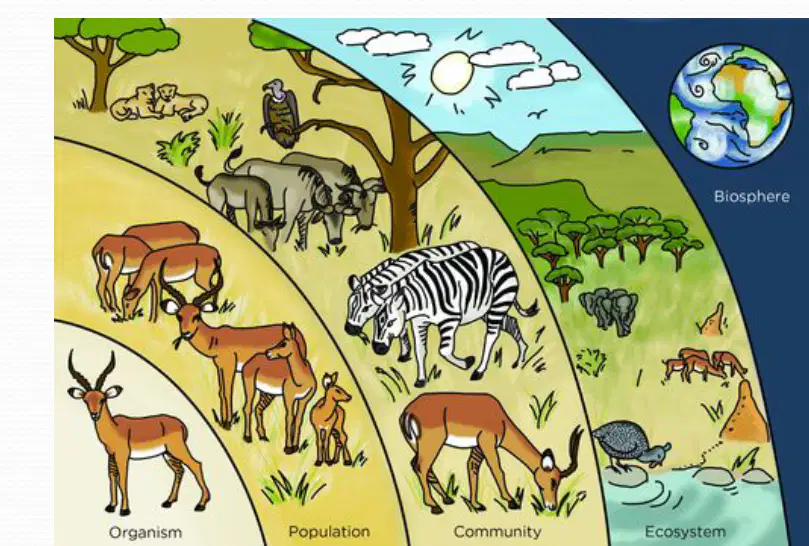
What are aquatic ecosystems composed of?
Only salt water
Only fresh water
Both salt water and fresh water
Only land areas
What is a biome?
A small community of plants and animals
A large community of plants and animals in a major habitat
A single species of plant
A type of ecosystem found only in deserts
How many different ecosystems can be found in a biome?
Only one
Two
Many
None
Which biome is typically found in regions with hot and dry conditions?
Tundra
Desert
Temperate forest
Taiga
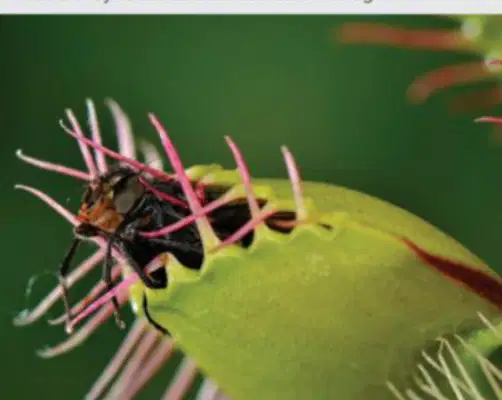
How do living things grow and change over time?
By making copies of themselves or having offspring.
By remaining the same throughout their life.
By losing energy and cells.
By not interacting with their environment.
What does a habitat include?
Only biotic factors
Only abiotic factors
Both biotic and abiotic factors
Neither biotic nor abiotic factors
Which of the following is an example of a factor in a gray fox's habitat?
The color of its fur
The food it eats
The number of trees in the world
The size of the ocean
What is one component of the gray fox's habitat mentioned in the text?
The type of soil in the desert
The den it sleeps in
The height of mountains
The depth of rivers
What does an ecological niche contain?
Only physical factors
Only chemical factors
Only biological factors
All physical, chemical, and biological factors
What are abiotic conditions in an ecological niche?
Food sources
Air temperature and water tolerance
Species behavior
Competition with others
What does competition in an ecosystem involve?
Sharing resources equally
Competing for the same limited resources
Avoiding each other
Helping each other find food
What is mutualism?
Both organisms are harmed
One organism benefits, the other is harmed
Both organisms benefit
Neither organism benefits
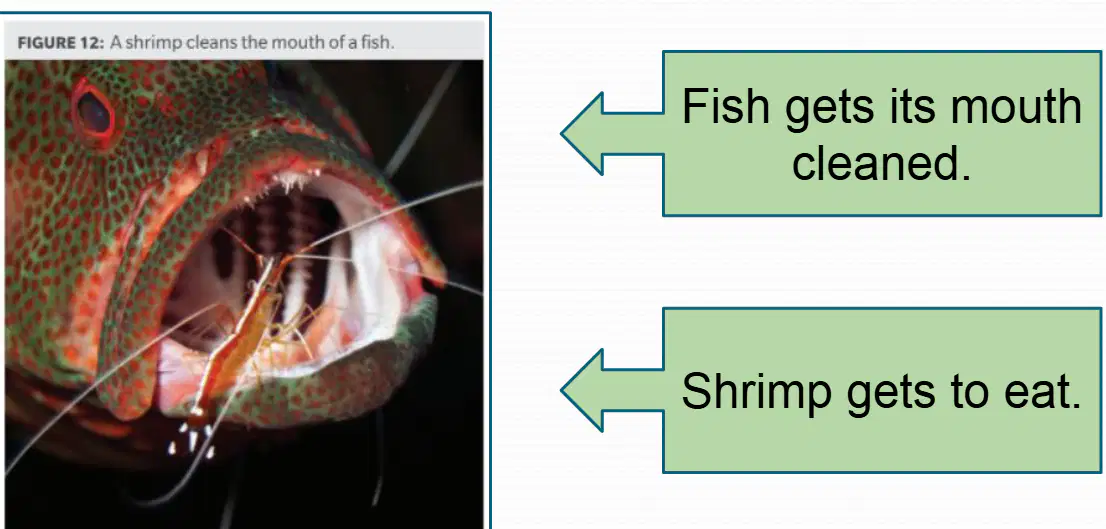
In a mutualistic relationship, what happens to the fish and shrimp in the image?
The fish is harmed, and the shrimp benefits
The fish benefits, and the shrimp is harmed
Both the fish and shrimp benefit
Neither the fish nor the shrimp benefit
In a parasitic relationship, what happens to the host organism?
It benefits from the relationship.
It is harmed by the relationship.
It remains unaffected.
It becomes a predator.
What is biodiversity?
The variety of ecosystems in a region
The measure of the number of different species found in an area
The amount of vegetation in a forest
The number of animals in a zoo
How does an increase in species diversity affect an ecosystem?
It makes the ecosystem less stable
It has no effect on the ecosystem
It leads to a healthier ecosystem
It decreases the ecosystem's productivity
What do cownose rays feed on according to the diagram?
Sharks
Bivalves and arthropods
Plants
Other cownose rays
What happens to bivalve and arthropod populations when cownose rays overpopulate?
Their populations increase
Their populations remain stable
Their populations collapse
They become predators
How can the use of pesticides affect biodiversity?
It increases the number of species
It has no effect on species
It negatively affects remaining species
It helps in the growth of native plants
What is an example of an invasive species mentioned in the text?
Zebra Mussel
Lionfish
Asian Carp
Burmese Python
What is population density?
The number of individuals living in a defined space
The number of species in a country
The amount of food available in an area
The number of plants in a forest
If a biologist finds 600 animals in a 10 square kilometer area, what is the population density?
60 animals/km²
50 animals/km²
70 animals/km²
80 animals/km²
If the area is doubled but the number of individuals remains the same, what happens to the population density?
It doubles
It halves
It remains the same
It triples
In which type of dispersion do individuals of the same species compete for resources?
Clumped dispersion
Uniform dispersion
Random dispersion
No dispersion
What is the population growth rate of Brazil’s human population?
0.5%
1%
0.8%
1.2%

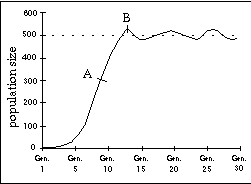
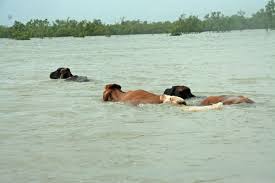
Natural disasters can be considered limiting factors.
true: density independent limiting factors
false; natural disasters are not limiting factors
true: density dependent limiting factors
false: because Mrs. Schaffer said

