
 Worksheets
BPED 3A Final Exam
Total questions: 50
Worksheet time: 38mins
Which of the following symptoms would differentiate an Achilles tendon rupture from Achilles tendinitis?
Mild pain with activity and slight swelling
Sharp pain, a "pop" sound, and inability to stand on tiptoe
Gradual onset of pain with stiffness in the morning
Redness and bruising without functional loss
What is the primary symptom of plantar fasciitis?
Pain on the top of the foot
Heel pain, especially in the morning
Numbness in the toes
Swelling around the ankle
Which condition is characterized by inflammation of the tendons on the front of the lower leg?
Achilles tendinitis
Posterior tibialis tendinitis
Anterior compartment syndrome
Anterior tibialis tendinitis
What is a common cause of Achilles tendinitis?
Sudden twisting injury
Repetitive overuse
Direct trauma
Nerve compression
If you were advising an athlete on how to prevent stress fractures in the lower leg and foot, which of the following strategies would be most effective?
Encouraging the use of lightweight running shoes with minimal support
Recommending sudden increases in running intensity to strengthen the bones
Gradually increasing training intensity and ensuring proper footwear with adequate cushioning
Advising against weight-bearing exercises altogether
What is the term for a bunion?
Hallux valgus
Hallux rigidus
Claw toe
Hammer toe
Which of the following conditions involves the thickening of the tissue surrounding the nerve between the third and fourth toes?
Morton's neuroma
Pump bump
Turf toe
Stone bruise
What is the medical term for shin splints?
Plantar fasciitis
Medial tibial stress syndrome
Compartment syndrome
Achilles tendinitis
Which of the following is a common symptom of compartment syndrome?
Gradual onset of pain
Pain that decreases with elevation
Numbness and tingling
Warmth and redness
What is the term for a fracture at the base of the 5th metatarsal?
Jones fracture
March fracture
Hairline fracture
Stress fracture
What type of toe deformity is characterized by hyperextension at the MTP joint and flexion at the DIP and PIP joints?
Hammer Toe
Turf Toe
Claw Toe
Mallet Toe
Which of the following best describes the mechanism of injury for a lateral ankle sprain?
Eversion and plantarflexion
Inversion and plantarflexion
Eversion and dorsiflexion
Inversion and dorsiflexion
Which of the following conditions involves inflammation of the anterior compartment muscles of the lower leg?
Achilles tendinitis
Medial tibial stress syndrome
Anterior compartment syndrome
Plantar fasciitis
A fracture at the base of the 5th metatarsal is known as a:
March fracture
Jones fracture
Hairline fracture
Stress fracture
Medial tibial stress syndrome is commonly known as:
Achilles tendinitis
Shin splints
Plantar fasciitis
Compartment syndrome
Which injury involves the dislocation of the radius from the elbow joint?
Olecranon fracture
Radial head fracture
Elbow dislocation
D) Nursemaid's elbow
What are the signs and symptoms of a forearm fracture?
Deformity and pain
Swelling and tenderness
Loss of function
All of the above
Repetitive throwing motions are a common cause of:
Cubital tunnel syndrome
Medial epicondylitis
Lateral epicondylitis
Olecranon bursitis
Which of the following is NOT a sign of elbow dislocation?
Severe pain
Deformity
Rapid swelling
Gradual loss of motion
What is a common symptom of cubital tunnel syndrome?
Pain on the lateral side of the elbow
Numbness and tingling in the little and ring fingers
Weakness in wrist extension
Swelling of the olecranon bursa
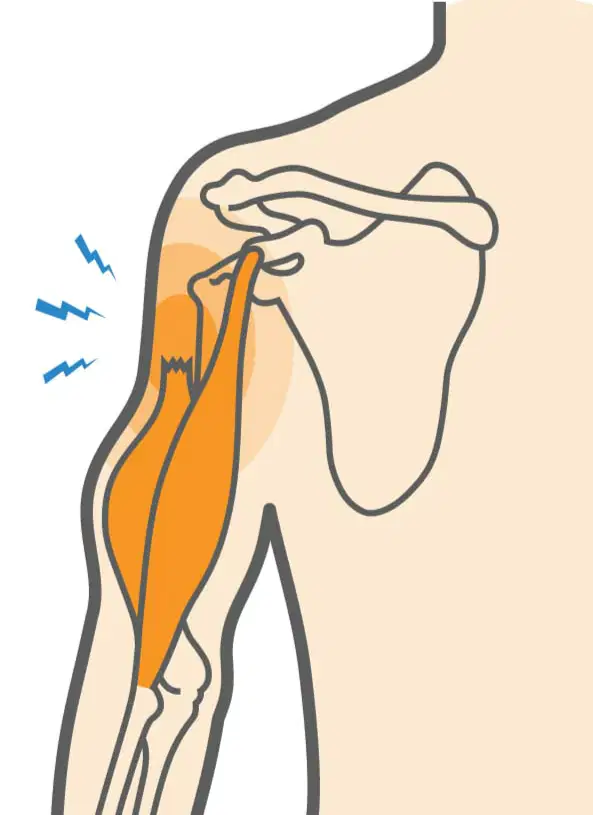
What is the main symptom of a biceps brachii rupture?
Sharp pain and a visible bulge in the upper arm
Gradual pain and stiffness in the elbow
Numbness and tingling in the hand
Weakness in wrist flexion
What is a sign of a serious forearm fracture?
Mild swelling
Deformity
Gradual pain
Normal range of motion
Which injury might present with numbness and tingling in the hand?
Lateral epicondylitis
Medial epicondylitis
Cubital tunnel syndrome
Olecranon bursitis
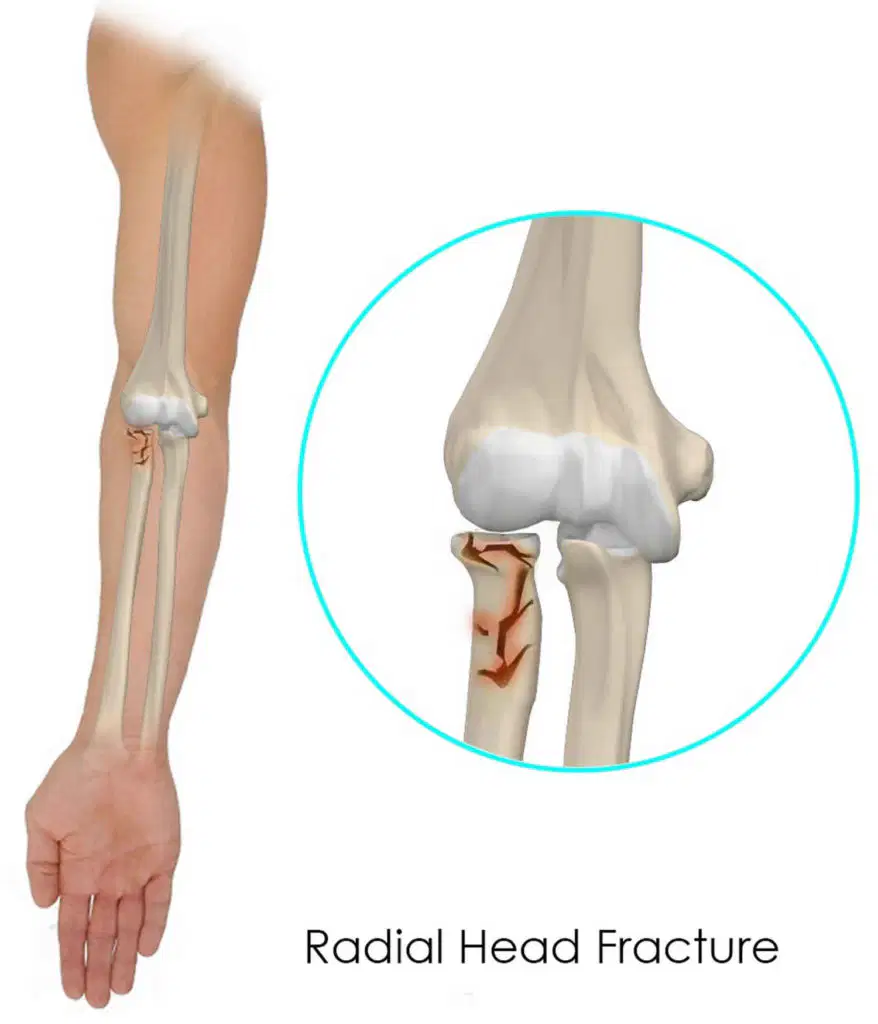
Which of the following is a symptom of a radial head fracture?
Pain on the medial side of the elbow
Inability to fully extend the elbow
Numbness in the hand
Visible swelling at the elbow
Pain with resisted wrist extension is indicative of:
Lateral epicondylitis
Medial epicondylitis
Cubital tunnel syndrome
Olecranon bursitis
Which condition is characterized by a visible swelling at the elbow and pain from direct trauma?
Medial epicondylitis
Lateral epicondylitis
Cubital tunnel syndrome
Olecranon bursitis
What injury presents with a "Popeye" deformity and sudden, sharp pain in the upper arm?
Biceps brachii rupture
Triceps brachii rupture
Elbow dislocation
Forearm fracture
Which injury involves severe pain and deformity with an inability to fully extend the elbow?
Medial epicondylitis
Lateral epicondylitis
Elbow dislocation
Forearm fracture
What injury is indicated by pain on the medial side of the elbow, increased by resisted wrist flexion?
Medial epicondylitis
Lateral epicondylitis
Cubital tunnel syndrome
Forearm fracture
What injury is associated with weakness in elbow extension?
Triceps brachii rupture
Biceps brachii rupture
Medial epicondylitis
Lateral epicondylitis
Which of the following best explains the Principle of Progressive Overload?
Training should be specific to the sport.
The body adapts to the demands placed on it.
To improve, the body must be gradually challenged.
Fitness improvements are lost when training stops.
Why is rest and recovery important in an exercise program?
To immediately improve flexibility.
To prevent a sudden drop in blood pressure.
To repair muscle tissue and prevent overtraining.
To maintain an elevated heart rate.
What does the Principle of Specificity imply for training?
Training should include a variety of exercises.
Training should be tailored to individual needs.
Training should be relevant to the sport or fitness goal.
Training should progressively increase in difficulty.
What is the purpose of dynamic stretches in a warm-up?
To hold a stretch for an extended period.
To take joints and muscles through their full range of motion.
To decrease body temperature.
To focus on isolated muscle groups.
In resistance training, what does "progressive overload" mean?
Using the same weight for every workout.
Gradually increasing the challenge to the body.
Focusing on endurance rather than strength.
Decreasing the intensity over time.
A person wants to improve their cardiovascular endurance. Based on the text, which type of exercise would you recommend they focus on?
Activities like running, swimming, or cycling
Flexibility exercises like yoga
Strength training with free weights
Balance exercises
A client wants to incorporate the Principle of Progressive Overload into their weightlifting routine. Which of the following is the MOST appropriate way to do this?
Maintain the same weight and reps every week.
Gradually increase the weight lifted, reps, or sets over time.
Focus solely on improving flexibility.
Decrease the intensity of workouts each week.
To improve range of motion, when is the best time to perform static stretches?
Before the warm-up
During the main activity
After the cool-down
Only during a dedicated flexibility phase
A runner wants to prevent muscle soreness after long runs. What should they include in their workout?
A long main activity phase
A thorough cool-down phase with static stretching
High-intensity strength training
A flexibility phase before the run
Which combination of exercises would create a workout that effectively targets both upper and lower body using free weights?
Bench press, squats, and lunges
Bicep curls, tricep extensions, and calf raises
Shoulder press, rows, and Russian twists
Deadlifts, step-ups, and dumbbell press
A fitness instructor is designing a warm-up. Which sequence of activities is most appropriate?
Static stretches followed by light aerobic activity
Light aerobic activity followed by dynamic stretches
Main activity at a low intensity
Balance exercises followed by static stretches
A trainer is structuring a workout for someone with limited access to equipment, focusing on strength and endurance. Which combination is best?
Barbell squats and bench press
Machine leg press and lat pulldown
Push-ups, lunges, and resistance band rows
Dumbbell curls and triceps extensions
A workout routine aims to improve both strength and flexibility. Which combination of activities is ideal?
Running and cycling
Weightlifting and yoga
Swimming and Pilates
A mix of resistance training and stretching exercises
To design a program that adheres to the principle of variation, what should be included?
The same exercises every workout
Gradually increasing weight but keeping exercises the same
Different exercises, intensities, and formats
Only focusing on one type of training
What is the underlying concept behind the Principle of Adaptation?
The more you train, the more flexible you become.
The body changes in response to the stress placed upon it.
Consistent training leads to decreased strength.
The body needs variation to avoid adaptation
Why is the intensity of exercise an important factor?
It only affects the duration of the workout.
It determines the type of muscle fibers recruited.
It has no impact on fitness improvements.
It helps in measuring how hard you work during exercise and influences the outcome.
What is the significance of the cool-down phase in preventing dizziness?
It increases muscle soreness.
It prevents a sudden increase in heart rate.
It slowly decreases heart rate and breathing.
It improves muscle elasticity.
Someone wants to focus on improving their core strength and stability. Which training method would be most effective?
Free weights
Resistance bands
Bodyweight exercises
Suspension training
What is the main purpose of the flexibility/stretching phase?
To improve range of motion.
To improve cardiovascular endurance.
To build muscle strength.
To prepare the body for high-intensity activity.
What is the relationship between intensity and perceived exertion?
Intensity cannot be measured by perceived exertion.
Perceived exertion is one way to measure intensity.
Intensity is only measured by weight lifted.
They are inversely related.

