
 Worksheets
Ecology Unit Review
Total questions: 75
Worksheet time: 53mins
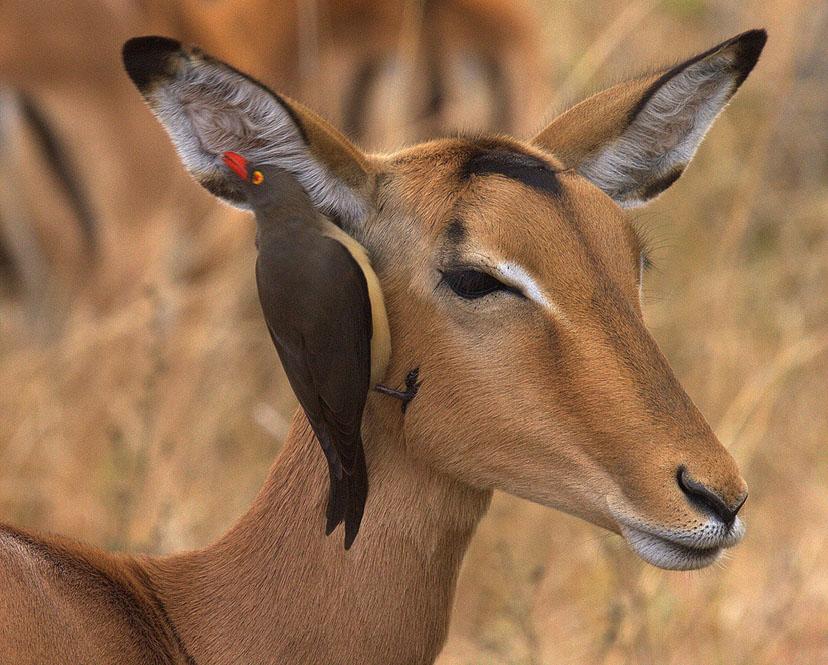
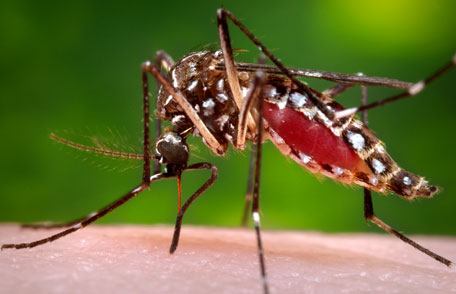
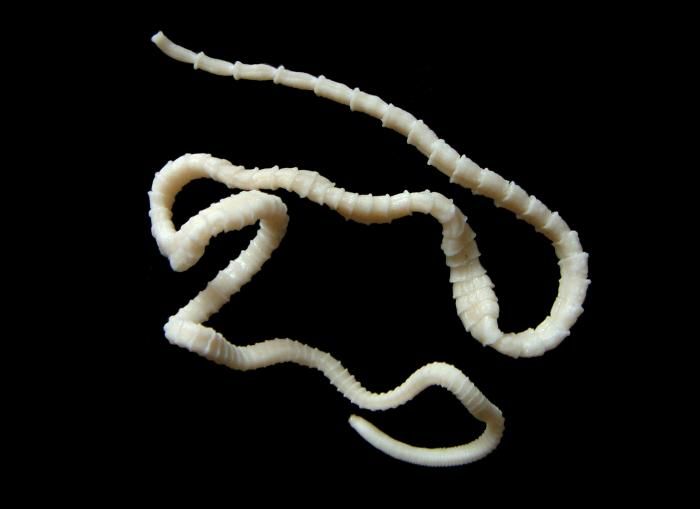
Abiotic and biotic factors in the environment
ecosystem
community
niche
population
population growth decreases at carrying capacity
logistic growth
predator-prey
exponential growth
mutualism
critical species in keeping ecosystem healthy
population
organism
apex predator
keystone species
group of same species living together
keystone species
organisms
population
community
increase of toxins in an individual
bioaccumulation
exponential growth
parasitism
biomagnification
population growth without limits
biomagnification
biome
logistic growth
exponential growth
maximum sustainable population
exponential growth
carrying capacity
logistic growth
extinction
populations of different species
biome
ecosystem
community
niche
role played in the community
keystone species
niche
symbiosis
competiton

Which organisms are responsible for nitrogen fixation in the nitrogen cycle?
Plants and animals
Viruses and protists
Fungi and algae
Bacteria

Based on the information in the diagram, which of the following processes returns carbon dioxide to the air or water? Choose all that apply
decomposition of plants and animals
combustion of coal and oil
photosynthesis
cellular respiration
Which statement best describes how the carbon cycle and oxygen cycle are interrelated?
Animals use CO₂ and release O₂ during respiration.
Animals release H₂O during respiration and CO₂ during transpiration.
Plants use CO₂ and release O₂ during photosynthesis.
Plants release H₂O during transpiration and release CO₂ during photosynthesis.
the movement of carbon through and between organisms and the physical environment
carbon cycle
the movement of water between the oceans, atmosphere, land, and living things
water cycle
the movement of nitrogen between the environment and living things
nitrogen cycle
Almost all nitrogen fixation occurs (a)
All plants have nitrogen fixing bacteria in their roots.
True
False
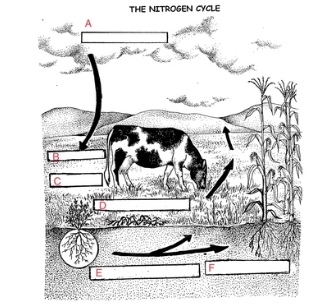
In the nitrogen cycle, what does label A in the diagram represent?
Gas
Clouds
Carbon dioxide in the atmosphere
Nitrogen in the atmosphere
What do free living bacteria in the soil do?
Make clouds
Turn atmospheric nitrogen into nitrates
Make carbon dioxide for plants to go through photosynthesis
Help plants take in water
Bacteria create a form of nitrogen that animals can use directly.
True
False
Bacteria fix nitrogen from the atmosphere into a form plants can use.
True
False
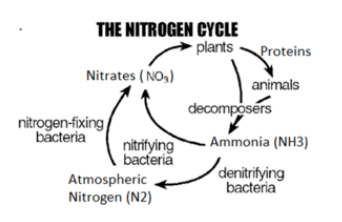
According to this diagram, animals get proteins from eating ________________________
decomposers
bacteria
plants
sunlight
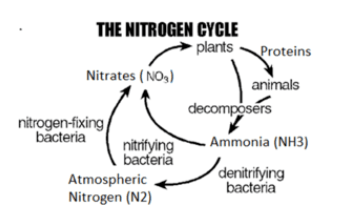
According to this diagram, plants absorb
nitrates
nitrogen fixing bacteria
animals
decomposers
Plants and animals cannot use nitrogen directly from the air.
True
False
What process occurs when dead plant and animal matter decomposes and nitrogen is released back into the atmosphere?
Assimilation
Fixation
Ammonification
Denitrification
What is the formula for atmospheric nitrogen?
N
N2
NH3
NO3
What is the process of combining nitrogen gas with other elements to make nitrogen into usable compounds?
nitrogen composition
nitrogen fixation
ammonia
denitrification
How do animals get the nitrogen they need?
From the air they breathe
From the water they drink
From the food they eat
From the sun
How is nitrogen "fixed" into a usable form for plants?
Through action of bacteria only
Through lightning only
Through action of bacteria and lightning
Through photosynthesis
How is nitrogen "fixed" into a usable form for plants?
Through action of bacteria only
Through lightning only
Through action of bacteria and lightning
Through photosynthesis
The process in which nitrogen circulates and is recycled is called
The nitrogen cycle
The carbon cycle
The water cycle
The phosphorus cycle
What converts nitrogen gas into a usable form for plants and animals?
bacteria
rain
fungi
car exhaust
The depletion in the Ozone layer is caused by:
Carbon dioxide
Nitrous oxide
Methane
Chlorofluorocarbon
BIOdiversity means a variety of . . .
People
Plants
Life
Places
spatial distribution of individual within the population
Geographic Distribution
Population Density
Dispersion
Growth Rate
Age Structure


The carrying capacity of a region is affected by both density-dependent and density independent factors. Organize these options into the right categories
food
shelter
disease
rainfall
temperature
pollution
Decide if each of the following limiting factors are density-dependent or density-independent.
Many fish die due to a drastic change in water temperature.
Due to severe overcrowding in an Asian village, many children do not survive to adulthood.
An extensive drought in the plains threatens wildebeest, giraffe, and springbok populations
Since snakes prey on frogs, an increase in the frog pop. causes an increase in the snake pop.
Which best describes the graph of logistic growth?

What type of growth is represented in this graph?
logistic
survivorship curve
predator-prey
Which of the following are density independent factor(s)?
competition for resources
predator-prey relationships
parasitism and disease
weather, natural disaster and man made disturbances
Processes that remove individuals from a population.
death and emigration
birth and immigration

