
 Worksheets
PNA Prova Piloto Exame – A Parte I 2018
Total questions: 46
Worksheet time: 23mins
Um homem de 78 anos de idade é trazido ao serviço de urgência pela sua família devido a dificuldade progressiva em engolir desde há dois meses, da qual resultou uma perda ponderal de 7 kg. Tem tido fraqueza generalizada progressiva e dificuldade em deglutir nos últimos dois anos. A família ficou preocupada quando reparou que o que ele come não era suficiente para manter o peso. Não toma qualquer medicação. Ele tem 180 cm de altura e pesa 58 kg; IMC 18 kg/m². Os sinais vitais são temperatura 37,0°C, frequência cardíaca 68/min, frequência respiratória 13/min e pressão arterial 108/76 mm Hg. A oximetria de pulso em ar ambiente revela saturação de 96 %. O exame físico mostra reflexo de vómito preservado, mau controlo motor da língua e contrações da língua. Observa-se fraqueza moderada e atrofia da extremidade superior esquerda e contrações frequentes dos músculos do antebraço. Os reflexos rotulianos estão exagerados bilateralmente e há clónus sustentado no tornozelo esquerdo. Engasga-se num teste de deglutição de água.
Acidente vascular cerebral lacunar da ponte.
Botulismo de origem alimentar.
Esclerose lateral amiotrófica.
Esclerose múltipla.
Infeção por Corynebacterium diphtheriae.
Um rapaz de 6 anos é levado ao pediatra por os pais acharem «que está a crescer pouco». Os antecedentes pessoais incluem gestação com hipertensão arterial materna a partir do 2.º trimestre e parto às 38 semanas com peso ao nascer de 2030 g. O desenvolvimento psicomotor tem sido adequado e não tem doenças de relevo. A análise do boletim de saúde infantil e juvenil mostra progressão ponderal que atingiu no fim do primeiro ano o P15 (e aí se tem mantido) e progressão estatural que se mantém desde o nascimento entre os percentis 3 e 5. A velocidade de crescimento no último ano foi de 3 cm. Atualmente mede 98 cm (< P3) e apresenta um peso de 18 kg (P15). IMC 18,7 kg/m². Baseado na altura dos pais, a estatura alvo desta criança deve situar-se entre 172 cm (P30) e 185 cm (P85). O restante exame físico é normal.
«Antes de emitir uma opinião necessito de uma RM da hipófise.»
«Neste momento não há tratamento, será um adulto de baixa estatura.»
«O menino vai crescer até mais tarde e atingir a altura prevista.»
«O vosso filho tem critérios para tratamento com hormona de crescimento.»
«Remarcamos consulta dentro de um ano para reavaliar a velocidade de crescimento.»
Um homem de 75 anos de idade apresenta-se numa consulta de seguimento. Ele tem uma história de dois anos de diagnóstico de doença de Parkinson, para a qual toma cinco comprimidos de carbidopa-levodopa por dia. Refere que os sintomas estão bem controlados. Ele admite que ocasionalmente vê pequenos insetos. Os sinais vitais são normais. A expressão facial e volume de voz são normais. Ao exame físico o membro superior direito apresenta tônus muscular aumentado sem tremor. Os movimentos motores finos da mão direita (no movimento de bater o polegar e o indicador) estão lentificados. O doente consegue-se levantar da posição de sentado sem apoio e dá passos com distância normal, mas apresenta uma redução do balanceio do membro superior direito.
Adição de donepezilo.
Adição de quetiapina.
Continuação do tratamento atual.
Redução da dose de carbidopa-levodopa.
Substituição da carbidopa-levodopa por pramipexol.
A 30-year-old woman, pregnant (primigravida) at 28 weeks, comes for a prenatal check-up. She has been a strict vegetarian for several years. In each consultation, the patient has insisted that she eats well. However, she has gained only 0.9 kg relative to her pre-pregnancy weight of 54 kg; she is 165 cm tall. She says she has been taking vitamins and iron as instructed. She exercises regularly but has significantly reduced her activity in the last four weeks because she has felt 'too tired.' Her heart rate is 90/min and blood pressure is 110/60 mm Hg. The laboratory results from this consultation are as follows: Blood Hematocrit: 25% Hemoglobin: 7.5 g/dL Leukocytes: 3500/mm³ Mean corpuscular volume: 105 µm³ Platelets: 119,000/mm³ What is the most accurate interpretation of these laboratory results considering the woman's clinical history?
Glucose-6-phosphate dehydrogenase deficiency.
Iron deficiency.
Folic acid deficiency.
Vitamin B12 (cyanocobalamin) deficiency.
Autoimmune thrombocytopenia.
A 25-year-old woman, gravida 0, with regular cycles (28 days with 4 days of menstrual flow), presents to a gynecology consultation for very pruritic vaginal discharge that started 3 days ago and has intensified, preventing sexual intercourse. The date of her last menstruation was 12 days ago. She started sexual activity at age 15. She uses male condoms for contraception, but not always. She habitually uses daily panty liners. Two weeks ago, she was medicated with amoxicillin for a urinary infection. She has been healthy and does not take any chronic medication. Vital signs are within normal limits. On pelvic exam, vulvar erythema is visible; with a speculum, thick white discharge is observed; the cervix has no lesions; vaginal touch is normal and painless. The rest of the physical exam is normal.
The phase of the menstrual cycle.
Use of antibiotics.
Age at onset of sexual activity.
Daily use of panty liners.
Inconsistent use of male condoms.
A 29-year-old woman, nulligravida, with seven weeks of menstrual delay, presents to the emergency department with complaints of pain. She reports continuous 'coin-like' pain in the hypogastrium and right iliac fossa, quantifying the intensity as 5 out of 10, for two days. No genital bleeding. No significant past history except for occasional vulvovaginitis. Vital signs: temperature 37.5°C, heart rate 90/min, respiratory rate 13/min, blood pressure 118/60 mm Hg. On examination, mucous membranes are colored and hydrated. The abdomen is soft and slightly tender on superficial palpation, but more painful on deep palpation in the right iliac fossa. On gynecological exam, the cervix is normal, closed, and painful on mobilization. The uterus and adnexal regions are difficult to assess due to discomfort, especially on the right. Pregnancy test in urine is negative. Blood tests show leukocytes at 14,000/mm³. Which of the following is the most appropriate study to request next?
Urinalysis.
Serological beta-HCG assay.
Abdominopelvic ultrasound.
Pelvic ultrasound via vaginal route.
Standing abdominal X-ray.
Um homem de 48 anos de idade recorre ao serviço de urgência por uma história com 12 horas de evolução de dormência e fraqueza no ombro e braços direitos. Refere ainda que tem tido dor cervical crescente nos últimos quatro meses para as quais tem tomado paracetamol sem alívio. Diz ainda que um banho de água morna e dois comprimidos de paracetamol esta manhã não aliviaram os sintomas. Fuma dois maços de tabaco por dia e consome bebidas alcoólicas ocasionalmente. Ele é casado e tem quatro filhos. Trabalha como operador de máquinas numa fábrica. O único internamento que tem foi para uma hernioplastia inguinal aos 45 anos de idade. Tem 175 cm de altura e pesa 95 kg; IMC 31 kg/m². Os sinais vitais são temperatura 37,0°C, frequência cardíaca 76/min, frequência respiratória 12/min e pressão arterial 135/90 mm Hg. O doente aparenta um bom estado geral e não aparenta ter sofrimento agudo. Ao exame físico observa-se dificuldade em elevar o braço direito contra resistência, com força muscular 3/5. Apresenta dormência no teste de sensibilidade na face látero-superior do braço direito. O reflexo bicipital está diminuído à direita. O exame dos membros inferiores não mostra qualquer alteração.
Administrar diclofenac.
Fisioterapia.
Imobilização com colar cervical.
Injeção de metilprednisolona.
Referenciar a neurocirurgia.
Encontra-se a realizar uma visita domiciliária a um doente de 93 anos de idade que vive com a sua esposa de 70 anos numa casa de dois pisos. O doente foi diagnosticado com demência tipo Alzheimer há oito anos. Tem incontinência urinária e fecal. Como já não se consegue alimentar a si próprio ou mastigar, depende da mulher para o ajudar na alimentação. A esposa tem recusado a ajuda dos filhos adultos de ambos para tomar conta do doente. Ela refere: «Gostamos da nossa privacidade.» A esposa pediu esta visita porque encontrou uma úlcera de pressão esta manhã no dorso do doente enquanto lhe fazia a higiene. O doente também necessita da ajuda de duas pessoas para sair da cama e está confinado ao leito a maior parte do tempo. Hoje, ao exame físico, o doente aparenta magreza superior à da visita realizada dois meses antes. Observa-se má higiene oral com várias peças dentárias soltas. Observa-se uma úlcera de decúbito de 2 cm × 3 cm sobre o sacro. Observa-se emagrecimento intercostal. O doente sorri para si mas não fala.
Demência avançada.
Hematoma subdural.
Infeção do trato urinário.
Maus tratos.
Neoplasia metastizada.
A 67-year-old man, finance worker, seeks consultation for numbness in his left arm that started suddenly one day while at work. He reports that 30 minutes before the onset of numbness, he developed frontal headaches and nausea without vomiting. He took two paracetamol tablets and returned to work. He has a history of arterial hypertension treated with amlodipine and bipolar disorder treated with lithium carbonate. The patient smokes half a pack of cigarettes per day for the past 30 years. He is 172 cm tall and weighs 92 kg; BMI 31 kg/m². Vital signs: temperature 37.2°C, heart rate 110/min, respiratory rate 20/min, blood pressure 180/98 mm Hg. Physical exam revealed left homonymous hemianopia and decreased mobility of the left upper limb with muscle strength 2/5. The rest of the physical exam was unremarkable.
Stroke.
Giant cell arteritis.
Atypical migraine.
CNS neoplasm.
Conversion disorder.
In a multidisciplinary oncology group meeting, the case of a 65-year-old man, asymptomatic, who underwent screening colonoscopy that revealed a non-obstructive neoplasm of the transverse colon, is presented. His personal and family history is irrelevant. Vital signs: temperature 37.0°C, heart rate 65/min, respiratory rate 16/min, blood pressure 129/82 mm Hg. Height 180 cm, weight 70 kg; BMI 21.6 kg/m². Physical exam is normal. Biopsy during colonoscopy revealed moderately differentiated adenocarcinoma. Thoracoabdominopelvic CT showed eight bilobar liver metastases. Serum study showed: Hemoglobin 13.5 g/dL, Leukocytes 8000/mm³, Platelets 256,000/mm³, Prothrombin time 11 sec, C-reactive protein 45 mg/dL, Alkaline phosphatase 220 U/L, GGT 222 U/L, ALT 50 U/L, AST 60 U/L, Total bilirubin 0.8 mg/dL, Albumin 3.5 g/dL, Creatinine 0.9 mg/dL, CEA 1422 ng/mL (N < 2 ng/mL), CA19.9 2983 U/mL (N < 37 U/mL). Erythrocytes are normochromic and normocytic. Leukocyte formula is normal.
Chemoembolization of metastases.
Neoadjuvant chemotherapy.
Radiofrequency ablation of metastases and segmental resection of the colon.
Segmental resection of the colon with partial hepatectomy.
Transverse colectomy.
A 35-year-old woman, married and mother of two children, seeks her attending physician at the health center, with complaints of anguish, irritability, intolerance to noise, initial insomnia, and feeling difficulty in fulfilling the role of wife and mother. The symptoms began after the birth of her second child four years ago. This child suffers from asthma with frequent use of emergency services. The physical exam did not reveal changes other than mild tremor of the upper limbs and palmar sweating. On mental status exam, she is oriented, restless, with fluctuating attention, and concerns (which she admits are excessive) about various areas of her life. Her mood is anxious, without hallucinatory-delusional activity and without suicidal ideation. In a consultation three months ago, there is a record of electrocardiogram and tests, including thyroid function, without changes.
Prescribe aripiprazole.
Prescribe lithium.
Psychodrama.
Analytic inspiration psychotherapy.
Cognitive-behavioral therapy.
A 22-year-old woman, 32 weeks pregnant, seeks her attending physician three days before her scheduled prenatal checkup for intense headaches. She has had headaches since the 8th week of pregnancy, gradually worsening. She reports that the headaches are intense, without nausea, vomiting, or visual or auditory changes. She noticed moderate edema of the ankles at the end of her work shift as a supermarket cashier. She weighs 63 kg and is 165 cm tall. On physical exam today, her blood pressure is 118/54 mm Hg. The fundoscopic exam is normal. Uterine height is consistent with gestational age and fetal heart sounds are normal. Urine is negative for protein and glucose.
Electroencephalography in sleep deprivation.
24-hour renal function study.
Liver biochemical profile.
Brain CT scan.
No additional studies are necessary.
A 25-year-old woman comes to the clinic accompanied by her husband, complaining of a significant reduction in sexual frequency after the birth of their only child two years ago. The delivery was vaginal with episiotomy. The husband reports maintaining desire and excitement directed at his wife, complaining about her lack of participation. The patient, when interviewed individually, referred to an important affective bond with her husband, stating, however, that although in the past she felt excitement and overall satisfaction in sexual relations, since the birth of the child she has not felt sexual desire in any situation. However, when she occasionally initiates sexual relations due to her partner's insistence, she ends up having some erotic sensations, but never manages to reach orgasm. Her intense professional life has prevented her from going to the gym, which has contributed to a poor body image, related to weight gain during pregnancy, which has persisted. She has a history of depressive episode in the first month after delivery, being medicated since then with paroxetine, successfully. What is the most likely explanation for this patient's condition?
Complications of childbirth.
Deficit of self-esteem.
Depressive episode.
Drug-induced iatrogenesis.
Overinvestment in the role of mother.
An 18-year-old woman has been living with her mother and younger sister for six months, observed by the family doctor, who referred her for a nutrition consultation. The mother reports that in the last two years the patient has been progressively restrictive with food, eating almost exclusively small amounts of fish and vegetables. She also increased physical activity, spending at least three hours a day at the gym. When interviewed, the patient refers to the need to undergo this regimen to lose weight and improve certain areas of her body, which she considers excessively voluminous. No relevant medical history, but she has had amenorrhea for six months. On physical examination, she appears thin and dehydrated. She is 165 cm tall and weighs 37 kg; BMI 13.6 kg/m2. Vital signs: temperature 35.4°C, heart rate 45/min, respiratory rate 13/min, and blood pressure 90/65 mm Hg. No diagnostic aids are immediately available.
Schedule follow-up with family doctor.
Refer for nutrition consultation.
Refer for psychology consultation.
Refer for psychiatry consultation.
Refer to emergency services.
A 33-year-old woman comes to your office for her first consultation. She says: "I need to be seen immediately. I can't stand the headaches anymore. I usually wake up with a headache that lasts two hours." The occurrence of headaches is not related to her menstrual period. She also complains of extreme sleepiness during the day and once fell asleep while driving. Physical examination reveals an obese woman with a blood pressure of 150/90 mm Hg. The rest of the physical exam is normal.
Prescribe modafinil.
Prescribe propranolol.
Prescribe a combination that includes codeine, as needed.
Order a brain MRI.
Order a sleep study.
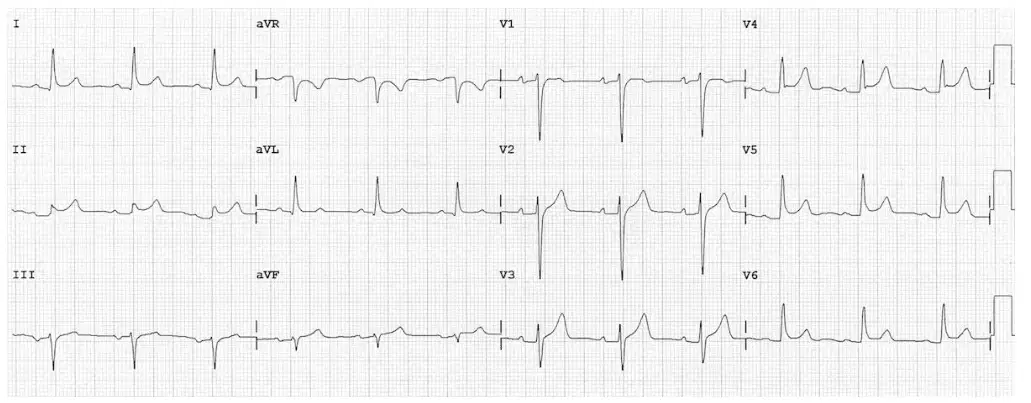
A 42-year-old man presents to the emergency department with chest pain. He reports a precordial pain of intensity 7 out of 10, burning in nature, lasting 12 hours, fluctuating and relieved when leaning forward. No radiation. He had constipation for about 15 days. He has a history of controlled hypertension (on atenolol) and obesity. He is an active smoker (5 pack-years). No relevant family history. On physical examination, he appears anxious and complaining. Height: 175 cm, Weight: 94 kg, BMI: 31 kg/m². Vital signs: temperature 36.8°C, heart rate 98/min, respiratory rate 15/min, blood pressure 120/78 mm Hg. Pulse oximetry: O2 saturation 98% on room air. Pulmonary and respiratory auscultation are normal. The attached electrocardiogram was obtained.
Takotsubo disease.
Acute myocardial infarction.
Hiatal hernia.
Pericarditis.
Brugada syndrome.
Uma mulher de 45 anos de idade recorre ao consultório médico devido a uma história de seis meses de zumbidos (tinnitus) no ouvido direito e perda progressiva de acuidade auditiva à direita. Refere dificuldade em ouvir as pessoas ao telefone quando coloca o telefone à direita. Não perdeu acuidade auditiva à esquerda. Não tem história prévia de patologias relevantes e não toma qualquer medicação. Os sinais vitais são normais. O exame físico revela uma ligeira ptose do andar inferior da hemiface direita e perda das rugas na fronte direita. O reflexo corneano é normal no olho esquerdo, mas ligeiramente reduzido no olho direito. A acuidade auditiva está reduzida à direita. O resto do exame neurológico não revela anomalias.
Doença de Ménière.
Glioma do tronco cerebral.
Herpes zoster do ouvido.
Neurinoma do acústico (schwannoma vestibular).
Otosclerose.
Uma mulher de 74 anos de idade é trazida à consulta pelo seu filho devido a uma história de vertigens e vómitos desde há dois dias. Refere ainda que, desde que os sintomas começaram, a sua audição à esquerda tem vindo a diminuir. Há vários dias atrás desenvolveu congestão nasal e dos seios perinasais e «dores de garganta»; os sintomas iniciaram uma semana após ter visitado os seus netos. Nega diplopia, dormência da face ou fraqueza em extremidades. Tem história prévia de depressão, diverticulose, hipertensão arterial controlada e osteoartrose das mãos. Está medicada com fluoxetina, amlodipina, hidrocortisona e paracetamol. A doente aparenta estar pálida, mas está sem sinais de desconforto em decúbito dorsal. Os sinais vitais são temperatura 37,4°C, frequência cardíaca 78/min, frequência respiratória 16/min e pressão arterial 134/78 mm Hg. O exame dos pares cranianos não revela alterações. Tem nistagmo horizontal. A força muscular é normal. Teste de Romberg positivo. O teste de audição revela diminuição moderada bilateralmente. O restante exame físico é normal.
Acidente vascular isquémico cerebeloso.
Acidente vascular isquémico da artéria labiríntica.
Doença de Ménière.
Neurinoma do acústico.
Neurite vestibular.
A 42-year-old Caucasian woman, housewife, presents to the emergency department with a two-day history of balance loss when standing up or walking, with moderate back pain radiating to the left leg. She says: "I feel like my legs are turning into rubber." She has had progressive urinary incontinence during this period and has been urinating in bed at night. Three years ago, she underwent a tumorectomy followed by chemotherapy and radiotherapy for an infiltrative ductal carcinoma of the breast. She is 160 cm tall and weighs 57 kg; BMI 22 kg/m². Vital signs: temperature 37.1°C, heart rate 88/min, respiratory rate 16/min, blood pressure 102/66 mm Hg. Muscle strength in the limbs is 3/5. Deep tendon reflexes are exaggerated in the knees and ankles. Pain sensitivity is reduced in the lower limbs.
Bone scintigraphy.
Electromyography.
X-ray of the spine.
MRI of the spine.
CT of the spine.
A 76-year-old man is brought to the emergency department by his wife because he has had weakness in his right arm and leg for two hours, associated with a headache and fever. Two weeks ago, he was hospitalized for treatment of cellulitis of the right lower limb with intravenous antibiotics. His medical history includes rheumatic fever at age 12, mitral valve replacement at age 71, type 2 diabetes mellitus, hypertension, and peptic ulcer disease. He is on warfarin, metformin, amlodipine, and ranitidine. Vital signs: temperature 39.4°C, heart rate 110/min, respiratory rate 28/min, blood pressure 160/100 mm Hg. The patient is dehydrated and confused but cooperative. Chest auscultation reveals bilateral basal crackles. Cardiac exam reveals a grade 4/6 systolic murmur heard along the left sternal border. Physical exam reveals ankle edema and signs of resolving cellulitis in the right leg. Neurological exam reveals rightward gaze deviation, muscle weakness, and decreased tendon reflexes in the left limbs. Reflexes in both ankles are absent. Babinski sign is present on the left.
Brain abscess.
Lacunar infarct of the internal capsule.
Intracerebral hematoma.
Subdural hematoma.
Subarachnoid hemorrhage.
A 82-year-old man is hospitalized following the implantation of a biological aortic prosthesis for aortic stenosis 15 days ago. The surgery had a complicated postoperative course due to prolonged need for ventilatory support, pneumonia associated with invasive ventilation, and need for vasopressor support. The patient improved and met criteria for discharge. Today, the patient presents with fever and deterioration of general condition, with marked fatigue. Vital signs: temperature 38.5°C, heart rate 98/min, high amplitude pulse, respiratory rate 15/min, blood pressure 155/45 mm Hg. Pulse oximetry shows O2 saturation of 92% in room air. Cardiac auscultation reveals a systolic murmur 2/6 along the left sternal border (previously known) and a diastolic murmur 2/6 in the 3rd left intercostal space, newly detected. Pulmonary auscultation reveals crackles at both bases. The rest of the physical exam is unremarkable. Lab results: Hemoglobin 10.2 g/dL (normochromic, normocytic), Leukocytes 16,000/mm³, Neutrophils 84%, Platelets 141,000/mm³, C-reactive protein 45 mg/dL.
Echocardiogram.
Myocardial necrosis markers.
Chest X-ray.
Chest CT.
Viral serology.
A 1-week-old newborn is brought to the emergency department due to a rectal temperature of 39.1°C, lethargy, and difficulty feeding. Lumbar puncture results suggest bacterial meningitis. Which of the following is the most likely etiological organism?
Haemophilus influenzae.
Listeria monocytogenes.
Neisseria meningitidis.
Group B Streptococcus.
Streptococcus pneumoniae.
A 45-year-old man is brought to the emergency department by his brother after being found confused and disoriented at home for about 20 minutes. In the car, on the way to the hospital, the patient lost consciousness. The brother says the patient was well when he visited a month ago and is unaware of any health problems. On admission, the patient does not respond. Vital signs: temperature 37.0°C, heart rate 60/min, respiratory rate 10/min, blood pressure 80/50 mm Hg. Pulse oximetry in room air shows 87% saturation. Initial physical exam reveals no neck stiffness or focal neurological signs. Which of the following is the most appropriate immediate step?
Administer 50% glucose.
Administer naloxone.
Protect the airway.
Perform arterial blood gas analysis.
Perform a head CT scan.
A 25-year-old man of African descent comes to the emergency department due to an asthma attack. He is currently using beclomethasone inhaler for asthma and was hospitalized three months ago for a similar crisis. Physical exam reveals a man with severe dyspnea and scattered wheezing. Which of the following is most likely to be found on the rest of the physical exam?
Bifid pulse.
Low amplitude pulse.
Increased pulse pressure.
Pulsus alternans.
Pulsus paradoxus.
A 73-year-old man is brought to the emergency department by his family due to increasing drowsiness and difficulty breathing over the past two days. His medical history is significant for chronic obstructive pulmonary disease (COPD). He required corticosteroid pulse therapy four times in the past year. He is currently on prednisolone 10 mg/day and uses 2 L/min oxygen via nasal cannula at home. He was hospitalized two years ago for acute COPD exacerbation and required nine days of mechanical ventilation. Since then, he has specified that he does not wish to be resuscitated or intubated in the future. Pulmonary function tests two years ago showed FEV1 of 0.85 L and FEV1:FVC ratio of 0.42 (37% of predicted). He smokes a pack of cigarettes per day for the past 60 years and continues to smoke against medical advice. Today, his vital signs are: temperature 38.3°C, heart rate 98/min, respiratory rate 8/min, blood pressure 117/56 mm Hg. Pulse oximetry with 3 L oxygen via nasal cannula shows 89% saturation. The patient is drowsy and confused. Pulmonary auscultation reveals diffuse inspiratory and expiratory wheezes. Cardiac sounds are muffled but otherwise normal. Mild bilateral ankle edema is noted. Laboratory results: Serum: Na+ 142 mEq/L, K+ 4.0 mEq/L, Cl- 106 mEq/L, HCO3- 32 mEq/L. Arterial blood gas: PaO2 55 mm Hg, PaCO2 85 mm Hg, pH 7.29. Which of the following interventions is most likely to improve this patient's condition?
Administration of inhaled epinephrine.
Administration of intravenous ceftriaxone and azithromycin.
Administration of intravenous methylprednisolone.
Change in inspired oxygen fraction to 50% by face mask.
Assisted ventilation with continuous positive airway pressure by mask.
A 60-year-old man visits his physician due to progressive respiratory difficulty over the past year. He reports dyspnea after walking a block. Symptoms do not occur at rest and are not affected by changes in position or time of day. He denies cough, sputum, or chest pain. No significant past medical history or medication use. Smoked a pack of cigarettes daily for the past 40 years. Height: 183 cm, weight: 63 kg, BMI: 19 kg/m². Vitals: temperature 37.0°C, heart rate 85/min, respiratory rate 25/min, blood pressure 120/60 mm Hg. Pulse oximetry in room air: 93% saturation. Physical exam: mild temporal wasting, no peripheral edema or cyanosis, jugular venous pressure not elevated, use of accessory muscles. Chest exam: increased anteroposterior diameter, hyperresonant percussion, decreased breath sounds, prolonged expiration, no wheezing, no rales. Cardiac exam: normal heart sounds, no murmurs. Which of the following studies is most likely to establish the diagnosis in this patient?
Serum α1-antitrypsin determination.
Spirometry.
High-resolution chest CT.
Chest X-ray.
No study is indicated.
A 70-year-old man with a history of schizophrenia in remission for 10 years, chronic obstructive pulmonary disease, and prostate cancer is admitted for prostatectomy. Postoperatively, he becomes abruptly confused and disoriented, paranoid, alternating between combativeness and psychomotor inhibition. He refuses all medication. What is the most appropriate first step?
Administer salbutamol by nebulizer.
Administer haloperidol.
Determine oxygen saturation by pulse oximetry.
Order chest X-ray.
Order ionogram.
A 55-year-old woman visits her attending physician because she has had pain in her left shoulder for the past two months. She smokes a pack of tobacco per day for 25 years. On physical examination, there is no pain on palpation of her shoulder, but she is unable to abduct her arm beyond 25°. She is hoarse, but the rest of the physical examination is normal. The shoulder X-ray is normal.
Arthroscopy.
Shoulder arthrography.
Chest X-ray.
Shoulder MRI.
Shoulder CT scan.
A 2-month-old infant is brought to the emergency department for respiratory distress. The child was well until three days ago when she developed rhinorrhea and cough that lasted two days. Tonight, the child began to breathe rapidly. On physical examination, the infant has cold, mottled skin, is tachypneic with shallow and cyanotic breathing. Auscultation of the lung fields reveals decreased breath sounds and scattered crackles.
Determine oxygen saturation.
Obtain chest X-ray.
Obtain lateral neck X-ray.
Perform laryngoscopy.
Request a pulmonology consultation.
A 56-year-old woman with chronic dyspepsia presents to the emergency department several hours after undergoing upper digestive endoscopy with gastric biopsy under sedation at an outpatient hospital unit. She reports that after returning home from the hospital, she developed a retrosternal burning sensation that progressively worsened. She states that the pain worsens with breathing and reports being unable to swallow solid foods since the pain began. She reports having healthy eating habits. She is 155 cm tall and weighs 79 kg; BMI 33 kg/m². Current vital signs are: temperature 38.3°C, heart rate 120/min, respiratory rate 22/min, and blood pressure 95/70 mm Hg. The patient is sitting upright and appears to be in acute distress. Pulse oximetry reveals an oxygen saturation of 93% on room air.
Acute gastritis.
Mediastinitis.
Aspiration pneumonia.
Pulmonary thromboembolism.
Esophageal ulceration.
A 22-year-old man returns to the medical office for follow-up after a cutaneous tuberculosis test. He had a positive result with an intermediate intensity response and 12 mm induration on chest X-ray. He completed daily isoniazid therapy for six months without incident. A week ago, two months after completing treatment, a new tuberculin skin test again showed an intermediate intensity response. Screening for university admission revealed a 12 mm induration.
Prescribe isoniazid and rifampicin for one year.
Prescribe isoniazid for another year.
Repeat the chest X-ray.
Repeat the tuberculin skin test in six months.
Do nothing further.
A 52-year-old woman visits her family doctor for an irritating cough that prevents her from sleeping. She has a history of type 2 diabetes mellitus, hypertension, and chronic renal failure. She is on metformin, lisinopril, and aspirin. Her vital signs are: temperature 37.1°C, heart rate 68/min, respiratory rate 15/min, and blood pressure 135/80 mm Hg. Pulse oximetry shows O2 saturation of 98% on room air. Cardiac and pulmonary auscultation are normal. Laboratory tests reveal a creatinine clearance of 50 mL/min.
Add hydrochlorothiazide.
Request pulmonary function tests.
Request chest X-ray.
Request microbiological analysis of bronchial secretions.
Substitute lisinopril with losartan.
A 47-year-old obese woman is seen in an outpatient clinic for epigastric pain, heartburn, and retrosternal burning after meals. She also reports early satiety and easy fatigue. Over the past six months, she has lost 12 kg (current weight 78 kg) and, in the last two weeks, has had episodes of vomiting after eating. Physical examination shows pale mucous membranes, no skin changes, no palpable cervical masses, and a distended abdomen with tenderness in the epigastrium. The liver is palpable; there is no ascites. Laboratory results: Blood: Hemoglobin 8.5 g/dL (microcytosis, hypochromia), Hematocrit 49% Arterial blood gases: PaO2 93 mm Hg, PaCO2 48 mm Hg, pH 7.5 After 36 hours of fasting, an upper digestive endoscopy reveals a distended stomach, abundant food residue, and an exophytic lesion in the gastric wall near the pylorus causing luminal obstruction. Biopsies were taken.
Placement of a transmural stent.
Percutaneous endoscopic gastrostomy.
Neoadjuvant chemotherapy.
Gastric radiotherapy.
Surgical treatment.
A 19-year-old man, single, comes to the assistant physician's office, brought by his mother, reporting increasing isolation and 'strange behaviors,' which have progressively developed over the last eight months, since he entered higher education. The mother describes that her son has started speaking 'very quietly,' insists on keeping the curtains at home always closed, and frequently searches the house for unclear reasons. She also mentions that her son has not attended classes in the last semester. During the consultation, the patient avoids eye contact and does not cooperate with the interview in his mother's presence. Cotton plugs are visible in both ears. When interviewed alone, he explains that he does not feel comfortable talking about certain subjects in his mother's presence because he thinks she might be conspiring with the upstairs neighbors, whom he often hears insulting and criticizing him. The patient appears poorly groomed and with poor hygiene. Physical examination and vital signs are within normal limits.
Depressive episode with psychotic symptoms.
Paranoid schizophrenia.
Social phobia.
Delusional disorder.
Schizophreniform disorder.
A 70-year-old man, a retired coal miner, is brought to the emergency room by his wife due to sudden onset of shortness of breath, cough, and expectoration. His vital signs are: temperature 37.8°C, heart rate 130/min, and blood pressure 90/75 mm Hg. Physical examination reveals shallow breathing, tracheal deviation to the left, and decreased breath sounds in the right lung fields.
Administer 3 L of 0.9% NaCl saline and reassess the patient.
Admit to the intensive care unit for monitoring and observation.
Insert a chest drain and admit the patient.
Request a chest X-ray.
Schedule a ventilation-perfusion scan.
A 45-year-old African woman visits the medical office for follow-up of diabetes mellitus diagnosed five years ago. She reports weight gain and increased blood glucose. She cannot specify the cause of the weight gain. She reports reducing fat and cholesterol intake as much as possible. She does little physical activity and has a sedentary job. She takes metformin once a day. She has no allergies. Her vital signs are: temperature 37.0°C, heart rate 84/min, respiratory rate 14/min, and blood pressure 140/85 mm Hg. Lung and heart exams are unremarkable. Neurological exam shows no sensory loss. Fundoscopy reveals mild vessel narrowing. Laboratory results are as follows: Serum: Creatinine: 1.1 mg/dL Cholesterol: Total: 176 mg/dL HDL: 40 mg/dL LDL: 120 mg/dL Triglycerides: 90 mg/dL Fasting glucose: 165 mg/dL TSH: 2.3 μU/mL Blood: Hemoglobin: 12.2 g/dL Hemoglobin A1c: 8.7% Urine: Albumin: absent Her blood pressure during the last three visits in the past nine months averaged 135/89 mm Hg.
β-blocker.
α-blocker.
Diuretic.
ACE inhibitor (IECA).
No medication is indicated.
A 68-year-old man comes to the assistant physician's office at the health center, complaining of a cough with whitish sputum for four months. Additionally, he has dyspnea on exertion and occasional wheezing for the past three months. He denies fever, chest pain, or weight loss during this period. He has a history of arterial hypertension, dyslipidemia, and smoking habits (10 units/day since age 45). He is chronically medicated with chlorthalidone, amlodipine, and rosuvastatin. On physical examination, the patient shows no signs of respiratory distress. Vital signs are: temperature 36.3°C, heart rate 89/min, respiratory rate 18/min, and blood pressure 107/80 mm Hg. Oxygen saturation in room air is 98%. The patient is 167 cm tall and weighs 89 kg; BMI 31.9 kg/m². Pulmonary auscultation shows normalization of the expiratory to inspiratory time ratio and rare wheezing in all fields. The rest of the exam is irrelevant.
Spirometry.
Blood gas analysis.
Complete blood count.
Chest X-ray.
Chest CT scan.
A 67-year-old woman comes to the outpatient clinic for the first time for a periodic health evaluation. She reports that she generally feels healthy. She has a history of type 2 diabetes and arterial hypertension. She denies a history of heart disease. She is medicated with aspirin, metformin, and lisinopril. She drinks two to three glasses of wine per week and does not smoke. She is 165 cm tall and weighs 54 kg; BMI 20 kg/m². Vital signs are normal. Laboratory results are as follows: Serum: Cholesterol Total 165 mg/dL HDL 27 mg/dL LDL 102 mg/dL Triglycerides 181 mg/dL Urea 18 mg/dL Creatinine 1.0 mg/dL Glucose 116 mg/dL Blood: Hemoglobin A1c 5.9% ALT 30 U/L AST 25 U/L Which of the following pharmacotherapies is most likely to have a significant impact in reducing this woman's cardiovascular risk?
Acarbose.
Amlodipine.
Gemfibrozil.
Irbesartan.
Simvastatin.
A 56-year-old woman presents to the emergency department with complaints of edema in the limbs (upper and lower) and periorbital region, worsening over the past three weeks. She denies fever, dyspnea, chest pain, abdominal pain, or genitourinary symptoms. She has a history of diabetes mellitus for 17 years, dyslipidemia, and rheumatoid arthritis. She takes metformin, sitagliptin, acarbose, atorvastatin daily, and methotrexate with folic acid weekly. Physical examination reveals edema in the limbs, face, and abdominal wall. Vital signs: temperature 36.4°C, heart rate 79/min, respiratory rate 13/min, blood pressure 107/89 mm Hg, O2 saturation 98% on room air. Pulmonary auscultation is unremarkable. Cardiac auscultation reveals basal crackles. Laboratory results are as follows: Serum: Cholesterol: 164 mg/dL HDL: 54 mg/dL LDL: 245 mg/dL Triglycerides: 134 mg/dL Urea: 67 mg/dL Creatinine: 1.3 mg/dL Glucose: 231 mg/dL Albumin: 2.3 mg/dL Proteins: 3.4 mg/dL Hemoglobin A1c: 8.6% Na+: 134 mEq/L K+: 4.1 mEq/L Cl-: 106 mEq/L HCO3-: 32 mEq/L Blood: Hemoglobin: 10.8 mg/dL Leukocytes: 4500/mm³ Platelets: 157,000/mm³ Urine type 2 with some dysmorphic erythrocytes and proteinuria. 24-hour urine with total proteins of 3.9 g.
Glomerulopathy.
Renal ischemia.
Renal neoplasia.
Post-renal obstruction.
Tubulopathy.
A 52-year-old Caucasian woman with diabetes mellitus treated with glipizide presents to the emergency department with nausea and vomiting for the past two hours. She says: "I feel a weight on my chest." She has no known history of coronary artery disease (CAD). Her vital signs are normal. Physical examination reveals no pathological findings. Considering the diagnosis, which of the following factors is most likely to lead to an underestimation of the probability of an acute myocardial infarction in this woman?
Absence of history of CAD.
Normal physical examination.
History of diabetes mellitus.
Nausea and vomiting.
Her gender.
A 78-year-old man with dementia, Alzheimer's type, is brought to the medical office by his family, who report that the patient wakes up at night short of breath and has had progressive leg edema. The patient had an uncomplicated anterior wall myocardial infarction two months ago. Today, his vital signs are: temperature 37.0°C, heart rate 84/min, respiratory rate 22/min, and blood pressure 140/90 mm Hg. Physical examination shows no jugular venous distension, but there is a third heart sound (S3) audible, fine crackles at both lung bases, and 1+ bilateral pitting edema in the lower extremities. The electrocardiogram is similar to the one from two months ago. In addition to a chest X-ray, which of the following is the most important additional test to order?
Serum urea and creatinine determination.
Serum TSH determination.
Echocardiography.
Stress test.
Pulmonary function tests.
Um recém-nascido de 15 dias de vida é trazido ao serviço de urgência pela mãe devido a temperatura retal de 39,5°C desde esta manhã e dificuldade no aleitamento. A gravidez e o parto eutócico decorreram sem complicações e o período pós-natal imediato decorreu sem intercorrências. Os sinais vitais estão dentro dos parâmetros de normalidade. Com exceção de maior irritabilidade, o exame físico é normal. As análises laboratoriais revelaram leucócitos de 12 800/mm³ e concentração de proteína C reativa de 4,5 mg/dL (N = 0,9 mg/dL).
Dar alta ao doente prescrevendo paracetamol.
Iniciar antibioticoterapia empírica.
Internar o doente para vigilância.
Realizar colheita de urina.
Realizar raio-X do tórax.
Uma menina de 18 meses de vida é trazida ao pediatra pela mãe devido a uma história de sete dias de febre alta. Há quatro dias atrás foi observada no serviço de urgência e a mãe refere: «Foi medicada com amoxicilina para uma amigdalite.» A mãe refere que a febre tem vindo a agravar e que a doente está a comer e a brincar menos do que o habitual. Os antecedentes pessoais são irrelevantes e o programa vacinal encontra-se atualizado. A observação tem um ar doente. Os sinais vitais são temperatura 39,0°C, retal, frequência cardíaca 140/min, frequência respiratória 50/min e pressão arterial 100/60 mm Hg. Ao exame físico observa-se eritema conjuntival e exantema maculopapular generalizado que não poupa palmas e plantas. Apresenta ainda orofaringe ruborizada, sem hipertrofia ou exsudado amigdalino. Os gânglios linfáticos cervicais estão aumentados e há um ligeiro edema da mão e do pé. O restante exame físico não apresenta alterações.
Doença de Kawasaki.
Doença de Still.
Doença mão-pé-boca.
Escarlatina.
Febre escaronodular.
A 56-year-old man is brought to the emergency department by ambulance after losing consciousness an hour ago. His wife, who accompanies him, reports that her husband lost consciousness while walking in the hall of their house after returning from dinner at a Chinese restaurant. She says he hit his nose on the floor when he fell. The patient's loss of consciousness was transient, and he is currently alert and oriented to time and space. The man has been treated by his attending physician for hypertension and lower back pain in the past year. He is on diuretics and non-steroidal anti-inflammatory drugs (NSAIDs). He takes no other medications and denies illicit drug or alcohol use. He is 180 cm tall and weighs 113 kg; BMI: 35 kg/m². Currently, his vital signs are: temperature 37.0°C, heart rate 90/min, respiratory rate 18/min, and blood pressure 150/92 mm Hg. Physical examination reveals clotted blood around the nostrils. Pulmonary and cardiac auscultation are normal. He has mild tenderness on abdominal palpation. Abdominal X-ray reveals a curvilinear calcification to the left of the lumbar spine. Which of the following is the most appropriate immediate test to order?
Serum urea and creatinine determination.
Serum calcium determination.
X-ray of the lumbosacral spine.
Contrast X-ray of the upper gastrointestinal tract.
Abdominal CT scan.
Um jogador de voleibol profissional de 22 anos de idade recorre à consulta do médico assistente porque tem dor torácica anterior intensa com agravamento progressivo desde que jogou num torneio para qualificação olímpica há um dia. Ele diz: «Parece que alguém me está a espetar no coração.» A dor irradia para as omoplatas. Desde que comeu sushi ontem à noite, ele refere mal-estar abdominal, náuseas e dois episódios de vómito. Tem sido saudável e não toma qualquer medicação. Não fuma. Bebe seis cervejas ao fim de semana e nega uso de substâncias ilícitas. Ele tem 201 cm de altura e pesa 86 kg; IMC 21 kg/m². Os sinais vitais são temperatura 37,2°C, frequência cardíaca 100/min, frequência respiratória 16/min e a pressão arterial 130/88 mm Hg. O exame físico revela dor no epigastro à palpação e ruídos intestinais presentes. O eletrocardiograma não revela qualquer alteração. O raio-X do tórax suporta a suspeita diagnóstica. As concentrações de amilase sérica e enzimas cardíacas estão dentro dos valores referência normais.
Dissecção da aorta.
Enfarte agudo do miocárdio.
Gastroenterite aguda.
Pancreatite.
Reação aguda ao stress.
Um rapaz de 4 anos de idade é trazido ao serviço de urgência 30 minutos após ter sido encontrado na garagem a brincar ao lado de um recipiente de gasolina aberto. Está assintomático e não tem antecedentes relevantes. Os sinais vitais são temperatura 37,1°C, frequência cardíaca 80/min, frequência respiratória 50/min e pressão arterial 110/68 mm Hg. O restante exame físico não revela alterações.
Administrar carvão ativado.
Administrar pro-cinético (ipecac).
Internar o doente para vigilância.
Realizar lavagem gástrica.
Requisitar raio-X do tórax.

